
TL;DR

Get furniture and decor delivered free — and shop member deals
- Fast, free delivery on millions of items
- Access to Prime Big Deal Days deals on October 6–7
- Prime Video, Amazon Music and more included
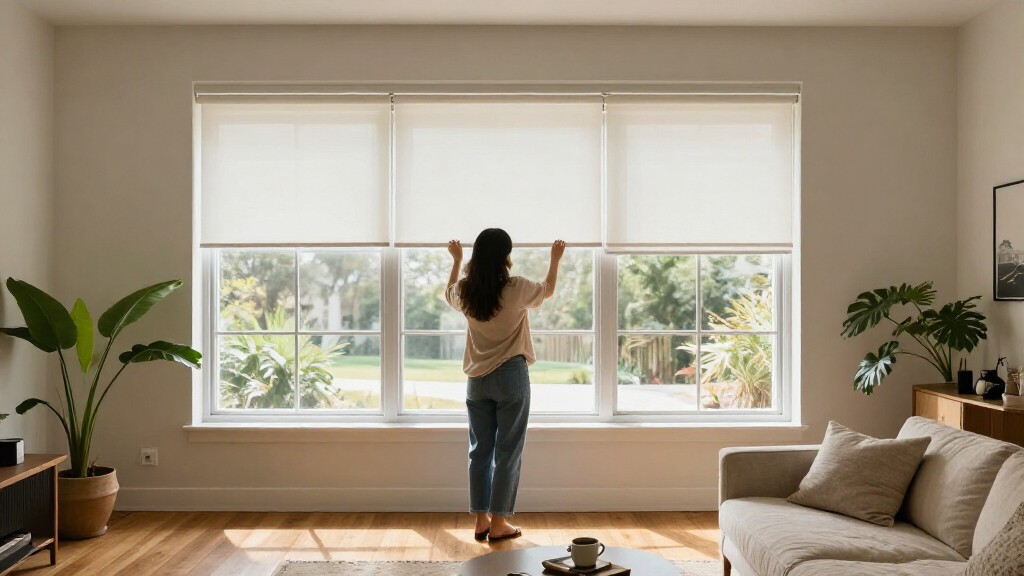
A Hunker report says interest in Roman shades is rising in 2026, citing a 50% year-over-year increase in Google searches and designer support for relaxed styles. Roman shades offer a tailored alternative to curtains, but the cited figures do not establish that they are replacing traditional window treatments across homes.
Roman shades are drawing increased consumer and designer interest in 2026, according to a Hunker report that cites a 50% year-over-year rise in Google searches for the window covering and designer support for relaxed Roman styles. The figures point to a trend, but do not show that shades have broadly displaced curtains or other traditional treatments.
The Hunker report frames Roman shades as a cleaner-looking alternative to ornate curtains, valances and tie-back decorations. It cites Google Trends data showing searches for “Roman shades” are up 50% from the previous year. The report does not provide the underlying search volume, the exact dates used, or a comparison with searches for other window coverings, so the percentage indicates increased search interest rather than market share or sales.
For designer preference, the report references Apartment Therapy’s State of Home Design 2026 report, saying more than one-third of designers surveyed identified relaxed Roman shades as a leading window-treatment trend. The cited finding concerns designer views; it does not establish how many households have installed them or whether all Roman shade styles are gaining at the same rate.
Roman shades use fabric that folds as the covering is raised. Styles include soft-fold and relaxed silhouettes, and the report says they can offer more controlled light adjustment than curtains. Some models fit within the window frame, reducing the amount of space the treatment occupies. The available styles, fit and operating mechanisms vary by product, so buyers would need to compare individual options rather than assume every shade has the same features.
Why Homeowners Are Reconsidering Curtains
The interest matters to readers planning a room update because window treatments affect light, privacy and the visual balance of a space. Roman shades can provide a less full-looking alternative to long curtains while retaining a fabric finish. Their compact appearance may suit rooms where bulky drapery is impractical or where a more restrained design is preferred.
Cost and fabric choice are part of the appeal described in the report. Interior designer Jennifer McKissick, speaking to The Spruce, said Roman shades use less fabric than long drapery, which can make it possible to use a higher-priced textile in a smaller quantity. That is a design rationale, not a guarantee that shades cost less overall: custom sizing, hardware, lining and installation can affect the final price.
The reported trend also gives homeowners a reason to distinguish between a design preference and a practical requirement. A shade’s light filtering, privacy, installation method and ease of operation depend on its materials and construction. The popularity figures alone do not identify which products suit a particular window or household.
As an affiliate, we earn on qualifying purchases.
How Roman Shades Differ From Drapery
Roman shades are not a new invention; the report describes them as an established window-treatment option receiving fresh attention. Their fabric panels gather into horizontal folds when lifted, rather than hanging in long, loose lengths like conventional curtains. Relaxed Roman styles have softer folds, while other versions may be more structured. The shape and fabric influence whether a shade reads as casual, formal or decorative.
The comparison with curtains is not simply about appearance. Curtains can be drawn across a wider area and may suit large windows, while shades are typically fitted to individual openings. Depending on the model, a Roman shade may be mounted inside or outside the window frame. Installation dimensions, the window’s trim and the desired degree of light control matter when selecting one.
The Hunker article also notes that shades are available at a range of price points and that some people make no-sew versions using fabric adhesive. That option is presented as a possible DIY route, not as a tested recommendation for every fabric or window. Buyers considering a homemade treatment should check material and hardware instructions and confirm that the finished shade can be operated safely.
“They require about one-fourth of the fabric that long drapery requires, making them a great option to incorporate more expensive fabrics into your space.”
— Jennifer McKissick, interior designer, speaking to The Spruce
What the Trend Figures Do Not Show
The source material does not provide the absolute number of Google searches, the precise measurement period, or the search terms included beyond “Roman shades.” A 50% increase can describe a change in search activity, but without those details it cannot show the size of demand or establish a shift in sales.
The designer finding also has limits: the report excerpt does not state the survey’s sample size, the full wording of the question, or how designers were selected. It is not clear whether relaxed shades were selected as the leading style by a large margin or were one of several popular choices.
There is no evidence in the cited material that traditional curtains are disappearing, that Roman shades are the most purchased treatment, or that they work better for every room. The article’s framing of shades as “taking over” is stronger than the available data can confirm. Price comparisons, durability, child-safety details and performance across different window types are not supplied.
What Shoppers Should Compare
People considering Roman shades can compare measurements, mounting options, fabric and light control before choosing a style. Checking whether a shade fits inside the frame or needs an outside mount can help clarify the finished look and avoid ordering the wrong size. Product specifications should also explain whether the fabric filters light, provides privacy or is lined for greater room darkening.
Shoppers should request quotes that separate the shade, custom sizing, hardware and installation costs. That makes it easier to compare a Roman shade with curtains on total price rather than on fabric use alone. Anyone making a DIY version should follow the adhesive and hardware manufacturers’ directions and confirm that the completed treatment is appropriate for the window and its intended use.
The next indication of whether this design interest translates into a wider purchasing shift would be more detailed sales or installation data, alongside future search figures with clearly stated periods and baselines. The cited report establishes increased attention and designer interest; whether that interest will persist through 2026 remains to be seen.
Key Questions
Are Roman shades replacing traditional curtains?
The cited reporting shows rising search interest and designer support for relaxed Roman shades, but it does not establish that curtains are being broadly replaced. The scale of any shift in household purchases is unknown.
What does the reported 50% increase refer to?
Hunker says Google Trends showed searches for “Roman shades” were 50% higher than the previous year. The report excerpt does not provide the underlying search volume or exact comparison dates.
Why are designers interested in Roman shades?
The report describes them as a tailored, space-conscious option with adjustable light control. Designer Jennifer McKissick also told The Spruce that shades use about one-fourth as much fabric as long drapery, which may allow for a more expensive fabric choice.
Do Roman shades cost less than curtains?
Not necessarily. Less fabric may reduce one part of the cost, but custom sizing, materials, lining, hardware and installation can change the total. The cited source does not provide a direct price comparison.
Are Roman shades suitable for every window?
The source does not make that claim. Fit and function depend on the window’s dimensions, mounting space, desired privacy and light control, and the specific shade design.
Source: rss
Halloween Picks
halloween
As an affiliate, we earn on qualifying purchases.