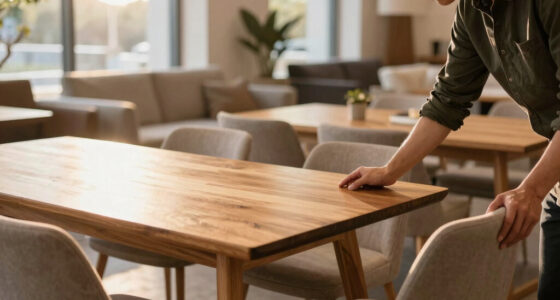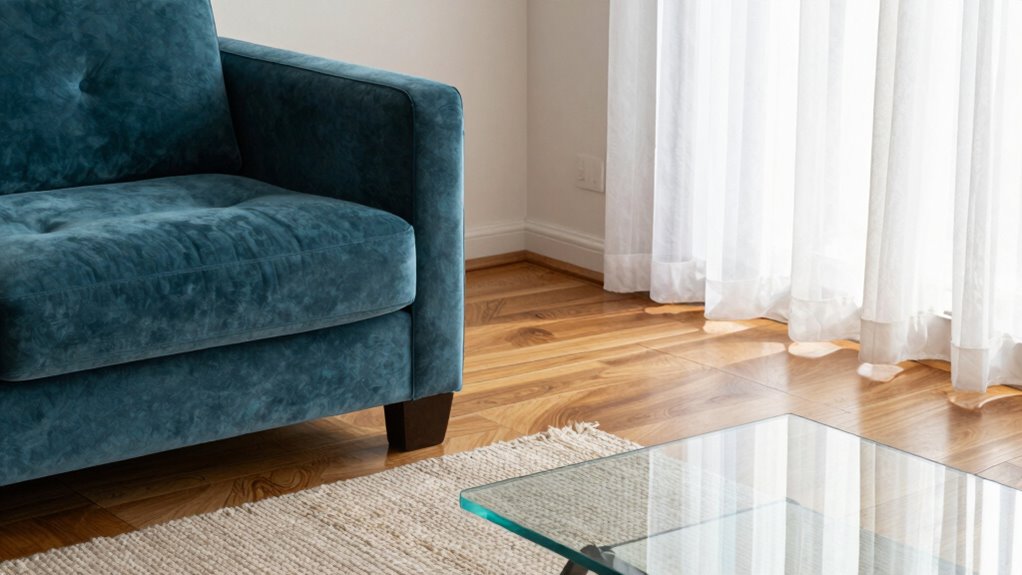

To beautifully balance soft upholstery with hard surfaces, combine plush textures like velvet or woven fabrics with smooth materials such as satin, leather, or polished wood. Use neutral tones for cohesion and add pops of color through cushions or rugs. Keep proportions in check—large furniture should suit the space—while layering textiles adds depth. Proper lighting highlights textures and enhances colors, creating harmony. Want to know more ways to achieve this perfect balance? Keep exploring for practical tips.

Get furniture and decor delivered free with Prime
- Fast, free delivery on millions of items
- Prime Video, Amazon Music and more included
- Member-only deals all year
Key Takeaways
- Pair sleek hard surfaces with plush, textured upholstery to create tactile contrast and visual interest.
- Use neutral tones in soft furnishings to seamlessly blend with hard surfaces for harmony.
- Balance large furniture with proportionate, slim pieces to prevent overwhelming the space.
- Incorporate layered textiles and varied textures to add depth without clutter.
- Use thoughtful lighting to highlight textures and maintain true color balance.
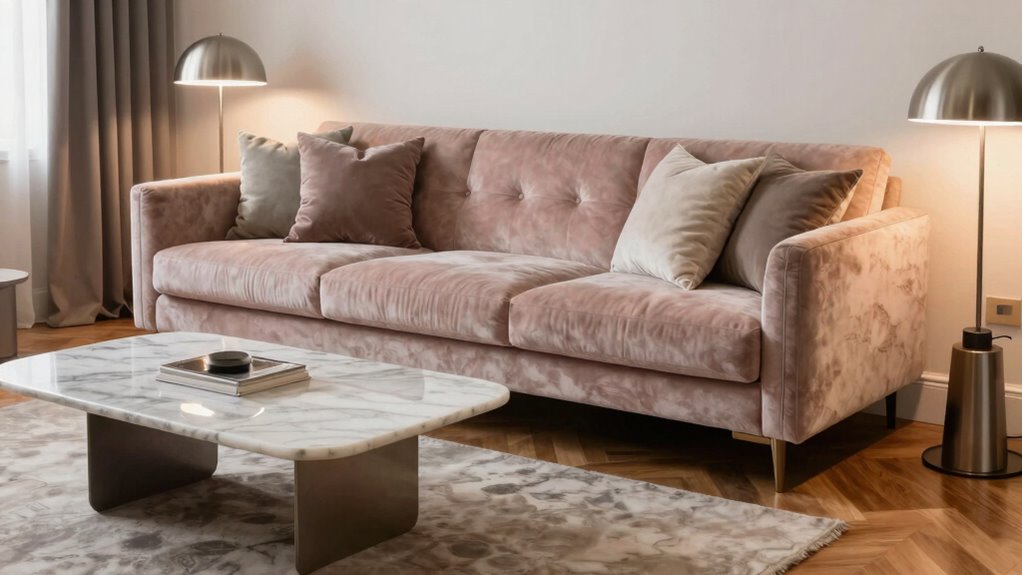
Achieving a balanced look in your space often involves thoughtfully combining soft upholstery with hard surfaces, creating a harmonious and inviting environment. To do this successfully, you need to pay attention to fabric textures and color coordination. These elements work together to soften the sharpness of hard surfaces while adding visual interest and depth.
Start by selecting fabric textures that contrast yet complement the hard surfaces in your room. For example, pairing a sleek, polished wooden table with plush, textured cushions or throws on your seating creates a tactile balance. Textured fabrics like boucle, velvet, or woven materials bring warmth and softness that counteract the smoothness of stone, glass, or metal surfaces. When you choose these fabrics, consider the overall feel you want. If your space leans modern and minimal, smooth fabrics like satin or leather can add a sleek touch, while more eclectic spaces benefit from chunkier, textured textiles that invite touch and comfort.
Contrast sleek wood with plush textiles like velvet or woven fabrics for a warm, balanced space.
Color coordination plays an essential role in achieving visual harmony. Instead of contrasting colors that clash, aim for a palette that blends seamlessly. For instance, if your hard surfaces are in neutral tones like gray, beige, or black, incorporate soft upholstery in similar hues with subtle variations. This creates cohesion without monotony. Alternatively, adding pops of color through accessories—such as cushions, rugs, or curtains—can enliven the space while still maintaining balance. Keep in mind that bold colors on soft furnishings can be grounded with neutral hard surfaces, preventing the room from feeling overwhelming.
Pay attention to scale and proportion as well. Large, soft furniture pieces should be proportional to the hard surfaces they sit against or near. A bulky sofa in a small room can overwhelm the space, while a slim, sleek piece might look too sparse against robust, hard surfaces. Balance the visual weight of your textures and colors to achieve a unified look. Incorporating layered textiles—like a patterned rug or multi-colored cushions—to add complexity without clutter. Additionally, understanding the importance of fabric textures and how they influence the overall ambiance can help you make more intentional choices. Exploring texture contrast in your design can further elevate the aesthetic and tactile appeal of your space. Moreover, paying attention to fabric durability can ensure your soft furnishings remain attractive and functional over time. Remember that the right choice of fabric quality can also impact the longevity and comfort of your furnishings.
Finally, don’t forget that lighting influences how textures and colors appear. Proper lighting enhances fabric textures, highlighting their richness and depth. It also ensures that color coordination remains true to your design vision. By thoughtfully combining fabric textures, coordinating colors, and considering scale and lighting, you can create a space that beautifully balances soft upholstery with hard surfaces, resulting in a room that’s both stylish and welcoming.
As an affiliate, we earn on qualifying purchases.
Frequently Asked Questions
What Color Schemes Work Best for Mixed Textures?
You should opt for neutral color pairing, like whites, grays, or beiges, to create a calm, balanced look with mixed textures. Contrast techniques, such as pairing a soft upholstered sofa with sleek, hard surfaces, highlight each material’s beauty. Incorporate accent colors sparingly to add visual interest without overwhelming the space. This approach guarantees your design feels cohesive, fresh, and inviting while showcasing the unique qualities of every texture.
How Do I Maintain Durability With Soft Furniture?
Did you know that high-quality upholstery fabric can last up to 15 years? To maintain durability, choose fabrics with good fabric longevity and stain resistance. Regularly vacuum and spot clean your soft furniture to prevent dirt buildup and stains. Use protective covers or slipcovers for added defense, and avoid direct sunlight to prevent fading. These steps keep your furniture looking fresh while ensuring it stays durable over time.
Can I Mix Different Hard Surface Materials?
Yes, you can mix different hard surface materials. Focus on material compatibility to guarantee they work well together, avoiding clashing textures or finishes. Use surface layering techniques to create visual interest—pair smooth marble with textured wood or sleek metal with matte stone. This approach adds depth and balance to your space, making each material stand out while complementing soft upholstery. Just be mindful of contrast and cohesion for a harmonious look.
What Lighting Enhances the Balance Between Textures?
You should use a combination of ambient and accent lighting to enhance the balance between textures. Ambient lighting provides a soft, overall glow that highlights the space’s harmony, while accent lighting draws attention to specific hard surfaces or soft upholstery, creating depth. By layering these lighting types, you emphasize the contrast and complementarity of textures, making your space feel inviting, balanced, and visually interesting.
How Do I Incorporate Varying Styles Seamlessly?
To incorporate varying styles seamlessly, focus on creating textural contrast and style harmony. Mix different furniture styles and decor pieces intentionally, blending modern with vintage or rustic with sleek designs. Use neutral colors or consistent accents to tie diverse elements together, ensuring they complement rather than clash. By balancing bold statements with subtle details, you achieve a cohesive look that highlights your unique style while maintaining visual harmony.
Conclusion
By blending plush pillows with polished panels, you create an enthralling contrast that’s both cozy and chic. Remember, balancing soft and hard surfaces isn’t just about placement—it’s about personality. Play with textures, pair plush with sleek, and don’t shy away from experimenting. Ultimately, your space should speak your style, showcasing a seamless harmony that’s both inviting and impressive. So, step confidently, style boldly, and let your home tell its unique story through the beautiful balance of surfaces.
Halloween Picks
halloween
As an affiliate, we earn on qualifying purchases.