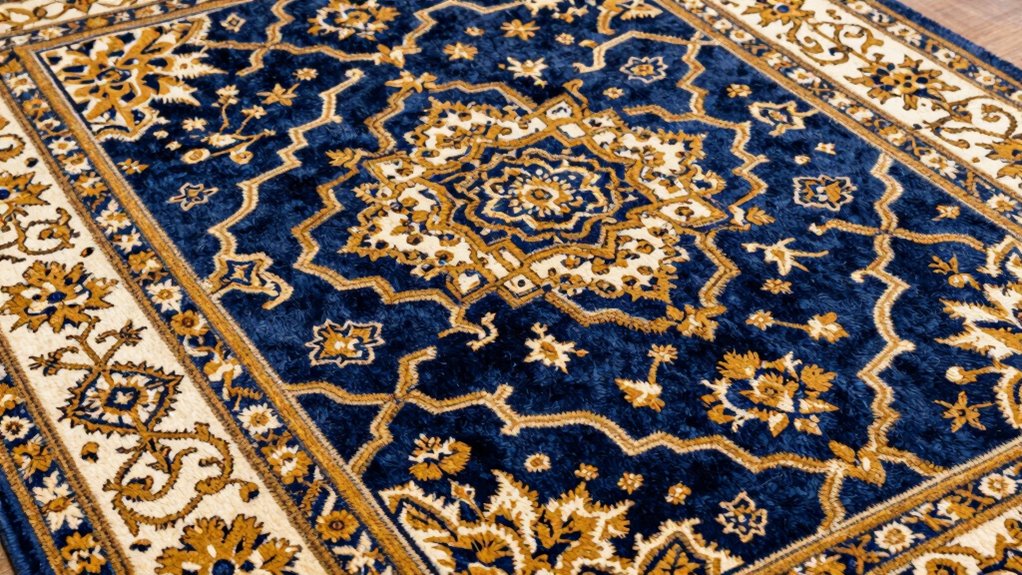
To keep your maximalist rug vibrant without chaos, limit yourself to three patterns that complement each other in size, color, and style. Choose contrasting patterns—like geometric, intricate, or textured—to create visual interest while maintaining balance. Use neutral backgrounds or bridge pieces to unify your design. Carefully position your patterns to avoid clutter, and repeat shared hues to guide the eye smoothly. Keep exploring further for tips to craft a cohesive, energetic space.
Key Takeaways
- Limit your rug patterns to three or fewer to maintain visual balance and prevent clutter.
- Choose patterns with contrasting scales and colors to create cohesion without overwhelming the space.
- Use neutral backgrounds or transitional textiles to unify diverse patterns smoothly.
- Vary pattern sizes and textures thoughtfully to add interest while keeping the design harmonious.
- Prioritize strategic placement and repetition to maximize impact and guide the eye naturally through the room.
Why Limit Your Patterns in Maximalist Rugs?

Limiting the number of patterns in a maximalist rug helps prevent the design from becoming overwhelming. When you include too many patterns, it can create chaos instead of excitement. By controlling pattern repetition, you ensure that each element has space to breathe, helping your eye focus without feeling cluttered. This approach balances visual weight across the rug, preventing any one pattern from dominating or feeling out of place. When there’s a limit on pattern variety, your design feels intentional and cohesive. It allows your chosen patterns to complement each other, rather than compete. Keeping your patterns in check makes your space feel lively yet harmonious, giving your maximalist rug the bold impact you desire without overwhelming the room. Free floating can also help create a sense of balance and flow within your design.
How to Choose the Right Three Patterns for Your Space
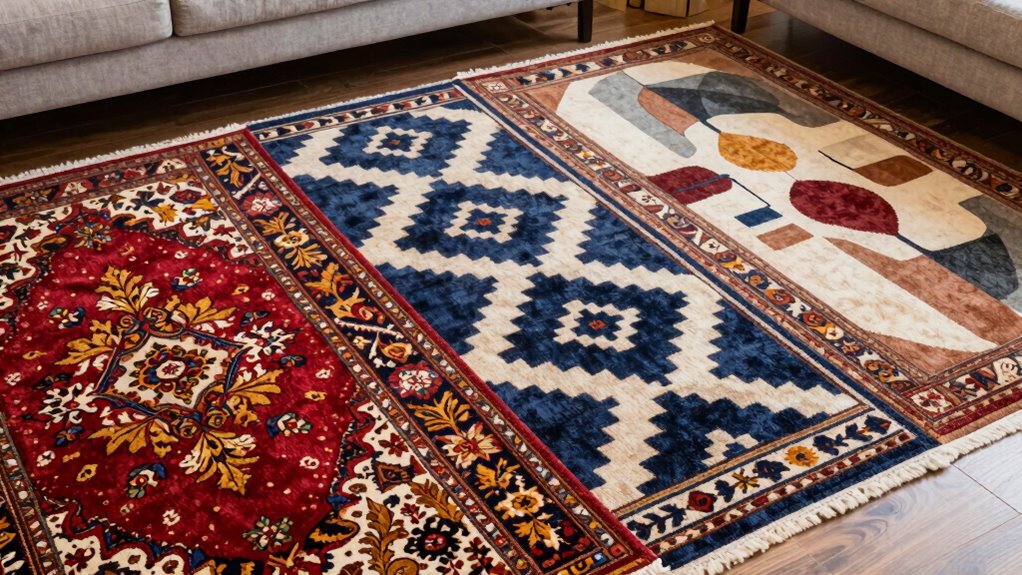
Choosing the right three patterns for your space involves balancing variety with harmony. Start by selecting patterns with enough contrast to create visual interest without clashing. Consider pattern contrast—mixing bold with subtle designs helps each rug stand out while maintaining cohesion. Focus on identifying focal points; one pattern can serve as the main feature, while the others complement it. For example, pair a large-scale geometric pattern with a smaller, intricate design, and a neutral textured rug to ground the space. Keep in mind that patterns don’t need to match perfectly, but they should work together to guide the eye smoothly around the room. Additionally, understanding pattern contrast can help you make more informed choices to enhance your decor. Ultimately, choosing three thoughtfully curated patterns allows you to achieve a lively, engaging look without overwhelming your space.
Mixing Colors and Textures in Maximalist Rugs Without Overwhelm
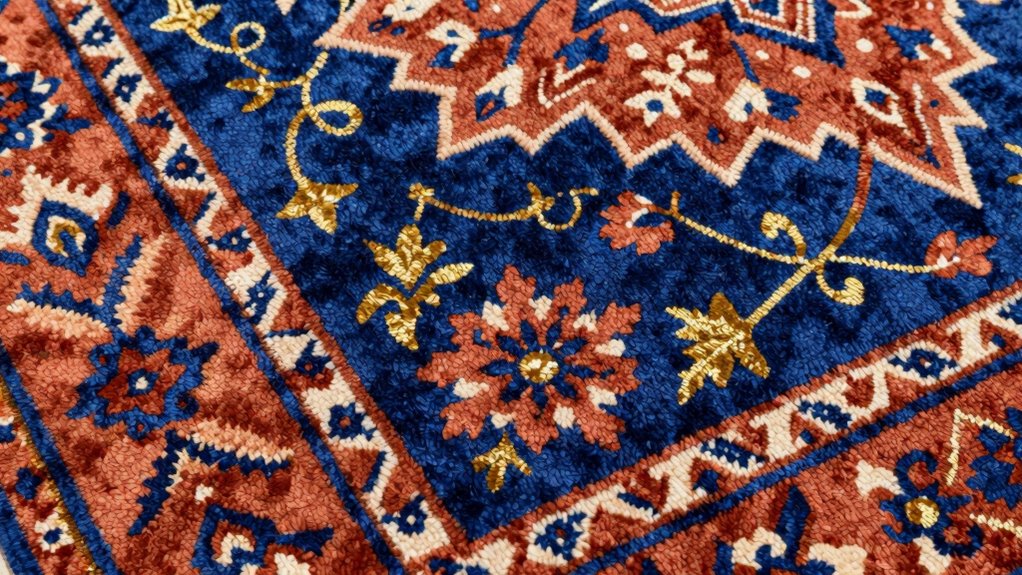
To create a balanced look, focus on combining colors strategically so they complement rather than clash. Vary textures thoughtfully by mixing smooth and textured surfaces without overcrowding your space. When you plan your rug, consider how these choices work together to add interest without overwhelming your room.
Balancing Colors Strategically
While bold colors and rich textures define maximalist rugs, balancing these elements is key to avoiding visual chaos. You can achieve this by employing techniques like color blocking, which groups similar hues to create visual harmony. Pattern layering adds complexity without overwhelming by carefully stacking designs to maintain clarity. To keep your rug balanced, consider these strategies:
- Use a limited color palette with strategic accents to anchor the design.
- Apply pattern layering thoughtfully, ensuring larger shapes don’t compete with intricate details.
- Incorporate neutral tones to provide resting points for the eye amid vibrant colors.
Additionally, understanding visual hierarchy helps in designing a cohesive and balanced look that guides the viewer’s eye naturally across the rug.
Varying Textures Thoughtfully
In maximalist rugs, incorporating a variety of textures and colors can create stunning depth without overwhelming the eye. Focus on texture variety to add visual interest and tactile layering, making the rug feel rich and inviting. Mix plush, shaggy, and flat-woven elements thoughtfully, ensuring each texture complements the overall design. Use contrasting textures to highlight specific areas or patterns, but do so sparingly to avoid clutter. Balance smooth and rough surfaces, combining natural fibers with more intricate details. This tactile layering invites touch and adds dimension without creating chaos. Remember, the goal is to enhance your space’s personality while maintaining harmony. Carefully selected textures can elevate your maximalist rug, making it a mesmerizing centerpiece that feels deliberate and balanced. Incorporating quality assessment principles ensures that each element contributes to a cohesive and enduring design.
Tips for Layering and Styling Maximalist Rugs in Different Rooms
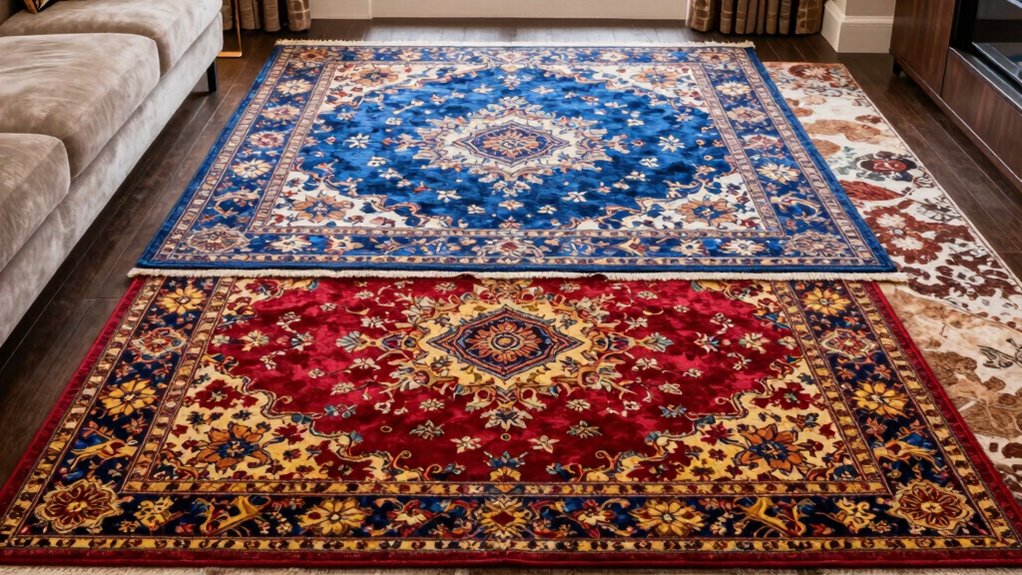
When layering maximalist rugs, you want to pay attention to pattern scales to avoid visual chaos. Balancing bold colors across different rugs helps create harmony rather than overwhelm the space. By carefully harmonizing pattern sizes and color schemes, you can achieve a cohesive, striking look in any room. Incorporating simple organizational strategies can further help manage the visual complexity of layered rugs.
Harmonizing Pattern Scales
Balancing pattern scales is key to successfully layering maximalist rugs without creating visual chaos. To achieve this, focus on pattern contrast and scale harmony. Mix large-scale rugs with smaller, more detailed patterns to prevent overwhelming the space. This contrast guides the eye and creates a cohesive look. Keep the scale of patterns in proportion to the room’s size and furniture to avoid visual clutter. Additionally, understanding media literacy can help you discern authentic design inspiration from fleeting trends, ensuring your space remains timeless. Use a dominant large pattern with smaller, subtle ones to anchor the space. Vary pattern sizes across different rugs to add depth without competing. Maintain consistent pattern style or color palette for unity while balancing scales.
Balancing Color Schemes
After establishing harmonious pattern scales, focusing on color schemes guarantees your layered rugs create a cohesive look rather than visual clutter. Achieve color harmony by selecting rugs that share a common palette or complementary shades, which helps unify different patterns without overwhelming the space. Consider balancing bold and neutral hues to maintain visual balance, ensuring no single rug dominates. Mix warm and cool tones thoughtfully to create depth while keeping the overall color scheme cohesive. Use accent colors from existing room decor to tie everything together seamlessly. Remember, restraint is key—avoid too many contrasting colors that can disrupt harmony. By carefully balancing color schemes, your layered rugs will enhance the room’s style without sacrificing harmony or creating chaos.
Common Pattern Mistakes and How to Avoid Them

One common mistake in choosing patterns for maximalist rugs is overwhelming the space with too many competing motifs. This pattern overload creates visual chaos rather than excitement. To avoid this, focus on selecting patterns that complement each other within your three-pattern limit. Be mindful of color clash, which can intensify the sense of disorder. Incorporate patterns with similar tones or subtle variations to maintain harmony. Also, consider the scale of each pattern; mixing large and small motifs carefully prevents visual confusion. Additionally, practicing visual balance ensures your rug remains lively yet cohesive, avoiding a cluttered appearance.
Decorating Styles That Work Well With the 3-Pattern Maximalist Approach
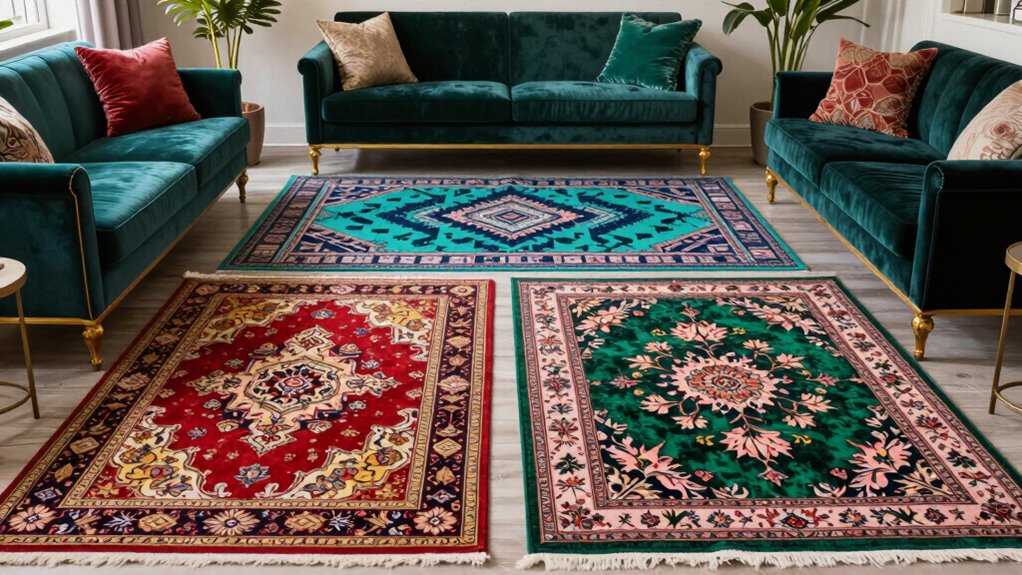
Certain decorating styles naturally complement the three-pattern maximalist approach, allowing you to create bold yet harmonious spaces. Styles like boho, eclectic, and modern maximalism thrive with pattern repetition, which helps tie different patterns together without overwhelming the eye. Focus on maintaining color harmony across your patterns; choose a cohesive palette to unify the look. These styles embrace mixing textures and patterns but stay within a controlled color scheme to prevent chaos. By limiting yourself to three patterns, you can use these styles to showcase your personality while keeping the space balanced. The key is selecting patterns that complement each other in style and color, creating a vibrant, lively environment that feels intentional rather than cluttered.
How to Transition Between Pattern Clusters for a Cohesive Look
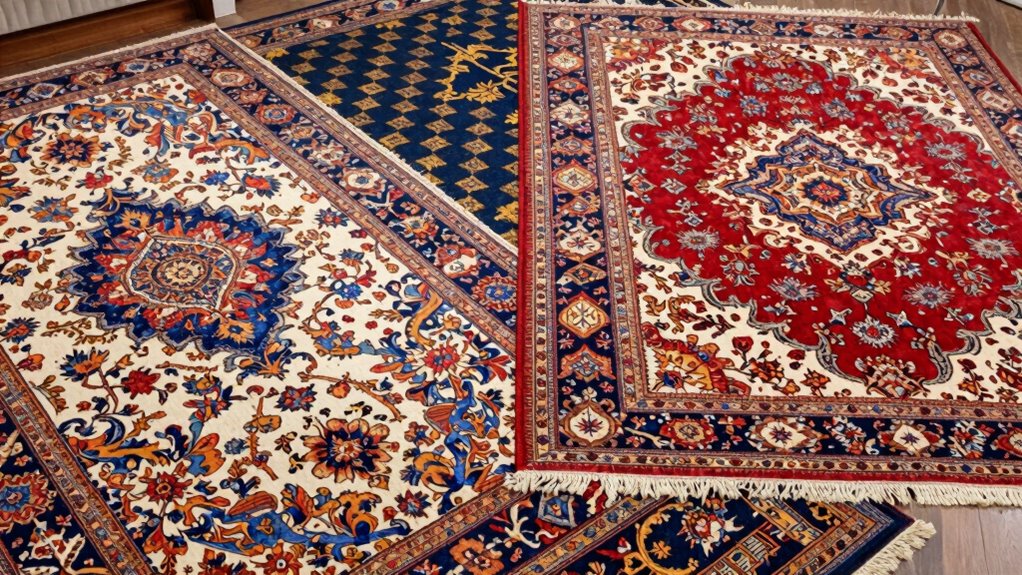
When moving between different pattern clusters in your space, the goal is to create a seamless flow that feels intentional rather than jarring. To achieve smooth pattern progressions, consider balancing scale and color to guide the eye naturally across clusters. Use subtle overlaps or shared hues to unify diverse patterns and strengthen visual flow. Incorporate transitional pieces like solid-colored textiles or neutral backgrounds to provide breathing space and anchor the design. Additionally, understanding the fundamentals of vehicle performance can help inform your approach to balancing elements so that transitions feel natural and cohesive rather than abrupt.
Creative Ideas to Maximize Impact Without Creating Chaos

To maximize impact without creating chaos, focus on strategic placement and thoughtful balance. Use pattern repetition to create harmony, ensuring each rug complements rather than competes. Repeating a specific pattern in different areas establishes a cohesive visual flow and reinforces your chosen theme. Maintain a clear visual hierarchy by varying pattern sizes and colors, guiding the eye naturally across the space. Limit your patterns to three or fewer to prevent overload, and consider pairing bold designs with simpler ones for contrast. Keep negative space in mind, giving your eye room to breathe. Additionally, understanding the importance of visual hierarchy can help you craft a dynamic, lively environment that’s visually stimulating yet organized, allowing your maximalist rugs to shine without overwhelming the room.
Frequently Asked Questions
Can I Combine More Than Three Patterns if I Vary Their Scale?
Yes, you can combine more than three patterns by using pattern variation and scale contrast. Varying the size and complexity of each pattern helps prevent visual chaos, even with additional patterns. Focus on balancing bold and subtle designs, and guarantee each pattern has a distinct scale. This approach creates a lively, layered look without overwhelming the space, allowing you to enjoy a rich, curated aesthetic while maintaining harmony.
What Are Some Common Color Schemes for Three-Pattern Maximalist Rugs?
Like a well-orchestrated symphony, your three-pattern maximalist rug benefits from balanced color schemes. You’ll find that monochromatic palettes create serene harmony, while complementary colors boost pattern contrast and energy. Analogous schemes offer cohesive visual flow, and bold, contrasting hues add vibrancy. By choosing a color scheme that aligns with your desired mood, you guarantee your rug remains engaging without feeling chaotic, even with three distinct patterns.
How Do I Clean and Maintain Intricate Three-Pattern Rugs?
To keep your intricate three-pattern rugs looking their best, vacuum regularly using gentle, suction-only techniques to avoid damaging the fibers. For stain removal, act quickly with a clean cloth and mild detergent or a specialized rug cleaner. Avoid harsh chemicals, and always test a small area first. Deep clean periodically with a professional service to preserve the vibrant patterns and intricate details, ensuring your rug stays stunning and well-maintained.
Are There Specific Room Types Best Suited for Three-Pattern Maximalist Rugs?
Think of three-pattern maximalist rugs as the spice rack of your decor—perfectly suited for lively, creative spaces. You’ll find these rugs work best in living rooms or eclectic bedrooms where pattern mixing adds personality. They bring energy without overwhelming, making them ideal for rooms that invite conversation and personality. Just guarantee the surrounding decor complements, so your space remains lively yet balanced, like a well-curated gallery.
How Do I Incorporate Three-Pattern Rugs Into a Minimalist Decor?
To incorporate three-pattern rugs into minimalist decor, focus on achieving visual balance through thoughtful pattern mixing. Keep the surrounding furniture and accessories simple and neutral to let the rug stand out without overwhelming the space. Use variations in pattern scale to create harmony, ensuring no pattern dominates. This approach helps you enjoy a layered, yet cohesive look that maintains the calm essence of minimalist decor while adding visual interest.
Conclusion
By limiting yourself to three carefully chosen patterns, you’re crafting a tapestry of harmony rather than a wild jungle. Think of your rug as a symphony—each pattern a distinct instrument, working together in perfect concert. When you master this balance, your space transforms into a vibrant masterpiece that feels lively yet controlled. Embrace the art of restraint, and let your maximalist rug be the bold heartbeat of your home’s style story.