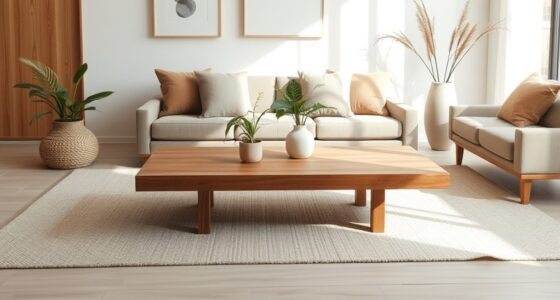

Indoor planters affect your light exposure by their size, color, and placement, which can block or let sunlight reach your plants. Larger pots need more frequent cleaning, while small ones are easier to maintain but may dry out faster. The material of your planters also influences moisture retention and cleaning efforts. Properly choosing and positioning your planters can boost your plant health and make upkeep simpler—stay with us to discover more ways to optimize your indoor garden.

Get furniture and decor delivered free with Prime
- Fast, free delivery on millions of items
- Prime Video, Amazon Music and more included
- Member-only deals all year
Key Takeaways
- Larger or darker planters block light, reducing sunlight for plants, while transparent or small planters enhance light exposure.
- Bigger planters require more frequent cleaning due to dust and debris buildup, impacting maintenance routines.
- Material choice influences moisture retention and cleaning needs, with porous materials like clay demanding more thorough upkeep.
- Proper drainage and regular cleaning prevent stagnant water, pests, and diseases, supporting healthier plants.
- Correct planter size, placement, and maintenance improve light access, reduce pests, and promote an attractive, manageable indoor garden.
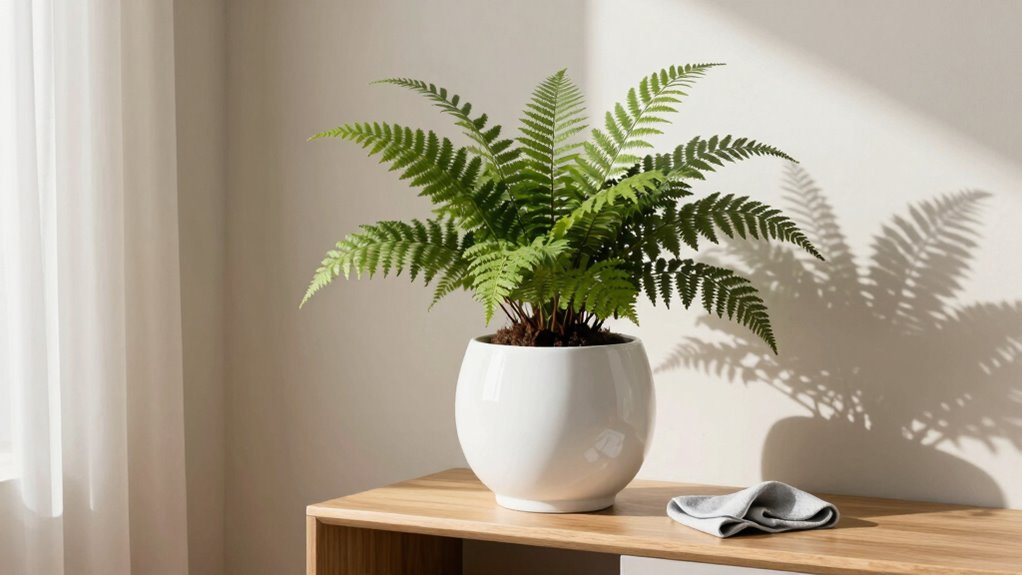
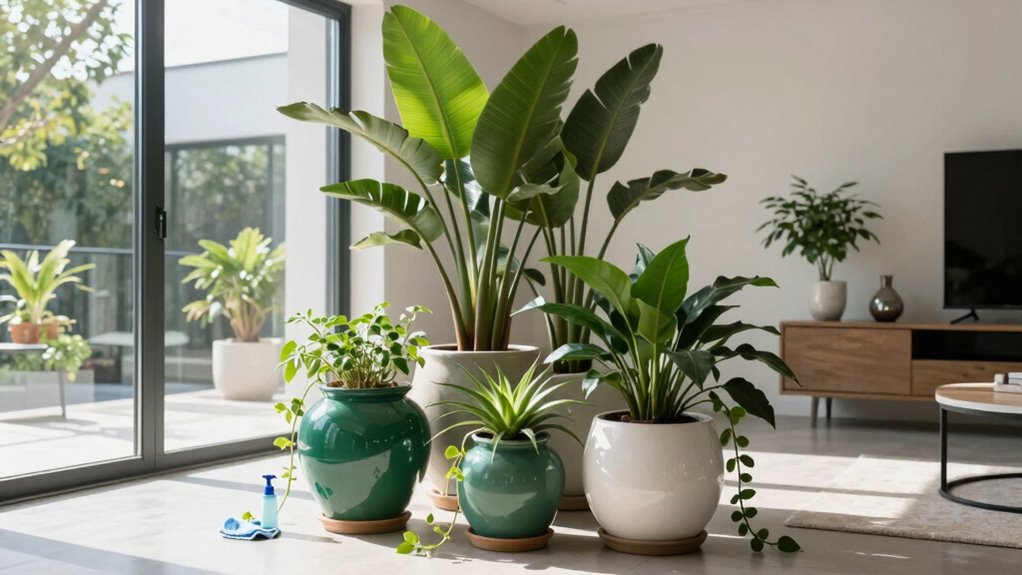
Indoor planters can transform your space, but to keep your plants healthy and vibrant, you need to take into account factors like light, scale, and cleaning. When selecting planters, the size and placement directly influence how much light your plants receive. Larger or darker-colored containers can block sunlight, reducing the amount of natural light that reaches the soil and leaves. Conversely, smaller or transparent planters may allow more light to penetrate, which is beneficial for light-loving plants. You’ll want to position your planters thoughtfully, making certain that each plant gets the right amount of light for its specific needs. This means adjusting the placement as seasons change or moving plants closer to or farther from windows as required.
Choose planters carefully to optimize light, placement, and plant health throughout the seasons.
The scale of your planters also impacts your cleaning routines. Bigger pots tend to gather more dust and debris, making cleaning more of a task. Regularly wiping down the exterior prevents dust buildup, which can hinder your plant’s ability to photosynthesize, especially if dust diminishes light absorption. Smaller planters, on the other hand, are easier to maintain, but they may require more frequent watering due to their limited soil volume. Balancing the size of your planters with the space available ensures you’re not overwhelmed with maintenance, and your plants get the necessary conditions to thrive. Additionally, selecting appropriate soil types can influence the overall health and ease of maintenance for your indoor garden.
Water requirements are closely tied to the size and material of your planters. Larger containers hold more soil, retaining moisture longer, which means you might need to water less frequently. Smaller pots dry out quickly, demanding more attentive watering schedules. The material of the planter—whether ceramic, plastic, or clay—also influences moisture retention and cleaning routines. For example, porous materials like clay may absorb moisture and dirt over time, requiring a thorough cleaning to prevent pests and diseases. Proper pest management becomes essential here; stagnant water or debris in dirty planters can attract pests, so regular cleaning and drainage checks are necessary. Clearing out old soil and wiping down the inside of containers can prevent mold and pest infestations, keeping your plants healthier and reducing the need for chemical treatments. Being aware of soil moisture levels can help you better tailor your watering habits and prevent over- or under-watering. Furthermore, choosing planter materials with durability and ease of cleaning in mind can save you time and effort in ongoing maintenance. Properly choosing soil types and biodiversity in your indoor garden can also promote more sustainable and pest-resistant plant choices.
In essence, how you choose and maintain your indoor planters impacts light exposure, cleaning routines, and overall plant health. By paying attention to their size, material, and placement, you can create a thriving indoor garden that’s both easy to care for and visually appealing. Regular maintenance and strategic positioning will help you enjoy vibrant, healthy plants while minimizing pest issues and guaranteeing they get the right amount of water and light.
As an affiliate, we earn on qualifying purchases.
Frequently Asked Questions
How Do Indoor Planters Influence Natural Light Distribution in a Room?
Indoor planters influence natural light distribution by diffusing light and enhancing shade. When you place planters near windows, they help scatter sunlight, creating a softer, more even light throughout the room. This light diffusion reduces harsh shadows and bright spots, while shade enhancement offers sheltered areas for plants that prefer lower light. Your arrangement can optimize light flow, making your space more comfortable and visually appealing.
Can Large Planters Damage Flooring or Furniture Over Time?
Large planters can damage your flooring or furniture over time because of their weight and the durability of your flooring. If the planter is too heavy or the floor isn’t sturdy enough, it might cause dents, cracks, or scratches, especially if moved frequently. To prevent damage, choose lightweight planters or add a protective pad underneath, and make certain your flooring can support the planter’s weight.
What Are the Best Cleaning Products for Different Planter Materials?
For plant care, choosing the right cleaning products depends on your planter’s material. Use gentle soap and water for ceramic and plastic planters, avoiding harsh chemicals that can damage surfaces. For metal planters, a mild detergent and a soft cloth work well, while stone or concrete planters may need a diluted vinegar solution. Incorporate these cleaning routines into your regular schedules to keep your planters looking fresh and prevent damage.
Do Indoor Planters Affect Indoor Humidity Levels Significantly?
Indoor planters can influence humidity levels, especially if your plants transpire a lot of moisture. As plants release water through transpiration, the humidity around them can increase, creating a more humid environment. This effect is more noticeable with larger plants or numerous planters grouped together. You might notice higher humidity levels, which can benefit some plants but may also encourage mold or pests if not managed properly.
How Often Should I Rotate Plants for Even Light Exposure?
You should rotate your plants every couple of weeks to maintain light balance and guarantee even growth. Regular plant rotation prevents one side from getting too much light while the other stays shaded. By doing this, you help your plants develop uniformly, stay healthy, and avoid leaning toward the light source. Keep an eye on your plants’ growth patterns, and adjust the rotation frequency as needed for ideal light exposure.
Conclusion
As you incorporate indoor planters, imagine them as vibrant anchors that transform your space. Their presence shapes how light dances around your room, casting shifting shadows that breathe life into every corner. Their scale can make your space feel cozy or expansive, depending on your choices. And while they require some routine care, the beauty they bring makes cleaning feel like a small price to pay. Ultimately, planters turn your home into a lush, inviting oasis that reflects your unique style.
Halloween Picks
halloween
As an affiliate, we earn on qualifying purchases.