
TL;DR

Get furniture and decor delivered free with Prime
- Fast, free delivery on millions of items
- Prime Video, Amazon Music and more included
- Member-only deals all year
Hunker describes a DIY wreath made by layering painted pistachio shells into flower shapes and attaching them to a wreath base. The project reuses shells and allows seasonal color changes, but the report does not provide tested durability data or a full cost estimate.
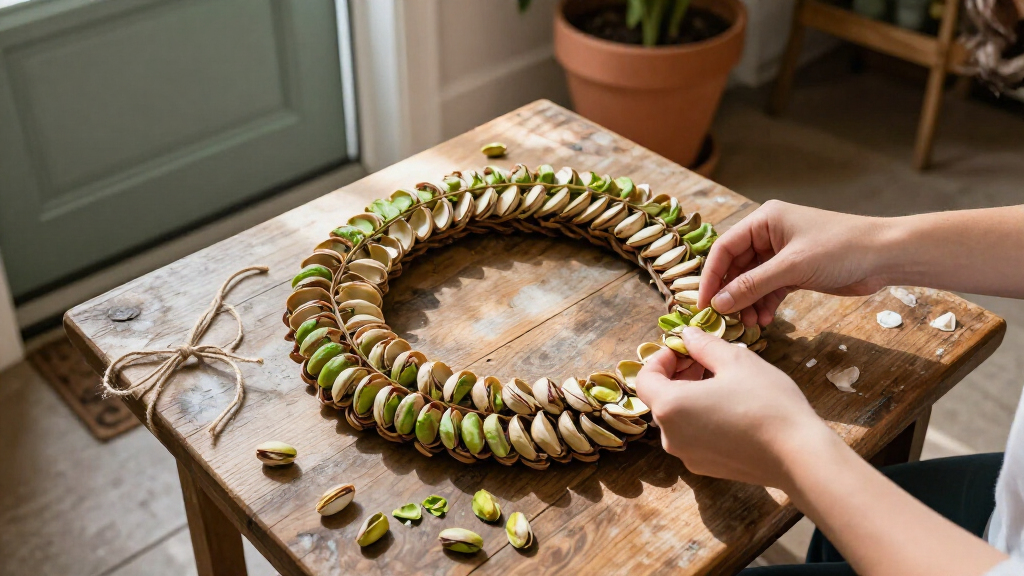
Hunker has published instructions for making a front-door wreath from pistachio shells, turning the discarded shells into layered, painted flowers attached to a homemade or reused wreath base. The project offers a way to customize a seasonal decoration with materials that may already be on hand, though the report does not establish how long the finished wreath will last outdoors.
The design starts with a wreath form made from a cut cardboard ring, a pool noodle bent into a circle and secured with duct tape, or an existing wreath that needs a new covering. The article suggests using a 24-inch-diameter form for a standard 36-inch-wide door. Twine or decorative ribbon can cover a cardboard or pool-noodle base.
Before assembly, the shells should be rinsed in hot water to remove residue and dried on a baking sheet. They can then be painted on both sides, either one color at a time or in several shades. To create a flower, the instructions call for gluing three or four shells upright near the center of a small cardboard backing, then adding overlapping layers outward with glue along each shell’s lower edge.
Once enough flowers have been made for the intended design, they are glued onto the wreath form. The guide lists a glue gun, super glue or B7000 as possible adhesives, along with a craft knife, paint, and twine or ribbon. It recommends attaching a ribbon for hanging and placing the wreath about 14 inches below the top of the door. The time required will depend on the number of shells and flowers; the source cautions that the project involves detailed, repetitive work.
A Reusable Alternative to Fresh Blooms
The idea appeals to people looking for a customizable door decoration without buying fresh flowers or a mass-produced wreath. It also makes use of a kitchen byproduct: shells that might otherwise be discarded. A household that already has the shells and a suitable base may keep material costs down, but the source provides no price comparison or total project budget.
Color is the main way to adapt the design. The report suggests painting flowers in different shades for spring or fall and changing the hanging ribbon to suit the occasion. It describes the shells as more resistant to wilting than fresh flowers, but that is not the same as a tested claim about weatherproofing. Paint, glue, and the base may respond differently to sun, moisture, and temperature, so outdoor performance will depend on materials and conditions.
Products Worth Considering

Hisense 65-inch U6 Pro Mini-LED 4K UHD Smart Fire TV

TCL 65 Inch QM8L Series SQD-Mini LED QLED 4K Smart Google TV

TCL 65-Inch QM6K QLED Mini-LED 4K HDR Smart Google TV, 144Hz
As an affiliate, we earn on qualifying purchases.
How the Shell Flowers Take Shape
Hunker presents the project as a small-scale home craft rather than a commercially tested product. Its central technique is to overlap individual shells around a center point until they resemble flower petals. Small cardboard circles provide backing for each flower, helping keep the shells together before they are attached to the larger wreath.
The choice of base affects the preparation. A cardboard ring can be cut from a reused shipping or shoe box, while a pool noodle can be formed into a circle and covered with twine or ribbon. The article also suggests reusing an old wreath. Its 24-inch example is offered for a 36-inch-wide door, not as a required size for every entrance or wreath design.
““you’ll have to sweat the small details for this DIY.””
— Hunker’s report
Outdoor Wear Has Not Been Tested
The source does not report weather testing, a finished-wreath lifespan, or maintenance requirements. Its suggestion that the shell flowers will hold up season after season is the article’s claim, not a documented test result. It also gives no measured estimate for the amount of time, number of shells, or adhesive needed, and no complete cost breakdown.
Results may vary with shell size, paint type, adhesive, and the wreath base. The guide does not specify whether the finished decoration should be brought indoors during rain or extreme temperatures, or whether a protective coating is suitable. Those questions remain open for anyone planning to leave the wreath exposed to the elements.
Choose Materials and Test Placement
The next step for readers who want to try the project is to select a base and paint colors, clean and dry the shells, and assemble a sample flower before making enough for the full wreath. A small test can show whether the chosen adhesive holds the shells and whether the paint gives the desired finish. The source does not provide a tested materials combination or a schedule for completing the project.
Before hanging the wreath outside, makers can check that the flowers are firmly attached and decide whether the finished piece needs shelter from rain or direct sun. Hunker’s guide gives a suggested hanging position but does not announce any follow-up testing or additional findings.
Key Questions
What materials does the pistachio shell wreath require?
The guide lists pistachio shells, a wreath base, adhesive, paint, and twine or ribbon. A craft knife is useful for shaping a cardboard base. The base can be made from cardboard, a pool noodle, or an old wreath.
How are the shells made into flowers?
Glue three or four shells upright near the center of a small cardboard circle, then add overlapping shells outward. Hunker recommends putting glue along the lower edge of each shell as the flower grows.
Will the wreath last outdoors season after season?
Hunker says the shell blooms can hold up season after season, unlike fresh flowers that may wilt. However, the report does not provide weather tests or a verified lifespan, so outdoor durability is not established.
How large should the wreath be?
The article suggests a 24-inch-diameter wreath for a standard 36-inch-wide door. That is a reference point; readers can adjust the size to fit their door and preferred design.
How can the design be changed for different seasons?
Paint the shells in different colors or shades, and swap the twine or hanging ribbon. The source suggests using color choices to adapt the flowers for spring, fall, or other occasions.
Source: hunker.com