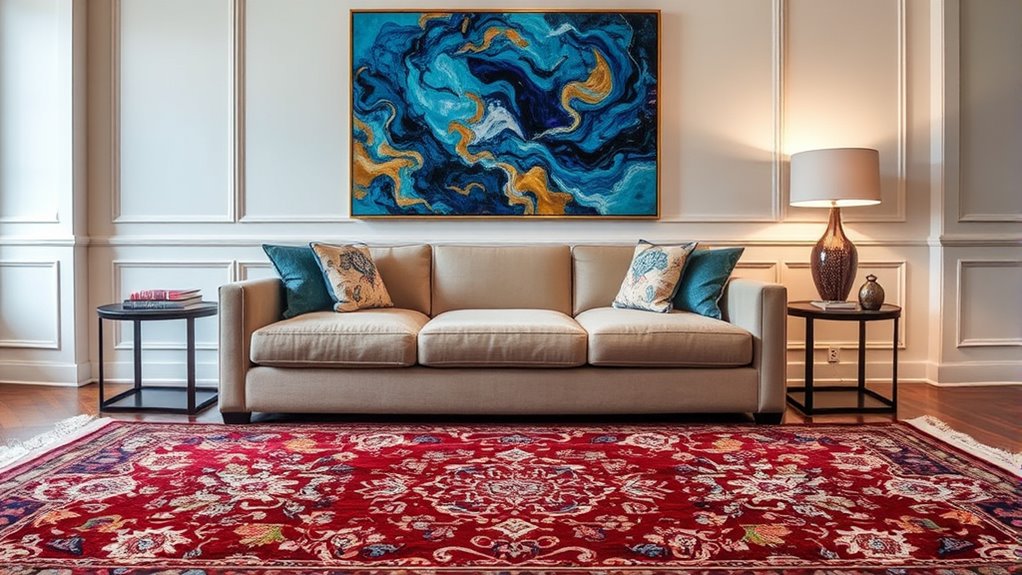

To create a cohesive visual story with art and rugs, focus on balancing textures and colors that complement your space’s style. Choose materials that evoke various sensations—soft, smooth, or rough—to add depth, and coordinate hues to unify the overall look. Mixing contrast and harmony in textures and colors helps your space feel inviting and intentional. Keep exploring different combinations, and you’ll discover how to craft a beautiful, cohesive environment that truly reflects your style.
Key Takeaways
- Select a dominant color palette from walls, furniture, or accents to guide harmonious art and rug choices.
- Combine textures that contrast or complement, such as plush rugs with sleek art, to add visual interest.
- Ensure that art and rugs share similar hues or tones for a unified, cohesive look.
- Use material textures to create tactile harmony, balancing rough, smooth, soft, or hard sensations.
- Achieve visual flow by aligning colors and textures thoughtfully, avoiding clashes for a balanced space.
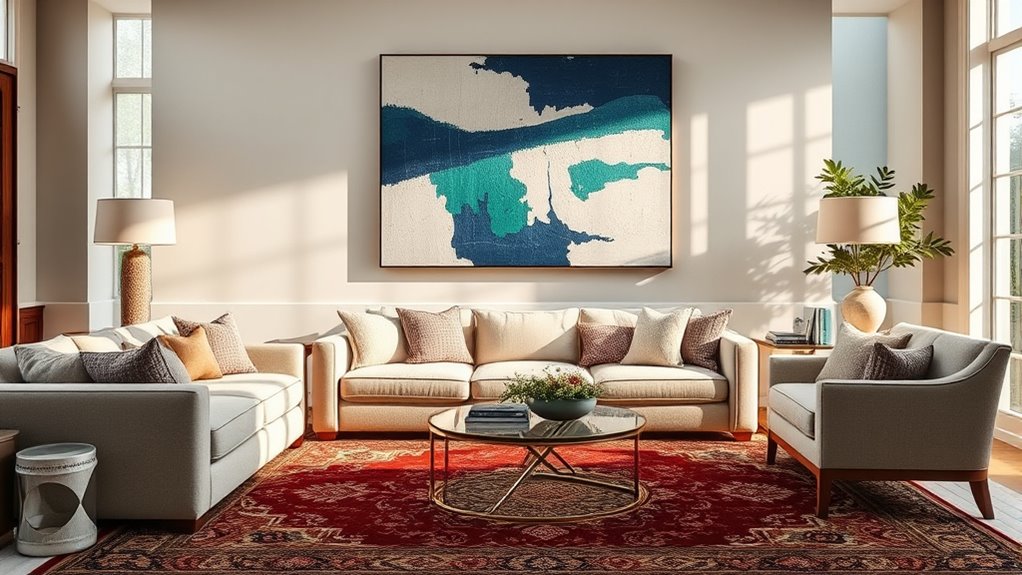
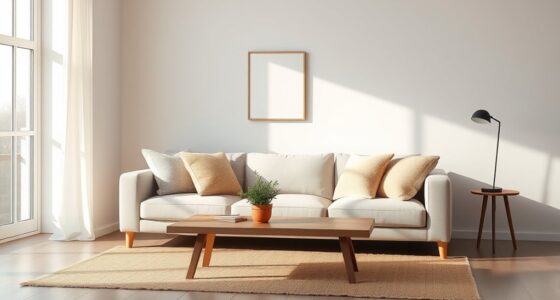
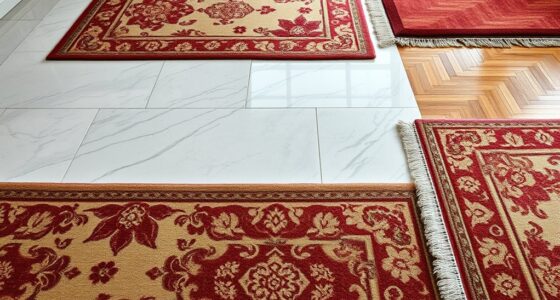
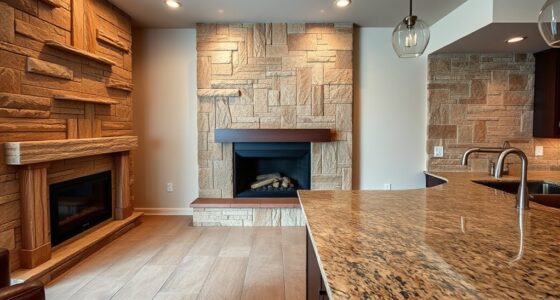
Selecting the right art and rugs can transform a room from ordinary to extraordinary, but it’s essential to choose pieces that reflect your personal style while complementing your space. When you’re selecting these elements, pay close attention to material textures and how they work together. The textures of your art frames, rugs, and even the furniture should create a tactile harmony that invites people in. For example, pairing a plush, shaggy rug with sleek, glossy artwork can add visual interest and depth. Conversely, a flat-woven rug paired with textured, layered art can produce a more subdued, sophisticated vibe. Feel the materials—rough, smooth, soft, or hard—and think about how these textures will interact within your room. When textures are thoughtfully combined, they create a balanced feel that makes the space more inviting and cohesive. Incorporating **material textures** intentionally can elevate your interior design and enhance the overall ambiance. Color harmony is another critical aspect. You want your art and rugs to work together seamlessly, creating a unified look rather than competing for attention. Start by choosing a dominant color palette for your room. This could be based on your wall color, furniture, or even a favorite accent hue. From there, select art and rugs that either complement or accentuate these colors. If your room has warm tones like amber, rust, or gold, look for artwork and rugs that incorporate similar hues or subtle variations. If you prefer cooler shades like blues and greens, choose pieces that echo these colors to reinforce a sense of tranquility. The goal is to create a visual flow, where your art and rugs support each other without clashing or overwhelming the space. Don’t forget that material textures and color harmony should work hand in hand. For example, if your room features a lot of matte finishes, adding a glossy or shiny piece of art can create a striking contrast that energizes the space. Conversely, if your room has a lot of reflective surfaces, opting for art and rugs with soft, matte textures can help ground the look. When your textures and colors are aligned, your room feels naturally cohesive, and your art and rugs become an integral part of the overall design story.
Frequently Asked Questions
How Do I Mix Different Art Styles Effectively?
You can mix different art styles effectively by focusing on art style harmony and using contrast techniques. Start with a unifying color palette to tie diverse pieces together. Incorporate contrast techniques like varying textures or scale to create visual interest. Balance bold, eclectic styles with more subtle ones, ensuring each piece complements the others. This approach helps your space feel dynamic yet cohesive, making your art collection truly stand out.
What Are the Best Rug Materials for High-Traffic Areas?
Ever wondered how to keep your space stylish and resilient? For high-traffic areas, you should choose durable rug materials like wool or nylon, which stand up well to wear and tear. Consider durability considerations and maintenance tips—opt for stain-resistant fibers and easy-to-clean textures. These materials help your rug stay beautiful longer, even with daily foot traffic, ensuring your space remains inviting and functional without constant upkeep.
How Can I Incorporate Personal Artifacts Into My Decor?
You can incorporate personal mementos and family heirlooms into your decor by displaying them prominently on shelves or wall niches. Use frames or shadow boxes to highlight their significance, and pair them with complementary art or rugs that reflect your style. Mix modern pieces with vintage items to create a meaningful, cohesive look. This approach makes your space uniquely yours, telling your personal story through curated, cherished artifacts.
What Lighting Enhances Artwork Without Causing Damage?
Think of gallery illumination as a gentle breeze for your artwork; it enhances without overwhelming. Use LED lights with adjustable brightness to highlight pieces, and opt for UV protection filters to prevent damage. Position lights at a 30-degree angle to avoid glare, and choose warm or neutral tones to bring out colors naturally. This way, your art stays vibrant and safe, creating a mesmerizing display without risking harm.
How Do I Balance Bold Art With Subtle Rugs?
You balance bold art with subtle rugs by focusing on color coordination and scale balancing. Opt for a rug in a neutral tone or subtle pattern that complements your artwork’s colors, ensuring it doesn’t compete for attention. Choose a rug with a scale that grounds the space without overwhelming the art. This harmony allows your bold pieces to stand out while the rug provides a cohesive, understated foundation.
Conclusion
By carefully selecting art and rugs that reflect your personality, you turn your space into a masterpiece that leaves visitors breathless. When you create a harmonious story through thoughtful choices, your home becomes more than just a place—it’s an awe-inspiring sanctuary. Trust your instincts, embrace bold decisions, and watch as your space transforms into a stunning visual symphony. Remember, your home is your canvas—make it a masterpiece everyone will admire for generations to come.