Choosing eco-friendly materials for your lifestyle helps reduce waste and supports a healthier planet. Opt for natural fibers like organic cotton, hemp, or bamboo, which are biodegradable and made sustainably. When shopping, look for biodegradable packaging to dispose of waste responsibly. Small changes, like using plant-based products and minimizing plastic, can make a big difference for your well-being and the environment. Keep exploring to discover more ways to embrace sustainable wellness and live greener.
Key Takeaways
- Using biodegradable packaging and eco-friendly materials reduces waste and pollution, supporting a healthier environment.
- Natural fiber fabrics like organic cotton, hemp, and bamboo promote sustainable fashion and decrease reliance on synthetic fibers.
- Choosing products with sustainable sourcing and low-impact production minimizes environmental harm and ensures healthier living environments.
- Incorporating eco-conscious practices, such as reducing plastic use and supporting eco-friendly brands, fosters overall well-being.
- Small daily choices, like opting for natural materials and responsible waste disposal, collectively contribute to sustainable wellness.
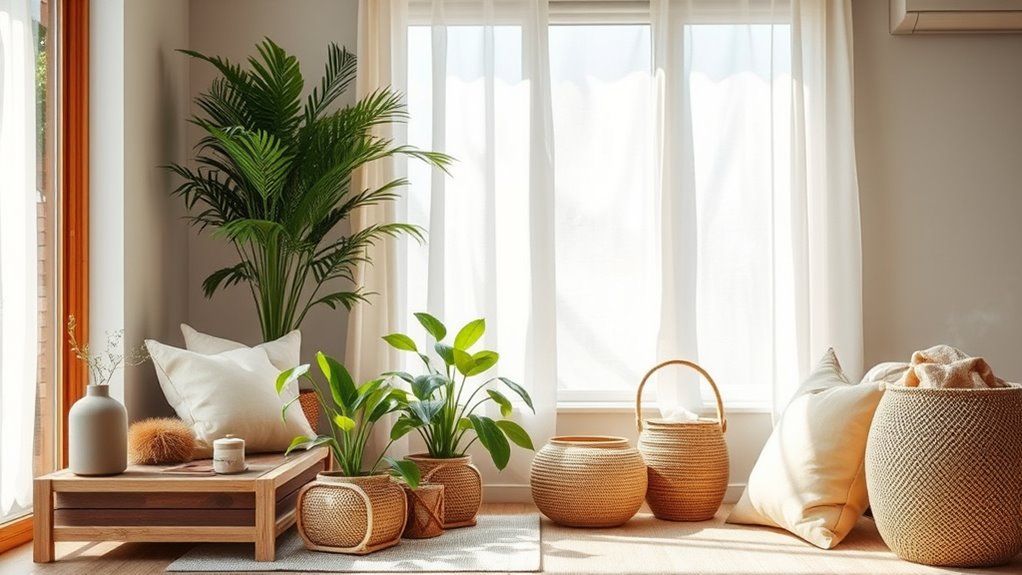
Have you ever wondered how your choices can impact the environment? Every decision you make, from what you buy to how you dispose of items, influences the health of our planet. One way to live more sustainably is by choosing eco-friendly materials that reduce waste and pollution. For example, opting for biodegradable packaging means you’re supporting products that break down naturally without leaving harmful residues. This type of packaging helps cut down on plastic waste that often ends up in oceans and landfills, harming wildlife and ecosystems. When you choose items packaged with biodegradable materials, you’re actively reducing your carbon footprint and promoting a cleaner environment.
Another powerful choice is to incorporate natural fiber fabrics into your wardrobe and household items. These fabrics, made from materials like cotton, hemp, linen, or bamboo, are renewable and biodegradable, unlike synthetic fibers that persist in the environment for decades. Natural fiber fabrics not only minimize pollution during production but also decompose much faster after disposal, lessening the burden on landfills. By selecting clothing and home textiles made from natural fibers, you’re supporting sustainable agriculture and reducing reliance on petroleum-based products. This shift encourages manufacturers to adopt eco-friendly practices and invest in environmentally conscious sourcing.
Living sustainably also means becoming more mindful of your consumption habits. When shopping, look for products that emphasize eco-friendly materials and packaging. Many brands now offer biodegradable packaging options, which you can easily identify by labels or product descriptions. These packaging materials often use plant-based derivatives or compostable substances, making it easier for you to dispose of waste responsibly. Incorporating such choices into your daily routine can greatly lessen the amount of non-biodegradable waste accumulating in landfills and waterways.
Additionally, embracing natural fiber fabrics can inspire you to build a more eco-conscious wardrobe. Swap out synthetic clothing for items made from organic cotton or hemp, which are cultivated without harmful chemicals and pesticides. These fabrics tend to last longer and feel more comfortable against your skin. furthermore, many natural fibers are produced using traditional, low-impact methods that conserve water and energy. By choosing these materials, you’re supporting sustainable farming practices and reducing your environmental impact.
Furthermore, selecting products with environmentally friendly water filtration systems can help ensure that your household water is clean and safe while reducing the need for single-use plastic bottles, further supporting your eco-friendly lifestyle. Ultimately, every small step counts. Switching to biodegradable packaging and natural fiber fabrics isn’t just about making eco-friendly choices—it’s about fostering a healthier, more sustainable lifestyle. Your decisions can influence others and contribute to a collective effort to protect our planet. So, next time you shop or dispose of waste, think about how your choices align with your commitment to wellness and environmental stewardship. By making conscious decisions today, you pave the way for a healthier tomorrow.
Frequently Asked Questions
How Do Eco-Friendly Materials Impact Indoor Air Quality?
Eco-friendly materials positively impact your indoor air quality by reducing airborne toxins that can cause health issues. These materials often emit fewer VOCs, making the air safer to breathe. Additionally, they enhance ventilation improvement, helping remove stale air and pollutants. By choosing eco-friendly options, you create a healthier living environment, minimizing respiratory problems and promoting overall wellness. You’ll enjoy cleaner, fresher indoor air that supports your well-being every day.
Are Sustainable Materials Cost-Effective Compared to Traditional Options?
Sustainable materials can be more cost-effective in the long run, with studies showing that eco-friendly options often save up to 30% on maintenance and energy bills. While the initial cost may be higher, your budget considerations should include durability and reduced health risks. Cost comparison reveals that investing in sustainable materials pays off over time, making them a smart choice for both your wallet and the environment.
Can Eco-Friendly Products Be Just as Durable and Long-Lasting?
Yes, eco-friendly products can be just as durable and long-lasting. Durability concerns often come from misconceptions, but many eco materials now have impressive material longevity. You’ll find that sustainably sourced options like bamboo, recycled metals, and organic textiles are designed to withstand daily wear and tear. With proper care, these products maintain their strength over time, proving that eco-friendly choices don’t mean sacrificing durability or quality.
What Certifications Should I Look for in Eco-Friendly Wellness Products?
You might find that certifications like Organic Certifications and Fair Trade Labels are key indicators of eco-friendly wellness products. They guarantee the products meet strict environmental and ethical standards, giving you peace of mind. When shopping, look for these labels to verify your choices support sustainable farming and fair labor practices. Trusting these certifications helps you promote health for yourself and the planet, making each purchase more meaningful and responsible.
How Do Eco-Materials Contribute to Overall Mental Well-Being?
Eco-materials boost your mental well-being by creating a calming environment that enhances mindfulness practices. When you surround yourself with natural, eco-friendly materials, you foster a stronger connection to nature, reducing stress and anxiety. These materials often promote better air quality, contributing to a sense of physical and mental health. By choosing eco-friendly options, you support a sustainable lifestyle that nurtures your mind and strengthens your bond with the environment.
Conclusion
By choosing eco-friendly materials, you’re not just improving your health but also supporting a sustainable future. Many believe that living sustainably is too costly or complicated, but studies show it’s often more affordable and easier than you think. When you opt for eco-friendly options, you help reduce pollution and conserve resources. So, trust that small changes in your everyday choices can make a big difference—proving that healthy living and eco-consciousness truly go hand in hand.