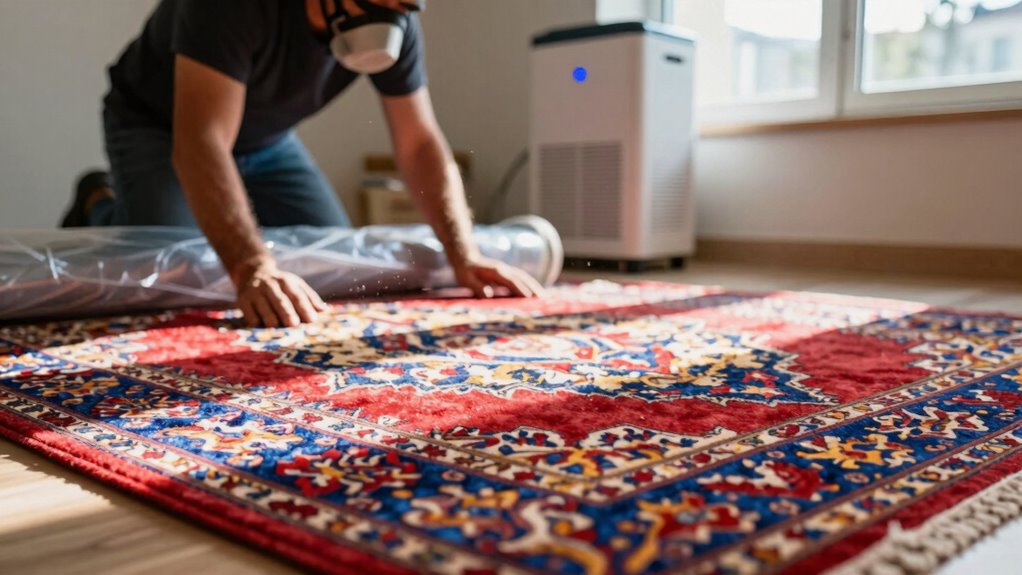

To protect your rugs and air quality during renovations, cover your rugs tightly with plastic sheeting or protective covers and secure them with tape or weights. Seal doors and vents with draft stoppers or weatherstripping to keep dust from spreading. Use high-quality HEPA filters and air purifiers, and ventilate your space when possible. Regularly clean with a HEPA vacuum. Keep pollutants out and your home fresh—more tips will help you stay ahead of dust challenges.
Open a free Amazon Business account
Business pricing, bulk buying and tax-exempt orders.
As an affiliate, we earn on qualifying purchases.
Key Takeaways
- Cover rugs with heavy-duty plastic sheeting or protective covers, securing edges tightly to prevent dust infiltration.
- Seal doors, vents, and gaps with draft stoppers or weatherstripping to contain dust within renovation zones.
- Use HEPA-filter air purifiers and ensure proper ventilation to reduce airborne dust and improve air quality.
- Regularly vacuum with HEPA filters and wipe surfaces to remove settled dust and allergens effectively.
- Limit foot traffic, encourage workers to wear masks, and create dust barriers to minimize dust spread and protect indoor environments.
HEPA air purifier for dust removal
As an affiliate, we earn on qualifying purchases.
As an affiliate, we earn on qualifying purchases.
Why Renovation Dust Is a Hidden Threat to Your Rugs and Air Quality
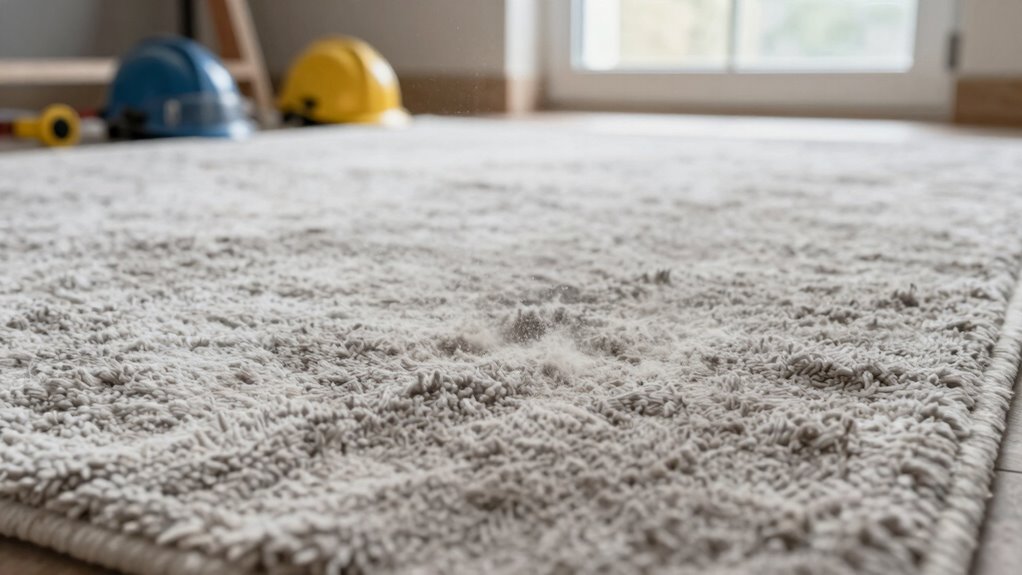
Renovation dust often goes unnoticed until it causes visible damage or health issues. This fine particulate matter contains airborne contaminants that easily infiltrate your home’s air system and settle into rugs and surfaces. Dust infiltration is a silent threat, spreading beyond the worksite and contaminating your living space. When you breathe, these airborne contaminants can trigger allergies, asthma, and other respiratory problems. Rugs act as filters, trapping dust particles but also becoming reservoirs for harmful debris. Without proper cleaning, this dust remains embedded, continually releasing into the air. Recognizing how renovation dust infiltrates your environment is essential to safeguarding your air quality and protecting your rugs from lasting damage. Staying vigilant helps you minimize exposure and maintain a healthier home. Additionally, using essential oils for respiratory health, such as eucalyptus and peppermint, can help support your respiratory system during and after renovations.
How Dust Settles Into Rugs and Why It’s Hard to Remove
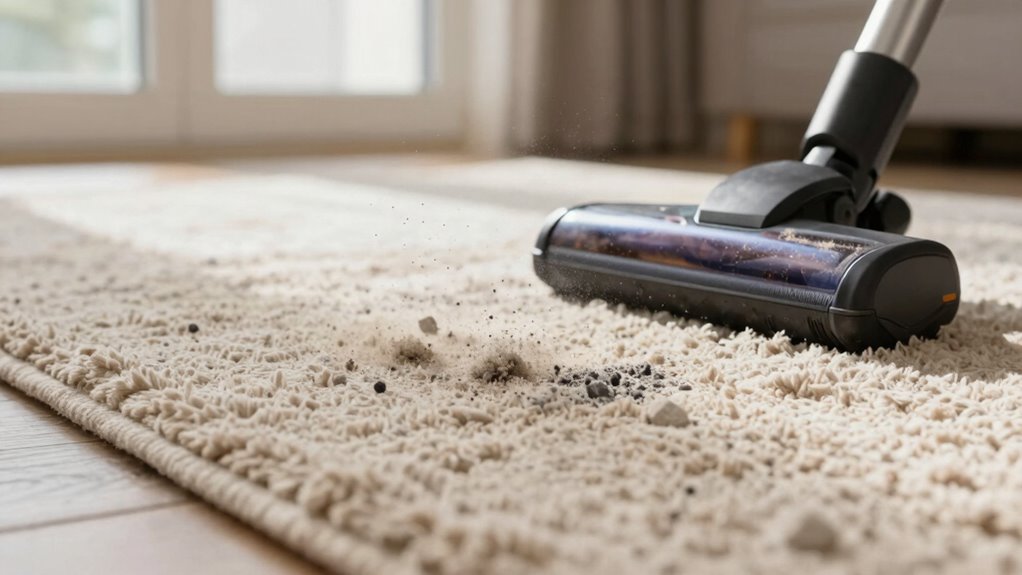
Dust particles easily sink deep into your rugs, making them harder to reach with regular cleaning. Over time, these embedded particles become stubborn, resisting vacuuming and surface treatments. That’s why thorough removal requires more effort than you might expect. Utilizing a high-quality vacuum with strong suction power and specialized pet hair attachments can significantly improve dust removal effectiveness.
Deep Dust Penetration
Have you ever wondered why dust seems to hide so deeply in rugs, making it so difficult to remove? Deep dust penetration occurs because dust particles settle far below the surface fibers, embedding into the dense layers of the rug’s foundation. This makes simple vacuuming ineffective. Dust can bypass surface filters, especially if dust barriers aren’t in place, allowing particles to settle deep inside. Proper air filtration systems help trap airborne dust before it settles, but without barriers, dust continues to infiltrate. Here’s a quick overview:
| Dust Behavior | Key Factors | Solutions |
|---|---|---|
| Settling deep | Dense rug fibers | Use high-efficiency filters |
| Penetration | Airflow and movement | Install dust barriers |
| Persistence | Embedded particles | Regular professional cleaning |
Understanding this helps you better protect your rugs and air quality during renovations. For effective dust control, consider integrating air filtration systems that target fine particles at source.
Embedded Particles Persist
When dust particles penetrate deep into rug fibers, they often become embedded within the dense layers of the material, making them difficult to remove. This dust infiltration traps airborne allergens, which can trigger allergies or respiratory issues long after the dust settles. Because these particles settle into the rug’s core, standard vacuuming often isn’t enough to fully eliminate them. Instead, dust and allergens become lodged in the fibers, resisting removal even with regular cleaning. This persistence means that renovation dust can linger, continuously releasing airborne allergens into your indoor air. To effectively reduce embedded particles, you need high-powered vacuums with HEPA filters, deep cleaning methods, or professional extraction. Without these measures, dust infiltration remains a persistent problem, compromising air quality and rug cleanliness. Incorporating proper ventilation considerations can help reduce the accumulation of airborne particles and improve overall indoor air quality.
How to Cover Your Rugs to Protect Them During Renovations
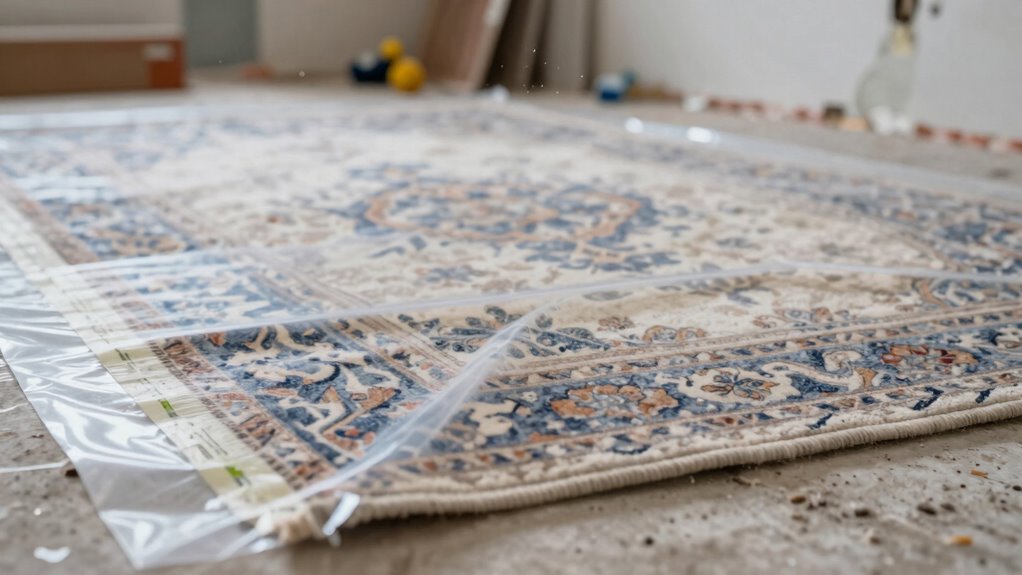
During renovations, your rugs are vulnerable to dirt, debris, and damage, making it essential to cover them effectively. Start by choosing appropriate covering materials such as heavy-duty tarps, plastic sheeting, or specialized protective covers designed for construction sites. These covers create a barrier that keeps dust, paint splatters, and debris off your rugs. Secure the protective covers tightly around the edges to prevent any gaps where dust can seep through. Tape or use weights to hold the covers in place, ensuring they won’t slip or shift during work. Remember, the goal is to keep your rugs clean and protected throughout the renovation process, so choose durable, easy-to-remove covers that won’t damage your flooring when taken off later. Incorporating connected home technology can also help monitor air quality and ensure proper ventilation during the renovation.
How to Seal Doors and Vents to Keep Dust Out of Your Home
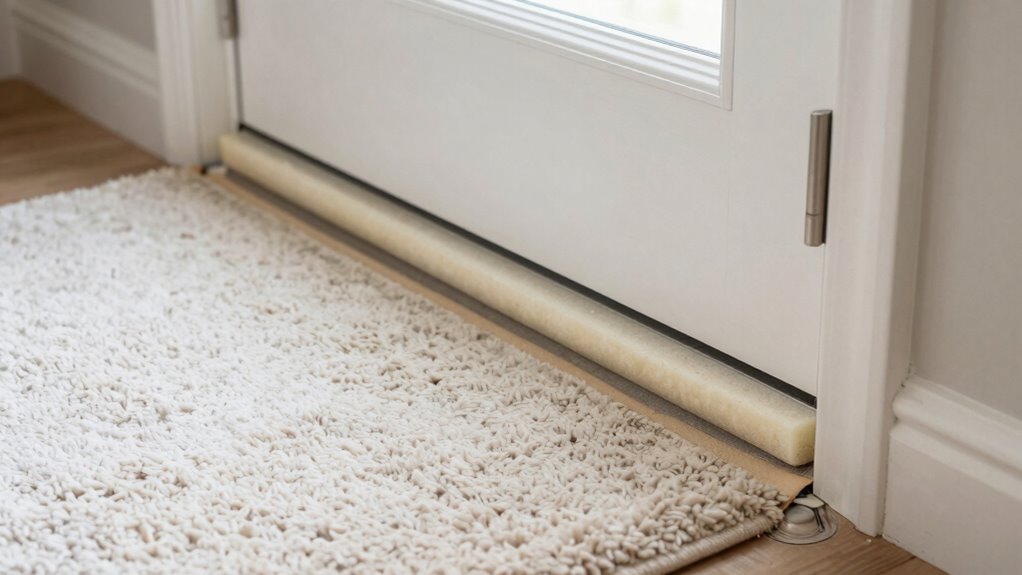
Sealing doors and vents is essential for preventing dust from infiltrating your home during renovations. Start with door sealing by using draft stoppers or weatherstripping along the edges of doors to block gaps. For vents, apply vent covering or sealant to close off heating and cooling vents, preventing dust from spreading through your HVAC system. Ascertain all gaps around door frames are tightly sealed, and consider using plastic sheeting or temporary door covers for added protection. When installing vent coverings, choose removable options for easy cleaning or access later. These steps create a barrier that keeps dust confined to the renovation area, protecting your indoor air quality and reducing cleanup time once work is complete. Proper door sealing and vent covering are simple yet effective dust control measures. Additionally, utilizing natural pools can help reduce chemical emissions and improve overall air quality in your outdoor living space.
Best Techniques for Vacuuming and Cleaning Rugs After Renovation
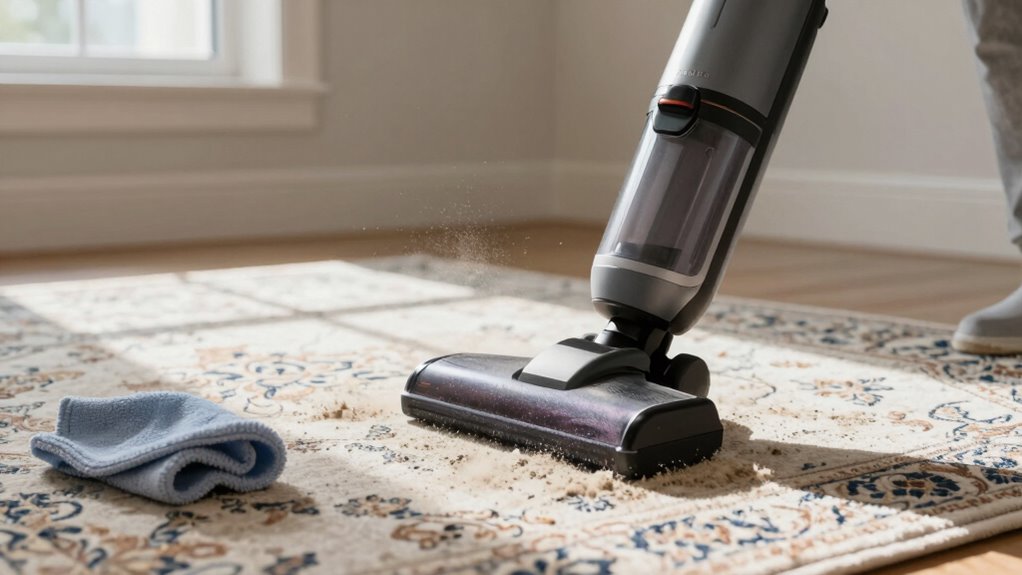
After sealing doors and vents to keep dust out, it’s time to focus on thoroughly cleaning your rugs. Start with a high-quality vacuum, ensuring proper vacuum maintenance for peak suction. Adjust your vacuum settings based on your rug material—delicate fibers need gentle care, while sturdy rugs can handle deeper cleaning. Use slow, deliberate passes to lift embedded dust and dirt. For best results, vacuum both sides of the rug if possible. Regular vacuuming prevents dust buildup and improves indoor air quality. Additionally, understanding luggage & bags features can help you transport cleaning tools more efficiently. Here’s a quick guide:
| Rug Material | Recommended Vacuum Technique |
|---|---|
| Wool | Gentle, low suction |
| Synthetic | High suction, multiple passes |
| Natural fibers | Slow, careful vacuuming |
| Delicate fibers | Light, brief passes |
| Thick pile | Overlapping, slow passes |
Proper vacuum maintenance and understanding of rug material are key to effective cleaning.
Using Air Purifiers and Ventilation to Improve Indoor Air During Renovation
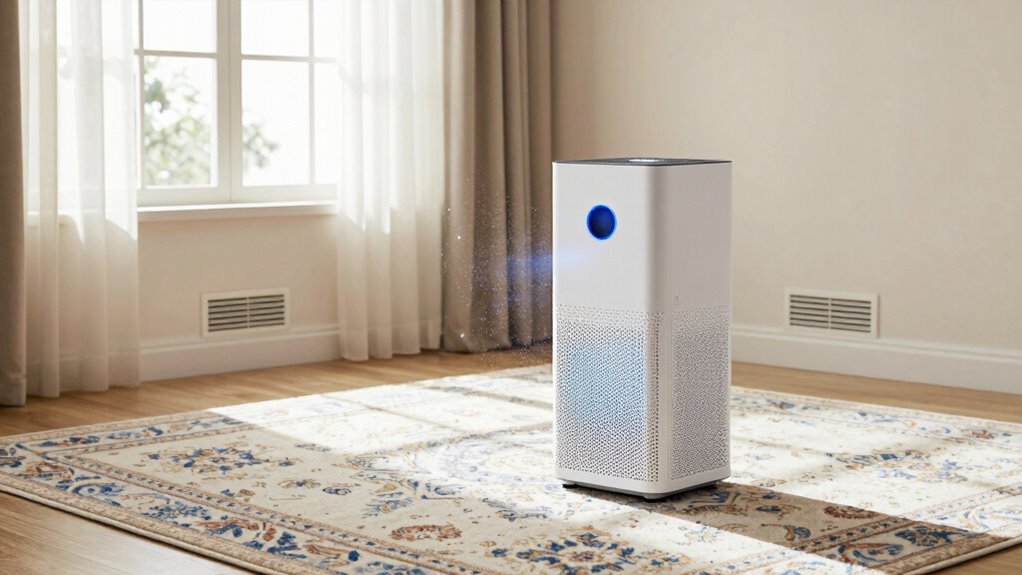
To effectively reduce indoor air pollution during renovation, using air purifiers and ensuring proper ventilation are essential steps. Place your air purifier in high-traffic areas or near sources of dust to maximize its effectiveness. Keep windows open whenever possible to promote fresh airflow and dilute dust particles. Use ventilation strategies like exhaust fans in kitchens and bathrooms to remove airborne contaminants. Regularly change air purifier filters to maintain their efficiency. Consider using portable fans to direct dust away from breathing zones and improve airflow throughout the space. Proper placement of air purifiers combined with strategic ventilation reduces dust buildup and improves indoor air quality, making your environment safer and more comfortable during renovation. Additionally, understanding nanomaterial properties can help select more efficient filtration systems that capture finer particles.
Post-Renovation Cleaning Tips to Remove Dust From All Surfaces

Cleaning up dust after renovation can feel overwhelming, but focusing on all surfaces guarantees a thorough job. Start by rearranging furniture placement to access hidden corners and underneath pieces. Use a microfiber cloth or damp cloth to wipe down surfaces, including countertops, shelves, and window sills, to trap dust rather than spread it. Pay special attention to areas near paint fumes, as dust can settle there more heavily. Vacuum carpets and rugs with a HEPA filter, and don’t forget to clean upholstery and drapes. For hardwood or tile floors, sweep or vacuum first, then mop with a damp mop. By systematically cleaning each surface, you’ll remove lingering dust and reduce airborne particles, creating a cleaner, healthier space post-renovation. Incorporating simple organizing strategies can help maintain a dust-free environment and keep your home calm and clutter-free.
How to Maintain Healthy Indoor Air Quality After Renovations
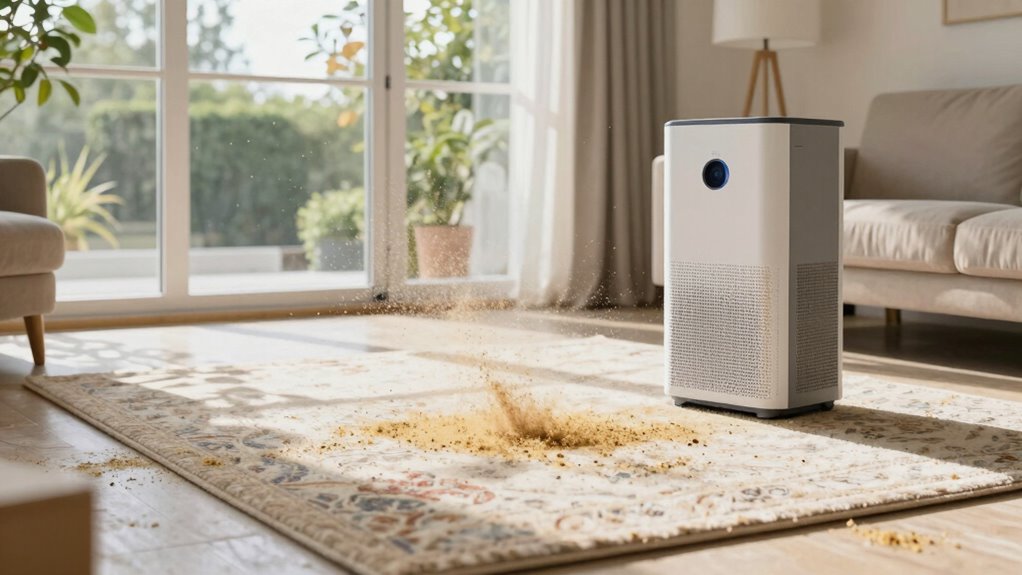
Maintaining healthy indoor air quality after renovations is vital to guarantee your space remains safe and comfortable. Start by conducting air quality monitoring to identify lingering dust, VOCs, or other pollutants. Regularly check your home’s ventilation system and replace filters in your HVAC to improve air circulation and remove contaminants. Scheduling HVAC maintenance ensures the system functions efficiently, trapping dust and reducing airborne particles. Keep windows open when possible to increase airflow and dilute indoor pollutants. Use air purifiers equipped with HEPA filters to further reduce dust and allergens. Avoid using harsh chemicals or aerosols that can compromise air quality. Staying proactive with these steps helps prevent health issues and maintains a fresh, clean environment long after the renovation dust settles. For added peace of mind, consider utilizing trusted business listings to find reputable air quality testing and cleaning services.
Common Mistakes to Avoid When Protecting Rugs and Air During Renovation
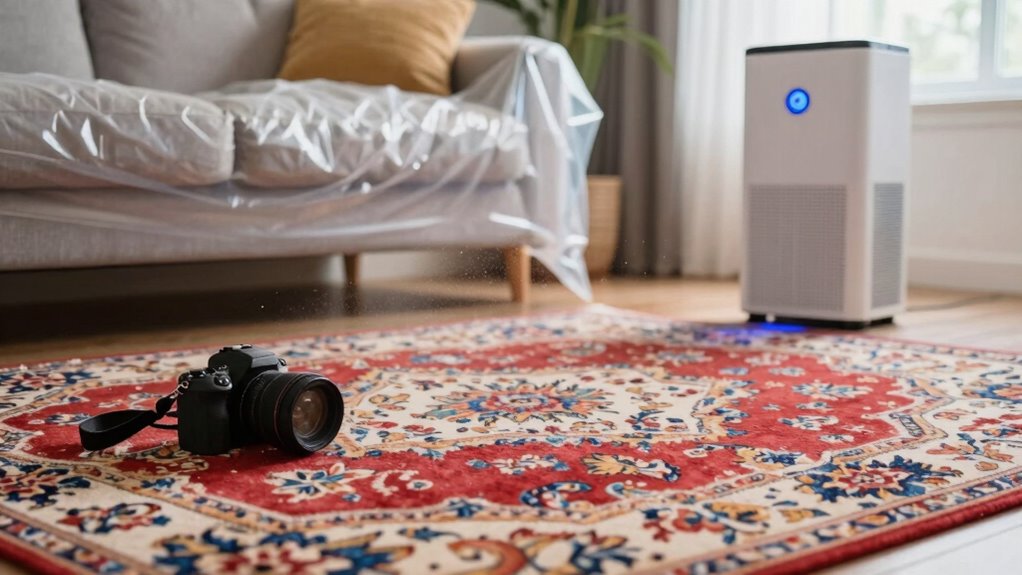
One common mistake during renovation is neglecting to properly protect your rugs and flooring from dust and debris, which can lead to permanent stains or damage. To avoid this, focus on effective furniture protection and dust barriers. First, always cover furniture with plastic sheeting or drop cloths to prevent paint fumes from settling on surfaces. Second, ensure your rugs are sealed with breathable covers or special rug protectors to prevent dust infiltration. Third, verify proper ventilation to minimize the buildup of paint fumes that can seep into your air and affect indoor air quality. Skipping these steps can cause lasting damage and compromise your home’s air quality, making your renovation more stressful than it needs to be. Proper protection keeps your home safe and clean.
Final Tips for Keeping Your Home Dust-Free During Home Renovation
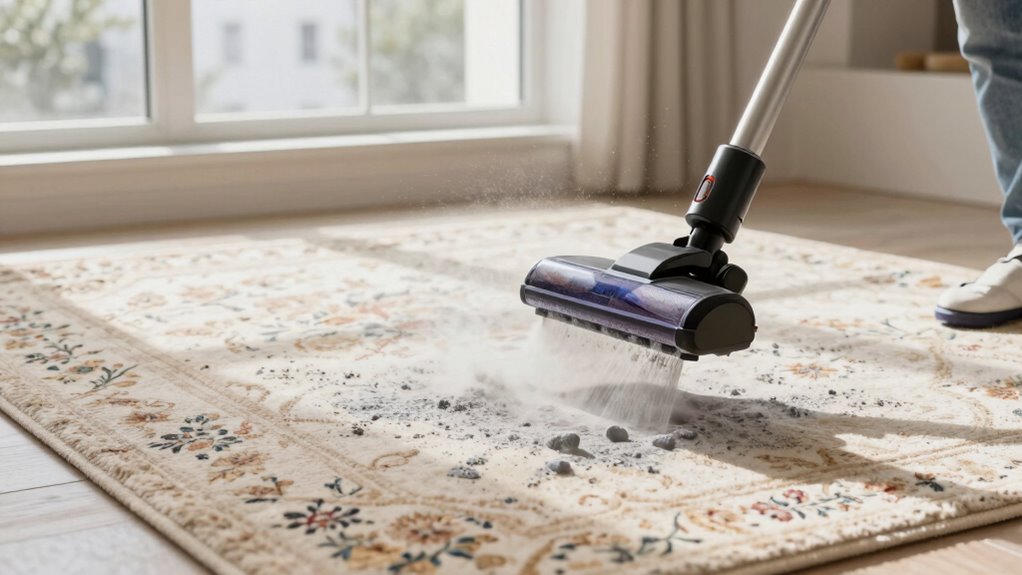
To keep dust under control during your renovation, start by establishing a dedicated workspace and sealing off the area as much as possible. Use dust barriers like plastic sheeting or temporary walls to contain debris and prevent it from spreading. Enhance air quality by investing in high-quality air filtration systems that trap fine particles and improve ventilation. Regularly replace filters to maintain efficiency. Keep surfaces clean by frequently vacuuming with a HEPA filter vacuum and wiping down hard surfaces to remove settled dust. Encourage workers to wear masks and minimize unnecessary foot traffic in the work zone. These steps help reduce airborne dust, protect your rugs, and maintain better air quality throughout your renovation project.
Frequently Asked Questions
Can Renovation Dust Cause Health Issues Long-Term?
Yes, renovation dust can cause long-term health issues if inhaled regularly. It can negatively impact indoor air quality, leading to respiratory problems and allergies over time. To protect yourself, use dust filtration systems and guarantee proper ventilation during and after renovations. Wearing masks and sealing off areas with dust barriers also help reduce exposure, minimizing the risk of long-term health effects from inhaling renovation dust.
Are There Specific Rugs More Resistant to Dust Damage?
Imagine a fortress standing strong amidst a storm—some rugs are just like that. You’ll find that rugs made from durable materials like wool, nylon, or polypropylene offer better material resistance and withstand renovation dust better than delicate fibers. Durability comparisons show these rugs resist damage more effectively. So, when choosing, opt for those with tight weaves and sturdy fibers to keep your space protected during dust-filled renovations.
How Often Should Air Purifiers Be Replaced During Renovation?
You should replace your air purifier filters every 2 to 4 months during renovation, depending on renovation dust levels. Regular air purifier maintenance is vital to guarantee it functions effectively, especially when dust levels are high. Check your device’s recommendations and monitor air quality; if you notice reduced airflow or persistent dust, it’s time for a replacement. This keeps indoor air cleaner and minimizes dust buildup on your rugs.
What DIY Methods Are Effective for Deep Cleaning Rugs Post-Renovation?
For effective DIY rug deep cleaning post-renovation, start by vacuuming thoroughly to remove loose dust. Then, mix a mild detergent with water and gently scrub the rug using a soft brush or sponge. Rinse with clean water and blot to remove excess moisture. You can also sprinkle baking soda, let it sit, then vacuum again to absorb odors. These methods help restore your rug’s cleanliness and improve air quality.
Does Sealing Doors Fully Prevent Dust Entry Into All Rooms?
Think sealing doors fully keeps dust infiltration out? Nice try! While door sealing definitely reduces dust entry, it’s not foolproof. Dust sneaks through tiny cracks, vents, and even around door frames. So, don’t rely solely on sealing doors—combine it with air purifiers and frequent cleaning. You’ll create a fortress against dust, but don’t expect a shiny, dust-free palace with a single seal!
Conclusion
Just like a sponge soaks up water, dust from renovations can seep into your rugs and air. By taking simple steps—covering your rugs, sealing vents, and thorough cleaning—you’ll keep dust at bay. Don’t let renovation dust turn your home into a dusty mess; stay proactive and vigilant. Protecting your space is like shielding a treasure chest—worth the effort for fresh air and spotless rugs. Your home deserves it!
Fall Picks
fall essentials
As an affiliate, we earn on qualifying purchases.