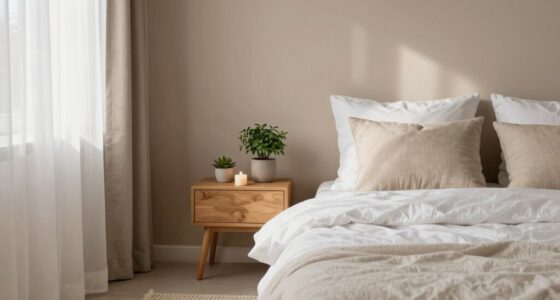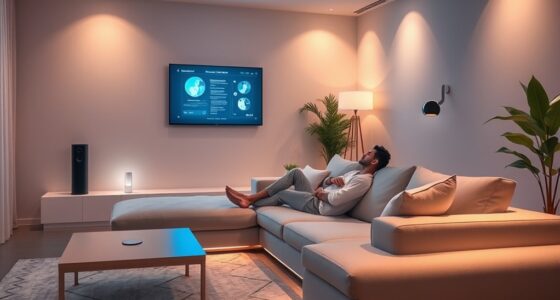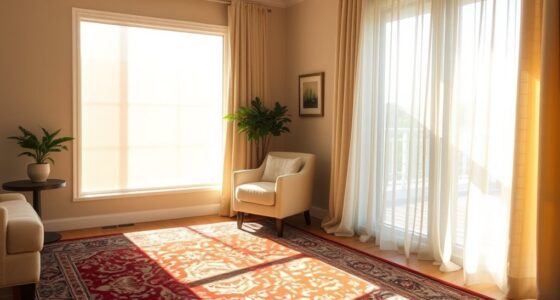

To make your wellness space feel private in an open layout, you can use soundproof barriers like insulated panels, thick curtains, or acoustic mats to block out noise. Adding visual screens or tall plants creates separation and reduces distractions, while soft, dimmable lighting makes the area cozy and inviting. Incorporating calming colors and textures further enhances serenity. Keep exploring to discover more ways to transform your space into a true sanctuary.

Get furniture and decor delivered free with Prime
- Fast, free delivery on millions of items
- Prime Video, Amazon Music and more included
- Member-only deals all year
Key Takeaways
- Incorporate soundproof barriers like insulated panels and acoustic mats to minimize noise distractions.
- Use visual screens, room dividers, and strategic furniture placement to create distinct visual boundaries.
- Combine soundproofing and visual screening to establish a holistic sense of enclosure and focus.
- Implement soft, dimmable lighting with warm tones to enhance intimacy and reduce openness.
- Select calming colors, textures, and aesthetic elements to reinforce tranquility and a private atmosphere.

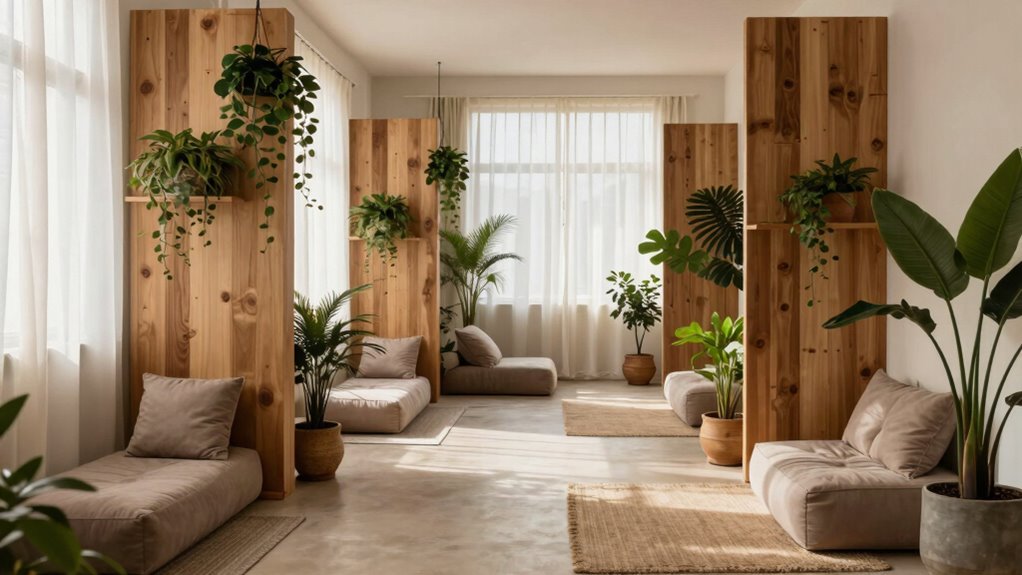
Creating a private wellness space is essential for truly relaxing and reconnecting with yourself. Even in open layouts, where multiple areas blend seamlessly, you can craft a sense of privacy that fosters peace and focus. It starts with thoughtful design choices that create barriers between your space and the outside world. Soundproof barriers are a game-changer here. They block out noise from other parts of your home or wellness environment, allowing you to enjoy quiet moments without distraction. You don’t need to go full-scale construction; even simple solutions like insulated panels, thick curtains, or specialized acoustic mats can considerably reduce sound transmission. These barriers help you feel isolated from external hustle, so you can fully immerse yourself in relaxation, meditation, or mindful practices. Incorporating acoustic solutions that are both effective and aesthetically pleasing can further enhance the sense of seclusion. Visual screening is equally important in establishing privacy in open layouts. Using screens, room dividers, or strategically placed furniture can create visual boundaries that make your wellness space feel separate from the rest of your environment. For example, tall plants or decorative screens can block sightlines, giving you a sense of enclosure without physically closing off the space. This visual separation helps you mentally shift into a private zone, where you can focus inward without feeling exposed or distracted. It also adds an aesthetic element, making your space feel intentional and personalized. When you combine visual screening with soundproof barriers, you create a holistic cocoon of privacy that nurtures your wellness routines. Additionally, lighting design can influence the perception of space and intimacy, making your sanctuary more inviting. Lighting plays a subtle yet impactful role in enhancing privacy too. Soft, focused lighting can define your area and draw attention inward, reducing the feeling of openness. Dimmable lights or lamps with warm tones can make the space feel cozy and intimate, further encouraging relaxation. Plus, choosing calming colors and textures for your screens and barriers can reinforce a sense of serenity. When you design your space with these elements in mind, you establish a sanctuary where you can truly unwind, free from external disturbances.
soundproof acoustic panels for wellness space
As an affiliate, we earn on qualifying purchases.
As an affiliate, we earn on qualifying purchases.
Frequently Asked Questions
How Can Soundproofing Enhance Privacy in Open Wellness Spaces?
Soundproofing enhances privacy by reducing noise transfer and creating a peaceful environment. You can achieve this with acoustic treatments like wall panels and ceiling baffles that absorb sound. Incorporating sound masking systems further masks conversations and ambient noise, making the space feel more secluded. These strategies help clients feel secure and relaxed, even in open wellness layouts, by minimizing distractions and preventing sound from escaping into shared areas.
What Lighting Options Create a Sense of Seclusion?
Think of lighting as a gentle embrace that shields your space. You should use ambient lighting to create a soft, calming glow that envelops the area, fostering a sense of seclusion. Add task lighting in specific zones for focused activities without overpowering the space’s intimacy. Together, these lighting options craft a cozy atmosphere, making your wellness space feel private even amid open layouts, inviting relaxation and personal reflection.
How Do Plant Barriers Contribute to Privacy?
Plant barriers contribute profoundly to privacy by serving as natural partitions that subtly block sightlines and sound. You can strategically place tall, lush greenery to create a sense of enclosure without sacrificing openness. These natural partitions not only enhance seclusion but also add a calming, organic aesthetic to your wellness space. By integrating plant barriers, you foster a more intimate environment that still feels open and inviting.
Can Furniture Placement Improve Perceived Privacy?
Think of furniture placement as a gentle shield around your sanctuary, creating cozy corners within an open space. By carefully arranging furniture and using spatial zoning, you can carve out private areas that invite relaxation. Position seating and partitions strategically to block sightlines and reduce noise, making your wellness space feel more intimate. Smart furniture arrangement transforms openness into a sense of personal retreat, where you can breathe and unwind in peace.
What Role Do Visual Screens Play in Open Layouts?
Visual screens play a vital role in open layouts by enhancing visual privacy and creating subtle space divisions. They help you feel more secluded without physically partitioning the area, making the space more comfortable and private. By strategically placing screens, you can delineate zones for different activities, reduce distractions, and foster a sense of intimacy. This thoughtful use of visual privacy elements guarantees your wellness space feels more personal and inviting, even amidst an open design.
Conclusion
So, next time you stroll into that open-plan wellness space, remember: a cleverly placed plant or a cozy curtain isn’t just decor—it’s your secret shield of privacy. Because nothing says “I’m alone with my thoughts” quite like pretending that a strategically positioned potted fern is actually a fortress. Embrace these tiny tricks, and you’ll soon master the art of feeling secluded, even in the most bustling, open layouts. Who knew privacy could be so delightfully disguised?
Halloween Picks
halloween
As an affiliate, we earn on qualifying purchases.