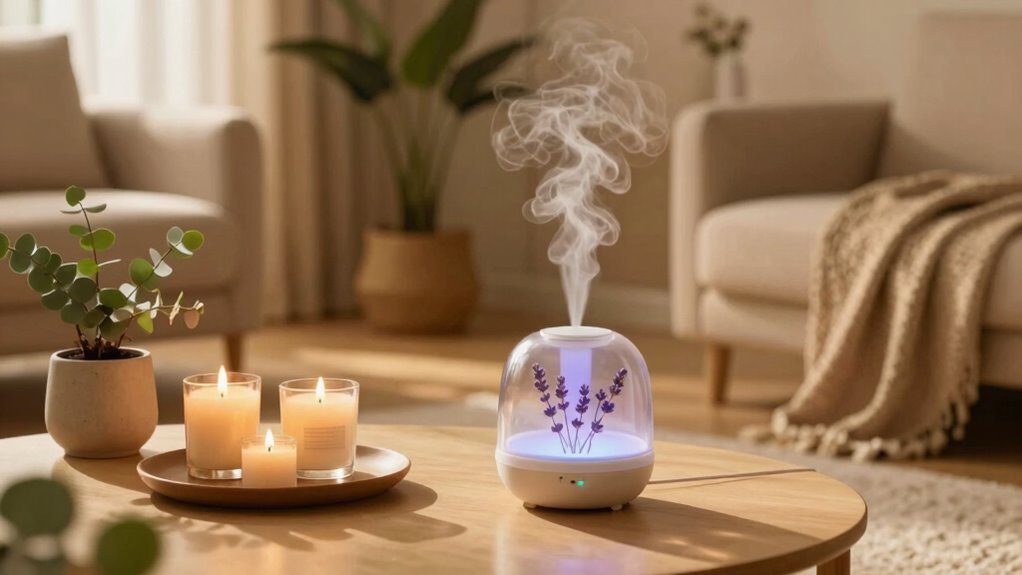

To make indoor scenting feel intentional, start by choosing specific essential oils or fragrances that match your mood or routine. Use a mix of scenting methods like diffusers, candles, and sprays, timing them throughout the day to match your activities. Adjust scent intensity and layer different aromas for harmony, ensuring your environment feels balanced and purposeful. By planning your scenting moments, you’ll create a space that feels thoughtfully designed—if you want to learn more, keep exploring these techniques.

Get furniture and decor delivered free — and shop member deals
- Fast, free delivery on millions of items
- Access to Prime Big Deal Days deals on October 6–7
- Prime Video, Amazon Music and more included
Key Takeaways
- Develop a scenting schedule using timers and specific moments to reinforce mood shifts.
- Use layered scenting methods (diffusers, candles, sprays) for natural aroma evolution.
- Choose intentional blends of essential oils to evoke desired feelings consistently.
- Control scent intensity and longevity to maintain a balanced and inviting atmosphere.
- Align scent choices with daily routines, such as fresh citrus in the morning or calming lavender at night.
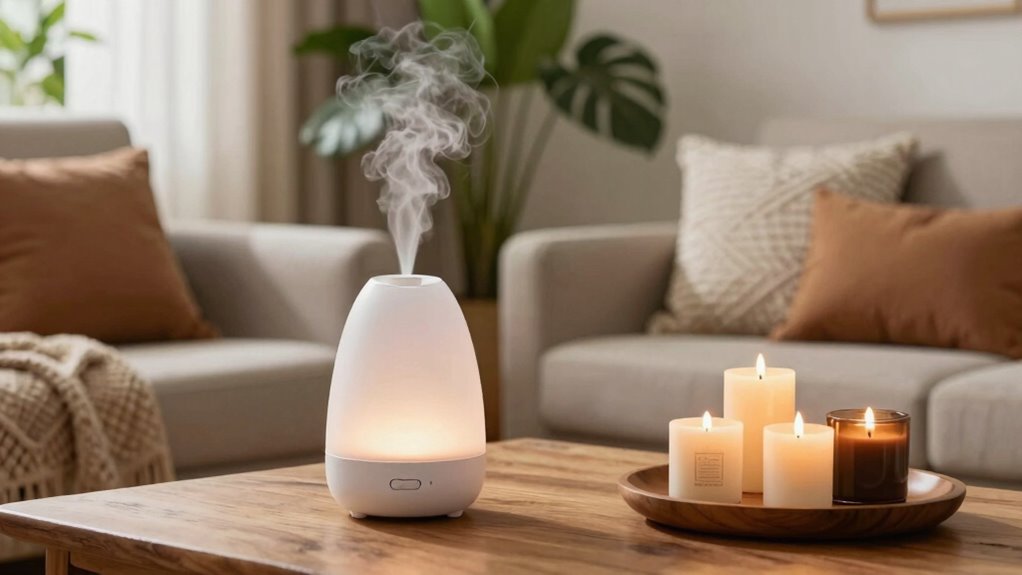
Creating a pleasant indoor atmosphere starts with mastering scenting techniques that enhance your space without overwhelming it. To make your indoor scenting feel intentional throughout the day, you need to think about how different aromas interact and how to maintain a subtle yet consistent presence. One effective method is using aromatherapy blends, which combine specific essential oils to evoke particular moods or feelings. For example, lavender and chamomile create a calming vibe, while citrus and peppermint energize your environment. When you craft these blends thoughtfully, you set a tone that resonates with your daily routines, making scenting feel purposeful rather than random.
Thoughtfully crafted aromatherapy blends create a purposeful, calming, and energizing atmosphere in your home.
Scent layering is another essential technique to keep your indoor aroma intentional. Instead of relying on a single fragrance source, you combine multiple scenting methods—like candles, diffusers, and room sprays—to create a harmonious aroma profile. Start by choosing a primary scent that matches the mood you want to sustain, then add complementary scents at different times of the day. For instance, you might begin with a citrus diffuser in the morning for freshness, then switch to a more grounding aroma like sandalwood or vanilla in the evening. This layered approach ensures your scent experience evolves naturally as your day progresses, reinforcing your desired atmosphere. Incorporating scent interaction principles can help you craft balanced and harmonious combinations that enhance the environment.
To sustain consistency, consider scheduling scenting activities. Use a diffuser with a timer so fragrant oils are dispersed during key moments, like mornings or after work, to signal changes between activities. If you prefer candles, select those with long-lasting scents, and light them intentionally to mark specific times. Scent sprays can be handy for quick refreshes, especially in high-traffic areas. The goal is to create a rhythm—placing emphasis on intentional moments—so your space feels thoughtfully curated rather than randomly scented. Paying attention to scent intensity helps prevent overwhelming your environment or letting the aroma fade away, ensuring a balanced and inviting atmosphere. Additionally, understanding aroma longevity can help you choose the right products that maintain their scent over time without frequent reapplication.
essential oil diffuser with timer
As an affiliate, we earn on qualifying purchases.
As an affiliate, we earn on qualifying purchases.
Frequently Asked Questions
Can I Mix Different Scents for a Personalized Aroma?
Yes, you can mix different scents for personalized aroma by practicing scent layering. Start with light, complementary scents and gradually combine them to create a unique aroma that suits your mood or space. This technique allows for aroma customization, making your indoor scenting more intentional and tailored to your preferences. Just make certain the scents harmonize, so your personalized blend feels natural and pleasing throughout the day.
How Often Should I Refresh My Indoor Scents?
You should refresh your indoor scents every few hours to maintain that fresh, intentional aroma. Even if you love your current scent, over time, it can fade or become less noticeable. Using scent layering techniques enhances aromatherapy benefits and keeps your space inviting. Don’t wait too long—regular refreshes guarantee your environment stays lively and soothing, making your scent experience truly purposeful and enjoyable throughout the day.
Are There Safe Scent Options for Pets?
Yes, there are safe scent options for pets. Look for pet-safe fragrances and opt for natural essential oils like lavender or chamomile, which are generally gentle and calming. Always dilute essential oils properly and avoid strong or synthetic scents that could upset your pets. Before using any new scent, observe your pets for reactions and consult your veterinarian if you’re unsure. This guarantees your home smells lovely without risking your pets’ health.
What’s the Best Time of Day to Scent My Home?
Think of your home as a canvas, and scent as your brushstroke, best applied when the day begins or winds down. Mornings, with fresh air and sunlight, set a vibrant tone, while evenings offer cozy, calming aromas. Your personal scent preferences and seasonal shifts guide your timing, making each moment intentional. Scenting during these key times helps create a seamless, sensory experience that enriches your daily living.
Can Scenting Help Improve Mood or Productivity?
Scenting can definitely boost your mood and productivity because of aromatherapy benefits. When you create a scented environment, you activate your senses, which can reduce stress and increase focus. By intentionally choosing uplifting scents like citrus or peppermint, you set a positive tone for your day. Incorporate these fragrances into your routine, like during work or relaxation, to harness the full benefits and keep your environment energized and balanced.
Conclusion
By thoughtfully layering scents throughout your day, you create a mindful sensory experience that feels both intentional and comforting. Imagine starting your morning with a invigorating citrus scent, then shifting to a calming lavender in the afternoon, and ending with warm vanilla at night. For example, Sarah noticed how her daily scent routine made her feel more centered and relaxed. With a little planning, you can turn indoor scenting into a simple, uplifting ritual that enhances every moment.
Fall Picks
fall essentials
As an affiliate, we earn on qualifying purchases.