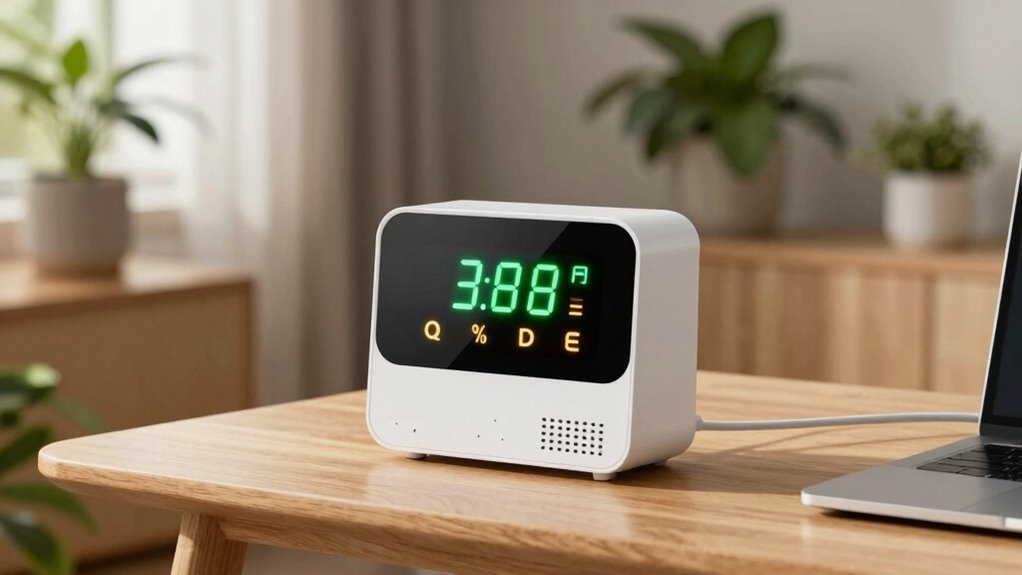

The one thing most people miss about air quality monitors is the importance of regular calibration. Many rely on the initial factory settings, but sensors can drift over time due to environmental factors like dust, humidity, or chemicals. Without consistent calibration, your monitor’s readings can become inaccurate, leading you to overlook real issues or cause unnecessary concern. Staying on top of calibration helps guarantee you get trustworthy data—keep going to learn how to maintain your monitor’s accuracy.
Key Takeaways
- Regular calibration is often overlooked but essential for maintaining the monitor’s accuracy over time.
- Many users assume factory calibration lasts indefinitely, neglecting sensor drift and environmental impacts.
- Environmental factors like humidity and dust can degrade sensor performance if not properly managed.
- Automatic calibration features may give a false sense of security without manual verification.
- Consistent calibration ensures reliable data, preventing misinterpretation of indoor air quality.
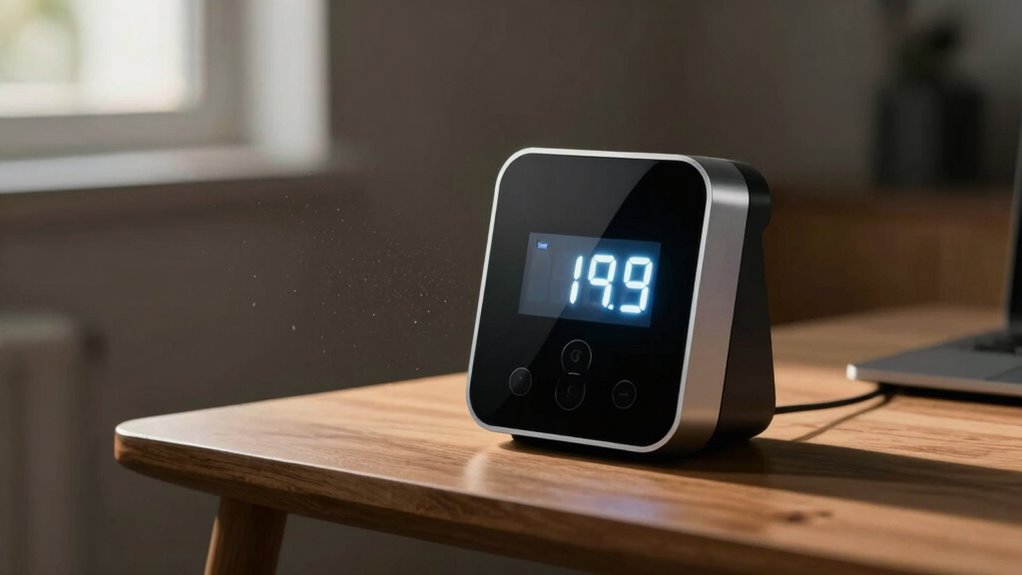
Many people assume that simply having an air quality monitor is enough to keep their indoor environment safe, but there’s a critical aspect they often overlook: calibration. Without proper sensor calibration, your monitor’s readings can become unreliable over time, leading you to make decisions based on inaccurate data. Sensor calibration is the process of adjusting your device to guarantee its measurements are precise and reflect the real conditions of your environment. If you neglect this step, your air quality readings could be off, giving you a false sense of security or unnecessary alarm.
Regular calibration is essential to ensure your air quality monitor provides accurate, trustworthy data.
When your monitor isn’t calibrated regularly, the data accuracy declines. This means that the device might report higher or lower levels of pollutants than what actually exists. For example, a poorly calibrated sensor could underestimate airborne pollutants, causing you to ignore potential health risks. Conversely, it might overestimate pollutants, prompting unnecessary concerns or actions. Over time, sensors drift from their original calibration, especially when exposed to factors like humidity, dust, or chemical exposure. This drift compromises the monitor’s ability to provide trustworthy data, which is essential for making informed decisions about your indoor air quality.
You might think that the factory calibration when you first purchase the monitor is enough, but sensors need ongoing calibration to maintain accuracy. Some advanced models have automatic calibration features, but many require manual adjustments or periodic testing against known reference standards. Regularly checking your device’s calibration status and recalibrating as needed ensures that the data you rely on remains precise. Additionally, understanding the sensor drift phenomenon helps in recognizing when recalibration is necessary to maintain data reliability. Knowing how environmental factors influence sensor performance can help you better maintain your device’s accuracy over time. Properly maintaining the device, including regular calibration, is crucial for ensuring consistent and reliable readings, especially if you rely on your monitor for health-related decisions. This is especially important if you use your monitor to detect specific pollutants like volatile organic compounds (VOCs), particulate matter, or carbon dioxide.
Neglecting sensor calibration doesn’t just affect data accuracy; it impacts your health and safety. Inaccurate readings could lead you to ignore poor air quality or take unnecessary measures, wasting time and resources. Ensuring proper calibration helps you trust your monitor’s data, making it easier to identify real issues and respond appropriately. It’s a simple step that can dramatically improve the effectiveness of your air quality management. So, if you want your monitor to do its job effectively, prioritize regular sensor calibration. It’s the key to getting reliable, precise data and truly safeguarding your indoor environment.

16-in-1 Indoor Air Quality Monitor, High-Precision Multi-Parameter Smart Air Quality Tester with HD Real-Time Color Screen, Portable Air Quality Monitor for Home, Office, Cars, Bedroom
- 16-in-1 Air Quality Monitoring: Measures 7 key air quality parameters
- All-in-One Design: Eliminates need for multiple testers
- Easy One-Tap Operation: Controls power and settings simply
As an affiliate, we earn on qualifying purchases.
As an affiliate, we earn on qualifying purchases.
Frequently Asked Questions
How Often Should I Calibrate My Air Quality Monitor?
You should calibrate your air quality monitor regularly to guarantee sensor accuracy. Typically, calibration frequency depends on your device and usage, but doing it every few months is a good rule of thumb. Check the manufacturer’s guidelines for specific recommendations. Regular calibration helps maintain accurate readings, so you can trust the data you’re getting and make informed decisions about your indoor air quality.
Can Air Quality Monitors Detect All Types of Pollutants?
Air quality monitors can’t detect all pollutants due to sensor limitations and pollutant specificity. While they effectively measure common issues like particulate matter and volatile organic compounds, they often miss gases like radon or specific chemicals. You should understand that each monitor is designed for certain pollutants, so for thorough analysis, you might need multiple devices or specialized sensors. Always check your monitor’s specifications to know what pollutants it can accurately detect.
What’s the Ideal Placement for Accurate Readings?
You need to place your air quality monitor away from walls, vents, and sources of pollution to get accurate readings. Think of sensor sensitivity—if it’s too close to a cooking area or smoker, it’ll skew results. Follow placement guidelines by positioning it at breathing height, ideally in the main living space, and avoid drafts or direct sunlight. Proper placement guarantees your monitor captures true air quality, not false signals.
Do Monitors Work Equally Well Indoors and Outdoors?
Air quality monitors don’t work equally well indoors and outdoors because of sensor accuracy and device durability. Outdoor monitors face harsher weather conditions, which can affect their durability and accuracy over time. Indoors, they provide more consistent readings since environmental factors are controlled. Choose a monitor designed for each environment to guarantee reliable data. Regular maintenance and calibration also help maintain sensor accuracy, regardless of where you use the device.
How Do I Interpret the Data From My Monitor Effectively?
Think of your air quality monitor as a compass guiding you through a foggy landscape. To interpret its data effectively, focus on sensor accuracy and data trends over time. Look for consistent patterns rather than isolated readings, which can be misleading. Track changes and compare them to your daily activities, helping you make informed decisions to improve your indoor air quality. This way, you turn raw numbers into a clear path forward.
Conclusion
Remember, an air quality monitor isn’t just a device; it’s your shield against unseen dangers swirling in the air. Think of it as a vigilant lighthouse, illuminating the hidden fog of pollutants lurking in your home. If you overlook its importance, you might walk blind into a silent storm. Keep it close, trust its readings, and breathe easy knowing you’re actively guarding your sanctuary from invisible threats. Your health depends on it.