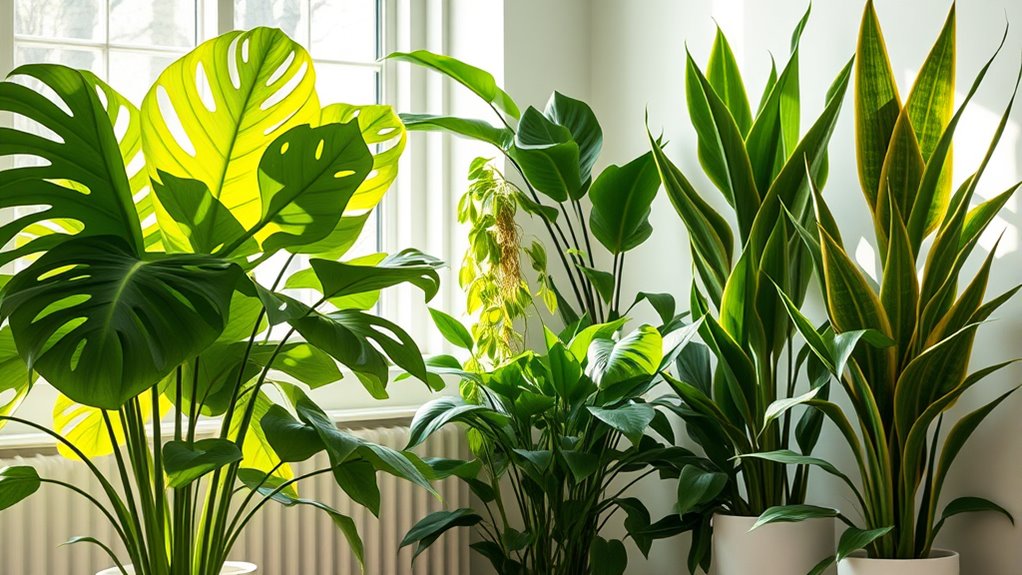

Indoor plants naturally improve your home’s air quality by filtering toxins like formaldehyde and benzene while increasing oxygen levels. To maximize their benefits, give each plant proper light, water, and care, and place them in spots with good airflow. Regularly dust their leaves and monitor their health to keep them thriving. By nurturing your plants well, you’ll enjoy cleaner, fresher air—and there’s more to discover about creating a healthier indoor space.
Key Takeaways
- Indoor plants filter toxins like formaldehyde, benzene, and trichloroethylene, improving air quality naturally.
- Proper plant care, including adequate light and watering, maximizes their air-purifying efficiency.
- Placing plants in well-ventilated, light-filled areas enhances their ability to remove indoor pollutants.
- Regular maintenance, such as dusting leaves and avoiding overwatering, supports plant health and air purification.
- Incorporating natural, low-maintenance plants like snake plants and peace lilies continuously improves indoor air quality.
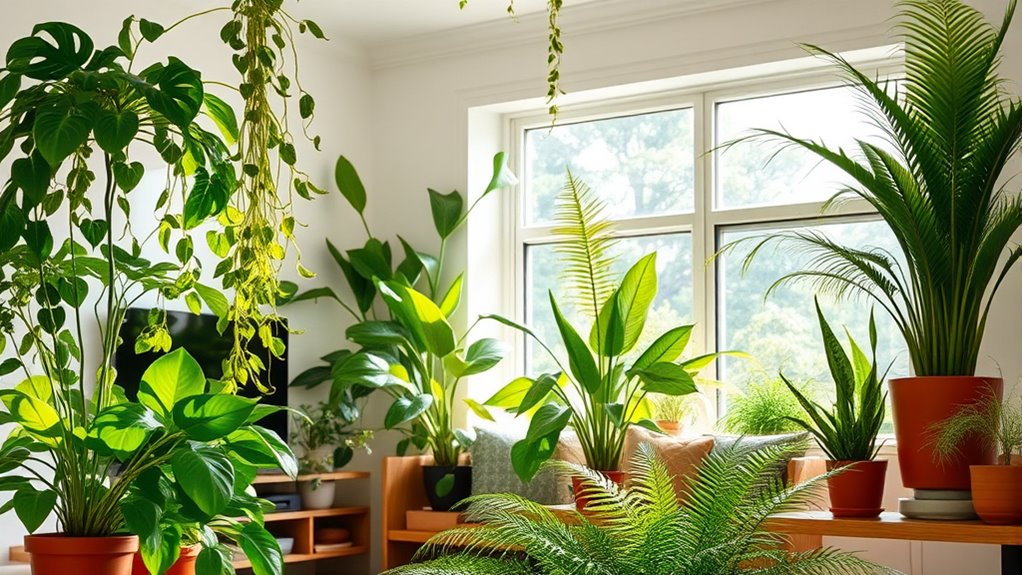
Indoor plants do more than add greenery to your space; they actively improve air quality by filtering out toxins and increasing oxygen levels. When you choose decorative greenery for your home or office, you’re not just enhancing the aesthetic — you’re also creating a healthier environment. To maximize these benefits, proper plant care is essential. Each plant species has specific needs, so understanding their light, water, and soil requirements helps ensure they thrive. Healthy plants are more efficient at purifying air, so regular watering, appropriate lighting, and occasional fertilization are key. Don’t forget to check for signs of pests or disease, as unhealthy plants won’t perform their air-cleaning role effectively.
Healthy indoor plants filter toxins and boost air quality with proper care.
As you incorporate indoor plants into your decor, think about their placement. Positioning them in areas with good airflow and natural light boosts their ability to filter air pollutants like formaldehyde, benzene, and trichloroethylene. Many popular types of decorative greenery, such as snake plants, pothos, or peace lilies, are known for their air-purifying properties and are easy to care for. These plants not only brighten your space but also act as natural air filters. Regularly dust their leaves to optimize their ability to absorb toxins and produce oxygen. Maintaining a consistent watering schedule and avoiding overwatering prevents root rot, which can compromise the plant’s health and efficiency. Proper plant care practices ensure your greenery remains healthy and maximally effective.
In addition to the physical care, creating a routine that encourages your plants’ growth and health will ensure they continue to improve your indoor air quality. Use natural fertilizers or compost teas to nourish your plants without introducing harmful chemicals into your environment. Keep an eye on humidity levels, as many indoor plants prefer moderate humidity; dry air can stress them and reduce their purifying capabilities. By integrating plant care into your routine, you not only foster a thriving collection of decorative greenery but also cultivate a healthier living space.
The benefits of your indoor plants extend beyond visual appeal—they serve as natural air purifiers that work continuously to improve your environment. With proper care, your decorative greenery can considerably reduce indoor pollutants, making your home or office more comfortable and fresh. Remember, good plant care isn’t complicated; it’s about providing the right conditions for your plants to flourish. When you do, you’ll enjoy the dual advantage of beautiful, lively decor and cleaner, healthier air. This simple addition to your space can have a profound impact on your well-being, turning your indoor environment into a natural oasis of purity and serenity.
Frequently Asked Questions
Which Indoor Plants Are Safest for Pets and Children?
You should choose pet-safe plants like spider plants, Boston ferns, and areca palms, which are also child-friendly greenery. These plants are non-toxic and safe if your pets or kids accidentally nibble on them. Always verify plant safety before bringing new greenery home, and keep an eye on your children and pets around any plants. Selecting pet-safe plants helps create a healthier, worry-free environment for everyone.
How Many Plants Are Needed to Significantly Improve Air Quality?
Plant plenty to produce a powerful, positive impact on your air quality. Typically, having about 15 to 20 well-placed plants throughout your home can noticeably purify the air. The more plants you add, the more pollutants they can absorb and filter out. Keep in mind, the exact plant quantity depends on your space size and plant types. But generally, a lush, leafy collection creates a cleaner, healthier home environment.
Do Indoor Plants Eliminate All Indoor Air Pollutants?
Indoor plants don’t eliminate all indoor air pollutants, but their plant effectiveness in pollutant removal varies. They can greatly reduce common pollutants like formaldehyde and benzene, improving air quality. However, for thorough purification, you should combine plants with proper ventilation and air purifiers. Keep in mind, while plants help, they aren’t a complete solution, so maintain good airflow and cleanliness for healthier indoor air.
How Often Should I Water Indoor Plants for Optimal Air Purification?
Water your indoor plants like you’re giving them a revitalizing drink—generally once a week. Stick to a consistent watering schedule to keep your plants healthy and thriving. Overwatering can harm plant health, while underwatering stunts growth. Check the soil’s top inch; if it’s dry, it’s time to water. Proper watering not only keeps your plants vibrant but also maximizes their air-purifying benefits.
Are There Any Plants That Can Remove Specific Toxins Like Formaldehyde?
Yes, certain plants excel at plant toxin removal, targeting specific toxins like formaldehyde. For example, the snake plant and spider plant are known for their ability to remove formaldehyde efficiently. These plants offer specific plant benefits by naturally filtering toxins from the air, improving your home’s air quality. Incorporate these into your space to enjoy healthier indoor air while adding greenery that actively contributes to toxin removal.
Conclusion
Bringing indoor plants into your home is like adding natural air purifiers, effortlessly enhancing your space’s freshness. They not only beautify your environment but also work silently to improve air quality, making your living space healthier and more inviting. By choosing the right plants, you create a sanctuary that feels as calming as a gentle breeze. Embrace these green allies, and you’ll breathe easier, knowing you’re nurturing both your home and your well-being.