To create sustainable indoor landscaping, choose eco-friendly planters made from recycled or biodegradable materials with good drainage. Proper drainage prevents water pooling, reducing mold and root rot risks. Set up drainage systems using gravel or mesh, and guarantee good air circulation to control humidity. Regularly monitor and maintain your setup to prevent mold growth. Keep an eye on common issues; with better drainage and ventilation, your indoor garden stays healthy and eco-conscious. Learn more about optimizing your space below.

Get furniture and decor delivered free — and shop member deals
- Fast, free delivery on millions of items
- Access to Prime Big Deal Days deals on October 6–7
- Prime Video, Amazon Music and more included
Key Takeaways
- Choose eco-friendly, biodegradable or recycled planters with proper drainage holes to reduce environmental impact and prevent mold growth.
- Implement well-designed drainage systems using gravel or mesh to avoid water pooling and minimize mold-prone damp environments.
- Maintain adequate ventilation and airflow to reduce humidity, lowering the risk of mold development indoors.
- Use well-draining soil mixes and avoid overwatering to promote healthy roots and prevent mold and fungal issues.
- Regularly clean drainage areas and monitor moisture levels to detect and address mold risks early, supporting sustainable indoor gardening.
Why Proper Drainage Is Essential for Indoor Gardens
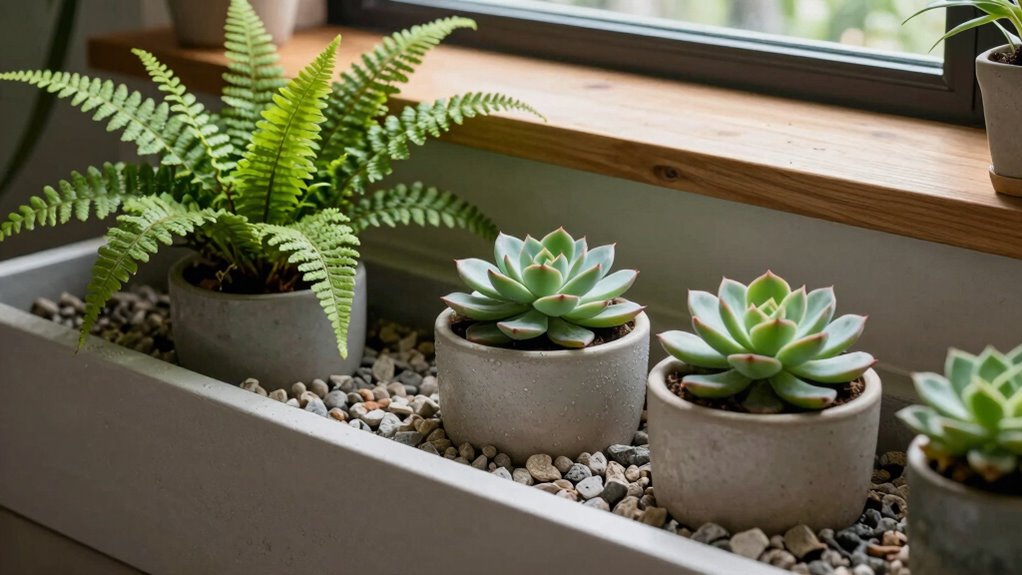
Proper drainage is crucial for the health and longevity of your indoor garden. Without it, excess water can accumulate, leading to root rot and other issues. To guarantee good drainage, you need to pay attention to soil composition; well-draining soil mixes prevent water from pooling around roots. When selecting plants, choose species that thrive in environments with good moisture control, as some plants are more sensitive to overwatering than others. Proper drainage also helps maintain consistent soil moisture levels, reducing mold and fungal risks. If your soil retains too much water, it can create a damp environment that harms your plants. By combining the right soil mix with thoughtful plant selection, you set a solid foundation for a healthy, sustainable indoor garden. Incorporating ventilation considerations can further improve air circulation and reduce humidity buildup that encourages mold growth.
How to Choose Eco-Friendly Planters With Good Drainage
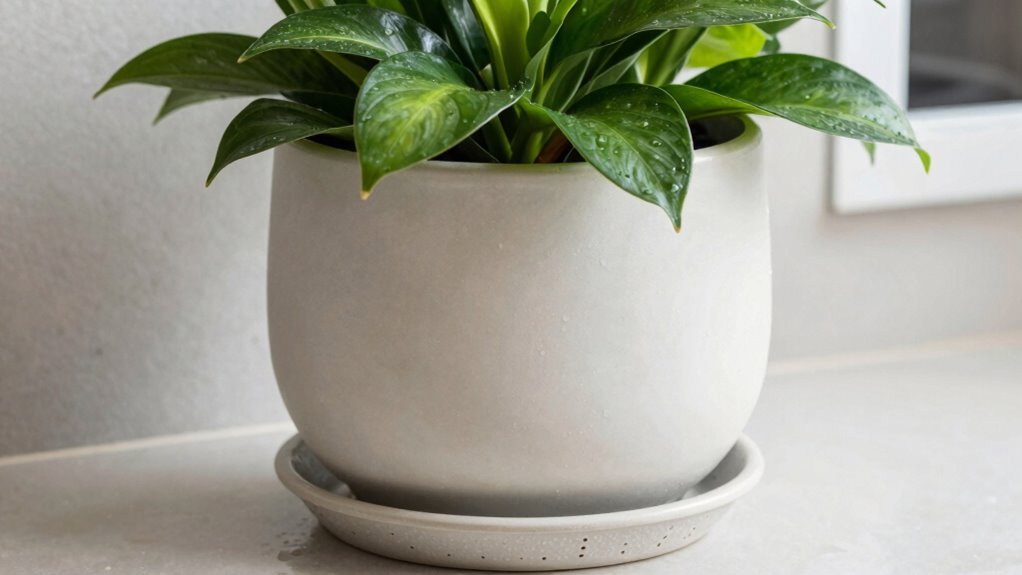
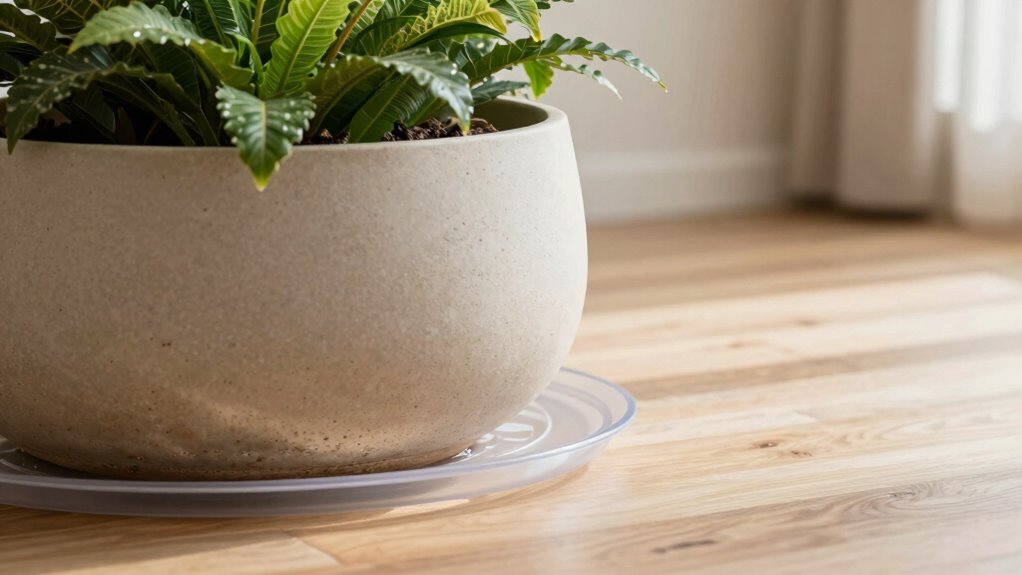
Choosing eco-friendly planters with good drainage is essential for maintaining healthy indoor plants while reducing environmental impact. Look for planters made from biodegradable materials, which break down naturally and lessen waste in landfills. These materials often include coconut coir, bamboo, or plant-based plastics. Recycled plastics are another sustainable option; they repurpose waste into functional planters, reducing the need for new plastic production. When selecting your planter, ensure it has drainage holes to prevent water from pooling and causing root rot. Avoid planters that trap excess moisture, as they can promote mold growth and compromise plant health. Incorporating Free Floating design principles can help create a more balanced and natural aesthetic in your indoor garden. By choosing eco-friendly materials with proper drainage features, you support sustainability and create a healthier environment for your indoor garden.
Setting Up Effective Drainage Systems for Your Indoor Garden
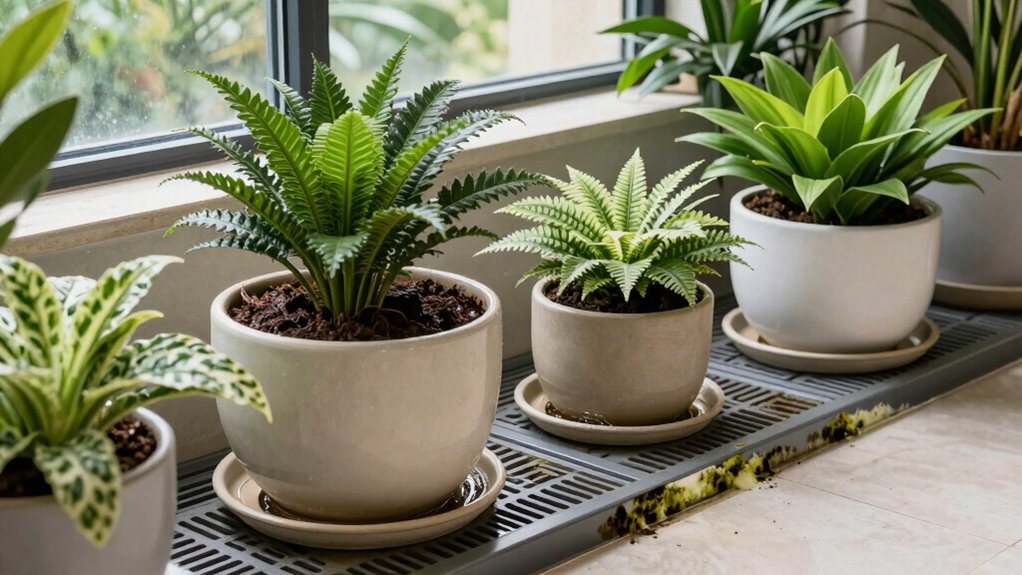
Have you considered how effective drainage can make or break your indoor garden’s health? Proper drainage prevents excess water from pooling, which conserves water by reducing waste and helps maintain ideal soil moisture levels. This is essential for water conservation, ensuring you use only what your plants need. Additionally, good drainage minimizes the risk of pests that thrive in damp environments, aiding pest control efforts. To set up an effective system, choose planters with drainage holes and incorporate gravel or mesh at the bottom to improve water flow. Regularly check for clogs and avoid overwatering. By establishing reliable drainage, you create a healthier environment for your plants, reduce water waste, and minimize pest problems, all while supporting sustainable indoor gardening practices. Incorporating drainage systems similar to those used in deep-sky imaging setups can further enhance water management and plant health.
Tips to Prevent Mold Growth in Indoor Plant Setups
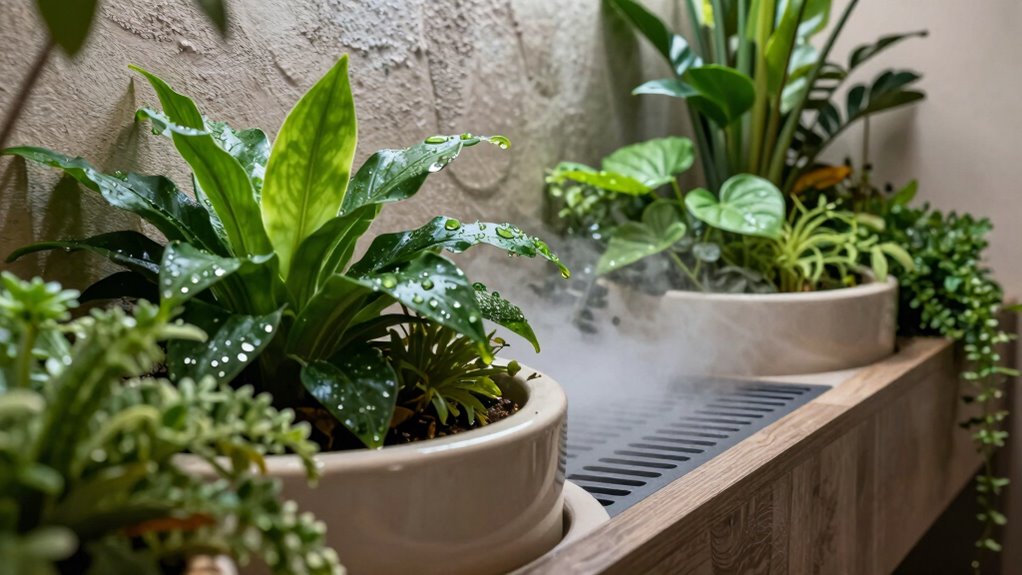
Good drainage is essential for keeping your indoor garden healthy, but it’s also important to prevent mold from taking hold. To do this, guarantee proper air circulation around your plants, which helps keep humidity levels in check and discourages mold growth. Avoid overwatering and use organic fertilizers sparingly, as excess moisture and nutrients can promote mold development. Keep your planters clean and dry, especially the drainage areas, to prevent mold spores from settling. Additionally, consider spacing your plants adequately so air can flow freely between them. Regularly monitor your setup for signs of mold or excess moisture, and act quickly if you notice any issues. Proper plant care practices are key to creating a less hospitable environment for mold while supporting your plants’ growth.
Materials That Reduce Mold and Promote Sustainability
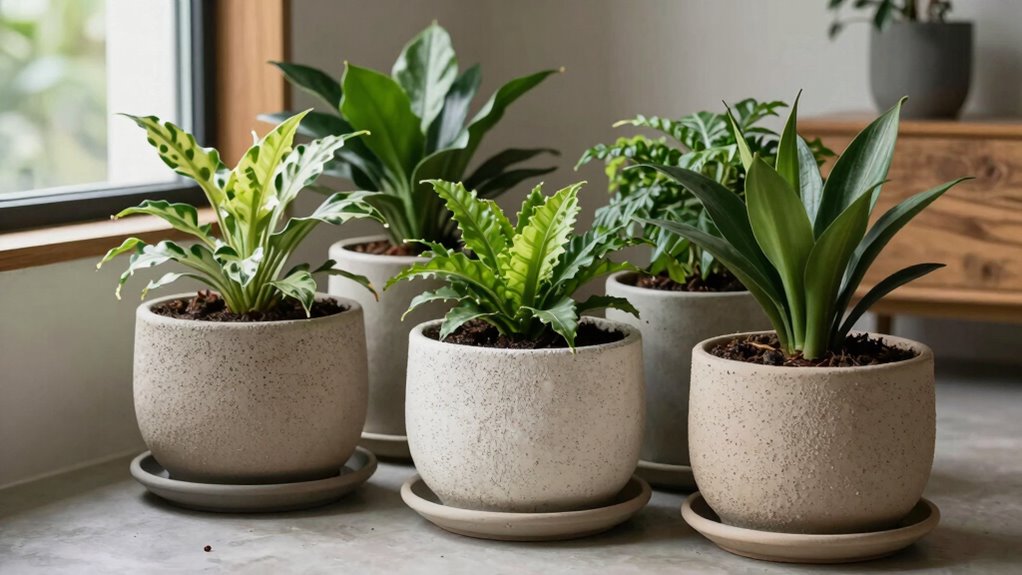
Using eco-friendly materials in your indoor garden not only helps reduce mold growth but also supports sustainability. Plant-based plastics are a great choice because they’re biodegradable, reducing plastic waste and minimizing mold-friendly environments. Recycled ceramics are another excellent option; they’re durable, non-porous, and resist mold buildup. These materials promote healthy plant roots by preventing excess moisture retention, which can lead to mold issues. Choosing sustainable options like plant-based plastics and recycled ceramics also lowers your carbon footprint compared to traditional materials. Additionally, these eco-friendly materials are often produced with fewer chemicals, further reducing mold risk. By selecting sustainable, mold-resistant materials, you create a healthier indoor environment while actively contributing to environmental conservation efforts. Incorporating biodegradable materials into your planters can further enhance the sustainability and mold resistance of your indoor garden.
Monitoring and Maintaining Healthy Drainage Systems
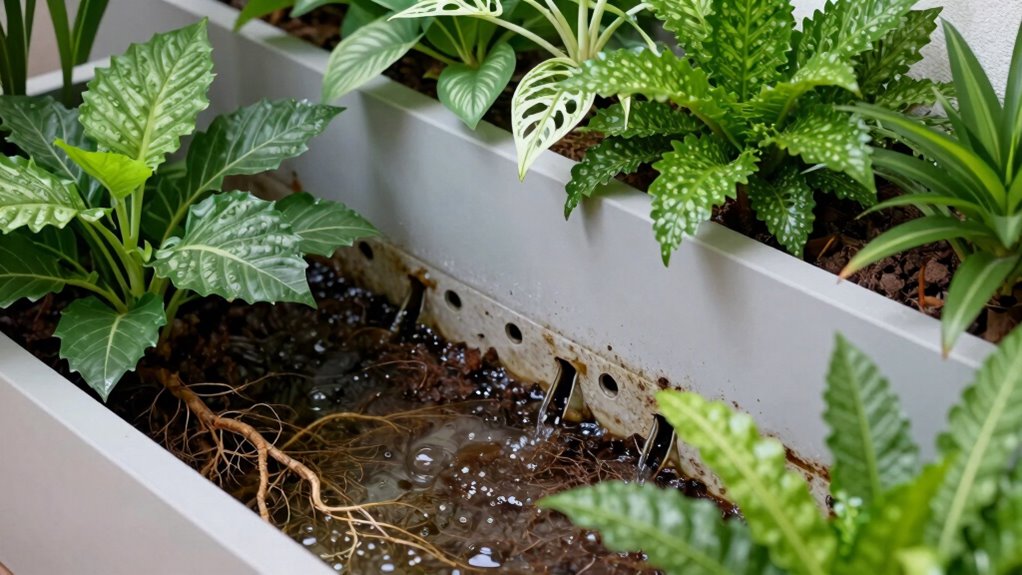
You need to regularly inspect your drainage system to catch issues early and keep everything flowing smoothly. Maintaining proper soil moisture levels helps prevent water buildup that can lead to mold growth. Taking preventative measures, like controlling mold and ensuring good drainage, keeps your indoor landscape healthy and sustainable. Incorporating architectural solutions can further enhance your space’s ability to manage moisture effectively.
Regular Drain Inspection
Regular drain inspections are essential for maintaining healthy drainage systems in your indoor landscape. By regularly checking, you can prevent clogs and ensure water flows properly. Pay attention to how soil composition and watering frequency affect drainage; overly dense soil or overwatering can cause issues. During inspections, look for:
- Accumulation of debris or organic matter blocking the drain
- Signs of mold or mildew around drainage areas
- Slow or standing water after watering
Address problems promptly by removing blockages or adjusting watering habits. Proper soil composition helps maintain water movement, reducing the risk of mold growth. Regular inspections keep your drainage system functioning efficiently, supporting a sustainable and healthy indoor environment. Additionally, understanding the effects of glycolic acid on skin can inform you on how to care for your skin if you use skincare products that may impact your environment.
Proper Soil Moisture Levels
Maintaining proper soil moisture levels is essential for promoting healthy drainage and preventing water-related issues in your indoor landscape. When soil is too wet, roots can suffocate, leading to rot and mold growth, while overly dry soil stresses plants and reduces nutrient uptake. To achieve balanced moisture, monitor soil regularly by checking its dampness and adjust watering accordingly. Using well-draining soil mixes helps maintain consistent moisture and supports healthy soil nutrients. Consider plant selection carefully; some species prefer moist conditions, while others thrive in drier soil. Accurate moisture levels encourage proper drainage, minimizing excess water that can cause mold problems. Additionally, choosing electric scrubber equipment designed for indoor cleaning can help maintain a hygienic environment by effectively removing mold spores and water residues. By staying attentive to soil moisture, you create a sustainable environment that nurtures your plants and prevents drainage issues.
Preventative Mold Measures
Since poor drainage can lead to mold growth, it’s essential to actively monitor and maintain your indoor landscape’s drainage system. Regularly check that excess water flows freely and isn’t pooling, which creates a breeding ground for mold. Improve drainage by adjusting your composting techniques to prevent excess moisture and selecting plants that thrive in well-drained soil. Proper plant selection reduces the risk of overwatering and mold development. To keep your drainage healthy, consider these steps:
- Clear debris from drainage holes and trays
- Use gravel or perlite in pots to enhance drainage
- Regularly inspect for mold growth and address promptly
- Stay informed about regulatory frameworks affecting indoor gardening practices
Maintaining proper drainage helps keep mold at bay, promoting a healthier indoor environment and more sustainable landscaping.
Common Drainage and Mold Problems and How to Fix Them
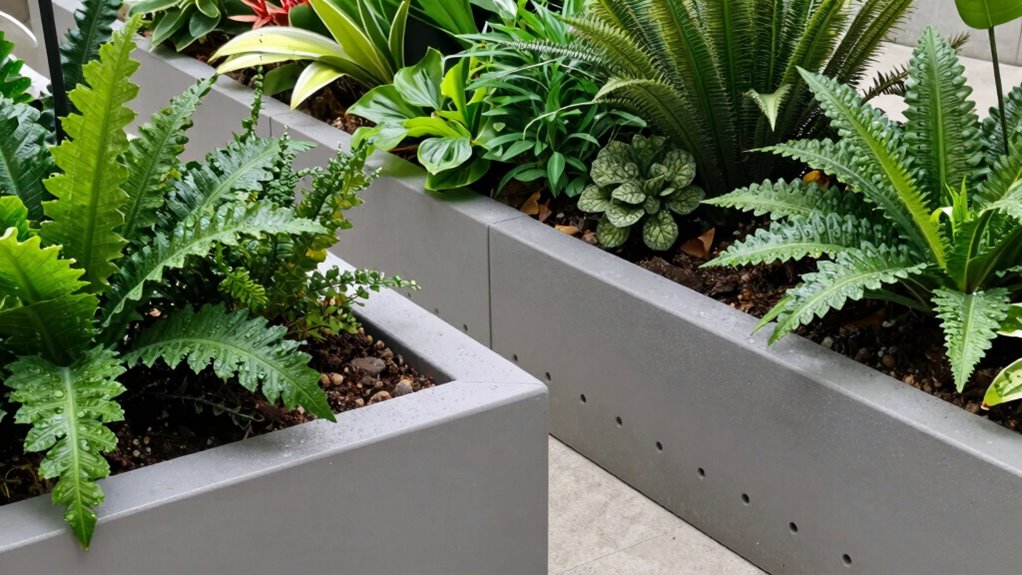
Poor drainage can lead to excess moisture around your indoor plants, creating the perfect environment for mold growth and structural issues. To prevent this, ensure your planters have proper drainage holes and avoid overwatering. Common problems include mold on soil surfaces and warped planters. Fix these by improving drainage, adjusting fertilizer choices to avoid excess nutrients that promote mold, and practicing pest management to reduce mold-spreading pests. Regularly inspect your plants for signs of mold or mustiness. Consider this table for quick reference:
| Issue | Cause | Solution |
|---|---|---|
| Mold on soil surface | Overwatering, poor drainage | Improve drainage, reduce watering |
| Warped planters | Excess moisture, poor drainage | Use well-draining pots and avoid overwatering |
| Mold from pests | Pest infestation | Implement pest management strategies |
| Soil mold growth | Excess fertilizer, moisture | Adjust fertilizer choices, improve drainage |
Maintaining proper drainage and moisture levels is essential for preventing mold and ensuring the longevity of your indoor garden. Stay vigilant to keep your indoor garden healthy and mold-free.
Improving Ventilation and Light to Control Humidity
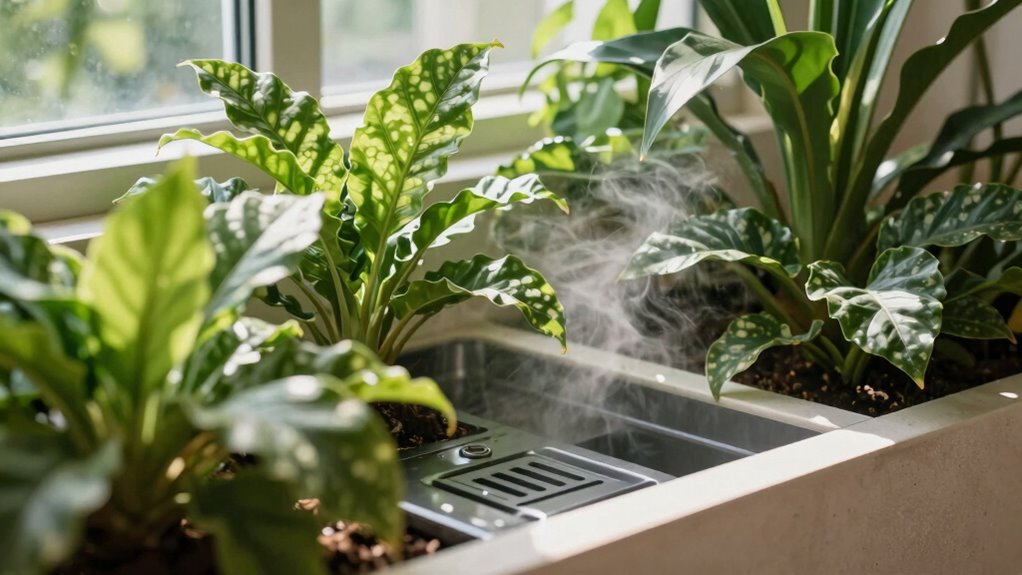
Proper ventilation and adequate lighting are key to managing indoor humidity levels and preventing mold growth. Good air circulation helps disperse moisture and reduces stagnant areas where mold can develop. Maximizing natural lighting not only brightens your space but also helps dry out excess moisture, making your environment less hospitable for mold. To improve these aspects:
- Open windows regularly to enhance air circulation
- Use fans or exhaust vents in areas prone to high humidity
- Place your planters where they receive ample natural light, and consider supplemental grow lights if needed
These steps promote consistent air movement and light exposure, keeping humidity levels in check. Proper ventilation and light work together to create a healthier indoor environment that supports your sustainable landscaping goals.
Quick Troubleshooting for Drainage and Mold Issues
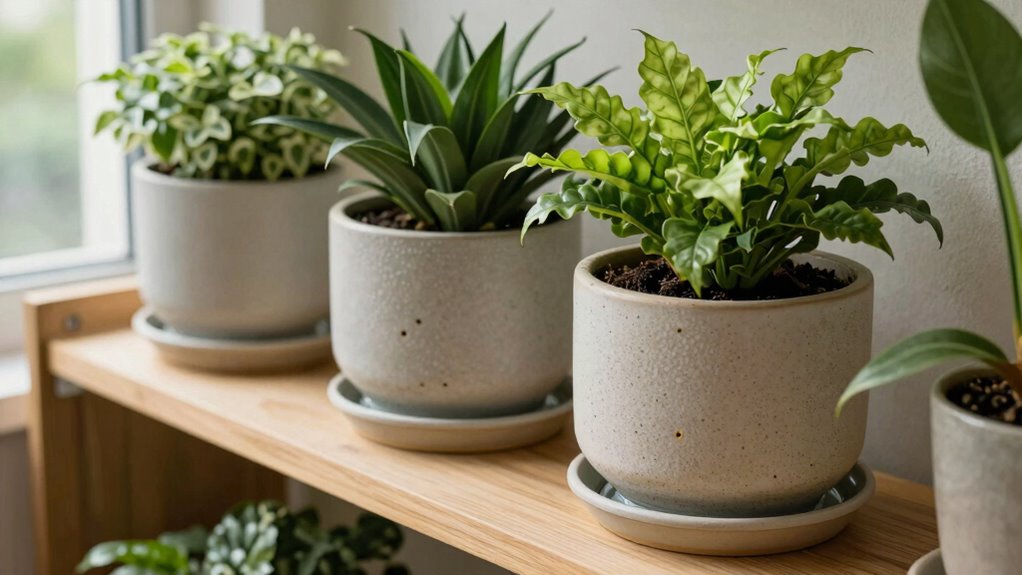
When you notice persistent damp spots or a musty smell, quick action can prevent mold from spreading and further damage your plants. First, check your soil composition—heavy, poorly-draining soil retains too much moisture, encouraging mold growth. If necessary, repot your plants with a lighter, well-draining mix. Adjust your watering schedules; overwatering is a common cause of drainage issues. Water only when the top inch of soil feels dry, and ensure excess water can escape through drainage holes. Clear any blockages in the planter’s drainage system. Improve airflow around your plants and consider using a fan or dehumidifier if humidity remains high. Regularly monitoring soil moisture and drainage will help you catch problems early, keeping your indoor garden healthy and mold-free.
Frequently Asked Questions
How Often Should I Water Indoor Plants for Optimal Drainage?
You should water your indoor plants when the soil moisture feels dry about an inch below the surface, typically every 1-2 weeks. Adjust your watering frequency based on the plant type and environment, ensuring proper drainage to prevent mold risks. Check soil moisture regularly, and avoid overwatering, which can lead to root rot and mold. Proper watering promotes healthy growth and sustainable indoor landscaping.
Are There Specific Plant Species Better Suited for Indoor Sustainable Gardens?
Did you know that native species and low-maintenance plants make up over 60% of successful indoor gardens? You’ll want to choose plants like snake plants, pothos, or peace lilies, which thrive with minimal care and are better suited for sustainable indoor gardens. These plants adapt well to indoor conditions, require less watering, and help reduce mold risks. They’re perfect for creating a beautiful, eco-friendly indoor space.
What Natural Remedies Can Prevent Mold Without Chemicals?
You can prevent mold using natural antifungal and organic remedies like tea tree oil, which you dilute and spray on affected areas, or vinegar, which works as a natural disinfectant. Guarantee good airflow and avoid overwatering to reduce moisture. Regularly wipe surfaces with these natural solutions, and keep humidity levels low. These organic remedies are safe and effective for maintaining a mold-free indoor garden naturally.
Can Artificial Lighting Improve Drainage and Mold Prevention?
Yes, artificial lighting can improve drainage and mold prevention by enhancing lighting optimization. Proper light levels promote healthy plant growth, which stabilizes soil moisture and reduces excess water that can cause poor drainage. Incorporate mold control strategies by ensuring your indoor lighting supports air circulation and reduces damp, dark areas where mold thrives. Consistent, adequate lighting helps maintain a balanced environment, preventing mold growth while supporting your indoor garden’s health.
How Do Seasonal Changes Affect Indoor Drainage and Mold Risks?
Seasonal changes impact indoor drainage and mold risks by altering humidity levels and airflow. When humidity rises due to seasonal humidity shifts, you’ll notice more moisture around your planters, increasing mold chances. Improved indoor airflow helps dry out excess moisture, reducing mold risks. During humid seasons, consider using fans or dehumidifiers to maintain ideal conditions. Regularly check drainage and ventilate your space to keep mold at bay year-round.
Conclusion
By prioritizing proper drainage and mold prevention, you create a healthier indoor garden. Did you know that indoor mold growth can increase allergy symptoms by up to 25%? With eco-friendly planters and good ventilation, you not only protect your plants but also improve your home’s air quality. Stay vigilant with regular maintenance, and you’ll enjoy lush, sustainable greenery indoors—without the worries of mold or drainage issues. Your green space will thrive, and your indoor air stays fresher longer.
Fall Picks
fall essentials
As an affiliate, we earn on qualifying purchases.