
To create a wellness-focused kitchen, prioritize ergonomic layouts that keep countertops at comfortable heights and organize everything for easy access. Incorporate natural materials like wood, stone, or bamboo to promote a calming atmosphere and improve air quality. Focus on spatial efficiency to reduce clutter and stress, supporting healthier habits. A thoughtful blend of ergonomic design and natural elements fosters a space that nurtures both body and mind—keep exploring to discover how each detail enhances your well-being.

Get furniture and decor delivered free — and shop member deals
- Fast, free delivery on millions of items
- Access to Prime Big Deal Days deals on October 6–7
- Prime Video, Amazon Music and more included
Key Takeaways
- Incorporate ergonomic layouts with optimal counter heights and organized spaces to reduce physical strain and promote mindful cooking.
- Use natural materials like wood, bamboo, and stone to enhance indoor air quality and foster a tranquil, nature-connected environment.
- Design functional zones that are streamlined and within easy reach to facilitate seamless meal preparation and reduce unnecessary movement.
- Promote healthy living by supporting nutritious meal prep, minimizing clutter, and encouraging habits of mindful cooking and eating.
- Adopt a holistic approach combining ergonomic principles and natural elements to create a calming, nourishing kitchen environment that supports overall well-being.
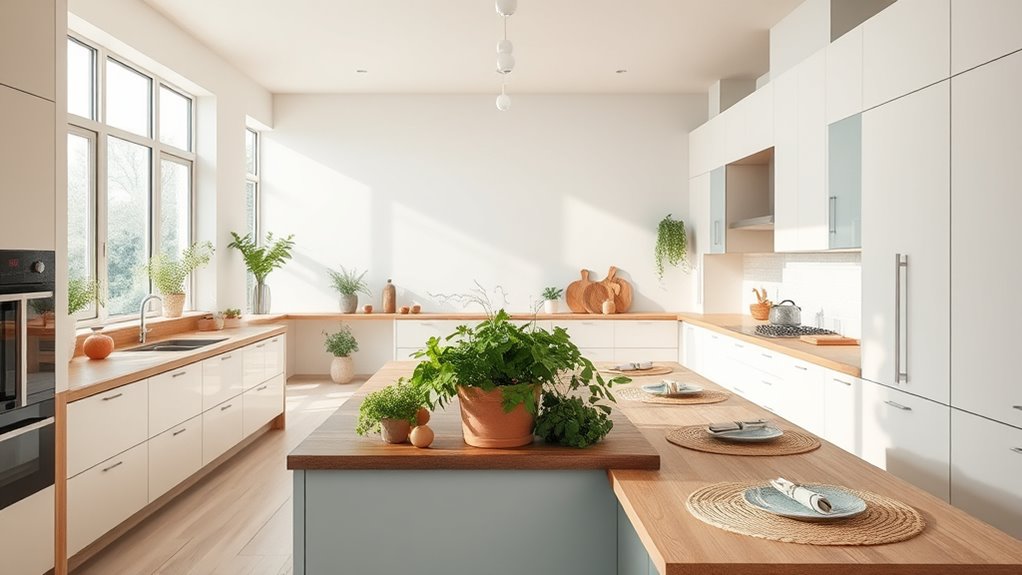
A wellness-focused kitchen isn’t just about aesthetics—it’s designed to promote healthy living and mindful cooking. When you step into this space, every element works together to support your well-being, from the layout to the materials used. One of the key principles is creating ergonomic layouts that make your cooking experience seamless and comfortable. Imagine countertops at the perfect height, so you don’t strain your back or shoulders, and a thoughtfully organized workspace that minimizes unnecessary movement. Everything you need is within easy reach, reducing fatigue and encouraging longer, more mindful meal preparations. This setup not only boosts efficiency but also helps you stay present during cooking, turning it into a calming ritual rather than a hurried task.
In addition to layout, natural materials play a vital role in fostering a nurturing environment. You’ll find sustainable wood countertops, bamboo flooring, and stone accents that lend warmth and authenticity to your kitchen. These materials aren’t just visually appealing—they also contribute to better indoor air quality and create a connection with nature. Using natural elements promotes a sense of tranquility and grounding, making your kitchen a sanctuary where you can focus on nourishing your body and mind. Plus, natural materials tend to age gracefully, developing character over time, which aligns with the idea of mindful living and appreciating the beauty of imperfection. Incorporating non-toxic materials further enhances a healthy environment by reducing chemical exposure.
Designing with ergonomic principles and natural materials also encourages healthier habits. When your kitchen is physically comfortable, you’re more likely to cook nutritious meals at home instead of relying on processed foods. The spatial efficiency of ergonomic layouts reduces clutter and stress, helping you stay organized and mindful. Meanwhile, natural materials, which often require less chemical treatment than synthetic alternatives, support a toxin-free environment. This holistic approach not only benefits your health but also creates a space that invites relaxation and focus. It’s about transforming your kitchen from a functional zone into a mindful space that nurtures your overall well-being.
As an affiliate, we earn on qualifying purchases.
Frequently Asked Questions
How Can Lighting Influence Kitchen Wellness?
Lighting greatly influences your kitchen wellness by boosting your mood and energy. You can maximize natural sunlight to create a bright, inviting space that naturally lifts your spirits. Incorporate adjustable lighting to customize brightness levels for different tasks, reducing eye strain and enhancing safety. Proper lighting also supports healthy circadian rhythms, helping you feel more alert during the day and relaxed at night, making your kitchen a truly nourishing environment.
What Materials Promote Healthier Indoor Air Quality?
You should choose materials like low-VOC paints, natural wood, and non-toxic countertops to promote healthier indoor air quality. Incorporate air purifying plants such as snake plants or pothos, which naturally filter toxins. Additionally, make certain natural ventilation by installing operable windows or exhaust fans, allowing fresh air to circulate and reduce indoor pollutants. These choices create a safer, more nourishing environment in your kitchen.
How to Incorporate Mindfulness Into Kitchen Design?
You can incorporate mindfulness into your kitchen design by choosing mindful color schemes like soft, calming hues that promote relaxation. Create an intentional workspace design that minimizes clutter and emphasizes purposeful layout, helping you stay present during meal prep. Incorporate natural elements and good lighting to foster a peaceful atmosphere. These choices encourage mindfulness, making your kitchen a serene space for nourishing both body and mind.
What Storage Solutions Support a Clutter-Free Space?
Choose smart storage solutions like pantry organization systems and hidden storage options to keep your kitchen clutter-free. Use pull-out shelves, labeled containers, and vertical storage to maximize space and accessibility. Incorporate concealed cabinets or drawers to hide appliances and utensils. Opt for modular units that adapt to your needs, and always prioritize clear organization. With these strategies, you’ll enjoy a tidy, calming kitchen that promotes wellness and efficiency every day.
How Does Kitchen Layout Affect Overall Well-Being?
Your kitchen layout directly impacts your well-being by promoting comfort and reducing stress. Ergonomic counters ensure you don’t strain while cooking, making tasks easier and safer. Incorporating natural ventilation improves air quality and keeps the space fresh, enhancing your mood and energy. A well-designed layout minimizes clutter and creates a flow that supports mindful cooking, ultimately contributing to your overall health and happiness in the space.
Conclusion
By prioritizing wellness-focused design, you create a kitchen that nurtures both body and mind. Did you know that incorporating natural elements and ergonomic layouts can boost mood and reduce stress by up to 30%? When you design with health in mind, you’re not just making a beautiful space—you’re fostering daily well-being. So, start embracing these nourishing principles today and transform your kitchen into a true sanctuary for mind and body.
Evergreen bestsellers Picks
bestsellers
As an affiliate, we earn on qualifying purchases.