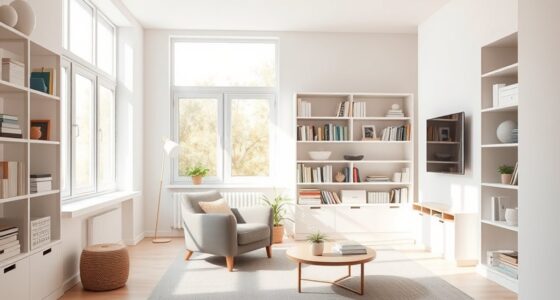
To boost your home office wellness, focus on ergonomic setup and mood-boosting decor. Use a standing desk or adjustable chair to support good posture and reduce discomfort. Maximize natural light by placing your desk near windows and add bright, energizing colors with plants or artwork. Proper lighting and ergonomic choices help sustain your mood and physical health. Keep exploring ways to transform your workspace into a comfortable, inspiring environment that promotes well-being.
Key Takeaways
- Incorporate adjustable standing desks and ergonomic chairs to promote proper posture and reduce physical strain.
- Maximize natural light by positioning your desk near windows, enhancing mood and reducing eye fatigue.
- Use daylight-mimicking lighting sources in darker months to boost mental clarity and focus.
- Add mood-boosting decor such as plants, colorful artwork, and inspiring accessories to create an inviting workspace.
- Regularly adjust your workspace setup to encourage movement and prevent discomfort, supporting overall well-being.
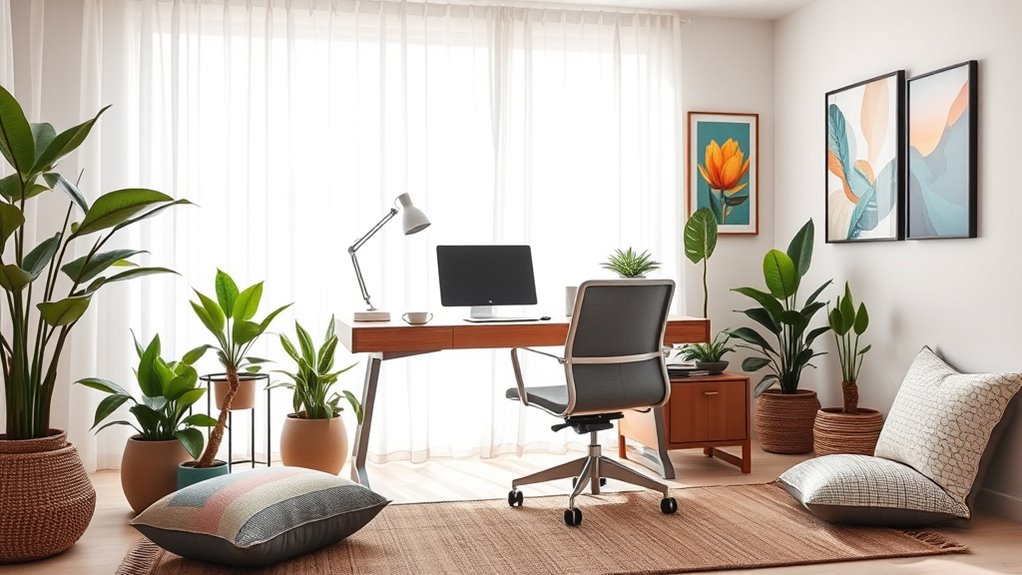
Working from home offers great flexibility, but it also poses unique challenges to your well-being. One of the biggest is maintaining good ergonomics, which directly impacts your comfort and health throughout the day. Investing in a standing desk can make a significant difference. Unlike traditional desks, standing desks allow you to switch between sitting and standing, reducing the strain on your neck, shoulders, and back. When you set up your workspace with a proper height in mind, you’ll find it easier to maintain good posture and stay energized. Pairing a standing desk with an ergonomic chair ensures your arms, wrists, and legs are supported correctly, preventing fatigue and discomfort. Remember, your workspace should promote movement and adjustability—staying in one position for hours isn’t just uncomfortable, it’s unhealthy.
Natural lighting plays a essential role in creating a productive and mood-boosting home office environment. Position your desk near windows to maximize exposure to sunlight throughout the day. Natural light not only reduces eye strain caused by artificial lighting but also helps regulate your circadian rhythm, improving your sleep quality and alertness. When you’re working, avoid harsh glare by using sheer curtains or adjusting your blinds, and consider adding a light source that mimics daylight for darker months. A well-lit workspace energizes your mind and enhances focus, making your workday feel less draining. Plus, natural lighting has been linked to improved mood and overall mental health, which is important when working remotely. Additionally, choosing projectors with high color accuracy can enhance visual clarity for presentations and digital tasks in your home office.
Incorporating standing desks and optimizing natural lighting are simple yet effective ways to boost your well-being at home. These ergonomic choices prevent physical discomfort and promote movement, which is essential for your body’s health. Meanwhile, good lighting can lift your spirits and keep your mind sharp. Together, these elements create a workspace that supports both your physical health and mental clarity. Remember, your home office isn’t just about functionality—it’s about making it a space that nurtures your overall mood and well-being. Small adjustments like raising your desk to standing height or arranging your setup near a window can have a lasting impact on how you feel during the day. Prioritize your comfort and mental health, and your home office will become a place where you can thrive.
Frequently Asked Questions
How Can I Improve Air Quality in My Home Office?
You can improve air quality in your home office by adding air purifying plants like snake plants or pothos, which naturally filter toxins. Also, enhance ventilation by opening windows regularly or installing exhaust fans to circulate fresh air. Avoid smoking indoors and reduce clutter to minimize dust buildup. These steps create a healthier environment, boost your mood, and keep you alert while working.
What Are the Best Plants for Reducing Stress?
Think of plants like lavender and snake plants as your personal stress relief techniques—they’ll help you breathe easier and stay calmer. These plants are known for their calming effects and improve air quality. Incorporate them into your space with calming color schemes, like soft blues or greens, to enhance relaxation. Having these in your home office can turn it into a peaceful sanctuary, making work feel less stressful and more manageable.
How Often Should I Take Breaks During Work?
You should take a break every 60 to 90 minutes during work. Use this time for stretch breaks to prevent stiffness and boost circulation. Remember to stay hydrated by following hydration tips, like drinking a glass of water regularly. These short breaks help you stay focused and energized, reducing fatigue. Incorporate movement and hydration into your routine to improve your overall well-being and productivity throughout the workday.
What Lighting Options Help Prevent Eye Strain?
To prevent eye strain, you should use a combination of task lighting and natural sunlight. Position your desk near a window to maximize natural light, which reduces eye fatigue. Supplement with adjustable task lighting, like a desk lamp, to illuminate your workspace without creating glare. Make sure the lighting isn’t too harsh or dim, and avoid direct reflections on your screen. This setup helps your eyes stay comfortable during long work sessions.
How Can I Personalize My Workspace Without Clutter?
You can personalize your workspace without clutter by incorporating custom storage solutions that keep essentials organized and out of sight. Add personal accents like photos, artwork, or meaningful decor to make the space feel uniquely yours. Choose stylish containers or shelves that match your aesthetic, ensuring everything has a designated spot. This way, your workspace stays tidy, functional, and reflective of your personality, boosting your mood and productivity.
Conclusion
By optimizing your home office with ergonomic furniture and mood-boosting decor, you create a healthier, more inspiring workspace. Remember, studies show that a well-designed environment can boost productivity by up to 15%. So, invest in your well-being—small changes can lead to big improvements in your mood and efficiency. Prioritize comfort and positivity, and you’ll find yourself more motivated and focused every day. Your ideal home office is within reach!