
The three biggest wins for soundproofing without construction are sealing gaps and cracks, adding soft materials, and using quick fixes like acoustic panels and draft stoppers. Seal doors, windows, and outlets with acoustic caulk to prevent sound leaks. Incorporate soft furnishings such as rugs, curtains, and upholstered furniture to absorb noise. Use removable panels and draft stoppers for immediate impact. Keep exploring these simple strategies to create a quieter space with minimal effort.
Key Takeaways
- Use door draft stoppers and acoustic panels for immediate sound absorption without permanent changes.
- Seal gaps around doors, windows, outlets, and baseboards with acoustic caulk to reduce sound leaks.
- Incorporate soft furnishings like rugs, curtains, and upholstered furniture to dampen sound transmission.
- Install removable soundproofing elements such as foam inserts and fabric-covered panels for quick results.
- Combine multiple non-invasive methods for comprehensive noise reduction without construction.

Vellure® Door Draft Stopper for Bottom of Door – Premium Door Sweep for Bottom of Door/Weather Stripping Door Seal (Save Energy – installs Quickly and Easily) Door Strip Ideal for
- Effective Draft Blocking: Silicone door draft stopper with strong adhesive
- Energy Saving: Blocks cold air and heat transfer
- Easy Installation: Install in under 1 minute, trim as needed
As an affiliate, we earn on qualifying purchases.
As an affiliate, we earn on qualifying purchases.
Quick Ways to Reduce Noise Without Construction
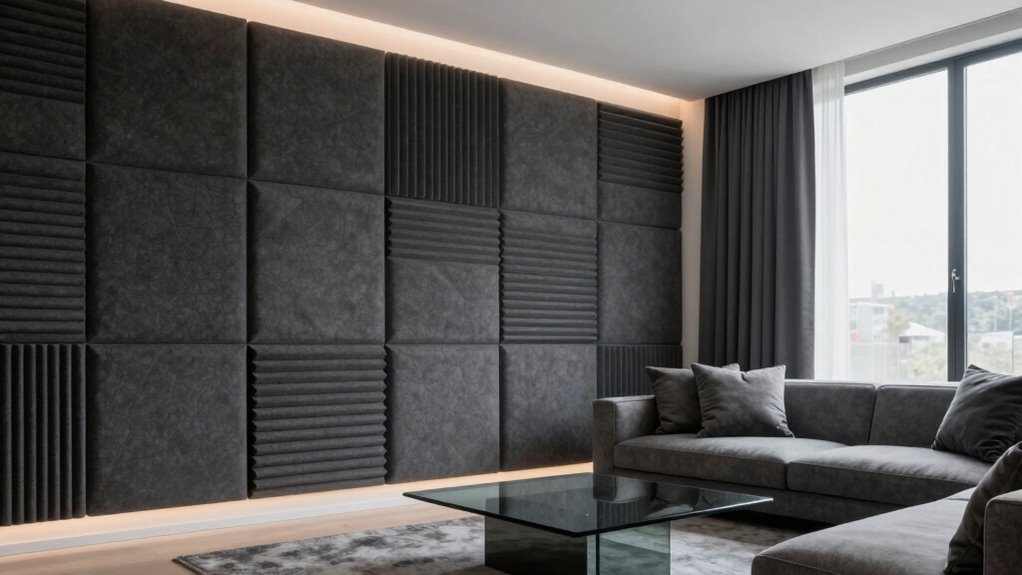
If you want to reduce noise quickly without undertaking any construction, there are several simple strategies you can try. Using door draft stoppers is an effective way to block sound leaks at the base of your doors. They prevent noise from escaping or entering through gaps, making your space quieter instantly. Additionally, installing acoustic panels can markedly absorb sound waves and reduce echo, especially in shared or noisy environments. You don’t need to permanently alter your walls; just place these panels strategically on problem areas. Both options are affordable and easy to implement, providing immediate improvement in your room’s soundproofing. These quick fixes let you enjoy a quieter space without the hassle or expense of construction work. For a more comprehensive approach, consider soundproofing techniques that optimize your space’s acoustics without any permanent modifications.
Seal Gaps and Cracks to Block Sound Leaks

Sealing gaps and cracks around your doors, windows, and walls is one of the most effective ways to block sound leaks and improve your room’s acoustics. Start by installing door sweeps at the bottom of your doors to close gaps and prevent sound from escaping or entering. For windows, consider using window plugs—removable, foam-filled inserts that seal the gaps tightly. Check for small cracks around wall outlets, light switches, and baseboards, and seal them with acoustic caulk or sealant. These simple measures prevent sound from leaking through tiny openings, making your space quieter without major renovations. Additionally, soundproofing techniques can further enhance your room’s acoustic isolation by reducing transmission through structural elements. By sealing these gaps and cracks, you markedly reduce noise transmission, creating a more peaceful environment with minimal effort.
Use Soft Materials and Soundproofing Elements for a Quieter Space
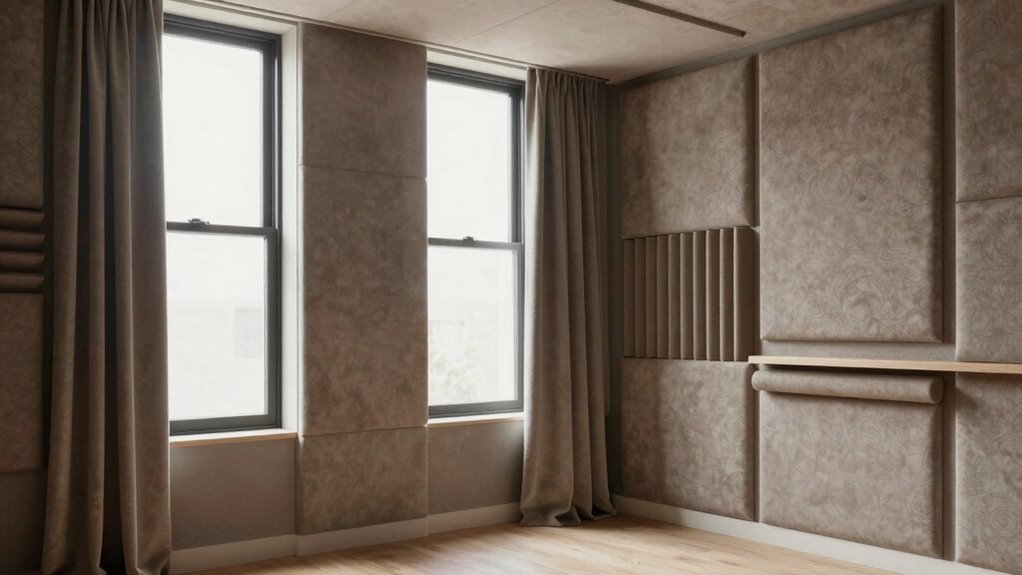
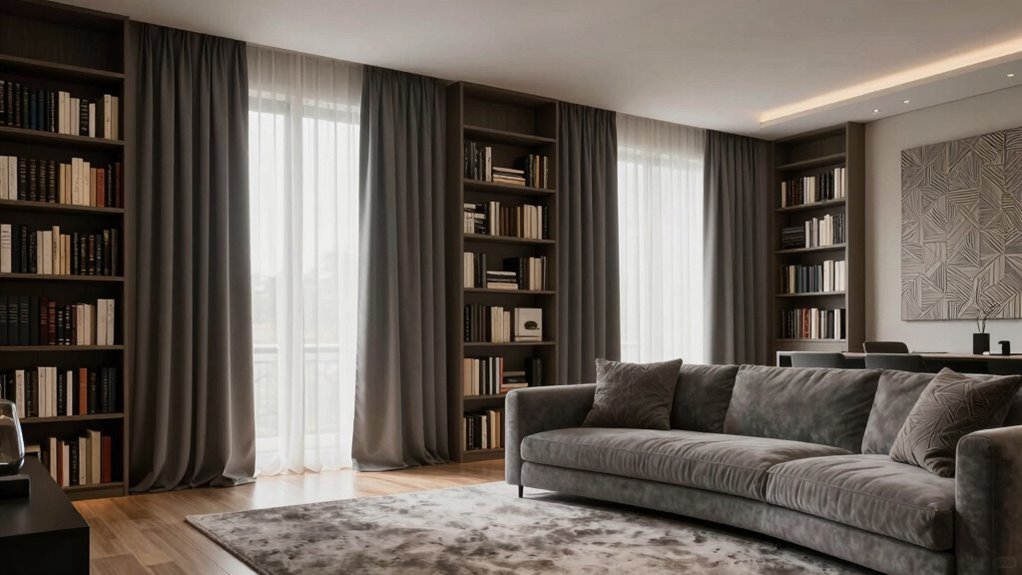
Adding soft materials to your space can considerably reduce noise by absorbing sound waves rather than reflecting them. Incorporate decorative paneling, such as fabric-covered boards or textured wall coverings, to dampen sound transmission. Soft furnishings like plush rugs, thick curtains, and upholstered furniture also play an essential role in absorbing sound energy, making your space quieter. These elements help break up sound waves, preventing echoes and reducing overall noise levels. Positioning soft materials strategically around the room enhances their effectiveness, especially in areas with hard surfaces. Using sound-absorbing materials is a proven method to enhance acoustics without any construction work. By combining decorative paneling with soft furnishings, you can create a more peaceful environment without any construction work. This simple approach markedly improves acoustics and transforms your space into a calmer, more comfortable haven.
Frequently Asked Questions
Can Furniture Placement Improve Soundproofing Effectively?
Yes, furniture placement can improve soundproofing effectively. You should focus on strategic furniture arrangement, such as placing acoustic furniture like upholstered chairs and heavy bookshelves against walls. These items absorb and block sound waves, reducing noise transfer between rooms. By thoughtfully positioning furniture, you can create a barrier that minimizes sound leakage, making your space quieter without needing construction or major renovations.
Are There Temporary Solutions for Soundproofing During Events?
Yes, during events, you can temporarily improve soundproofing by sealing doors with door seals to block noise leaks. Additionally, you can set up portable acoustic panels around the event space to absorb sound and reduce echo. These quick fixes are effective and easy to implement, helping you minimize noise disruptions without any construction. Just guarantee all gaps are sealed and panels are strategically placed for maximum sound absorption.
How Do Window Treatments Impact Noise Reduction?
Ever wonder how window treatments can quiet your space? You can markedly reduce noise by improving window seals and choosing curtains with greater thickness. Thick, heavy curtains act as a barrier, muffling sounds from outside, while proper window seals prevent drafts and noise leaks. Don’t underestimate their power—you’ll notice a difference almost instantly, creating a calmer, more peaceful environment without costly construction.
Can Plants Help Reduce Indoor Noise Levels?
Yes, plants can help reduce indoor noise levels. You can use indoor greenery and plant barriers to absorb sound waves, creating a quieter environment. Strategically placing tall, dense plants near noisy areas acts as natural soundproofing, improving acoustics without construction. Keep in mind that while plants help, they work best when combined with other soundproofing methods for maximum noise reduction.
What Are the Best Portable Soundproofing Options?
Think of portable soundproofing options as your personal noise-canceling shield. You can try material options like dense foam panels, mass-loaded vinyl, or thick curtains to block sound effectively. DIY techniques, such as sealing gaps with weatherstripping or hanging acoustic panels, boost their performance. These solutions are lightweight, flexible, and easy to move, giving you instant peace without any construction hassle. Just set them up, and enjoy a quieter space anytime.
Conclusion
By sealing gaps and embracing soft materials, you’re crafting a cozy sanctuary amidst chaos. Think of it as wrapping your space in a gentle, sound-absorbing blanket that muffles the outside world. These simple tricks turn your home into a fortress of calm, where noise fades into the background like distant thunder. With a few quick fixes, you’re not just reducing sound—you’re creating a peaceful oasis that feels like your personal quiet haven.