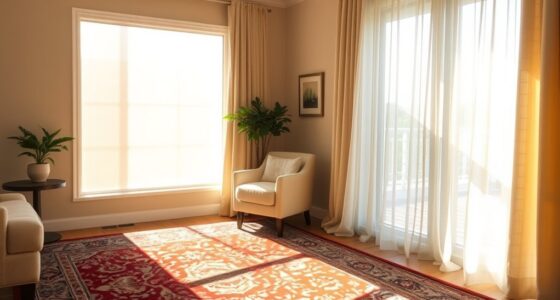
To create a calming space, opt for earth tones like soft beiges, muted greens, calming blues, and gentle browns. These colors mimic nature and foster tranquility, making your environment feel serene and welcoming. Use simple, uncluttered decor that highlights these hues, enhancing harmony and reducing visual chaos. When you incorporate natural light, these shades become even more soothing. Keep exploring to discover how to combine these elements for the ultimate peaceful retreat.
Key Takeaways
- Use soft beiges, muted greens, and gentle browns to create a tranquil, nature-inspired environment that promotes relaxation.
- Incorporate textured accents like linen throws or woven baskets in earthy tones to enhance harmony and tactile comfort.
- Pair natural hues with minimal, uncluttered decor emphasizing clean lines to foster a calm, serene space.
- Maximize natural light to accentuate earth tones, creating a warm, inviting atmosphere ideal for unwinding.
- Maintain a cohesive, balanced palette to reduce visual clutter and support emotional well-being.
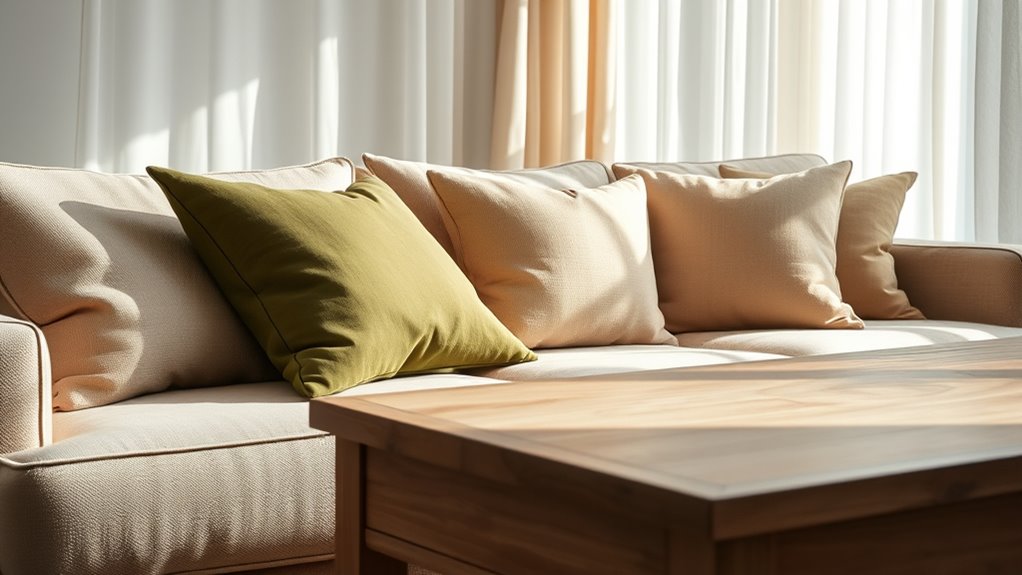
Creating a sense of calm in your space starts with choosing the right color palettes that evoke serenity. When you lean toward nature-inspired hues, you bring the outdoors inside, creating an environment that feels peaceful and grounding. Think soft beiges, muted greens, gentle browns, and calming blues—colors that mimic the natural world and foster a tranquil atmosphere. These tones are versatile and timeless, making them perfect for creating a space that relaxes your mind and rejuvenates your spirit. Incorporating color psychology can help you select shades that promote relaxation and emotional well-being. Using minimalist design techniques complements these hues perfectly. Keep your decor simple and uncluttered, focusing on clean lines and functional pieces. When your surroundings are free of chaos, the subtle beauty of your chosen color palette takes center stage. Minimalism emphasizes quality over quantity, allowing each color to breathe and resonate without distraction. This approach ensures that your space remains serene and inviting, rather than overwhelming or busy. In addition, choosing colors inspired by nature can enhance the overall sense of harmony within your home. Incorporating nature-inspired hues through minimalist design doesn’t mean sacrificing style. Instead, it creates a balanced, harmonious environment that encourages relaxation. For instance, a pale sage green wall paired with sleek, white furniture offers a fresh, calming aesthetic. Add a few textured accents—like woven baskets or linen throws—in earthy tones to deepen the sense of connection to nature. The key is to select a cohesive palette that promotes tranquility and to use simple, unadorned decor to highlight the colors’ natural beauty. When you choose your color scheme, think about how natural light interacts with each hue. Soft morning sunlight can warm earth tones, making them feel even more inviting. Conversely, cooler shades like bluish greys or muted greens work well in spaces with ample daylight, creating a cool, revitalizing vibe. The goal is to craft a space where your eyes can rest and your mind can unwind, with colors that soothe rather than overstimulate.
Frequently Asked Questions
How Can I Incorporate Earth Tones Into Small Spaces Effectively?
To incorporate earth tones into small spaces effectively, start with neutral wall colors and add textural accents like woven rugs or ceramic vases for depth. Choose furniture in warm browns or muted greens to create a cozy feel. Opt for multi-functional pieces that save space, and use natural materials to enhance serenity. These touches make your small space inviting and well-balanced without feeling cluttered.
Are Earth Tones Suitable for Energetic or Lively Environments?
Yes, earth tones can work well in lively environments if you balance them with vibrant color combinations and lively decor accents. You can use rich terracotta, warm browns, or muted greens as a base, then add pops of bold colors like turquoise or coral to energize the space. This blend creates a dynamic atmosphere that feels both grounded and vibrant, perfect for spaces meant to stimulate and inspire.
What Are the Best Accent Colors to Pair With Earth Tones?
Did you know that 85% of interior designers recommend complementary color schemes for creating balanced spaces? When pairing with earth tones, consider muted greens, soft blues, or warm terracotta as accent colors. Neutral accent options like beige, taupe, or creamy whites also enhance serenity without overwhelming the palette. These choices bring depth and harmony, making your space feel inviting and cohesive while highlighting the natural beauty of earth tones.
How Do Lighting Conditions Affect Earth Tone Color Perception?
Lighting conditions greatly affect how you perceive earth tone colors. Natural light highlights warm and cool undertones differently throughout the day, making colors appear more vibrant or subdued. Artificial lighting, such as warm bulbs, can enhance cozy, earthy hues, while cool lighting might mute or alter their tones. When choosing earth tones, consider how both natural and artificial light will interact with your space to guarantee the colors look just right.
Can Earth Tones Help Improve Mental Health and Relaxation?
Think of earth tones as a gentle hug for your mind. Yes, they can improve mental health benefits and boost relaxation techniques. These soothing colors create a calming environment that reduces stress and promotes tranquility. By surrounding yourself with warm, natural hues, you foster a sense of stability and peace. Incorporating earth tones into your space helps you unwind and recharge, making relaxation a natural part of your daily routine.
Conclusion
Embrace these earth tones like a gentle breeze guiding you to tranquility. Let their warm, muted hues wrap around you like a cozy blanket, turning your space into a sanctuary of peace. When you incorporate calming colors, you’re painting a serene landscape within your mind—where stress melts away and serenity blossoms. So, choose your palette wisely and watch as your surroundings become a soothing haven, a quiet oasis amid life’s bustling chaos.