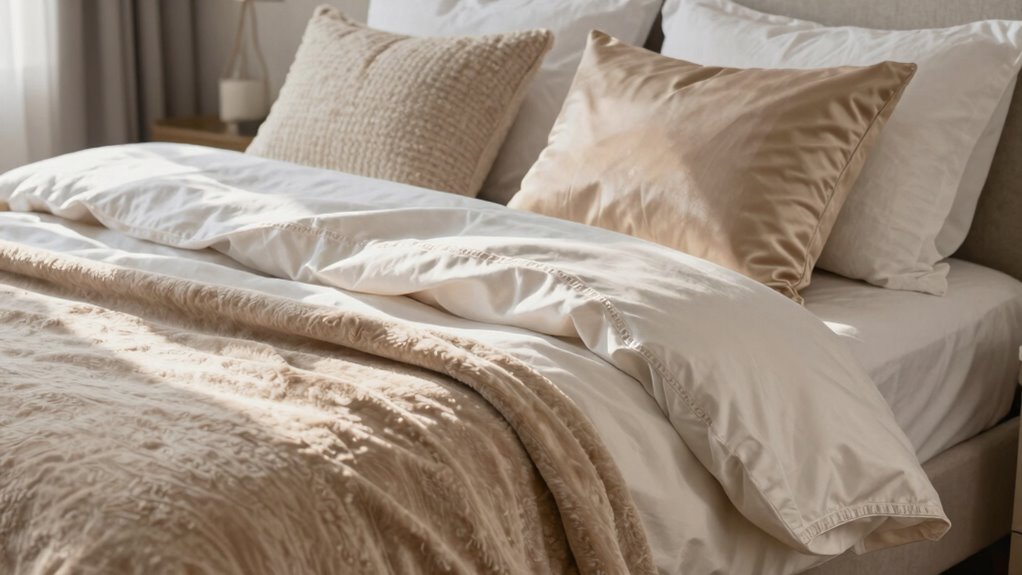

To create a better bedscape with linen, cotton, wool, and silk, start with a snug fitted sheet made from eco-friendly fabric. Layer with a lightweight flat sheet, then add a plush duvet or comforter filled with natural materials like wool or silk for warmth. Mix textures and neutral colors for visual interest and a calming vibe. Incorporate decorative pillows and throws to enhance comfort and style. Keep exploring to discover more tips for a truly inviting sleep space.

Get furniture and decor delivered free — and shop member deals
- Fast, free delivery on millions of items
- Access to Prime Big Deal Days deals on October 6–7
- Prime Video, Amazon Music and more included
Key Takeaways
- Use eco-friendly linens in neutral or pastel tones to create a calm, cohesive color palette for your bedscape.
- Layer different textures like linen, cotton, wool, and silk for visual interest and tactile comfort.
- Start with a snug fitted sheet, then add lightweight sheets, blankets, and decorative covers for depth and style.
- Incorporate eco-friendly cushions and throws to enhance coziness and sustainability.
- Adjust layers seasonally for comfort, blending natural fabrics for a versatile, stylish sleep environment.
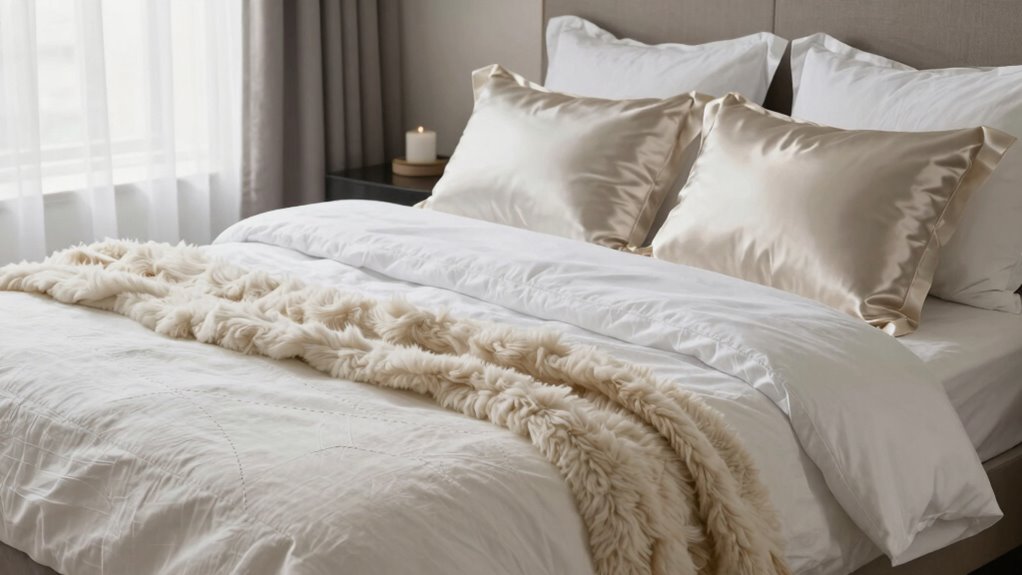
Creating a better bedscape begins with understanding that your bedroom should be a sanctuary of comfort and style. To achieve this, focus on selecting high-quality linens made from eco-friendly materials. Linen, cotton, wool, and silk not only elevate your sleep experience but also support sustainable practices. When choosing these fabrics, look for certifications or labels that indicate eco-conscious manufacturing, ensuring your bedding aligns with your desire for environmentally responsible living. These materials breathe well, resist allergens, and age beautifully, making them perfect staples for a cozy, sustainable bed.
Choose eco-friendly linens like linen, cotton, wool, and silk for a sustainable, stylish, and comfortable bedscape.
Once you’ve selected your fabrics, mastering bedding layering techniques can make a significant difference. Start with a fitted sheet that fits snugly over your mattress, providing a smooth base. Add a flat sheet or a lightweight cotton or linen sheet, which acts as a comfortable barrier and adds to the layered look. Then, incorporate a plush duvet or comforter, choosing wool or silk fillings if you want natural insulation that’s both breathable and hypoallergenic. Wool, in particular, regulates temperature effectively, keeping you warm in winter and cool in summer. Layer your bedding with a decorative duvet cover or throw in linen for a relaxed, inviting aesthetic.
Next, layer with a variety of blankets and throws. Wool throws add texture and warmth, while silk blankets lend a touch of luxury. These additions not only enhance comfort but also allow you to adapt to seasonal changes. When stacking, aim for a mix of textures and weights to create visual interest and versatility. For instance, a lightweight cotton sheet, a wool blanket, and a silk accent pillow combine durability with elegance. Incorporating eco-friendly materials into your bedding not only benefits the environment but also creates a healthier sleep environment for you. Additionally, choosing sustainable fabrics can extend the lifespan of your bedding, making your investment more cost-effective over time. Doing so also supports a commitment to biodiversity by reducing the environmental impact of textile production. Using textiles made from renewable resources further enhances the sustainability of your bedding choices.
To truly elevate your bedscape, consider the visual flow and color harmony. Stick to a neutral palette or soft pastels that complement your room’s decor, and mix textures to keep it inviting. Incorporate eco-friendly materials in your pillowcases, shams, and decorative cushions, ensuring that every element contributes to a cohesive, sustainable look. Remember, bedding layering techniques aren’t just about aesthetics—they’re about creating a functional, cozy environment. Adjust layers as needed, and don’t be afraid to experiment with different combinations until your bed feels just right. With thoughtful choices in fabric and layering, you craft a sleep haven that’s both stylish and eco-conscious.
As an affiliate, we earn on qualifying purchases.
Frequently Asked Questions
How Do I Choose the Right Bedding for Different Seasons?
To choose the right bedding for different seasons, consider duvet fill options like down for winter’s warmth or lightweight cotton for summer’s breathability. For cooler months, opt for thicker, high thread count sheets, while lighter, lower thread count sheets work well in warmer weather. Adjust your bedding based on temperature, and select duvet fills and thread counts that keep you comfortable all year round.
Can Mixing Different Fabric Types Improve Sleep Comfort?
Mixing different fabric types can markedly improve sleep comfort, especially since studies show that varied textures promote better temperature regulation. Fabric compatibility matters here—you might combine linen’s breathability with wool’s insulation for year-round comfort. This comfort enhancement helps prevent overheating or chilling during the night. By thoughtfully layering fabrics like silk and cotton, you create a dynamic bedscape that adapts to your needs, ensuring restful, comfortable sleep every night.
How Often Should I Wash and Replace My Bedding?
You should wash your bedding weekly to maintain cleanliness and comfort, especially if you have allergies or sensitive skin. Replace your bedding every 1-2 years, depending on bedding durability and fabric sustainability. Regular washing keeps fabrics fresh and extends their lifespan, while timely replacement ensures you enjoy supreme comfort and hygiene. Prioritize high-quality linens to maximize durability, and choose sustainable fabrics to support eco-friendly practices.
What Are the Best Ways to Care for Delicate Fabrics Like Silk?
To care for delicate fabrics like silk, always hand wash or use a gentle cycle with cold water. Use a mild detergent and avoid fabric softening, which can damage the fibers. For stain removal, gently dab with a mixture of water and mild soap, avoiding harsh chemicals. Air dry your silk items away from direct sunlight to prevent fading and maintain their luxurious feel.
How Do I Prevent Allergies From Bedding Materials?
You might love your cozy bedding, but allergies don’t have to crash your sleep party. To prevent allergies, opt for hypoallergenic materials and allergy-friendly bedding. Wash your sheets weekly in hot water, and consider allergy-proof covers for pillows and mattresses. Keep your bedroom ventilated and free of dust. These simple steps help you enjoy your bed without sneezing fits, proving comfort and health can go hand in hand.
Conclusion
Creating a beautiful bedscape with linen, cotton, wool, and silk transforms your space into a cozy retreat. By mixing textures and choosing quality fabrics, you enhance comfort and style effortlessly. Did you know that a well-made bed can improve sleep quality by up to 20%? So, invest in good linens and layer thoughtfully—your bedroom becomes more inviting and restful. With a little effort, you’ll wake up feeling refreshed and ready to face the day.
Halloween Picks
halloween
As an affiliate, we earn on qualifying purchases.