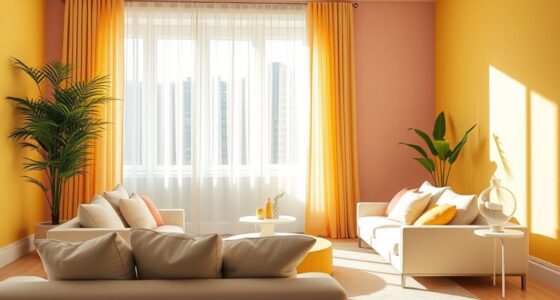
Creating a seamless indoor-outdoor flow enhances your wellness space by inviting natural light and connecting you with nature. Use large windows, sliding or bi-fold doors, and outdoor patios that feel like extensions of your indoor area. Incorporate cozy outdoor furniture, soothing lighting, and consistent decor to unify these spaces. Clear passageways and landscaping visuals guide your movement naturally. Keep exploring to discover how these design tips can transform your home into a health-enhancing sanctuary.
Open a free Amazon Business account
Business pricing, bulk buying and tax-exempt orders.
As an affiliate, we earn on qualifying purchases.
Key Takeaways
- Incorporate large windows and sliding doors to connect indoor spaces smoothly with outdoor areas.
- Design outdoor zones with comfortable furniture and natural elements that mirror indoor decor.
- Use consistent lighting and color schemes to create visual harmony between indoor and outdoor environments.
- Ensure unobstructed transition zones with pathways and minimal barriers for easy movement.
- Enhance well-being by maximizing natural light and integrating nature-inspired features into both spaces.

Creating a seamless indoor-outdoor flow transforms your living space into a versatile retreat. When you open up your home to the outdoors, you invite natural lighting to flood your rooms, instantly making your space feel brighter, more inviting, and connected to nature. Incorporating large windows, sliding glass doors, or bi-fold doors allows sunlight to pour in, reducing the need for artificial lighting during the day. This connection isn’t just aesthetic; it enhances your mood and promotes a sense of well-being. When natural lighting streams in, you’ll notice your indoor spaces feel more expansive and lively, blurring the line between inside and outside. Integrating expert appliance recommendations, such as outdoor lighting solutions, can further enhance this seamless experience.
Opening your home to natural light creates a brighter, more connected, and inviting indoor-outdoor living experience.
To maximize this flow, consider designing outdoor patios that extend from your living area. These patios serve as natural extensions of your indoor space, creating a seamless transition that encourages you to spend more time outdoors. Thoughtfully placed patio furniture, cozy seating, and even outdoor rugs can make these spaces feel just as inviting as your indoor living room. With easy access via sliding or folding doors, you can effortlessly move from the comfort of your sofa to the fresh air outside. This fluid transition encourages spontaneous outdoor gatherings or quiet moments alone with a book, making your home a true sanctuary.
Lighting plays a pivotal role in establishing this seamless connection. During the day, maximize natural light by keeping window treatments minimal or using sheer curtains that let sunlight filter through. At night, incorporate layered lighting—outdoor lanterns, string lights, and soft ambient fixtures—to maintain the cozy, inviting atmosphere. These lighting choices help you enjoy your outdoor patio even after sunset, extending your living space into the evening hours. When your indoor and outdoor areas are well-lit and visually connected, it’s easier to switch between spaces without feeling disjointed or confined.
Landscaping also contributes profoundly to the flow. Use pathways, low hedges, or planters to visually guide your eyes from indoor windows to the outdoor patio. Keep the transition area clear and unobstructed, so it feels like a natural extension rather than a separate zone. Incorporate elements like outdoor kitchens, fire pits, or built-in seating that match your indoor decor style, tying the spaces together harmoniously. This consistency in design creates a unified look that encourages you to move freely between indoors and outdoors, fostering wellness and relaxation.
Ultimately, creating a seamless indoor-outdoor flow isn’t just about architecture; it’s about cultivating an environment that refreshes your mind and body. By blending natural lighting, outdoor patios, and thoughtful design, you craft a living space where you feel connected, relaxed, and uplifted every day.
Frequently Asked Questions
How Can I Maximize Natural Light in My Wellness Space?
To maximize natural light in your wellness space, focus on strategic window placement to let in ample sunlight. Use solar shading devices to control glare and heat, ensuring comfort without sacrificing brightness. Keep windows unobstructed by heavy drapes or furniture, and consider skylights or glass doors for additional light. These steps create a bright, inviting environment that enhances your wellness experience naturally and seamlessly.
What Materials Are Best for Weather-Resistant Indoor-Outdoor Transitions?
You should choose weatherproof finishes like powder-coated metals or treated woods to withstand the elements. For passageways, opt for durable flooring such as composite decking, stamped concrete, or porcelain tiles that resist moisture and wear. These materials ensure a seamless indoor-outdoor flow, maintaining aesthetic appeal while providing longevity. By selecting weather-resistant finishes and sturdy flooring, you’ll create a resilient, beautiful space that endures season after season.
How Do I Ensure Privacy Without Disrupting Flow?
You can guarantee privacy without disrupting flow by using privacy screening and sound barriers strategically placed along outdoor edges. Opt for natural materials like bamboo or hedges that blend seamlessly with your space, maintaining the aesthetic. Incorporate lightweight screens or outdoor curtains that can be adjusted as needed. These elements provide visual and sound privacy while preserving the open, airy feel, creating a harmonious indoor-outdoor wellness space.
What Landscaping Enhances Indoor-Outdoor Harmony?
Oh, because everyone knows the secret to perfect harmony is a garden full of garden pathways and outdoor sculptures, right? You should incorporate winding pathways that invite exploration and blend seamlessly with your indoor spaces. Add outdoor sculptures as focal points to elevate the aesthetic and create visual connections. This thoughtful landscaping enhances indoor-outdoor harmony, making your wellness space feel naturally integrated and inviting, not just a backyard afterthought.
How Can I Incorporate Sustainable Design in Outdoor Wellness Areas?
You can incorporate sustainable design in your outdoor wellness areas by using eco-friendly materials like reclaimed wood, bamboo, and recycled metals for furniture and structures. Plant natural, native species to promote biodiversity and reduce water consumption. Incorporate rain gardens or permeable paving to manage runoff sustainably. These choices create a harmonious, eco-conscious space that enhances your wellness environment while supporting the planet.
Conclusion
Creating a seamless indoor-outdoor flow transforms your space into a wellness sanctuary. By blurring the lines between inside and out, you foster a calming environment that boosts mental health and promotes relaxation. Did you know that homes with integrated outdoor spaces see a 20% increase in overall well-being? Embrace open designs and natural elements to enhance your daily life. With thoughtful planning, you’ll turn your home into a sanctuary of peace and vigor.
Fall yard work Picks
leaf blowers
As an affiliate, we earn on qualifying purchases.