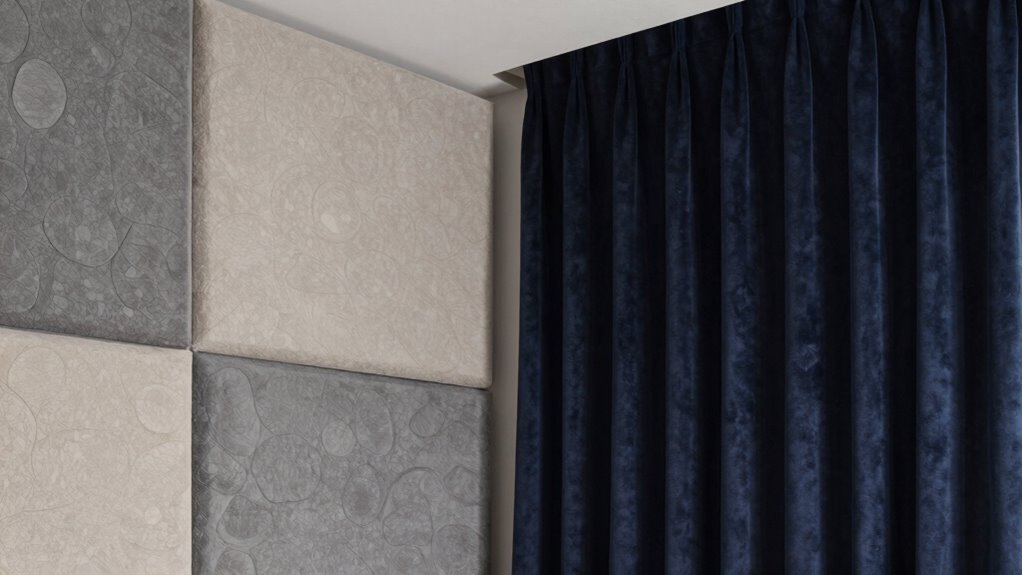
Acoustic panels are generally more effective at reducing echo because they absorb mid and high-frequency sounds internally, especially in larger spaces. Curtains mainly dampen high-frequency reflections on surfaces and add mass, but are less effective alone for overall echo reduction. Combining both can provide better results by targeting different sound types. Want to know which option suits your space best? Keep exploring to find the ideal sound absorption solution for you.
Key Takeaways
- Acoustic panels absorb sound internally, effectively reducing echo across a broad frequency range, especially in larger or reflective rooms.
- Curtains primarily dampen high-frequency sounds through mass and surface reflection but are less effective for low or mid frequencies.
- Acoustic panels are more reliable for comprehensive echo control, while curtains are best for quick, aesthetic, and localized sound dampening.
- Combining both treatments targets different frequencies, providing a more balanced and effective reduction of echo.
- Proper placement and material density significantly influence each treatment’s effectiveness in reducing room echo.
What Causes Echo and Poor Sound Quality in Rooms?

Echo and poor sound quality often occur when sound waves bounce off hard surfaces like walls, floors, and ceilings without enough absorption. This creates unwanted reflections that interfere with clarity. Soundproof barriers, such as thick walls or insulating materials, can help contain sound, but they don’t always improve room acoustics. Instead, they prevent noise from escaping or entering, not necessarily reducing echoes inside the space. Poor acoustics happen when surfaces reflect most sound rather than absorb it, causing reverberation. To improve this, you need to manage how sound interacts with your room’s surfaces. Properly addressing room acoustics involves reducing reflective surfaces or adding absorbent materials, which helps minimize echo and enhances overall sound quality. Additionally, understanding the influence of traditional cultural practices such as Native dance traditions can inspire innovative acoustic solutions that respect the environment and cultural heritage.
How Do Acoustic Panels and Curtains Absorb Sound Differently?

Both acoustic panels and curtains aim to reduce sound reflections, but they do so through different mechanisms. The material differences considerably influence how they absorb sound. Acoustic panels are typically made from porous materials like foam or mineral wool, which allow sound waves to penetrate and dissipate as heat through internal friction. Curtains, on the other hand, are often made from dense fabrics that reflect some sound while absorbing others, especially when thick or layered. Their sound wave interaction is mainly surface-level, bouncing off or partially soaking in the fabric. Acoustic panels actively break up sound waves within a space, reducing echo more efficiently, while curtains primarily dampen sound by adding mass and reducing reflections at surfaces. Recognizing the sound absorption mechanisms of each option helps you choose the right solution.
Are Acoustic Panels Effective at Reducing Echo in Small and Large Spaces?
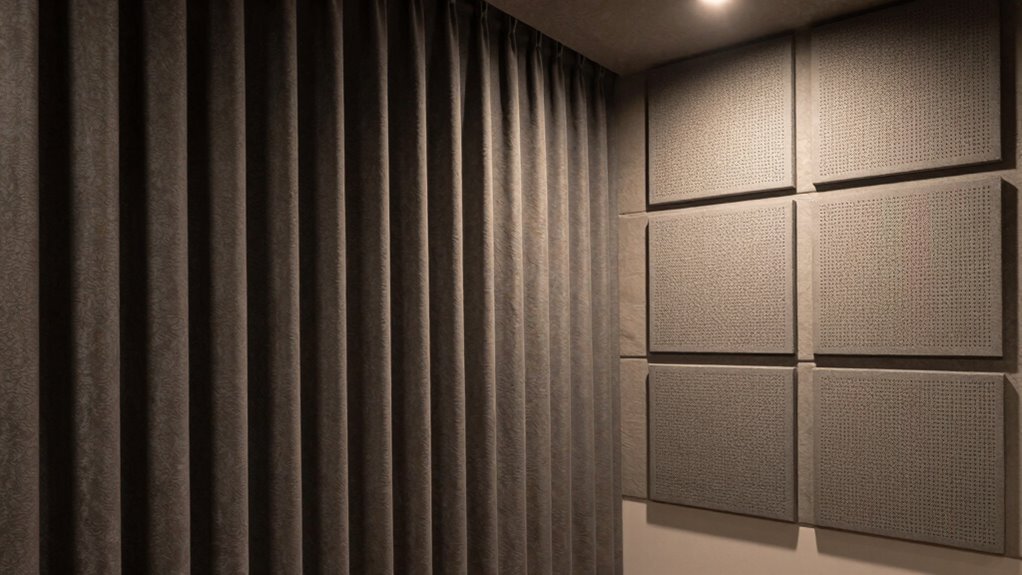
Are acoustic panels effective at reducing echo in both small and large spaces? Yes, but their effectiveness depends on room size and material density. In small rooms, panels can absorb sound waves quickly, minimizing echo and creating a clearer environment. Larger spaces pose more of a challenge because sound reflections travel farther, requiring more or thicker panels for ideal results. Material density plays a key role—denser materials absorb sound more effectively, especially at higher frequencies. For big rooms, using high-density panels strategically placed can considerably reduce echo. In smaller rooms, even lightweight panels can have a noticeable impact. Overall, the right combination of room size and panel material density determines how well acoustic panels control echo in any space. Additionally, understanding sound absorption principles can help optimize panel placement and material selection for maximum effectiveness.
Can Curtains Dampen Echo? Pros and Cons Explained

Curtains can help reduce echo by absorbing some sound, but their effectiveness depends on material and placement. They offer aesthetic and practical benefits, like style and flexibility, making them easy to update. However, they also have limitations and may not fully control sound in larger or highly reflective spaces. Incorporating sound absorption techniques can further enhance acoustic treatment.
Effectiveness in Sound Absorption
While curtains can help reduce echoes in a room, their effectiveness in sound absorption depends on several factors. Material comparison plays a key role—thicker, dense fabrics like velvet absorb more sound than lightweight materials. The type of fabric influences how well curtains dampen echo, with heavier options providing better results. Installation methods also matter; hanging curtains from ceiling to floor covers more surface area, improving their ability to absorb sound waves. Proper placement in the room enhances their effectiveness, especially when they are close to reflective surfaces. Keep in mind that curtains tend to absorb high-frequency sounds better than low-frequency ones. Overall, while they can reduce echo, their sound absorption capacity is limited compared to specialized acoustic treatments. Additionally, understanding sound absorption principles can help you choose the most effective solution for your space.
Aesthetic and Practical Benefits
Curtains not only help reduce echoes but also add to the aesthetic appeal of a room, making them a popular choice for homeowners seeking both function and style. They can enhance your decor style, whether you prefer modern minimalism or classic elegance. The installation process is straightforward, often requiring just a curtain rod and some hooks, making it easy to update your space without hassle. Additionally, curtains offer practical benefits like privacy and light control, which boost their appeal. They can be easily changed to match seasonal decor or evolving tastes. By choosing the right fabric and color, you can create a cozy atmosphere while addressing sound issues. Proper sound absorption techniques can further improve acoustic quality in your space. Overall, curtains blend style and practicality, enriching your room’s look and functionality simultaneously.
Limitations and Challenges
Although curtains can help reduce some echoes, they often fall short of providing complete sound absorption in larger or highly reflective rooms. One challenge is installation; hanging thick curtains evenly can be cumbersome, especially in spaces with irregular layouts or limited mounting options. Additionally, curtains require regular maintenance—washing or replacing them to prevent dust buildup and guarantee continued effectiveness. Over time, curtains may sag or fade, reducing their acoustic performance, which adds to maintenance considerations. They also tend to absorb sound primarily at specific frequencies, leaving some echoes unaddressed. These limitations mean curtains aren’t always a reliable standalone solution for echo control, especially in environments demanding high sound quality. You might need to combine them with other acoustic treatments for ideal results.
Which Is Better for Your Space: Acoustic Panels or Curtains?
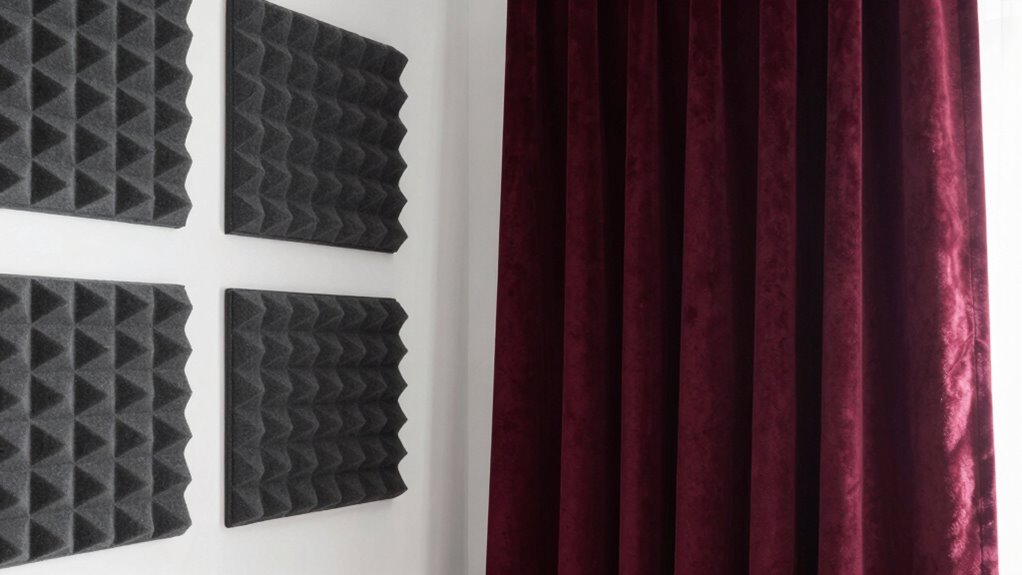
When choosing between acoustic panels and curtains, you’ll want to contemplate their sound absorption efficiency and how well they match your space’s style. Acoustic panels typically offer better noise reduction, but curtains can be more versatile and easier to incorporate into your decor. Ultimately, the best choice depends on your specific needs and aesthetic preferences. Considering the appropriate soundproofing techniques can enhance the overall acoustic environment of your space.
Sound Absorption Efficiency
Choosing between acoustic panels and curtains for sound absorption depends largely on their efficiency, as each offers different levels of noise reduction. Acoustic panels typically have higher material effectiveness, providing superior sound dampening, especially for mid to high frequencies. Curtains, on the other hand, are less effective but can still reduce echo in larger spaces. Your decision also hinges on installation methods—panels require mounting on walls, while curtains are easily hung and moved. Consider these points:
- Material effectiveness varies, with panels often outperforming curtains in noise reduction.
- Installation methods influence how seamlessly each option fits your space.
- For ideal sound absorption, combining both can address a broader frequency range.
- Additionally, sound absorption efficiency can be improved by selecting the right combination of materials and placement strategies.
Ultimately, your space’s needs determine which solution offers better sound absorption efficiency.
Aesthetic Compatibility
The aesthetic compatibility of acoustic panels and curtains depends largely on your interior style and personal preferences. Curtains seamlessly blend with various decor themes, offering flexibility in color coordination and fabric choices. Acoustic panels, however, can be designed to match or complement your existing decor, especially when using custom covers. To help visualize, consider this comparison:
| Feature | Acoustic Panels | Curtains |
|---|---|---|
| Decor Integration | Customizable, modern look | Traditional, versatile |
| Color Coordination | Wide options, paintable | Wide variety, fabric choices |
| Style Compatibility | Sleek, minimalist | Cozy, decorative |
| Material Flexibility | Rigid or soft finishes | Soft, textured fabrics |
| Overall Aesthetic | Contemporary or subtle | Warm, homely |
Choosing depends on whether you prioritize a sleek, integrated look or a soft, decorative feel. Additionally, considering sound absorption capabilities can help you select the most effective option for your space.
How Much Do Acoustic Treatments Cost, and How Do They Look?

Acoustic treatments vary widely in cost, depending on the materials and design you choose. You’ll find options ranging from budget-friendly curtains to high-end panels, making a thorough cost comparison essential. When considering aesthetic options, think about how treatments will blend with your space’s style. Incorporating research-backed insights into your decision can help ensure you select the most effective solution. Your budget and style preferences will influence your choice. Remember, investing in quality treatments can enhance the look of your room while reducing echo. Balancing cost with aesthetics helps you find a solution that’s both effective and visually appealing.
Should You Combine Acoustic Panels and Curtains for Better Results?
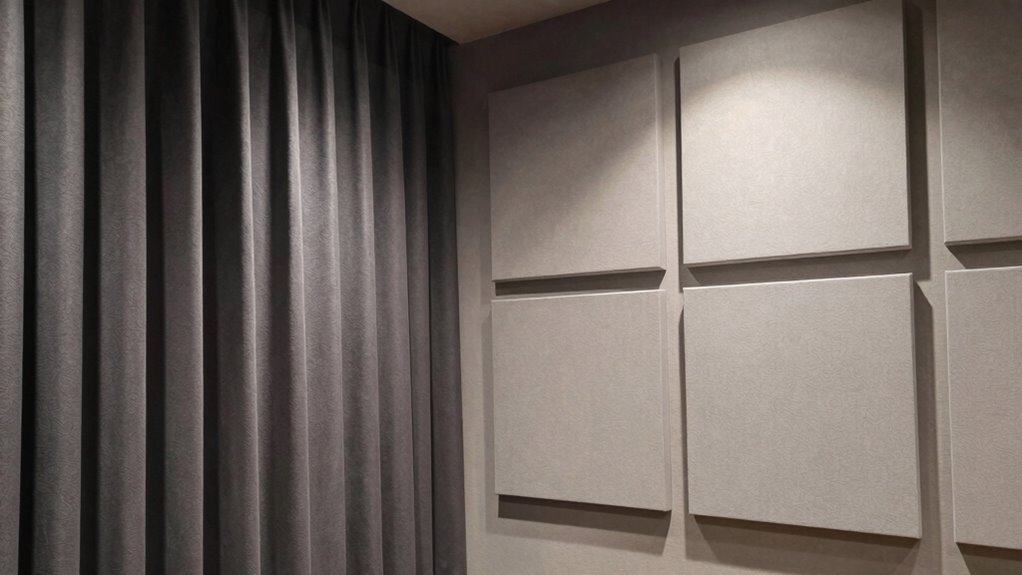
Combining acoustic panels and curtains can substantially improve your room’s sound quality because each treatment targets different aspects of sound absorption. Acoustic panels mainly absorb mid to high frequencies, reducing echo and reverberation, while curtains help dampen sound reflections and control bass buildup. Using both creates a dual purpose setup that maximizes sound control across a broader frequency range. Plus, integrating curtains with panels offers installation ease, since they can be positioned independently and adapted to your space’s specific needs. This combination is especially effective if you want a versatile, less invasive solution that doesn’t compromise room aesthetics. Ultimately, blending these treatments allows you to tailor sound management more precisely, making your space more acoustically balanced without overcomplicating installation.
Common Mistakes When Using Sound Absorbers and How to Avoid Them

Many people make the mistake of installing sound absorbers without considering their placement or the specific frequencies they target. This oversight can diminish their effectiveness and hinder soundproof barriers from functioning properly. To avoid this, focus on strategic placement based on acoustic engineering principles.
- Placing panels only on one wall can leave echo issues unresolved.
- Ignoring the room’s frequency profile may cause inefficient absorption.
- Overlooking the importance of combining soundproof barriers with absorbers can limit noise reduction.
How to Choose the Right Soundproofing Solution for Your Room and Budget

Choosing the right soundproofing depends on your budget and how you’ll use the room. Consider what level of noise reduction you need and what you can afford to spend. Balancing these factors helps you find the most effective solution for your space.
Budget Considerations
When selecting soundproofing solutions, your budget plays a crucial role in determining the best option for your space. To make an informed choice, consider the cost comparison between acoustic panels and curtains, and how easy each is to install.
- Acoustic panels often have a higher upfront cost but offer superior sound absorption, especially in larger rooms.
- Curtains tend to be more budget-friendly and are generally easier to install, making them suitable for quick fixes.
- Think about long-term savings—while curtains are cheaper initially, acoustic panels may last longer and require less frequent replacement.
Balancing your budget with installation ease and soundproofing effectiveness will help you find the right solution without overspending.
Room Usage Needs
The way you plan to use your room considerably influences which soundproofing solution is best suited for your needs and budget. For example, a home theater requires effective echo reduction without compromising decor style, making acoustic panels ideal due to their aesthetic options. If you need a quick, non-permanent fix, curtains are easier to install and blend seamlessly with your decor. Consider the installation process: panels may involve more effort but offer better sound absorption, while curtains are more straightforward and versatile. Use this table to compare options:
| Room Use | Recommended Solution |
|---|---|
| Home theater | Acoustic panels with decorative options |
| Multi-purpose living | Curtains for flexibility and ease |
| Recording studio | High-density acoustic panels |
| Casual lounge | Light, stylish curtains |
Final Tips for Creating a Quiet, Comfortable Environment
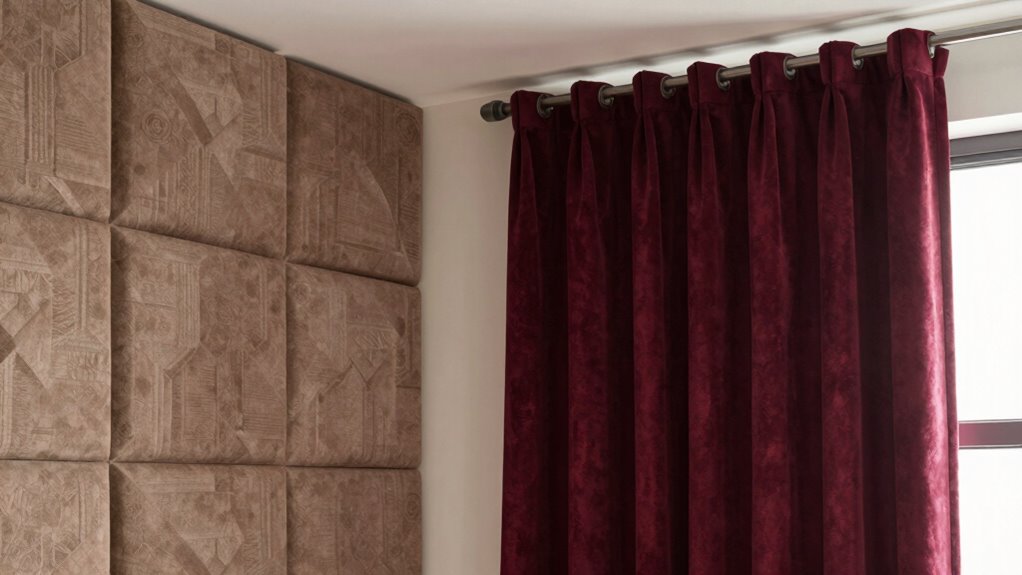
Creating a peaceful and comfortable environment requires thoughtful choices about sound management. To optimize your space, compare materials carefully—acoustic panels often offer better sound absorption, but curtains can be a versatile option. When selecting solutions, consider installation tips: secure panels at ear level and hang curtains properly for maximum effect. Focus on strategic placement to reduce echo and noise effectively. Remember, combining different materials can enhance overall soundproofing. Keep in mind that simplicity is key; don’t overdo it, and guarantee your choices fit your room’s purpose. By balancing material comparison and installation tips, you’ll create a space that’s both quiet and inviting. Small adjustments can make a big difference in achieving your ideal acoustic environment.
Frequently Asked Questions
How Do Acoustic Panels and Curtains Impact Room Aesthetics?
You notice that acoustic panels and curtains considerably impact your room aesthetics by complementing your decor style. Acoustic panels come in various material options, from fabric-covered to sleek, modern designs, blending seamlessly into contemporary spaces. Curtains add texture and color, enhancing warmth and style. Both choices allow you to personalize your environment, balancing sound absorption needs with visual appeal, so your room feels both functional and stylish.
Can Placement of Panels and Curtains Improve Sound Absorption?
Yes, proper placement of acoustic panels and curtains can considerably improve sound absorption. You should position panels at primary reflection points and hang curtains strategically over windows or open areas. Consider decorative options that match your room’s style without overshooting your budget, as cost considerations matter. When placed thoughtfully, these elements not only enhance acoustics but also complement your decor, creating a more comfortable and visually appealing space.
Are There Maintenance Differences Between Acoustic Panels and Curtains?
Like tending a garden, maintaining acoustic panels and curtains requires regular care. Acoustic panels generally need less frequent cleaning because their material durability withstands dust and stains better. Curtains, however, demand more frequent cleaning, especially if they’re fabric, to prevent dust buildup. You’ll find that panels tend to be more durable and low-maintenance, while curtains might need more attention to keep them looking and functioning their best over time.
What Environmental Factors Affect the Longevity of Sound Treatments?
Environmental factors like humidity, temperature fluctuations, and exposure to sunlight can impact the longevity of your sound treatments. If you don’t consider material durability, these elements may cause warping, fading, or deterioration over time. For maximum lifespan, choose materials suited to your environment, and protect your acoustic panels or curtains from extreme conditions. Proper placement and maintenance help guarantee your sound treatments stay effective longer, saving you money and effort.
Do Acoustic Panels or Curtains Contribute More to Room Insulation?
If you’re after serious room insulation, curtains take the crown, offering notable soundproofing benefits and easier installation. Acoustic panels? Well, they’re great for reducing echo but aren’t as effective at insulating against external noise. So, if you’re tired of neighbors’ midnight parties, curtains are your best bet. Just beware of installation challenges—hanging curtains is way simpler than mounting acoustic panels, unless you enjoy drilling holes.
Conclusion
Remember, when it comes to soundproofing, you get what you pay for, so choose wisely. Acoustic panels and curtains each have their strengths, but combining them can give you the best results. Don’t overlook proper placement and installation—little efforts make a big difference. Ultimately, creating a quiet, comfortable space takes patience and patience. As the saying goes, “The journey of a thousand miles begins with a single step”—start improving your room today.