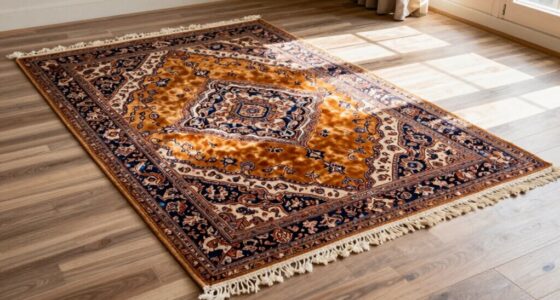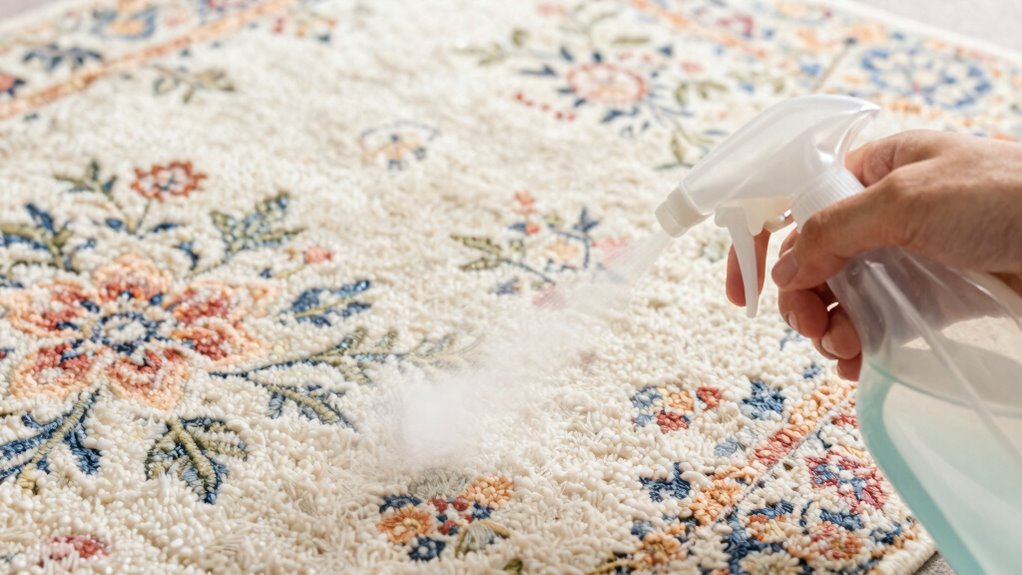

To make certain a rug accident cleaner is safe for delicate fibers, you should look for pH-balanced solutions that are gentle and free from harsh chemicals. Use light, careful techniques like blotting or mild agitation to avoid fiber stress or damage. Applying products properly and testing small areas first helps prevent discoloration or weakening. When you choose the right cleaner and approach, your rug stays vibrant and intact. Want to discover more tips for safe cleaning? Keep exploring below.

Get furniture and decor delivered free with Prime
- Fast, free delivery on millions of items
- Prime Video, Amazon Music and more included
- Member-only deals all year
Key Takeaways
- Uses gentle, non-abrasive application methods like blotting or light agitation to prevent fiber damage.
- Formulated with pH-balanced ingredients close to neutral to protect delicate fibers and dyes.
- Designed specifically for delicate materials such as wool or silk, ensuring safe cleaning.
- Avoids harsh chemicals and residues that can weaken fibers or cause discoloration.
- Includes clear instructions and testing recommendations to minimize risk of damage during use.
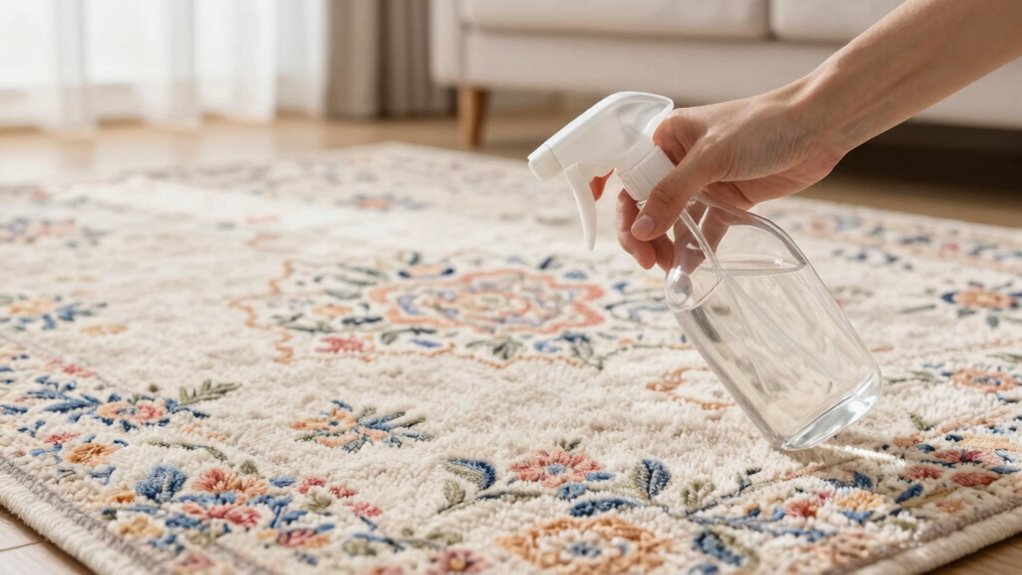
Have you ever wondered what makes a rug accident cleaner safe for delicate fibers? It’s a great question because many cleaning products can cause more harm than good, especially when dealing with sensitive materials. The key lies in understanding how stain removal techniques and pH balance considerations work together to protect your rug’s fibers. When selecting a cleaner, you want to focus on products that are gentle yet effective, capable of tackling stains without compromising the integrity of the delicate weave.
Stain removal techniques are essential because they determine how well a cleaner can eliminate spots without damaging the fibers. You should look for solutions that penetrate the stain carefully and lift it out without aggressive scrubbing or harsh chemicals. Gentle blotting or light agitations, combined with specialized stain removers designed for delicate fabrics, are preferable. Harsh scrubbing can fray or weaken fibers, so effective stain removal isn’t just about the formula but also about how you apply it. Always test a small, inconspicuous area first to see how the fibers respond before tackling visible stains. Proper application methods are critical for fiber safety because they help prevent unintended damage during cleaning.
Another crucial aspect is pH balance considerations. The pH level of the cleaning solution influences how it interacts with your rug’s fibers and dyes. Most delicate fibers, like wool or silk, are sensitive to high or low pH levels, which can cause fading, shrinking, or fiber degradation. Ideally, you want a cleaner that maintains a neutral pH—close to 7—since it minimizes the risk of chemical reactions that could weaken or discolor the fibers. Products formulated with pH-balanced ingredients are less likely to cause damage and are safer options for preserving your rug’s original appearance. Understanding pH balance is vital because it helps preserve both the color and texture of delicate fibers over time.
Using pH-balanced cleaners also helps in preventing residue buildup, which can attract dirt and cause the fibers to look dull over time. Additionally, understanding the importance of gentle cleaning techniques can significantly impact the longevity of delicate fibers. Incorporating knowledge about fiber-specific sensitivities can help you choose the most appropriate cleaning methods and products for your rug. When in doubt, consulting with a professional or researching the specific fiber type can further ensure safe cleaning practices. Once you understand the importance of pH considerations, you realize that a safe cleaner isn’t just about removing stains but also about maintaining the overall health of the delicate fibers. Combining appropriate stain removal techniques with pH balance considerations ensures your rug remains vibrant and intact after cleaning.
In the end, choosing a rug accident cleaner that is gentle yet effective boils down to understanding these core principles. By focusing on products designed for delicate fibers, respecting pH balance, and applying stain removal techniques carefully, you can clean your rug safely without risking damage. This approach keeps your delicate fibers looking beautiful and extends the life of your treasured rug for years to come.
pH-balanced rug cleaner for delicate fibers
As an affiliate, we earn on qualifying purchases.
As an affiliate, we earn on qualifying purchases.
Frequently Asked Questions
Are Natural or Synthetic Ingredients Better for Delicate Fiber Rugs?
You should prioritize natural ingredients for delicate fiber rugs because their chemical composition is gentler, reducing the risk of damage. Natural cleaners typically have less environmental impact, making them safer for your home and the planet. Synthetic ingredients, on the other hand, often contain harsh chemicals that can weaken fibers over time and harm the environment. Choosing natural options guarantees your rug stays beautiful while being eco-friendly and safe for delicate fibers.
Can These Cleaners Be Used on Antique or Vintage Rugs?
Imagine gently cradling a fragile, vintage treasure—your antique or vintage rug. These cleaners are crafted for delicate fibers, making them suitable for antique preservation and vintage restoration. They lift dirt without harsh scrubbing, preventing damage to aged fibers. Always test on a hidden area first, and opt for gentle, specialized solutions. With care, you can safely clean your cherished piece, maintaining its beauty and history for years to come.
How Long Does It Take for a Rug to Dry After Cleaning?
After cleaning your rug, it typically takes about 6 to 12 hours to dry completely, depending on factors like humidity and airflow. During this time, you’ll want to guarantee good ventilation to help with stain removal and odor control. Avoid walking on the rug until it’s fully dry to prevent new stains or damage. Using fans or opening windows accelerates drying, helping your rug look fresh and clean again sooner.
Are There Any Scents or Fragrances in Safe Rug Cleaners?
Many safe rug cleaners are fragrance-free, so you won’t have to worry about strong scents lingering on delicate fibers. However, some formulations offer scent-enhanced options if you prefer a fresh aroma. You can select a cleaner that suits your needs, whether it’s fragrance-free for sensitive noses or one with a subtle scent that adds a pleasant touch. Always check the product label to verify it aligns with your preferences.
Do Safe Cleaners Remove Pet Stains Effectively From Delicate Fibers?
Yes, safe cleaners can effectively remove pet stains from delicate fibers. They’re specially formulated for pet stain removal without damaging fragile materials. You should use gentle, enzyme-based solutions that break down stains without harsh chemicals. When applying, blot carefully and avoid scrubbing. This care guarantees you remove pet stains while protecting delicate fibers, keeping your rug clean and in good condition long-term.
Conclusion
When choosing a rug accident cleaner for delicate fibers, remember to read labels carefully and test a small area first—think of it as your own personal knight’s shield. Avoid harsh chemicals and opt for gentle, pH-balanced solutions to keep your precious fibers safe. With these tips, you’ll protect your rug like a seasoned pirate safeguarding treasure, ensuring it remains beautiful for generations to come—even if you’re caught in a sudden monsoon!
Fall Picks
fall essentials
As an affiliate, we earn on qualifying purchases.