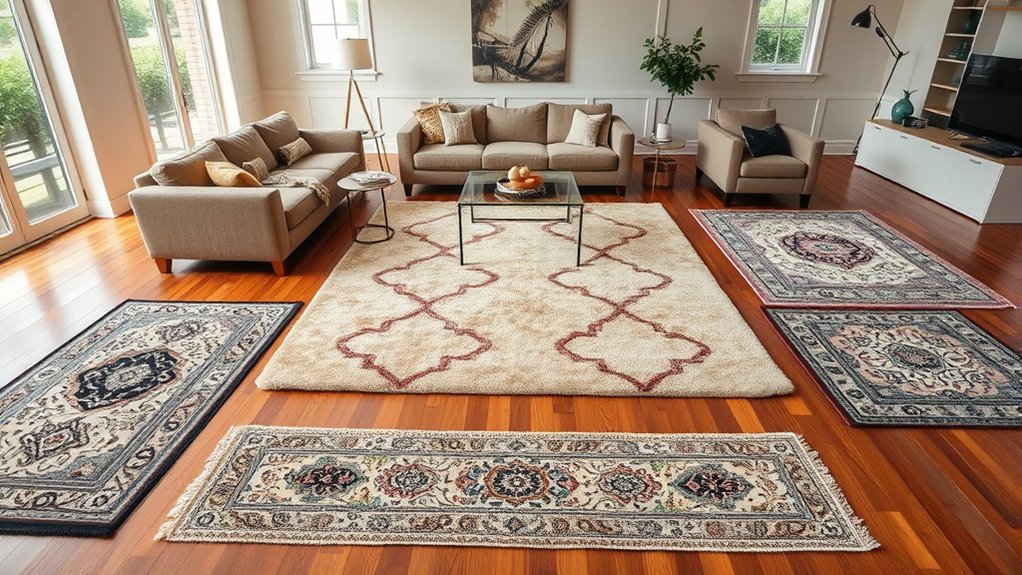

Choosing the right rug size depends on your room’s dimensions and layout. Measure your space carefully, then pick a rug that complements the furniture and creates balance. For living rooms, choose a rug that frames your seating or covers most of the floor; in dining areas, ensure chairs stay on the rug when pulled out. Proper proportion and placement make your space feel cohesive and inviting—keep exploring to master the art of perfect rug sizing.
Key Takeaways
- Measure your room carefully to determine the ideal rug size that complements your space’s proportions.
- Choose a rug that either frames your furniture or covers most of the floor for a balanced look.
- In dining areas, ensure the rug extends at least 24 inches beyond the table edges for functionality.
- For bedrooms, place rugs at the foot or sides of the bed to add softness without cluttering the space.
- Use proportion guidelines to prevent rugs from overwhelming or appearing too small in your room.
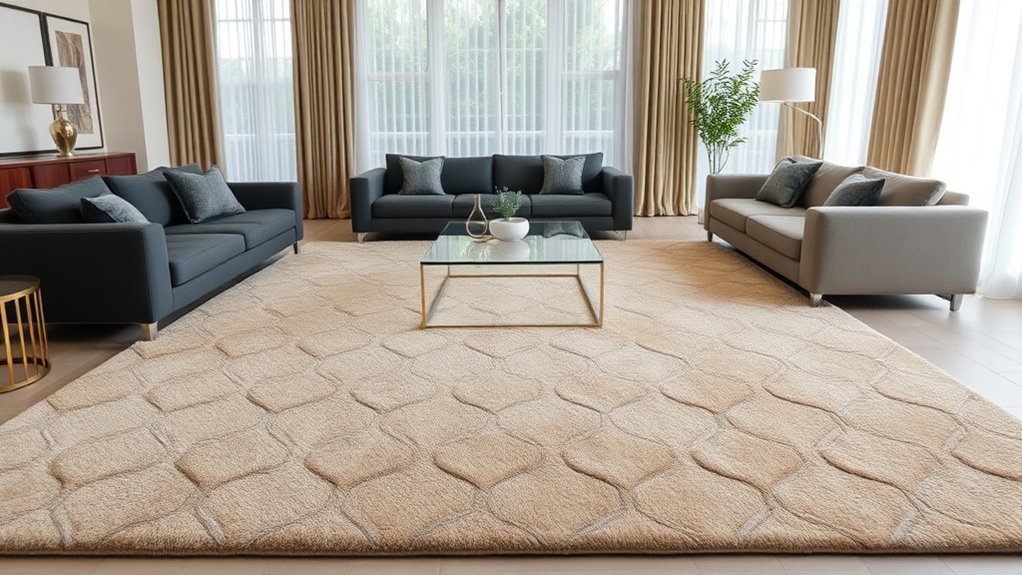
Ever wonder how to choose the perfect rug size for your space? It all begins with understanding how area rug placement influences the overall look and feel of a room. The right size can anchor your furniture, define zones, and add warmth without overwhelming the space. To start, measure your room carefully, noting the dimensions and noting where you want the rug to sit. For a living room, think about whether you want the rug to frame the seating area or cover most of the floor. If your goal is to create a cozy nook, a smaller rug placed under the coffee table works well. But if you want to make a bold statement or unify a large seating arrangement, opt for a larger rug that extends beyond the furniture edges. The key is proportion; a rug that’s too small can make a room feel disjointed, while one that’s too large might overwhelm the space.
When considering rug placement, imagine how it interacts with your furniture and room layout. For example, in a dining room, the rug should be large enough so that chairs remain on it even when pulled out. A good rule is to add at least 24 inches to the table’s width on all sides. In bedrooms, a rug placed at the foot or alongside the bed adds softness and comfort, but ensure it’s proportionate to the bed size—an overly small rug can look out of place, while a rug that’s too large might crowd the room. Additionally, understanding room proportions can help you select a rug that complements your space perfectly.
Once you’ve selected the right size, maintaining your rug is just as important as choosing it. Rug maintenance tips include regular vacuuming to remove dust and dirt, rotating the rug periodically to prevent uneven wear, and promptly addressing spills to avoid stains. If your rug is placed in high-traffic areas, consider using a rug pad to prevent slipping and reduce wear. Proper maintenance not only prolongs the life of your rug but also keeps it looking fresh and inviting, supporting your aesthetic choices and ensuring your space remains welcoming.
Frequently Asked Questions
How Do Rug Sizes Vary Across Different Interior Design Styles?
You’ll notice rug sizes vary across design styles, reflecting pattern variety and material differences. For example, modern interiors often feature large, simple rugs with minimal pattern variety, while traditional spaces favor smaller rugs with intricate designs. In bohemian styles, you may see a mix of sizes with bold patterns and diverse materials, creating a layered look. Adjust rug dimensions to match your style’s vibe, emphasizing pattern variety and material choices for harmony.
What Are the Best Rug Proportions for Small Spaces?
In a world where size matters, you should choose rugs for entryways that are proportionate to your small space. Opt for smaller rugs, around 3×5 feet, to avoid overwhelming the area. Use rug layering techniques by placing a runner or smaller rug under furniture to create depth. Keep proportions balanced, ensuring the rug doesn’t overpower or get lost in your space, maintaining a cozy and inviting look.
How Can I Measure My Room Accurately for Rug Sizing?
Start by gathering measuring tools like a tape measure and a ruler. Use these to measure your room’s length and width accurately, noting down the dimensions. Apply rug placement techniques by deciding whether you want the rug to cover the entire space or just define a specific area. Make sure you measure from wall to wall and consider furniture placement. This helps you choose a rug size that fits perfectly and enhances your room’s proportions.
Are There Standard Rug Sizes for Specific Room Types?
Yes, there are standard rug sizes for specific room types. For example, living rooms often use 8×10 or 9×12 area rugs, while dining rooms typically fit 8-foot round or rectangular rugs. When selecting your rug, make sure to incorporate rug padding to prevent slipping and protect your flooring. Standard sizes help define spaces, but always measure your room first to ensure the rug fits comfortably and complements your furniture.
How Do Rug Proportions Influence Overall Room Harmony?
Rug proportions greatly influence your room’s visual balance and focal points. When a rug is proportionate to your space, it anchors furniture and creates harmony, making the room feel cohesive. If it’s too small, it can disrupt the flow and draw attention away from key features. A well-chosen size accentuates focal points and guarantees everything looks intentional, making your room feel inviting and well-designed.
Conclusion
Choosing the right rug size is like finding the perfect frame for a masterpiece—it ties the room together with effortless grace. When you select proportions that dance harmoniously with your space, your room transforms into a symphony of style and comfort. Trust your instincts, measure twice, and let your rug be the silent conductor guiding your decor’s melody. With the right size, your room becomes a canvas painted with balance and elegance.