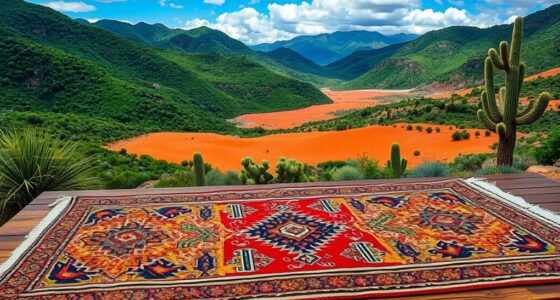
Rug patterns reveal their origin through distinctive motifs, colors, and weaving styles. For example, Persian rugs often feature floral designs and rich reds, while Turkish kilims display bold geometric patterns. Caucasian rugs include tribal symbols, and Central Asian styles use earthy tones with dense pile work. Recognizing these details helps pinpoint a rug’s region and cultural background. Exploring these clues further will give you a deeper understanding of a rug’s unique story and style.

Get furniture and decor delivered free — and shop member deals
- Fast, free delivery on millions of items
- Access to Prime Big Deal Days deals on October 6–7
- Prime Video, Amazon Music and more included
Key Takeaways
- Specific motifs like floral, geometric, or tribal symbols correspond to regions such as Persia, Anatolia, Caucasus, or Central Asia.
- Distinct color schemes, such as Persian reds or Central Asian earth tones, indicate regional dyeing techniques and origins.
- Knot types (e.g., Turkish Ghiordes or Persian Senneh) serve as signatures of regional weaving traditions.
- Design elements like medallions, Herati, or Boteh patterns are characteristic of certain cultural and geographic areas.
- Material and craftsmanship details, including fiber type and weaving style, reveal the rug’s regional heritage.
As an affiliate, we earn on qualifying purchases.
What Do Rug Patterns Tell Us About Culture?
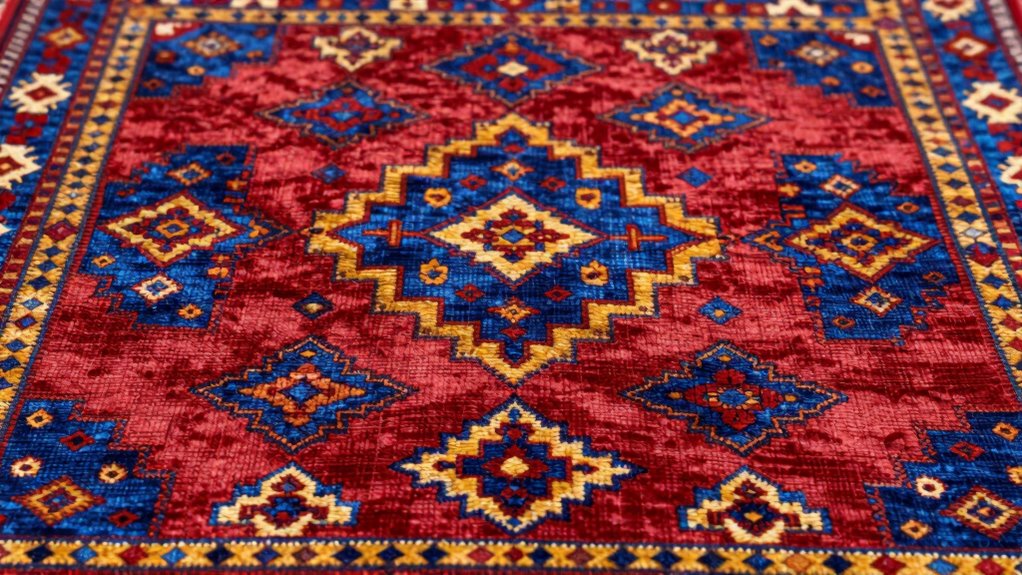
Have you ever wondered what the patterns on a rug reveal about the culture that created it? These intricate designs serve as cultural fingerprints, showcasing symbols, beliefs, and history. By studying traditional patterns, you can uncover stories and values passed down through generations. Modern reinterpretations of these designs help keep heritage alive, blending old motifs with contemporary styles. This process also emphasizes textile preservation, ensuring that traditional craftsmanship continues despite modern influences. When you appreciate rug patterns, you connect with the cultural identity embedded in each weave. The symbols and motifs aren’t just decorative—they’re meaningful expressions of community, spirituality, and history. Understanding these patterns enriches your appreciation of rugs as more than just decorative pieces; they’re cultural artifacts. Recognizing the cultural significance behind these motifs deepens your understanding of their historical context.
Recognize Key Rug Styles and Their Regions
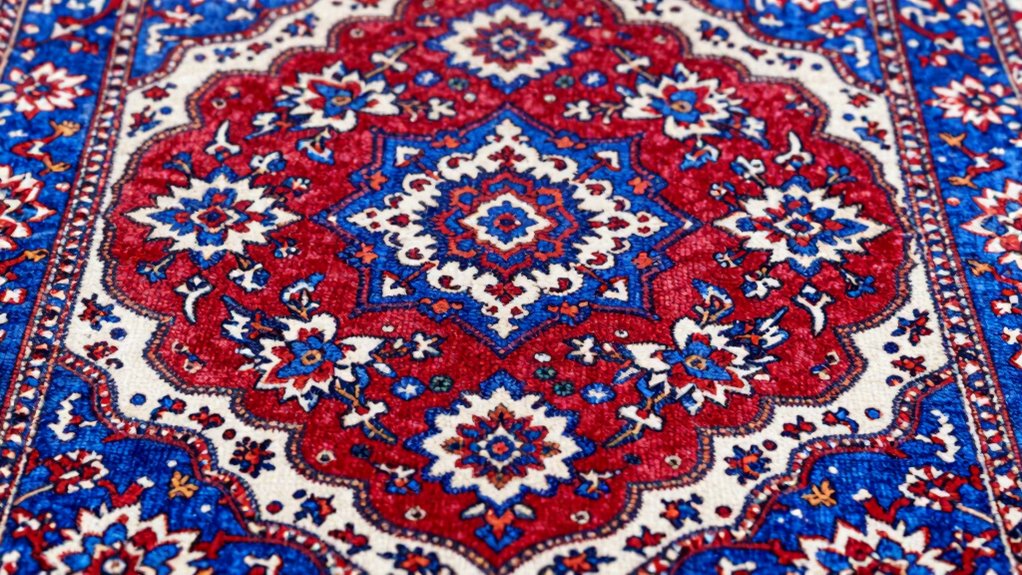
Recognizing different rug styles and their regions allows you to appreciate the rich diversity of textile traditions around the world. You can identify key styles by observing their unique craftsmanship techniques and geographic influences that shape each region’s aesthetic. For example:
Identifying regional rug styles reveals the rich diversity of global textile craftsmanship and design.
- Persian rugs feature intricate floral motifs, influenced by Iran’s historic craftsmanship.
- Turkish kilims display bold geometric patterns rooted in Anatolian traditions.
- Caucasian rugs often incorporate tribal symbols reflecting local history.
- Central Asian rugs showcase dense pile work influenced by nomadic lifestyles.
- Moroccan rugs highlight simple, modern designs with Berber craftsmanship techniques.
- Understanding the region-specific water techniques used in rug weaving can also provide insight into the cultural influences behind each style.
Identify Regional Motifs and Symbols
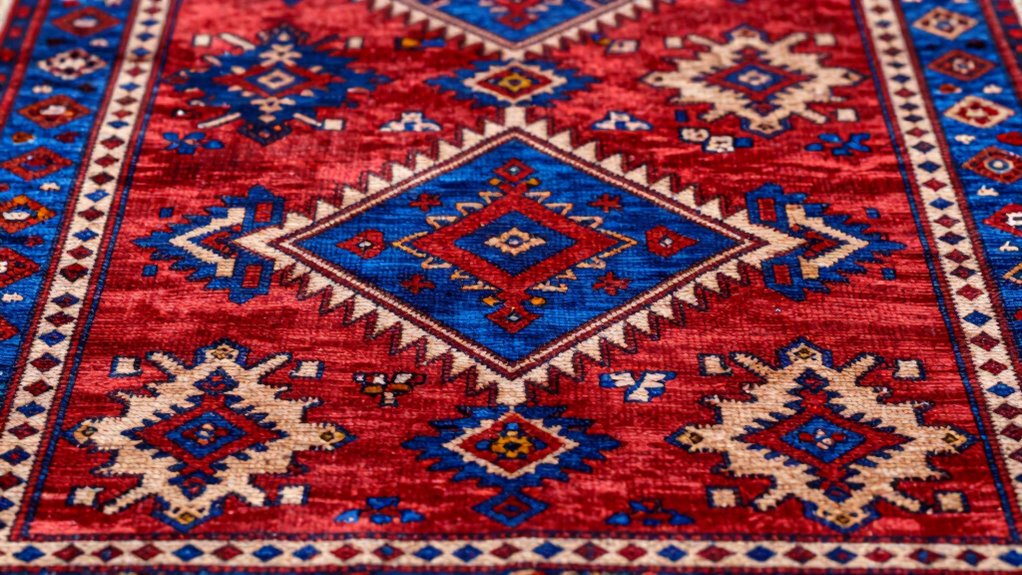
You can identify regional motifs and symbols by recognizing traditional patterns and their cultural meanings. Pay attention to common color schemes, as they often reflect specific areas or traditions. Understanding these symbols helps you appreciate the cultural stories woven into each rug. Additionally, water-resistant materials are frequently incorporated into designs to emphasize durability and regional significance.
Traditional Motifs and Symbols
Traditional motifs and symbols play a vital role in defining the unique character of regional rug styles. These patterns often reflect cultural stories, beliefs, and local environments. You’ll notice the use of geometric patterns that symbolize balance, harmony, and spiritual beliefs. Floral motifs are common, representing fertility, growth, and nature’s beauty. Each region has distinctive symbols, such as tribal emblems or mythological figures, that tell a story or convey protection. You might see:
- Geometric patterns that create intricate, symmetrical designs
- Floral motifs symbolizing life and renewal
- Animal symbols representing strength or companionship
- Abstract shapes with spiritual significance
- Cultural symbols woven into the rug’s fabric
These motifs serve as a visual language, revealing regional identities and traditions. Regional symbolism helps preserve cultural heritage and offers insights into the history of the people.
Common Regional Color Schemes
Have you ever noticed how different regions favor specific color palettes that highlight their unique motifs and symbols? Many areas choose colors that emphasize their traditional geometric motifs and floral patterns. For instance, Persian rugs often feature rich reds, deep blues, and creamy beiges to showcase intricate floral designs and symmetrical geometric motifs. In contrast, Central Asian rugs might favor earthy browns, muted greens, and warm oranges to accentuate bold geometric patterns. Turkish and Caucasian rugs frequently use vibrant reds, blacks, and whites to make their distinctive motifs stand out. These color schemes aren’t random; they reflect the region’s cultural identity and environment, helping you identify a rug’s origin based on its palette and the motifs it highlights. Recognizing regional color schemes can deepen your appreciation of the craftsmanship and cultural storytelling woven into each piece.
Cultural Significance of Patterns
Ever wonder how regional motifs and symbols in rugs reveal deeper cultural meanings? These patterns often embody stories, beliefs, and traditions unique to their regions. For example:
- Specific motifs can symbolize fertility, protection, or spirituality.
- Knot density reflects craftsmanship and regional techniques.
- Fringe styles may indicate the rug’s origin or purpose.
- Geometric shapes often carry cultural or historical significance.
- Colors combined with symbols tell stories or convey social status.
- Understanding Free Floating patterns can help identify the cultural influences and historical context behind a rug’s design.
How Material and Weave Reveal a Rug’s Origin
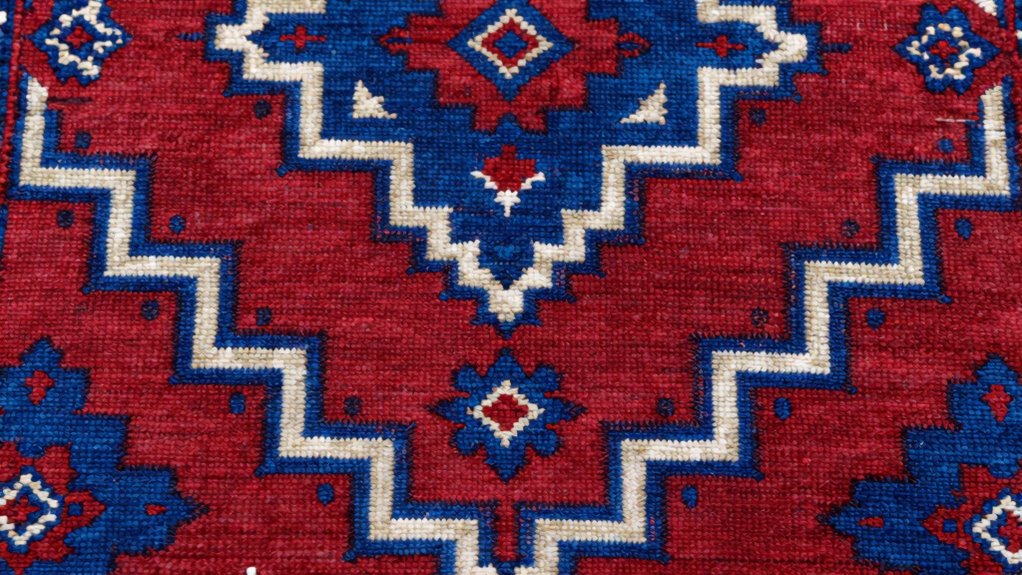
The materials used in rugs often point to specific regions, like wool from Persia or silk from China. The weaving techniques, such as flatweaves or knotted piles, also reveal where a rug originates. By examining both material and weave, you can uncover the rich history behind each rug’s craftsmanship. Additionally, understanding weaving techniques can help identify the skill level and cultural influences that shaped the rug’s design.
Material Types and Regions
Did you know that the materials and weaving techniques used in a rug can reveal its regional origin? The fiber sources and dyeing methods are especially telling. For example:
- Wool from sheep in Central Asia creates dense, warm rugs characteristic of that region
- Cotton, often imported, is common in Persian and Turkish rugs for its smooth texture
- Natural dyes from plants and minerals differ regionally, such as indigo in India or madder in the Middle East
- Hand-spun fibers reflect traditional dyeing techniques unique to each culture
- The fiber’s origin influences the rug’s durability and appearance, linking it directly to its geographic roots
- Regional weaving styles also play a role in identifying a rug’s place of origin, as specific patterns and techniques can be characteristic of certain areas
Weaving Techniques and Origins
Your choice of weaving technique often reveals where a rug comes from, as different regions develop distinctive methods over generations. For example, the knot types used—such as the Turkish (Ghiordes) or Persian (Senneh) knot—are characteristic of specific areas. These knots affect the rug’s durability and appearance, serving as regional signatures. Loom techniques also vary: flatweaves like Kilims use horizontal looms, while pile rugs often employ vertical or frame looms. The way the weaver structures the warp and weft threads, along with knot density, provides clues to origins. By examining these weaving methods, you can identify whether a rug is Anatolian, Persian, or Central Asian, revealing much about its cultural heritage. Additionally, color palette choices can further indicate a region’s traditional dyes and artistic influences.
What Do Regional Dyes and Colors Look Like?
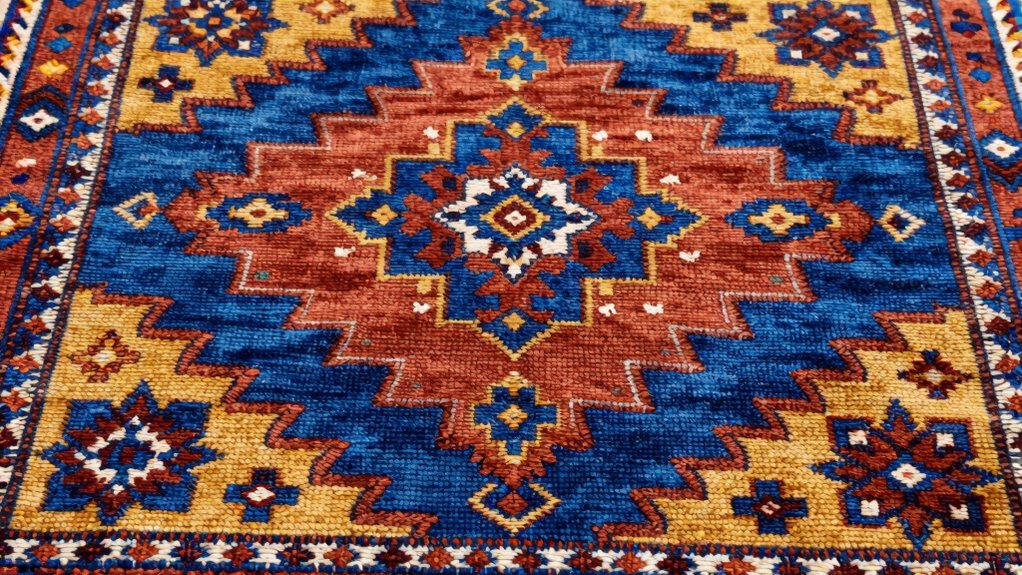
Regional dyes and colors often reflect local resources and cultural influences, giving each area a distinctive palette. You’ll notice certain hues that tell stories through natural dyes and their vibrant shades. For example:
- Bright reds from madder root symbolize energy and passion
- Deep indigos derived from indigo plant represent spirituality
- Earthy browns and ochres come from clay and mineral deposits
- Green shades often come from herbal or plant sources, signifying growth
- Color symbolism varies, with specific hues carrying cultural meanings
These natural dyes create rich, lasting colors that mirror regional environments. The regional resources used for dyeing influence the availability and diversity of colors, shaping each area’s unique aesthetic. By understanding these palettes, you can better appreciate how each rug’s colors tell a story rooted in its origin. The use of natural dyes also highlights a region’s resourcefulness and cultural values.
The History Behind Iconic Rug Designs
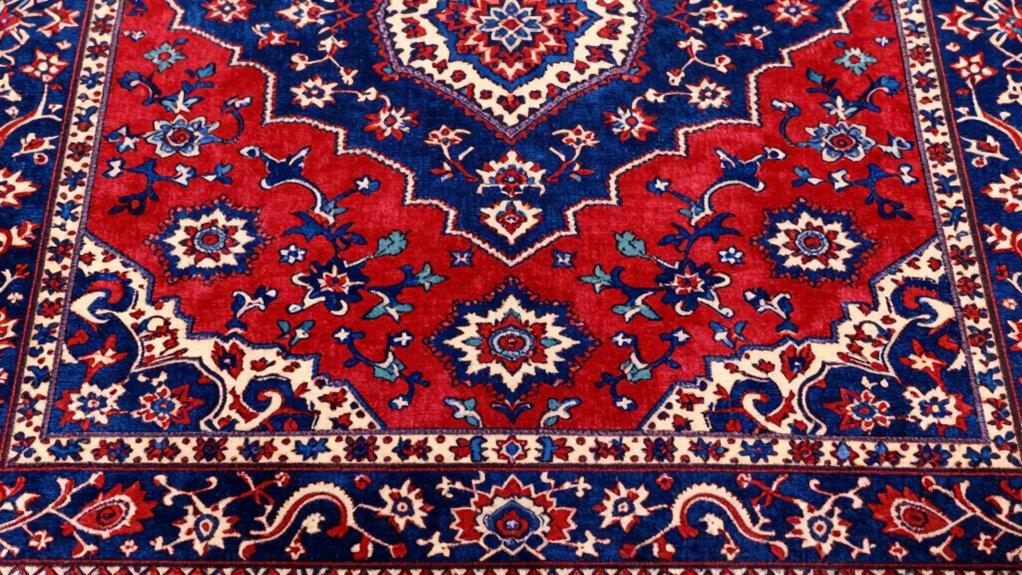
The vibrant colors and regional influences we’ve explored have evolved into distinctive rug designs that carry deep cultural meanings. These historic motifs have shaped iconic patterns, blending tradition with modern design. Today, these designs influence contemporary applications, inspiring new interpretations in home décor. Understanding their origins helps you appreciate how centuries-old symbols remain relevant. For example, geometric shapes and floral motifs reflect centuries of storytelling. Here’s a visual snapshot:
| Traditional Pattern | Modern Application |
|---|---|
| Medallions | Wall art or statement pieces |
| Herati motifs | Rug-inspired textiles |
| Boteh designs | Contemporary accessories |
| Gul patterns | Modern geometric rugs |
| Tribal symbols | Urban décor accents |
This history enriches your connection to these timeless designs.
Tips for Quickly Identifying a Rug’s Region
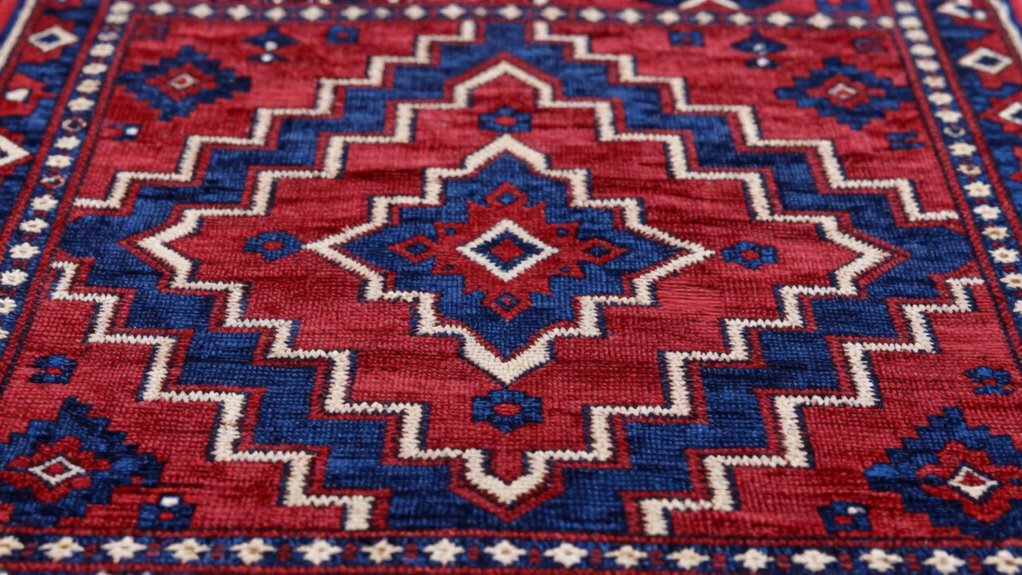
Identifying a rug’s region quickly becomes easier when you pay close attention to specific design elements and craftsmanship details. Look for patterns, color palettes, and knotting techniques that reflect regional styles. Modern manufacturing has introduced contemporary designs that blend traditional motifs with sleek aesthetics, so recognize these subtle differences.
Spot regional origins by examining design details, patterns, colors, and knotting techniques.
- Examine the pattern complexity and symmetry
- Notice the color combinations and dyeing methods
- Observe the pile quality and knotting style
- Check for signs of machine-made versus handwoven techniques
- Identify motifs unique to certain regions or cultures
Frequently Asked Questions
How Do Modern Trends Influence Traditional Rug Regional Patterns?
Modern trends influence traditional rug regional patterns through urban influences and digital design integration. You see contemporary designers blending city-inspired motifs with classic styles, creating unique, updated looks. Digital tools help you experiment with color palettes and pattern layouts, making traditional patterns more versatile. This fusion keeps regional rug designs fresh and relevant, appealing to modern tastes while honoring their cultural roots. As a result, traditional patterns evolve to reflect current aesthetic preferences.
Can Rugs From Different Regions Have Similar Design Elements?
Yes, rugs from different regions can have similar design elements. Shared motifs often reflect common cultural influences, trade, or historical exchanges, creating visual overlaps despite regional differences. You’ll notice these similarities in patterns, colors, and symbols, revealing how regional influences transcend borders. By recognizing these shared motifs, you appreciate the interconnectedness of rug artistry, understanding that beauty and tradition often unite diverse regions through common design elements.
Are There Specific Symbols Unique to Certain Rug Regions?
Yes, specific symbols are unique to certain rug regions. You’ll notice regional symbols and cultural motifs that reflect local traditions, beliefs, and history. For example, Persian rugs often feature floral and animal motifs, while Caucasian rugs display geometric patterns. These symbols help identify the rug’s origin and tell stories of the area’s cultural heritage. Recognizing these symbols allows you to appreciate the craftsmanship and regional identity woven into each piece.
How Does Climate Affect the Materials Used in Regional Rugs?
You notice that climate shapes the materials in regional rugs, like how dry deserts inspire coarse, durable fibers, while humid areas favor softer, moisture-resistant natural fibers. These variations influence dyeing techniques too, with sunnier regions using brighter, sun-faded colors, and wetter climates producing richer, deeper hues. The environment’s touch is woven into each rug’s texture and color, creating a vibrant story of place and climate that you can almost feel beneath your fingertips.
Can Rug Patterns Indicate the Rug’s Age or Historical Period?
Yes, rug patterns can help you with antique identification and pattern dating. You look for specific motifs, design styles, and weaving techniques that changed over time. Recognizing these details allows you to determine a rug’s age or historical period. Pay attention to worn-out or faded patterns, which also indicate age. By studying these elements, you gain insights into when the rug was made and its cultural significance.
Conclusion
Think of rug patterns as a map of stories and traditions woven into each thread. When I first learned to spot regional motifs, it was like revealing a hidden language—each symbol a word, each color a sentence. Just as a traveler recognizes landmarks, you’ll start to see clues revealing a rug’s origin. With a little practice, you’ll navigate this colorful world with the confidence of a seasoned explorer, uncovering history woven into every pattern.
Fall Picks
fall essentials
As an affiliate, we earn on qualifying purchases.