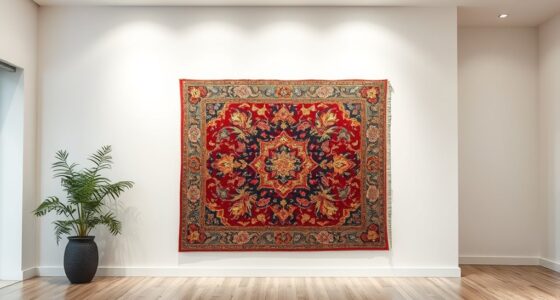
Layering rugs instantly adds texture and personality to your space, creating a cozy, curated look with minimal effort. By combining different colors, patterns, and textures, you can define zones, add visual interest, and make your room feel more inviting. Mixing textures like shaggy and flat-weave or pairing bold overlays with neutral bases helps achieve a balanced, stylish atmosphere. Keep exploring to discover tips that will transform your space into a truly textured and elegant environment.
Key Takeaways
- Use contrasting colors and patterns to create visual interest and focal points.
- Layer textured and patterned rugs to add depth and tactile richness.
- Define different zones within a room by strategically layering rugs of various sizes.
- Mix materials and pile heights for tactile contrast and enhanced elegance.
- Balance visual weight with darker, heavier rugs and lighter accents for a harmonious look.

Have you ever wondered how to add depth and personality to a room effortlessly? Layering rugs is a simple yet effective way to achieve that textured elegance you’re after. When you start experimenting with rug combinations, the goal is to create a cohesive look that feels intentional and inviting. One of the key elements to contemplate is rug color combinations. Instead of sticking to a single hue, think about contrasting or complementing colors that enhance your space. For example, pairing a neutral base rug with a bold, colorful overlay can add visual interest without overwhelming the room. If your furniture and walls are in muted tones, a vibrant rug layered on top can become the focal point, bringing warmth and vibrancy. Conversely, if your space already features rich colors, opt for more subdued rug shades to maintain balance.
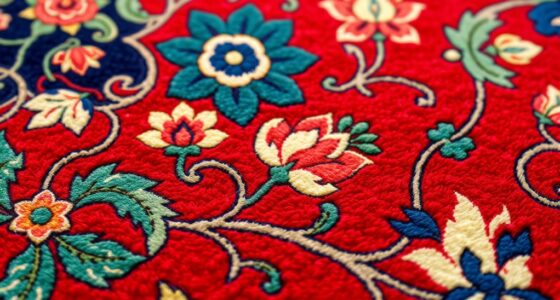
Mixing patterns is another exciting aspect of layering rugs. Combining different textures and designs can create a dynamic, lively atmosphere. You might choose a plush, solid-colored rug as a foundation and add a patterned runner or smaller patterned accent rug on top. The trick is to find patterns that share a common color palette or have a similar scale, so they don’t clash. For instance, pairing a geometric patterned rug with a floral one that shares a similar color scheme can be visually appealing. Keep in mind that mixing patterns doesn’t mean chaos; it’s about creating harmony through thoughtful coordination. Play with size, shape, and pattern style to add depth, making your space feel curated rather than cluttered.
Mix textures and patterns for a lively, harmonious layered rug look.
Layering rugs also allows you to define different zones within a room. For a cozy living area, you might place a larger, neutral rug as the base and then layer a smaller, textured or patterned rug on top, anchoring your seating arrangement. This technique makes the space feel layered and intentional, giving each area its own personality. When selecting rugs to layer, consider the materials and pile heights—combining a shaggy rug with a flat-weave can add tactile contrast. Additionally, incorporating rustic textures in your rug choices can further enhance the farmhouse aesthetic and create a warm, inviting atmosphere. Remember, the key is to balance the visual weight: heavier, darker rugs ground the space, while lighter, patterned rugs add airiness.
Ultimately, layering rugs is about expressing your style while adding depth and texture. Play with rug color combinations, mix patterns with confidence, and don’t be afraid to experiment. When done thoughtfully, this technique transforms a plain room into a curated, textured haven that reflects your personality and elevates your interior design effortlessly.
Frequently Asked Questions
How Do I Choose Rug Colors That Complement My Existing Decor?
To choose rug colors that complement your existing decor, focus on color coordination by picking hues that match or subtly contrast your current palette. You can also incorporate pattern mixing to add visual interest without clashing. Consider pulling colors from your furniture, walls, or accessories, and opt for neutral tones if you’re unsure. This approach guarantees your rug enhances your space while maintaining harmony and a cohesive look.
What Are the Best Rug Materials for High-Traffic Areas?
For high-traffic areas, opt for rug materials that offer excellent rug durability, like wool, nylon, or polypropylene. These materials withstand heavy foot traffic and are easy to clean. If you’re eco-friendly, look for eco-friendly rug options such as recycled fibers or natural materials like sisal and jute. These choices guarantee your space stays stylish and resilient without compromising sustainability.
How Can I Prevent Rugs From Slipping When Layered?
To prevent rugs from slipping when layered, you should use non-slip pads or rug grippers underneath each rug. These accessories create friction, keeping your rugs securely in place. Make sure to select pads that fit the size of your rugs and are suitable for your flooring type. Regularly check and reposition the pads or grippers as needed to maintain their effectiveness and ensure your layered rugs stay safe and stylish.
What Is the Ideal Rug Size Ratio for Layering?
Ever wonder what the ideal rug size ratio for layering is? Typically, aim for a larger rug as your base, about 1.5 to 2 times the size of the smaller top rug. This creates balanced layering proportions that feel intentional and stylish. For example, if your top rug is 5×7 feet, choose a base rug of 8×10 or 9×12 feet. This proportion keeps your layered look cohesive and visually appealing.
How Do I Maintain and Clean Layered Rugs Properly?
To maintain and clean layered rugs, vacuum regularly using gentle, overlapping strokes to avoid damaging the fibers. Be sure to vacuum both the top and underneath layers carefully. For stain removal, act quickly with mild soap and water or a specialized rug cleaner, applying stain removal tips promptly. Avoid harsh chemicals, and always test in a small area first. Regular upkeep keeps your layered rugs looking fresh and textured.
Conclusion
By layering rugs, you create a cozy haven that’s both bold and inviting. The textured depths bring warmth and personality, while the delicate patterns add subtle sophistication. It’s like wrapping your space in a soft, intricate embrace—a harmonious blend of comfort and elegance. As you step onto this curated mosaic, you’ll feel the perfect balance of visual intrigue and tactile luxury, turning your room into a sanctuary that’s as stylish as it is inviting.