
Choosing the wrong rug style — flatweave or pile — can make your room feel uncomfortable, clash with your décor, or wear out quickly. Flatweaves are sleek, durable, and easy to clean, perfect for high-traffic areas. Pile rugs are plush and cozy but require more maintenance and can trap dirt. Picking the wrong type may lead to frustration and regret; if you keep exploring, you’ll discover how to select the best fit for your space.

Get furniture and decor delivered free — and shop member deals
- Fast, free delivery on millions of items
- Access to Prime Big Deal Days deals on October 6–7
- Prime Video, Amazon Music and more included
Key Takeaways
- Choosing the wrong rug style can clash with your décor, making the room feel unbalanced or uninviting.
- Selecting an unsuitable thickness or material affects comfort, durability, and maintenance, leading to dissatisfaction.
- Incorrect size or placement of flatweave or pile rugs can disrupt room proportions and visual harmony.
- Failing to consider traffic and usage may cause rapid wear or difficulty cleaning, reducing rug lifespan.
- Ignoring the aesthetic and functional differences results in a room that feels mismatched or uncomfortable.
flatweave rug durable high traffic
As an affiliate, we earn on qualifying purchases.
As an affiliate, we earn on qualifying purchases.
What Are Flatweave and Pile Rugs? Key Differences Explained
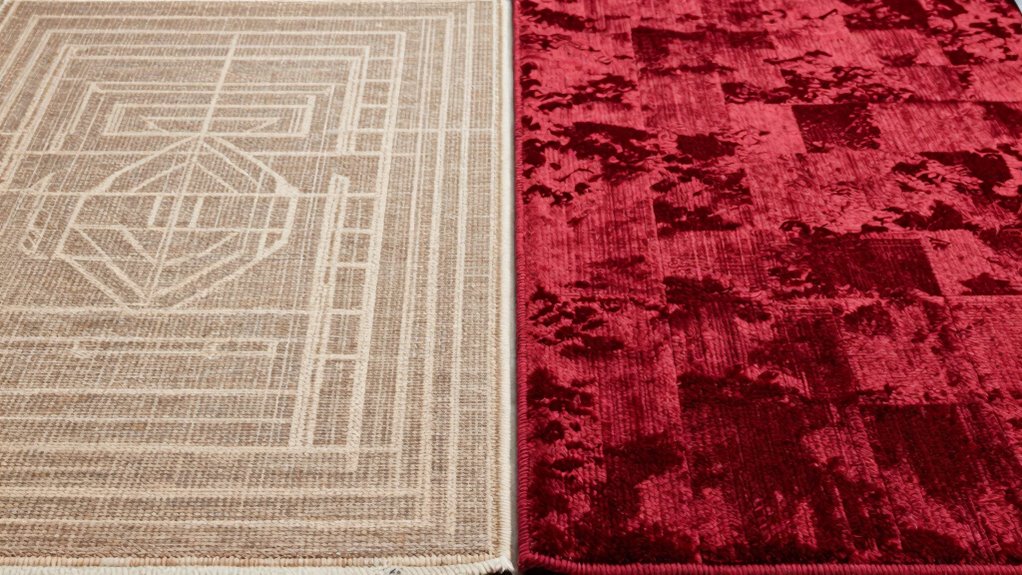
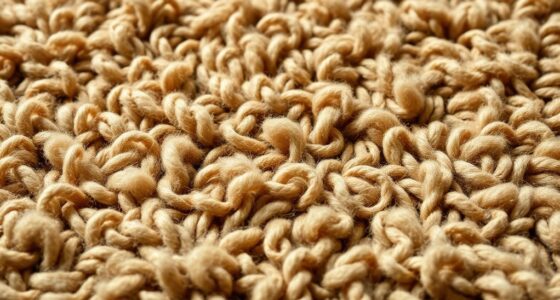
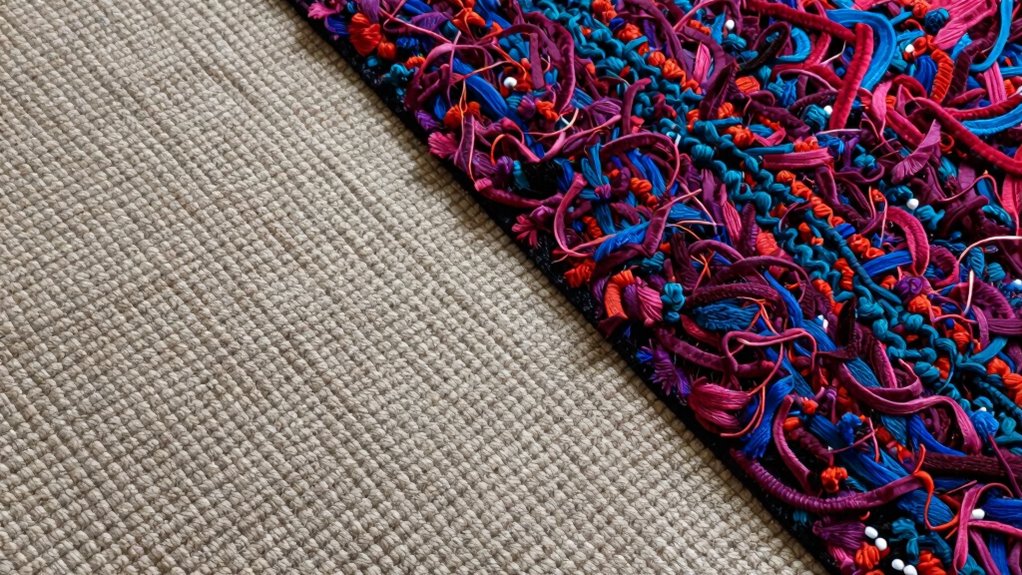
Understanding the differences between flatweave and pile rugs is essential when choosing the right style for your space. Flatweave rugs are crafted by weaving threads tightly together, creating a smooth, thin surface that offers a distinct texture contrast to plush carpets. Pile rugs, on the other hand, feature a raised surface made from knotted or tufted fibers, giving them a soft, cushioned feel underfoot. The material differences are notable—flatweaves often use jute, wool, or synthetic fibers, while pile rugs frequently incorporate wool, nylon, or polyester. These variations influence durability, maintenance, and comfort. Recognizing how texture contrast and material differences impact the look and feel of your rug helps you make a more informed choice for your space. Additionally, considering traditional craftsmanship techniques can provide insight into the cultural significance and quality of each rug type.
Flatweave vs. Pile Rugs: Which Style Suits Your Home?
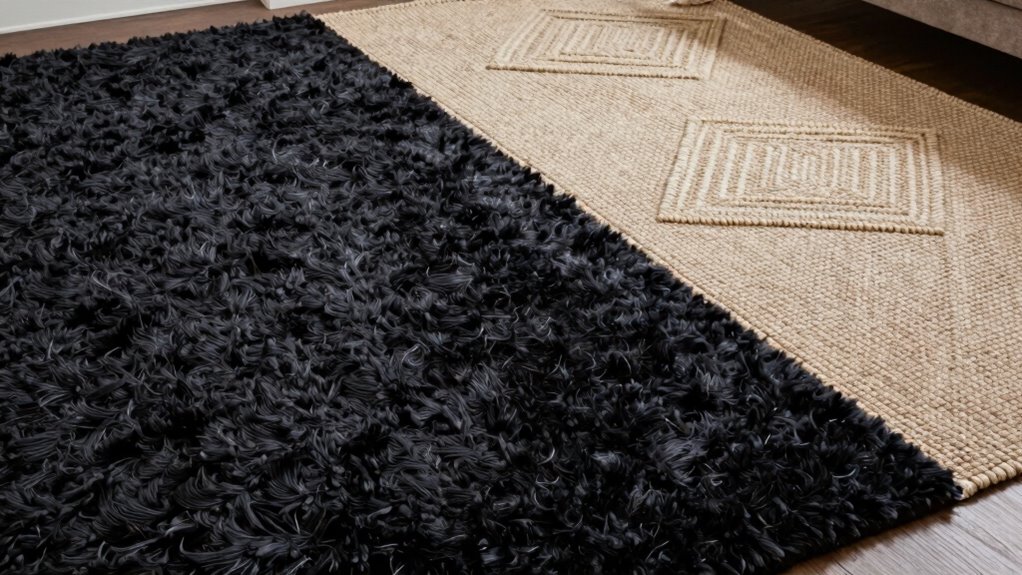
Choosing between flatweave and pile rugs depends on your home’s style and your daily needs. Flatweaves offer a sleek, modern look and are easy to maintain, making them ideal for busy households. Pile rugs provide a cozy, plush feel that adds warmth but may require more upkeep. Considering the Free Floating trend, both styles can be adapted to create a relaxed, effortless aesthetic in your space.
Style and Aesthetic Appeal
When it comes to enhancing your home’s style, the visual impact of your rug choice plays a crucial role. Flatweave and pile rugs each create distinct aesthetic vibes. Flatweaves offer sleek, modern looks with clean lines, perfect for minimalist or contemporary spaces. Pile rugs add warmth and coziness, ideal for traditional or plush interiors. Your choice influences color coordination and texture contrast, shaping the room’s overall feel. Consider these points:
- Flatweaves excel in showcasing bold patterns and vibrant colors
- Pile rugs provide a softer, more inviting texture
- Flatweaves often feature geometric or abstract designs
- Pile rugs emphasize plushness and layered textures
- Both styles can complement different décor themes and personal tastes
Selecting the right rug style requires understanding attention to detail to ensure your choice aligns with your room’s overall aesthetic and functional needs.
Practicality and Maintenance
Your choice between flatweave and pile rugs also impacts how easy they are to care for and keep looking their best. Flatweaves generally resist stains better and are easier to vacuum, requiring gentle techniques to avoid damaging fibers. Pile rugs tend to trap dirt and require more thorough cleaning, often needing regular vacuuming with a beater bar to lift debris. Additionally, understanding fiber durability can help you select a rug that withstands your household’s activity level.
Pros and Cons of Flatweave Rugs
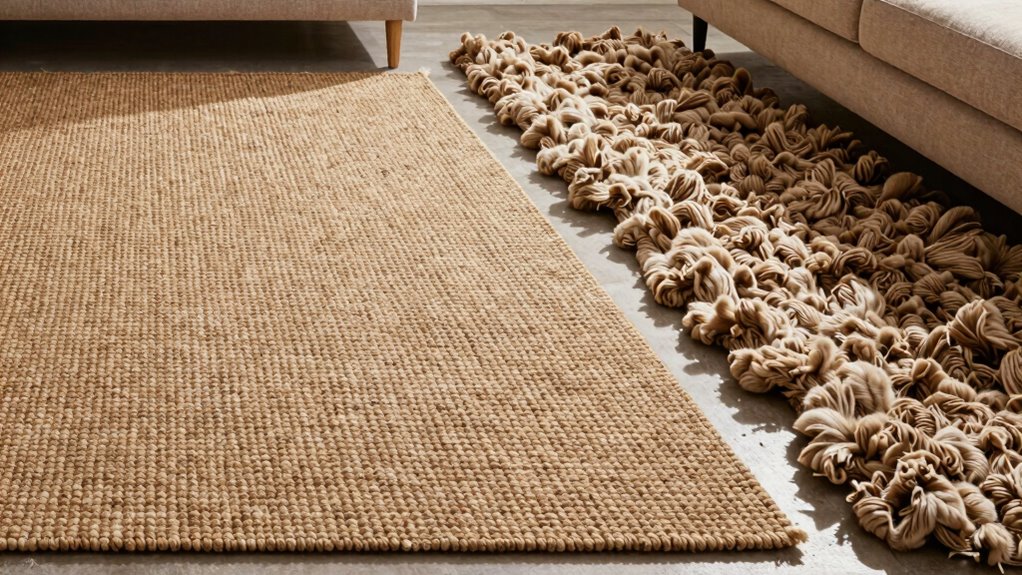
Flatweave rugs are known for their durability and easy maintenance, making them ideal for high-traffic areas. Their sleek design offers versatile style options that can complement various decor themes. Additionally, flatweave rugs often feature wide color gamut which enhances their visual appeal and allows for vibrant color schemes. However, understanding their pros and cons helps you decide if they’re the right fit for your space.
Durability and Maintenance
Flatweave rugs are known for their durability and low-maintenance nature, making them an excellent choice for high-traffic areas. They resist wear and tear, and their flat surface simplifies rug cleaning. Plus, their tightly woven fibers often provide natural stain resistance, helping you keep them looking fresh longer. To maintain their appearance, you should regularly vacuum and address spills promptly. Here are some key points:
- Easy to vacuum and spot clean
- Resists pilling and fraying
- Minimal snagging due to flat weave
- Less prone to deep-set stains
- Quick to dry after cleaning
- Their energy-efficient manufacturing processes also contribute to their sustainability and eco-friendliness.
While they’re tough and straightforward to care for, avoid harsh chemicals, and always follow cleaning instructions to preserve their longevity. Flatweave rugs give you a practical, low-hassle option for busy spaces.
Style and Versatility
Because of their simple yet versatile design, flatweave rugs can easily complement a variety of decor styles, from modern minimalism to bohemian eclectic. Their neutral, streamlined look makes color coordination straightforward, allowing you to mix and match with bold or subtle hues effortlessly. The flat surface encourages layering with other textiles, creating appealing texture contrast that adds depth to your space. You can choose vibrant patterns or subtle tones depending on your mood, making these rugs adaptable for any room. Plus, their sleek profile makes furniture placement easier, enhancing the room’s flow. Overall, flatweave rugs offer a flexible, stylish foundation that can evolve with your decor choices, making them a smart, versatile option for any interior design.
Benefits and Drawbacks of Pile Rugs
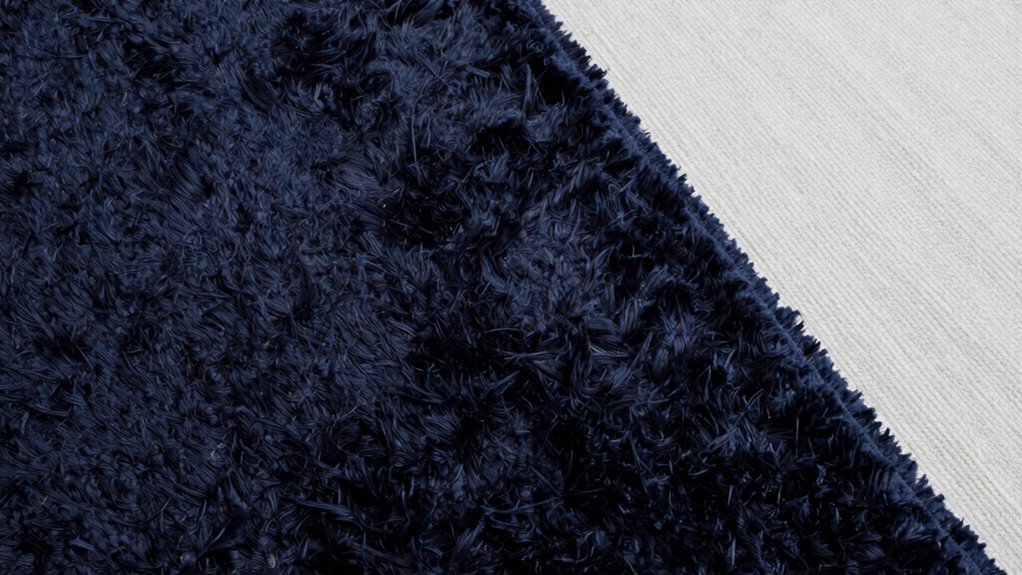
Pile rugs offer a plush, inviting feel that can instantly add warmth and comfort to any space. Their fiber texture creates a soft surface, perfect for lounging or children’s play areas. One major benefit is the wide range of color options, allowing you to match or accentuate your decor effortlessly. However, pile rugs can trap dirt and require regular vacuuming, making maintenance a bit more demanding. They also tend to wear faster in high-traffic zones. Plus, their thickness can make furniture placement tricky. The fiber texture provides plushness, but it can also be prone to crushing over time. If you prefer a cozy, luxurious feel and don’t mind frequent cleaning, pile rugs are a great choice. Just keep in mind their durability limits in busy areas. Proper care and cleaning can help extend their lifespan and maintain their appearance over time.
How to Choose the Right Rug for Your Space: Factors to Consider

Choosing the right rug for your space involves evaluating several key factors to ensure it complements your lifestyle and decor. First, consider rug fiber types; natural fibers like wool add durability and comfort, while synthetic options are budget-friendly. Next, think about color coordination—select hues that enhance your existing color scheme for a cohesive look. Also, assess the rug’s pile height to match your foot traffic and maintenance preferences. Use the table below to help determine the best fit:
| Factor | Consideration | Impact |
|---|---|---|
| Fiber Types | Wool, synthetic, cotton | Durability, feel |
| Color Coordination | Match or contrast existing decor | Visual harmony |
| Pile Height | Low, medium, high pile | Comfort, maintenance |
| Room Function | Living room, bedroom, entryway | Suitability for space |
Additionally, understanding the differences between flatweave and pile rugs can help you select the most suitable style for your needs.
Common Mistakes When Selecting Flatweave or Pile Rugs
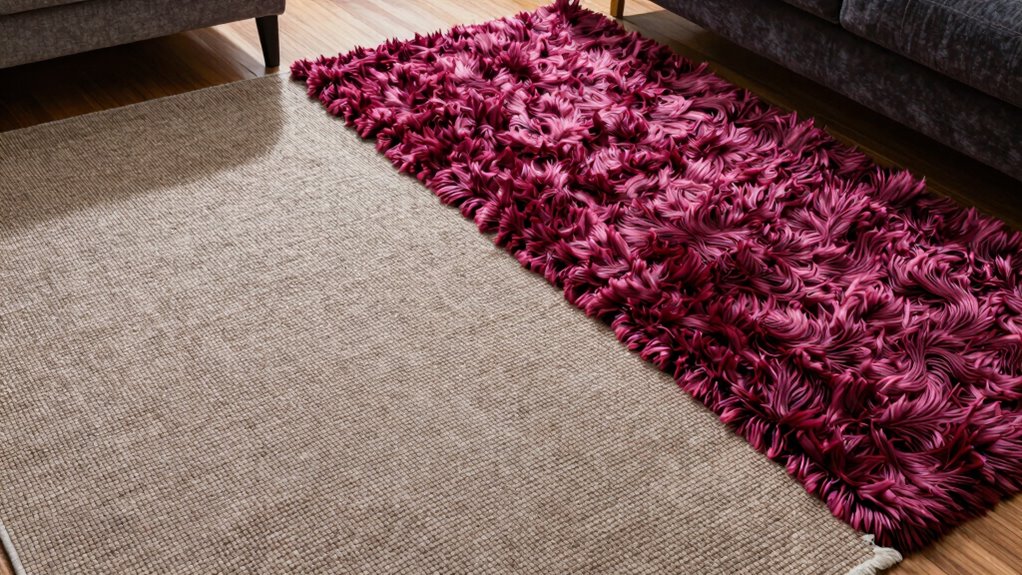
Selecting the wrong type of rug can quickly disrupt the harmony of your space, especially if you overlook common pitfalls. One mistake is ignoring rug thickness, which affects comfort and durability; flatweaves are thinner and more suited for high-traffic areas, while pile rugs add plushness but may wear faster. Another error is poor color coordination, making your rug clash with or fade into your décor. You also might overlook the room’s traffic flow, choosing a rug that’s too delicate or too bulky. Failing to measure the space accurately can lead to a rug that’s either overwhelming or too small. Lastly, ignoring maintenance needs can cause frustration later. Be mindful of these issues to ensure your rug enhances, rather than disrupts, your room’s overall aesthetic.
Best Rug Types for Different Rooms and Uses
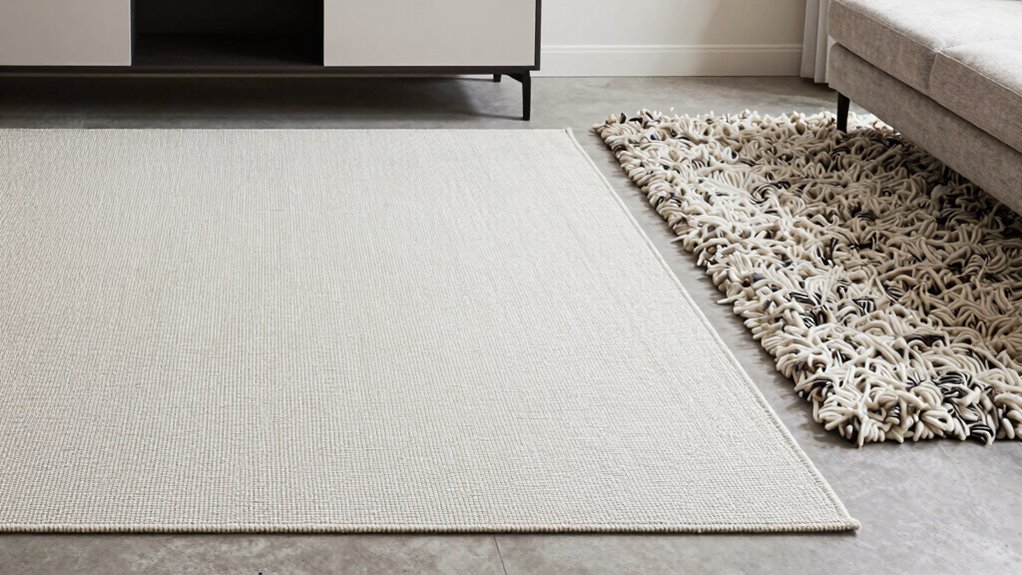
Different rooms and uses demand specific rug types to balance style, comfort, and practicality. For high-traffic areas like living rooms or hallways, sturdy area rugs with durable pile or flatweave designs work best. They hide dirt and withstand wear, especially when combined with rug padding to prevent slipping and extend lifespan. In bedrooms, you might prefer plush pile rugs for softness underfoot, creating a cozy atmosphere. Dining rooms benefit from low-pile rugs that are easy to clean and won’t trap crumbs. For kitchens and entryways, flatweave rugs are practical due to their easy maintenance. Always consider rug padding to add comfort, reduce noise, and protect your flooring. Selecting the right rug also involves understanding material durability, which impacts how well the rug will perform over time. Choosing the right rug for each space ensures your room looks great and functions well.
Caring for Your Flatweave and Pile Rugs: Tips for Longevity

To guarantee your flatweave and pile rugs stay looking their best for years, regular maintenance and proper care are essential. Use gentle rug cleaning techniques to prevent damage and preserve their appearance. Regular vacuuming removes dirt and dust, especially from pile rugs, while rotating your rugs prevents uneven wear. For eco friendly rug materials, opt for natural cleaning solutions like vinegar and baking soda, avoiding harsh chemicals. Protect your rugs from direct sunlight to prevent fading. Consider professional cleaning periodically to deep clean without harming delicate fibers.
- Vacuum regularly, using gentle settings
- Rotate rugs every few months
- Use eco friendly rug materials in cleaning
- Avoid harsh chemicals and bleach
- Protect from direct sunlight
Final Tips: Picking a Rug That Complements Your Style and Lifestyle
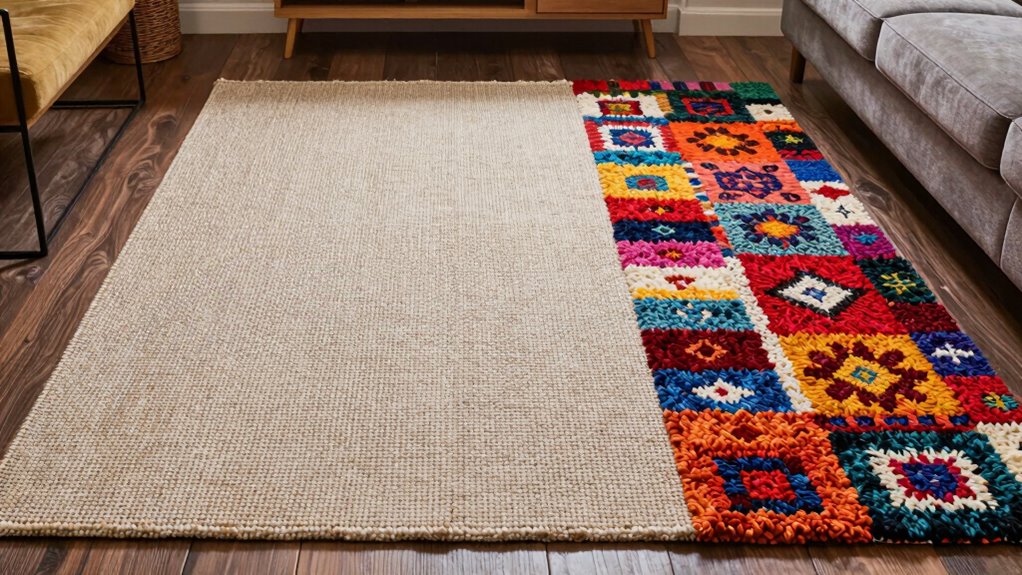
Choosing the right rug involves more than just picking a design you like; it should also suit your lifestyle and complement your personal style. Consider how rug layering can add depth and texture, especially if you want a layered, eclectic look. For high-traffic areas, opt for durable materials and darker shades that hide wear and stains. When selecting colors, focus on color coordination to tie the room together—match or contrast with your furniture, walls, and accessories for a cohesive feel. Think about your daily routines: if you have kids or pets, choose low-pile rugs that are easy to clean. Additionally, understanding smart design principles can help you select a rug that enhances comfort and functionality. Ultimately, pick a rug that reflects your personality and fits your lifestyle, ensuring it enhances your space rather than overwhelms it.
Frequently Asked Questions
Can Flatweave Rugs Be Used Outdoors?
Yes, you can use flatweave rugs outdoors because they typically offer good outdoor durability and are made from material suitability for weather conditions. Flatweave rugs are often crafted with synthetic fibers like polypropylene, which resist moisture and fading. Just make sure to choose a rug specifically labeled for outdoor use, as not all flatweaves can withstand the elements. Proper care will extend their lifespan and keep your outdoor space looking great.
Are Pile Rugs More Allergen-Friendly Than Flatweave Rugs?
Back in the day, folks thought pile rugs were the allergen-free choice, but that’s not entirely true. Pile rugs tend to trap more allergen accumulation and are harder to clean thoroughly, making them less allergen-friendly than flatweave rugs. You might find flatweaves easier to maintain and better for allergy sufferers because they don’t trap dust and allergens as easily. So, if allergies are a concern, flatweaves are probably your best bet.
How Do I Prevent Flatweave Rugs From Slipping?
To prevent your flatweave rug from slipping, you should use a rug pad designed for flatweave rugs. Look for anti-slip solutions like rubber or felt-backed pads, which grip both the rug and the floor. Secure the edges with double-sided tape if needed, and make certain the rug pad fits snugly underneath. These measures keep your rug stable, safe, and in place, reducing the risk of accidents.
What Is the Average Lifespan of Each Rug Type?
You’ll find that flatweave rugs typically last around 5-15 years, depending on use and care, thanks to their durability comparison favoring resistance to wear. Pile rugs may only last 5-10 years but can be easier to maintain with regular cleaning. Flatweaves require less maintenance, making them a longer-lasting choice for high-traffic areas. Proper care extends the lifespan of both, so consider your maintenance routine when choosing.
Do Flatweave or Pile Rugs Better Hide Stains?
When it comes to hiding stains, flatweave rugs are your best bet—they’re like a sponge, soaking up dirt and concealment better than pile rugs. Their tight weave and flat surface make stains less noticeable and easier to spot clean. Pile rugs, with their plush fibers, tend to show dirt and stains more, making them less ideal if stain concealment and dirt hiding are your priorities.
Conclusion
Choosing the right rug can transform your space, but did you know that over 60% of homeowners regret their rug choice within a year? By understanding the differences between flatweave and pile rugs and considering your lifestyle, you can avoid costly mistakes. Take your time, weigh the pros and cons, and pick a rug that truly complements your style—your room will thank you for it. Happy decorating!
Fall Picks
fall essentials
As an affiliate, we earn on qualifying purchases.