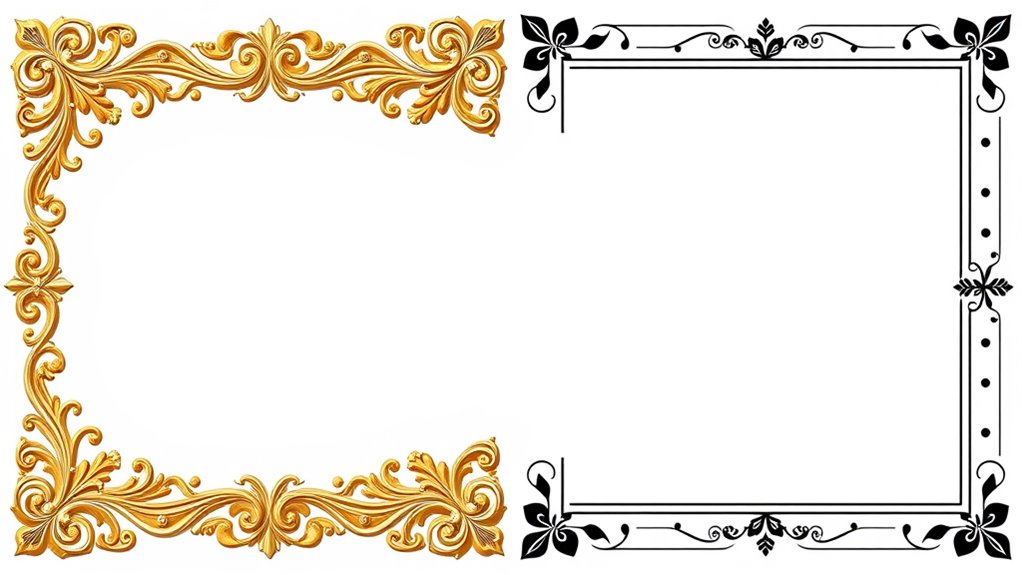

Classic border designs have rich historical roots, featuring intricate motifs, floral patterns, and detailed craftsmanship that reflect cultural traditions. Contemporary borders favor sleek, minimal styles with geometric shapes, clean lines, and bold or muted color palettes for a modern look. Both styles influence interior and fashion choices, blending tradition with innovation. If you want to explore how these styles can transform your space or wardrobe, there’s more to uncover about their features and pairing tips.
Key Takeaways
- Classic borders feature intricate floral and geometric motifs rooted in historical and cultural traditions, emphasizing ornamentation.
- Contemporary borders favor minimalistic, geometric patterns with clean lines, negative space, and streamlined forms.
- Classic designs often use rich colors and detailed craftsmanship, while modern styles prefer muted tones and simple aesthetics.
- Traditional borders symbolize cultural stories and beliefs; modern borders focus on sleek, versatile aesthetics for contemporary spaces.
- Seamless fusion of both styles combines ornate details with minimal lines to create balanced, timeless visual effects.
Origins and Historical Contexts of Border Styles

Borders have long served as visual markers that define and separate spaces, but their styles often reflect deeper cultural and historical influences. The historical evolution of border styles reveals how societies expressed identity, power, and tradition through design. For instance, ancient civilizations used intricate patterns to symbolize status and spiritual beliefs. During the Renaissance, borders became more elaborate, reflecting artistic trends and cultural exchanges. In many regions, borders carried cultural significance, acting as symbols of unity or division. Colonial periods introduced new motifs and techniques, blending indigenous styles with imported influences. Over time, these designs evolved to mirror societal shifts, political changes, and cultural values. Understanding their origins helps you appreciate how borders serve not just functional purposes but also as visual stories rooted in history. Additionally, design elements within borders often conveyed specific messages or symbolism relevant to the society that created them.
Design Elements and Visual Characteristics
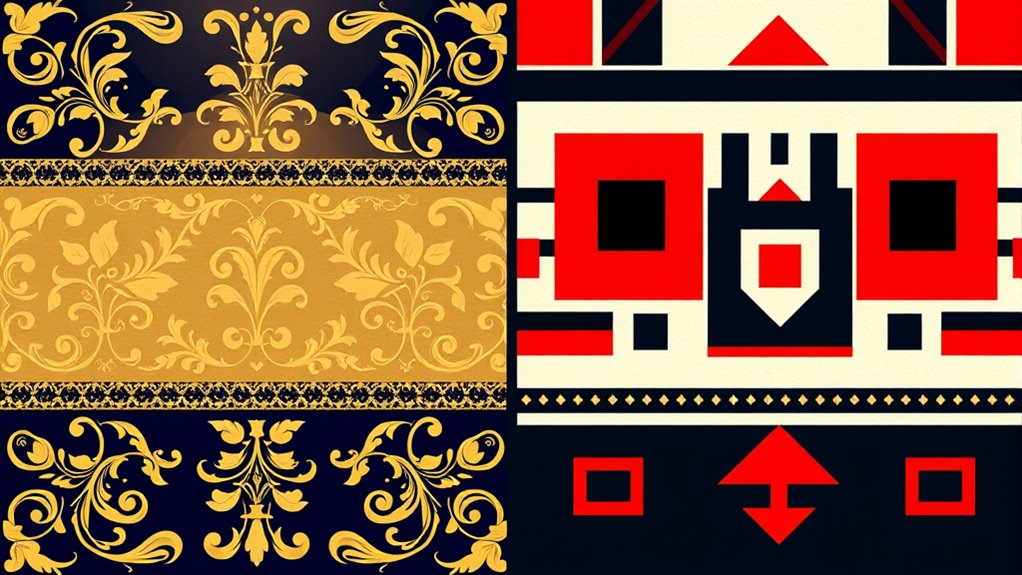
You’ll notice how traditional motifs and patterns create a sense of heritage, while modern minimalist features emphasize simplicity and clean lines. Color choices and material use also play a vital role in defining a border’s overall look and feel. Understanding these elements helps you appreciate the diverse visual characteristics across different border styles. For example, vetted product options in home decor can influence the selection of border designs that best complement your space.
Traditional Motifs and Patterns
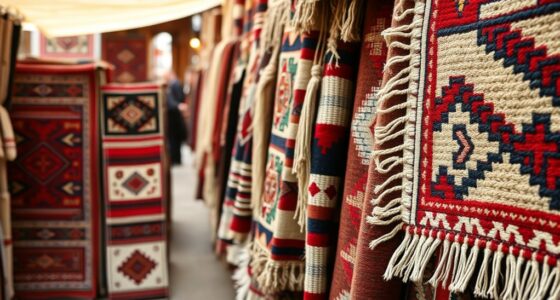
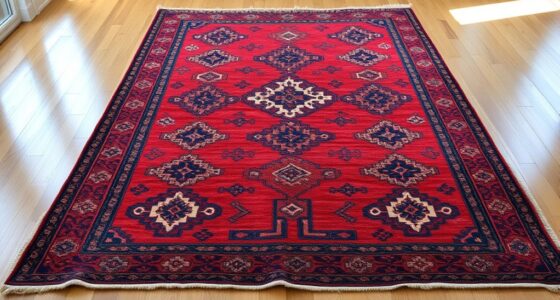
Traditional motifs and patterns form the core visual vocabulary of border design styles, often reflecting cultural heritage and symbolic meanings. You’ll notice ornamental floral designs that incorporate intricate, flowing shapes inspired by nature, symbolizing growth and beauty. Geometric patterns, on the other hand, emphasize symmetry, repetition, and mathematical precision, creating a sense of order and harmony. These motifs are carefully crafted to convey specific cultural stories or spiritual significance, making them central to many classic border styles. Their detailed craftsmanship often highlights fine lines, bold shapes, and contrasting colors. When you observe traditional borders, you’ll see how these elements work together to create a rich, meaningful visual language rooted in history and symbolism. Additionally, design elements such as vibrant colors and detailed motifs are often used to enhance the aesthetic appeal and cultural expression of these borders.
Modern Minimalist Features
Modern minimalist border designs strip away ornate details, favoring clean lines and simple shapes that emphasize clarity and function. You’ll notice geometric patterns that create a sense of order and symmetry, making the design feel balanced and uncluttered. The focus is on minimalist aesthetics, where less truly is more. Sharp angles, straight lines, and basic shapes like circles or squares define these borders, avoiding complex motifs. This approach highlights elegance through simplicity, allowing your main content to stand out without distraction. The visual appeal relies on negative space and streamlined forms, creating a modern, refined look. If you want a border style that’s sleek, unobtrusive, and versatile, embracing these features will help achieve a contemporary aesthetic. Additionally, understanding the design principles behind minimalism can guide you in creating cohesive and visually appealing borders.
Color and Material Usage
Color and material choices in border design substantially influence their visual impact and overall aesthetic. Your selection of color palettes can create different moods, from bold and vibrant to subtle and elegant. Classic borders often feature rich, deep hues like gold, red, and navy, while contemporary styles favor softer, more muted tones or even monochromatic schemes. Material textures also play a vital role; smooth, glossy finishes give a polished look, whereas textured surfaces like embossed patterns or fabric-inspired materials add depth and tactile interest. Combining these elements, you can craft borders that complement your overall design, whether aiming for timeless sophistication or modern simplicity. Paying attention to color and material usage guarantees your border enhances the visual harmony and character of your space or project. Incorporating design principles such as contrast and balance can further elevate the effectiveness of your border choices.
Material Choices and Techniques

Choosing the right materials and techniques is essential for creating a border that enhances your overall design. Your choice of fabric textures can set the tone, whether smooth silk for elegance or textured burlap for rustic charm. Consider how different materials interact with light and surroundings to create visual interest. Border embellishments, such as embroidery, appliqué, or beading, add depth and personality, making your design stand out. Techniques like quilting or fabric layering can also add dimension and structure. Be mindful of durability and ease of maintenance, especially if the border will be in a high-traffic area. Additionally, incorporating vertical storage solutions can help organize your materials and tools efficiently, supporting a seamless creative process. By carefully selecting materials and employing thoughtful techniques, you guarantee your border complements and elevates your overall aesthetic.
Cultural Influences and Symbolism
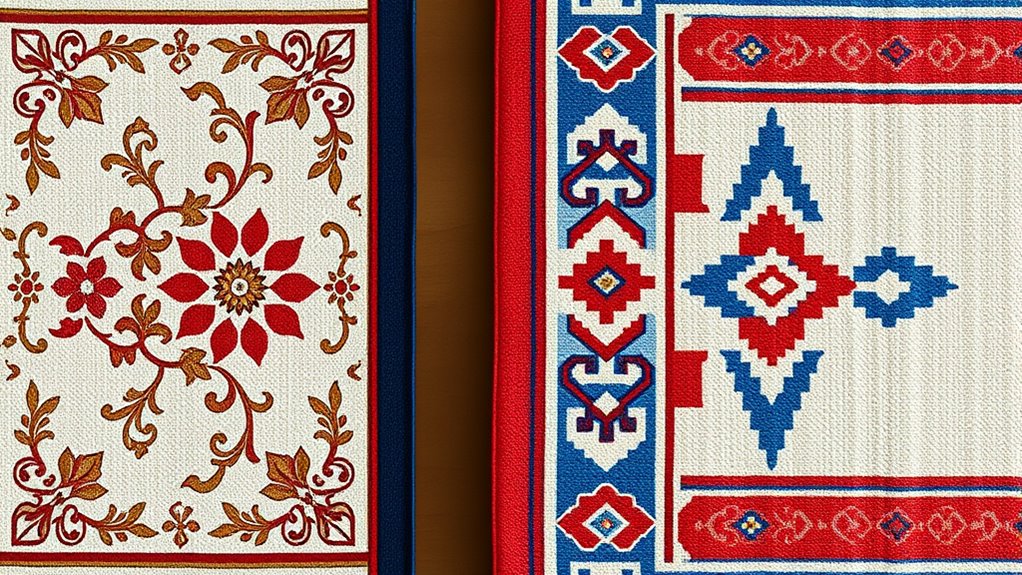
Materials and techniques can reflect cultural identities and traditions, adding layers of meaning to your border design. Cultural influences shape patterns, colors, and motifs, making each piece unique. Symbolism in design often conveys stories, beliefs, or values from specific regions. For example, intricate floral motifs might symbolize growth and prosperity, while geometric patterns can represent harmony or spirituality. Understanding these cultural elements helps you appreciate the depth behind each border. The table below highlights common cultural influences and their symbolism:
| Culture | Key Motifs | Symbolism in Design |
|---|---|---|
| Middle Eastern | Arabesques, calligraphy | Spirituality, eternity |
| East Asian | Dragons, cherry blossoms | Power, renewal |
| Latin American | Floral, animal patterns | Community, fertility |
| African | Tribal symbols, zigzags | Identity, protection |
| Indigenous | Totems, nature motifs | Connection to nature, ancestors |
Applications in Modern Interiors and Fashion
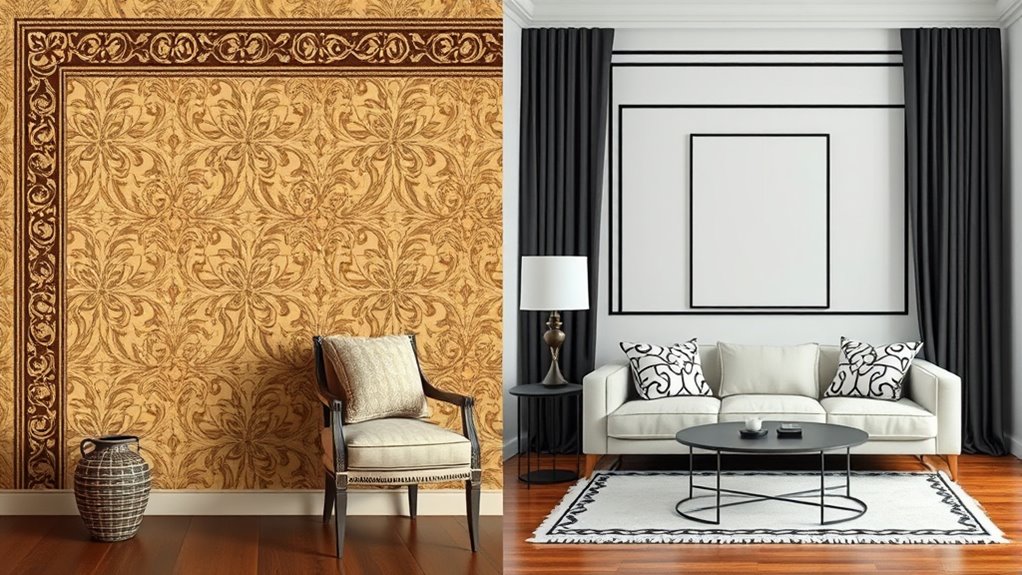
Border design styles have found a vibrant place in modern interiors and fashion, where they add visual interest and cultural depth. In interior decor, borders are used to frame walls, ceilings, or furniture, creating a cohesive look with a touch of elegance. In fashion accessories, borders appear on scarves, belts, and trims, offering a stylish accent. To incorporate these styles effectively, consider:
- Using bold borders in accent walls to draw attention.
- Adding intricate border details to curtains or upholstery for sophistication.
- Incorporating patterned borders on clothing, such as hems or collars.
- Combining classic and modern border elements for a unique, eclectic style.
- Thoughtful decor layering with borders can add depth and richness to your overall design.
These applications enhance visual appeal and reflect cultural influences, making your space and wardrobe more engaging.
Combining Classic and Contemporary Borders
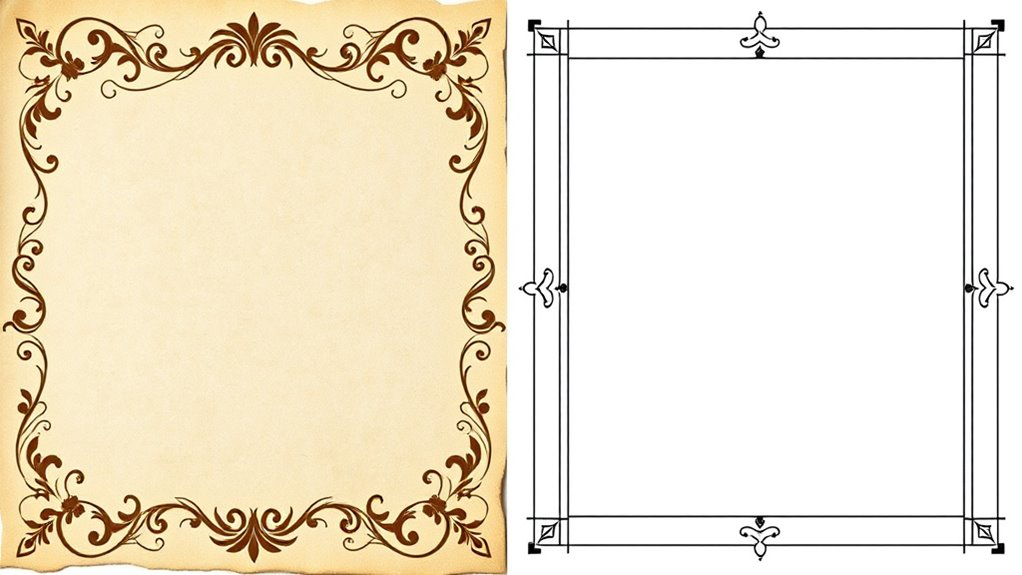
You can create stunning visuals by blending classic and contemporary borders seamlessly. Adding modern touches to traditional designs guarantees their timeless appeal while giving your space a fresh look. Using symbolism and interpretation approaches ensures a harmonious balance between old and new styles.
Blending Styles Seamlessly
Blending classic and contemporary border styles creates a harmonious look that bridges tradition and modernity. To achieve this seamless fusion, consider these strategies:
- Select a border pattern that combines ornate details with clean lines, balancing stylistic contrast.
- Use color schemes that echo both eras, such as muted tones with bold accents.
- Incorporate subtle modern elements into traditional designs, like geometric shapes within classic motifs.
- Keep the overall design simple, allowing the border pattern to stand out without overwhelming the space.
- Pay attention to design harmony to ensure the combined styles complement each other effectively.
This approach guarantees your border feels cohesive, blending styles effortlessly. By thoughtfully combining elements, you create a design that honors tradition while embracing modern aesthetics, resulting in a timeless yet fresh look.
Modern Touches to Classics
Integrating modern touches into classic border designs can transform traditional patterns into fresh, eye-catching elements. By blending contemporary motifs with timeless styles, you create borders that reflect both history and innovation. This approach highlights the stylistic evolution of border symbolism, where old symbols are reinterpreted with modern flair. For example, classic floral patterns can be simplified or stylized with bold lines, making them more versatile for current aesthetics. These updates help maintain the essence of traditional borders while appealing to contemporary tastes. The key is to balance tradition with innovation, ensuring that the modern touches enhance rather than overshadow the original design. Additionally, understanding the symbolic significance of traditional motifs can guide how modern elements are integrated, preserving their cultural meaning. Ultimately, this fusion results in borders that are both meaningful and visually engaging.
Complementary Design Approaches
Combining classic and contemporary border designs creates a harmonious balance that highlights the strengths of both styles. To achieve this, focus on techniques like pattern repetition and decorative framing. Here are four ways to merge these styles effectively:
- Use a traditional pattern with a modern twist by repeating it in a sleek, minimalist way.
- Incorporate decorative framing around contemporary artwork to add elegance and depth.
- Mix bold, geometric shapes with intricate motifs for visual contrast.
- Balance classic motifs with clean lines to create a cohesive look that feels fresh yet timeless.
Tips for Selecting the Right Border Style for Your Space
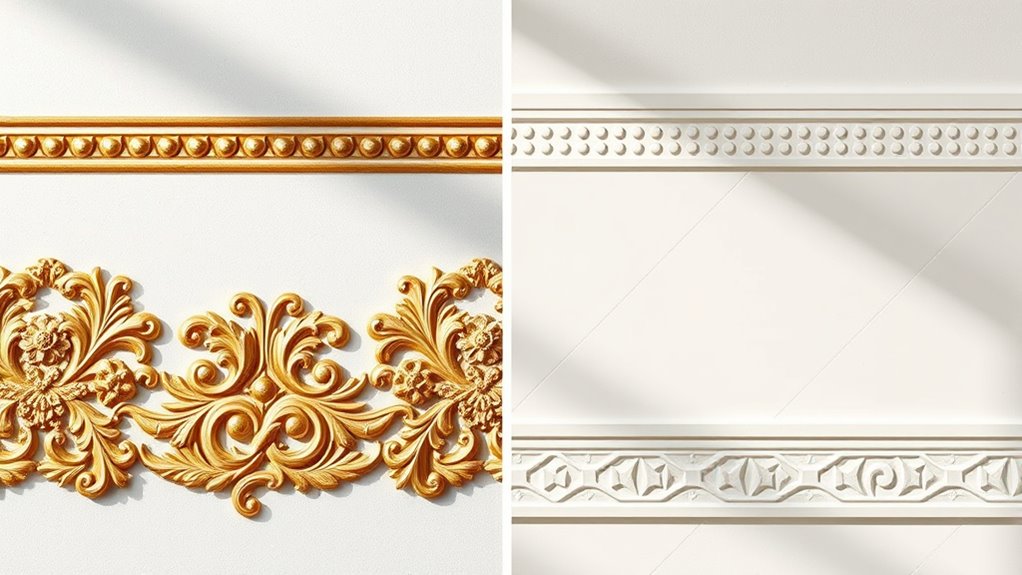
Choosing the right border style for your space starts with understanding the overall look you want to achieve. Consider how pattern mixing can add visual interest—pairing a bold border with simpler walls can create a balanced focal point. If you prefer a cohesive feel, prioritize color coordination by selecting borders that complement your existing palette. Think about the room’s purpose and mood; classic borders often suit traditional spaces, while contemporary styles work well in modern settings. Measure your walls accurately to ensure a proper fit. Don’t be afraid to experiment with different textures or patterns, but keep harmony in mind. Ultimately, selecting a border style that aligns with your décor makes your space feel intentional and stylish.
Frequently Asked Questions
How Do Border Designs Influence Perceived Room Size?
Border designs can markedly influence your perceived room size through visual illusion and spatial perception. Bold, intricate borders may make a space feel smaller by drawing attention to the edges, while simple, light borders can create a sense of openness. Carefully choosing your border style helps you manipulate spatial perception, making your room appear larger or cozier, depending on the effect you’re aiming for.
Can Border Styles Be Customized for Personal Taste?
They say “the devil is in the details,” and that’s true for border styles. Yes, you can customize border designs to match your personal taste, thanks to numerous personalization options and design flexibility. You can choose colors, patterns, and materials that reflect your style. This way, your borders become a unique expression of your personality, making your space truly your own and enhancing its overall aesthetic.
What Maintenance Is Required for Different Border Materials?
When considering border material types, you should know that maintenance tips vary. For wooden borders, you need to regularly clean and reseal to prevent moisture damage. Vinyl borders require occasional cleaning with mild soap, while stone or brick borders might need repointing or sealing every few years. By understanding these maintenance tips, you can keep your borders looking great and lasting longer, regardless of the material you choose.
Are There Eco-Friendly Options for Border Design Materials?
You’ll be happy to know there are eco-friendly options for border design materials. You can choose sustainable materials like recycled wood, bamboo, or recycled plastic, which help reduce environmental impact. Biodegradable borders made from natural fibers or plant-based plastics are also great choices, as they break down safely over time. These options not only look stylish but also support eco-conscious gardening and landscaping efforts, making your space both beautiful and sustainable.
How Do Border Designs Impact Overall Interior Design Harmony?
Your border designs can make or break your interior harmony, transforming a room from ordinary to extraordinary. Artistic patterns and thoughtful color coordination guide the eye and create visual flow, ensuring everything feels connected. They set the tone and style, whether sleek or ornate, helping you achieve a cohesive look. When you choose borders carefully, you craft an environment that’s not only beautiful but also perfectly balanced, like a symphony of design elements.
Conclusion
Did you know that nearly 60% of interior designers say that choosing the right border style can instantly elevate a space? Whether you prefer the timeless charm of classic borders or the sleek appeal of contemporary ones, understanding their origins and symbolism helps you make informed choices. By blending styles or selecting the perfect border, you can create a space that truly reflects your personality. So go ahead—transform your home with borders that tell your unique story.