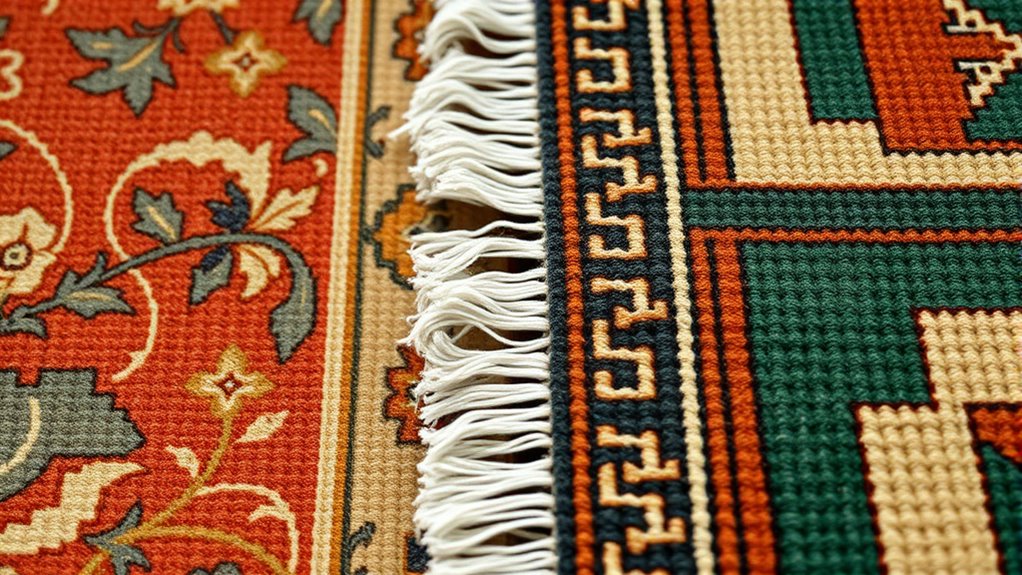

Knowing whether a rug is vintage or antique helps you understand its age, value, and restoration needs. Vintage rugs are typically 20 to 100 years old, while antiques are over 100 years old. Restoration can be tricky, especially with antique pieces that have fragile fibers, and improper work can reduce value. Regional origin, craftsmanship, and condition also play key roles. If you want to grasp these differences fully, you’ll find the insights that follow quite helpful.

Get furniture and decor delivered free with Prime
- Fast, free delivery on millions of items
- Prime Video, Amazon Music and more included
- Member-only deals all year
Key Takeaways
- Vintage rugs are 20-100 years old, while antique rugs are over 100 years, affecting their rarity and value.
- Restoration of vintage rugs requires delicacy; antique rugs need expert care due to fragile fibers.
- Proper restoration preserves authenticity; improper repairs can decrease a rug’s worth.
- Regional origin influences design, craftsmanship, and valuation, making provenance key for collectors.
- Valuation depends on age, condition, provenance, and craftsmanship; minor imperfections may add or detract value.
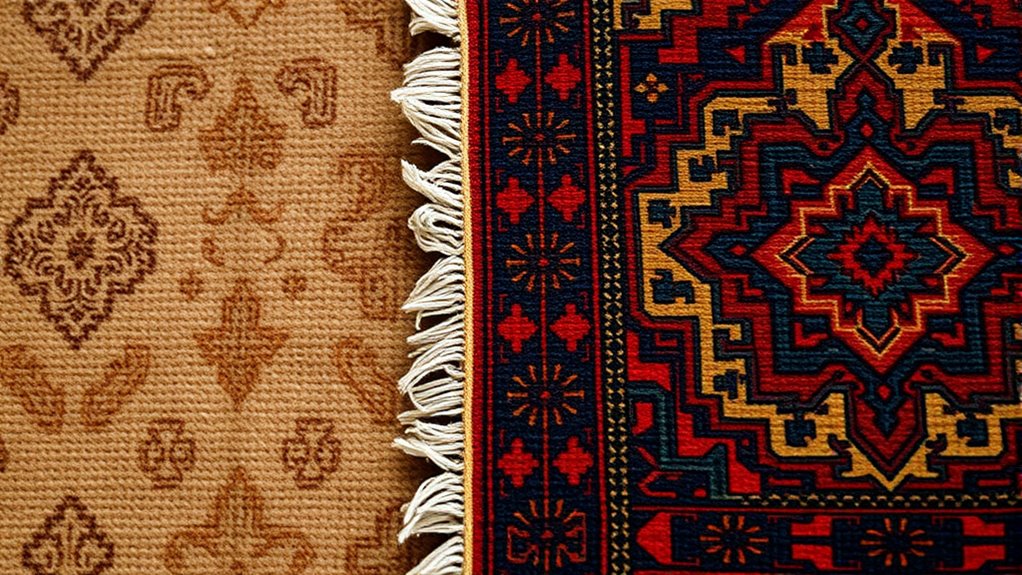
Have you ever wondered what truly sets vintage rugs apart from antique ones? The difference isn’t just about age; it involves a complex mix of history, craftsmanship, and condition that can influence how you perceive and value these pieces. One of the main considerations when dealing with vintage and antique rugs is understanding the restoration challenges involved. Vintage rugs, typically between 20 and 100 years old, often require careful restoration to address issues like fading, worn fibers, or minor tears. Since they’re usually still in relatively good shape, restoring them can be feasible, but it demands a delicate touch to preserve their original beauty. Antique rugs, on the other hand, are generally over 100 years old and may present more significant restoration challenges. Their age often means their fibers are more fragile, and any repair work must be handled with expertise to avoid further damage. Restoring antique rugs requires a deep understanding of traditional techniques and the materials used, which can be both time-consuming and costly. As a collector, you should be aware that restoration, if not properly executed, might diminish the rug’s authenticity and value. That’s why a professional assessment is essential for accurate restoration and for understanding how repairs impact the overall value appraisal of the piece. Additionally, knowing the regional origins of a rug can significantly influence its value and restoration approach. When it comes to value appraisal, vintage rugs tend to be more straightforward. Because they are newer, their value is often influenced by factors like design, provenance, and condition, but they don’t carry the same historical weight as antique rugs. Antique rugs, however, are valued not just for their condition but for their rarity, age, and provenance. Even minor imperfections can either add to their charm or detract from their worth, depending on their historical significance and authenticity. Proper evaluation requires an expert who can distinguish between genuine age-related wear and damage caused by poor preservation or restoration. An accurate appraisal considers the rug’s origin, materials, and craftsmanship, along with its present condition. Knowing the difference in valuation helps you make informed decisions whether you’re buying, selling, or maintaining a vintage or antique rug.
Products Worth Considering

Roborock Q7 M5+ Robot Vacuum and Mop with Self-Emptying Dock

Shark AI Ultra Robot Vacuum with Self-Empty Base

Bose TV Speaker (2nd Gen) Compact Soundbar with Bluetooth and HDMI Connectivity
As an affiliate, we earn on qualifying purchases.
Frequently Asked Questions
How Can I Verify a Rug’s True Age and Origin?
To verify a rug’s true age and origin, you should conduct provenance research to trace its history and ownership. Additionally, dye analysis helps determine the materials and techniques used, which can reveal its period and region. Consulting experts and authenticating with reputable appraisers can further confirm its authenticity. Combining these methods gives you a clearer picture of the rug’s provenance, ensuring you’re making an informed purchase.
What Are the Key Differences in Maintenance Between Vintage and Antique Rugs?
You might think maintenance is similar for vintage and antique rugs, but their care routines and cleaning techniques differ. Vintage rugs usually require gentle vacuuming and occasional spot cleaning to preserve their colors, while antique rugs need careful handling, minimal cleaning, and expert restoration to prevent damage. By understanding these differences, you guarantee both types stay beautiful and retain value. Proper care keeps your collection vibrant and well-preserved over time.
Are Vintage or Antique Rugs More Valuable for Investment Purposes?
You’ll find antique rugs generally more valuable for investment due to their rarity factors and historical significance. While market trends fluctuate, these rugs often appreciate over time, especially if well-preserved and unique. Vintage rugs can also be worthwhile, but their value depends more on current demand and condition. To maximize your investment, focus on rare, well-maintained pieces with authentic provenance, and stay informed about evolving market trends.
How Do I Identify Authentic Antique Rug Craftsmanship?
You identify authentic antique rug craftsmanship by examining weaving techniques, which should be intricate and consistent, reflecting traditional methods. Look closely at the material authenticity; genuine antique rugs often use natural dyes and high-quality fibers like wool or silk. Check for signs of age such as wear and patina. Authentic craftsmanship shows hand-knotting and detailed patterns that modern reproductions rarely replicate, helping you confidently spot genuine antique pieces.
What Are Common Restoration Considerations for Vintage Versus Antique Rugs?
Did you know that over 60% of collectors overlook restoration issues? When restoring vintage rugs, focus on dye stability and knot density, which impact longevity. For antique rugs, preservation of original dyes and meticulous knot work is key. Always consider whether the restoration maintains the rug’s authenticity, and work with specialists to ensure repairs don’t compromise historical value. Proper restoration enhances both beauty and worth.
Conclusion
Ultimately, understanding the subtle dance between vintage and antique rugs helps you appreciate their unique charm. Think of it as discovering a hidden treasure in your home—each piece has its own story to tell. By paying attention to their age and craftsmanship, you’ll make selections that truly resonate with your style. Embrace the journey of collecting, and soon enough, you’ll find yourself surrounded by timeless pieces that bring warmth and character to your space.