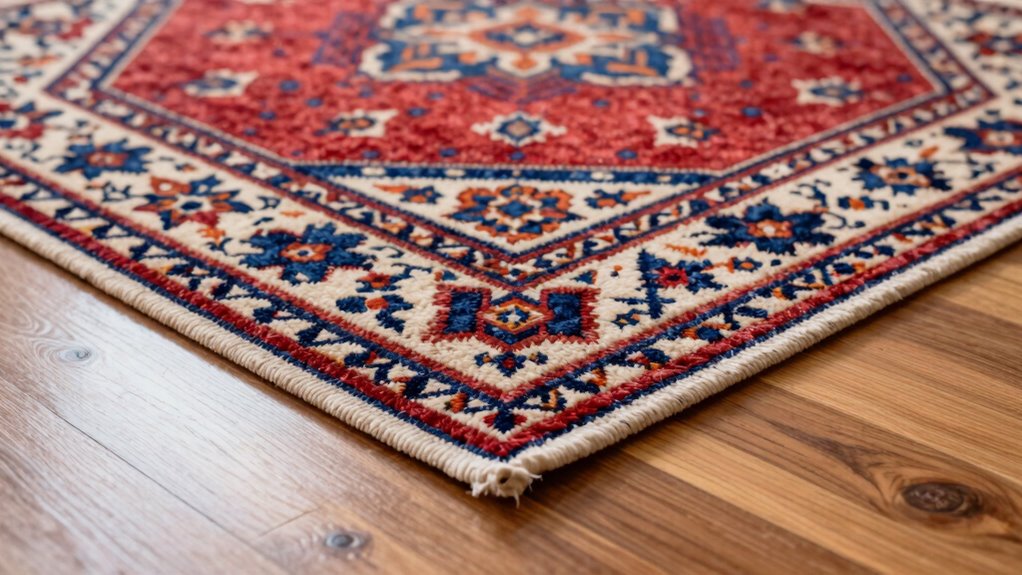

To prevent rug edges from curling or lifting over time, you can use double-sided carpet tape or adhesive spray to secure the edges in place. Applying gentle heat with an iron can also soften fibers and help them settle flat, especially for natural fibers or smaller rugs. Adding rug padding underneath provides extra stability and cushioning, reducing movement. Regular maintenance like vacuuming and rotating your rug keeps fibers straight, and exploring these options further can help you keep your rug looking smooth and secure.

Get furniture and decor delivered free with Prime
- Fast, free delivery on millions of items
- Prime Video, Amazon Music and more included
- Member-only deals all year
Key Takeaways
- Use double-sided carpet tape or adhesive spray to secure and flatten rug edges effectively.
- Apply gentle heat with an iron to soften fibers or backing, helping edges lay flat.
- Incorporate rug padding underneath to provide additional support and prevent curling.
- Regularly rotate and vacuum the rug to promote even wear and maintain edge stability.
- Combine vintage techniques, adhesives, and proper maintenance for long-lasting, flat rug edges.

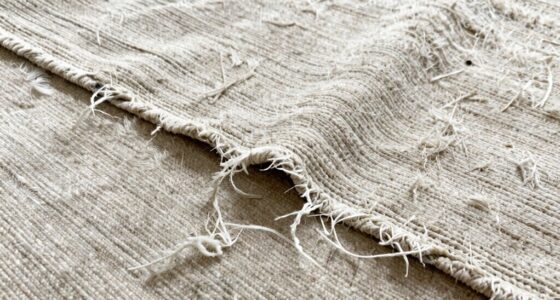
Have you ever stepped on a rug only to find its edges curling up and creating a tripping hazard? If so, you’re not alone. Over time, even the most well-loved rugs can develop curled edges, making them unsafe and less attractive. Fortunately, there are effective ways to keep your rug edges flat and secure. One approach is to explore vintage rug techniques, which often involve tried-and-true methods passed down through generations. For example, using double-sided carpet tape or applying heat with an iron can help flatten stubborn edges. These vintage techniques work by softening the rug’s backing or adhesive, allowing the fibers to settle into a more even position. They’re simple, affordable, and often quite effective, especially for smaller rugs or those with natural fiber backing. Additionally, understanding the properties of biodiversity in natural fibers can help you select more durable and resistant rug materials, ensuring longevity and resistance to curling over time. Recognizing the fiber characteristics can also inform the best maintenance practices to prevent curling.
Vintage techniques like double-sided tape and heat help flatten stubborn rug edges effectively.
In addition to vintage techniques, considering rug padding options can make a significant difference. Proper padding not only adds comfort underfoot but also helps keep the edges from curling up over time. Rug pads come in various materials, like rubber, felt, or a combination of both. The right padding offers grip, prevents slipping, and provides a cushioning layer that holds the rug flat against the floor. When selecting a rug pad, choose one that fits your rug’s size precisely; an ill-fitting pad can cause edges to lift or bunch up. For added security, some pads feature textured surfaces or grippy backing that anchors the rug to the floor, reducing movement and curling. Moreover, selecting the right rug backing material can enhance the overall durability and help prevent edges from lifting prematurely. Proper care and choosing the right materials can extend the life of your rug and maintain its appearance.
Another effective strategy involves securing the edges with adhesive solutions designed specifically for rugs. Applying a small amount of rug tape or adhesive spray beneath the edges can keep them flat and prevent curling. Be cautious to use products that are safe for your flooring type and rug material to avoid damage. Once you’ve secured the edges, you can use a low-heat iron or steam to gently set the fibers if needed, making the edges lay flat and smooth. Regular maintenance also plays a role in preventing curling. Rotating your rug periodically ensures even wear and reduces the chances of edges lifting prematurely. Additionally, vacuuming along the edges helps keep fibers straight and clean, which can reduce curling caused by dirt or debris settling into the fibers. Combining vintage techniques, appropriate rug padding, and regular upkeep creates a comprehensive approach to maintaining flat, safe rug edges that last. With a little effort and the right materials, you can enjoy a beautiful, secure rug without the worry of tripping hazards.
Products Worth Considering

Dyson V15 Detect Cordless Vacuum

Levoit Core 400S-P Smart Air Purifier for Large Rooms

Roborock RockMow X130H Wire-Free 4WD Robot Lawn Mower
As an affiliate, we earn on qualifying purchases.
Frequently Asked Questions
Can Rug Padding Prevent Curling Edges?
Yes, rug padding can prevent curling edges. When you add appropriate rug padding, it provides extra grip and stability, which helps keep the edges flat and prevents edge curling. Make sure to choose padding that fits your rug size and material, as this will maximize its effectiveness. Proper padding not only stops edges from lifting but also extends your rug’s lifespan and improves safety by reducing tripping hazards.
How Long Does It Take for Rug Edges to Settle?
Imagine your rug lying flat like a calm lake—most edges settle within a week or two. Rug material influences this; softer fibers may take longer, while sturdy ones settle faster. Edge reinforcement with tape or weights helps speed this process. As the days pass, the fibers relax and conform, and with patience and proper support, your rug’s edges will stay flat and secure, transforming your space into a smooth, inviting surface.
Are Certain Rug Materials More Prone to Curling?
Yes, certain rug materials are more prone to curling. Synthetic fibers, like nylon and polyester, tend to curl more because of their lighter weight and flexibility. Natural wool rugs are less likely to curl, thanks to their denser fibers and weight, which help keep edges flat over time. If you want to minimize curling, choose heavier rugs with natural wool or guarantee proper backing and stretching during installation.
Does Sunlight Exposure Affect Rug Edge Curling?
Yes, sunlight exposure can affect rug edge curling. Prolonged sunlight causes fading and weakens fibers, making edges more prone to curling or lifting. Additionally, sun damage can lead to color bleeding, which weakens the rug’s overall structure. To prevent this, keep your rug out of direct sunlight or use window coverings. This helps maintain the rug’s shape, color, and integrity over time.
Can Professional Cleaning Fix Curled Rug Edges?
Professional cleaning alone typically won’t fix curled rug edges, but it can help loosen dirt and restore some flexibility. For curled edges, you can try DIY remedies like applying heat with an iron and a cloth or using heavy furniture to flatten them. If these methods don’t work, consider professional repairs, which include re-stretching or re-backing the rug to restore its shape and prevent further curling.
Conclusion
By taking a few simple steps, you can keep your rug edges flat and looking fresh for years to come. Regularly securing loose corners, using the right adhesive, or employing heavy objects can make a big difference. Don’t let curling edges get the best of you—nip the problem in the bud before it grows into a bigger headache. Remember, a stitch in time saves nine, so stay proactive and enjoy a flawless, snag-free rug under your feet.