
Over the past three centuries, rug-making has evolved from regional traditions in the 17th and 18th centuries to incorporate Oriental motifs and artistic influences in the 19th century. In the 20th and 21st centuries, innovative techniques like digital printing, recycled materials, and laser cutting transformed rugs into contemporary art pieces. If you continue exploring, you’ll uncover how these key movements and makers shaped the dynamic world of rug design today.

Get furniture and decor delivered free — and shop member deals
- Fast, free delivery on millions of items
- Access to Prime Big Deal Days deals on October 6–7
- Prime Video, Amazon Music and more included
Key Takeaways
- The 17th–18th centuries saw the emergence of regional weaving styles, natural dyes, and foundational knotting techniques.
- The 19th century introduced Oriental motifs, geometric patterns, and increased artistic influence from Middle Eastern and Persian cultures.
- The 20th century marked the fusion of traditional crafts with modern materials, abstract designs, and technological innovations like digital printing.
- Contemporary rug makers incorporate recycled materials, laser cutting, and mixed media to push artistic boundaries and reflect modern aesthetics.
- Overall, the timeline highlights a shift from regional craftsmanship to global artistic expression and technological experimentation.
Origins and Early Weaving Traditions (17th–18th Century)

During the 17th and 18th centuries, rug weaving blossomed as artisans began to develop distinctive regional styles. You’ll notice that knotting techniques varied markedly, reflecting local traditions and skills passed down through generations. Some regions favored symmetrical knots, creating dense, durable rugs, while others used asymmetrical knots for lighter, more intricate designs. Dyeing methods also differed: natural dyes derived from plants, insects, and minerals produced vibrant, lasting colors. These techniques influenced the overall look and feel of each rug, giving each region its unique identity. As artisans refined their craft, they began to experiment with color combinations and knotting complexity, laying the groundwork for future weaving innovations. This period marked the foundation of diverse, regionally distinct weaving traditions that still influence rug design today.
The Rise of Oriental and Artistic Weaves (19th Century)

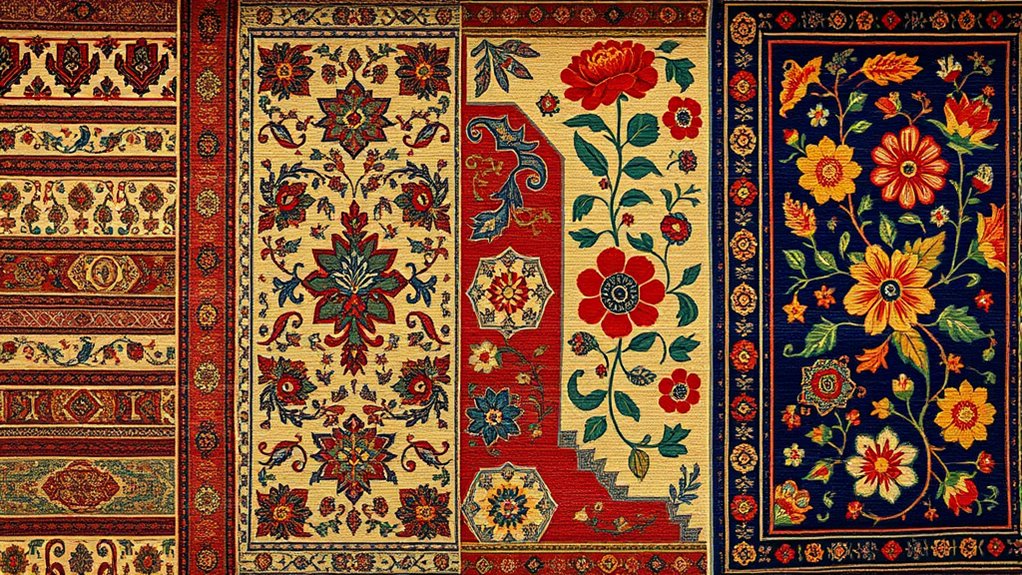
The 19th century marked a significant shift as Oriental motifs and artistic influences transformed rug weaving into a more expressive and decorative craft. You’ll notice an increased use of artistic motifs inspired by Middle Eastern, Persian, and Central Asian cultures, reflecting a broader appreciation of these traditions. Cultural influences became more prominent, as weavers integrated intricate patterns and vibrant colors that showcased their regional identities. This period saw artisans exploring new designs, blending geometric shapes with floral and abstract elements to create visually striking rugs. These artistic motifs not only enhanced the aesthetic appeal but also conveyed cultural stories and symbolism. Additionally, the incorporation of artistic expression elevated the craftsmanship, making rugs from this era highly sought after for their detailed ornamentation and cultural richness, thus elevating weaving into a highly valued art form.
Modern Innovations and Contemporary Rug Art (20th–21st Century)
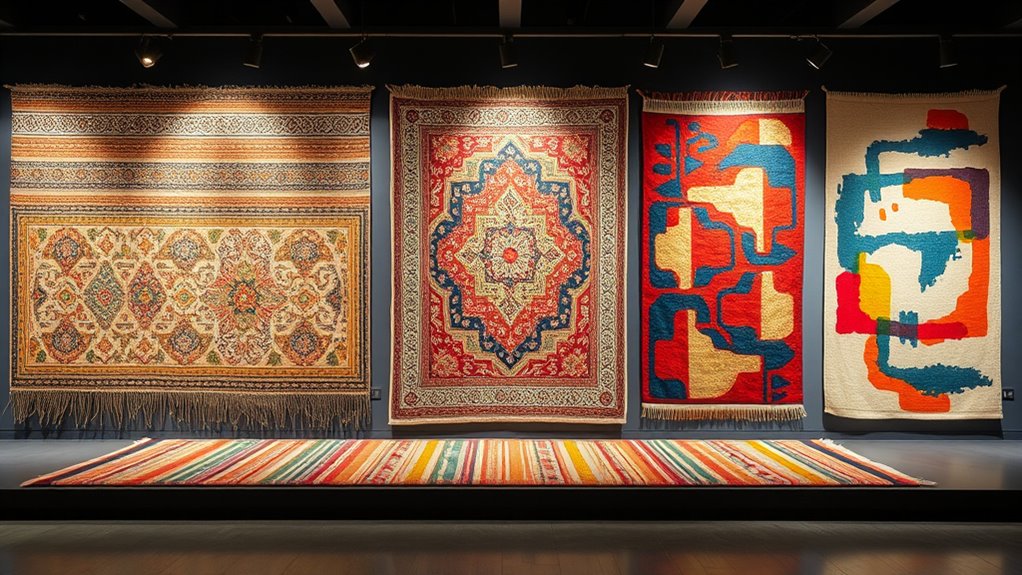
As the 20th and 21st centuries unfold, modern innovations and contemporary art have dramatically transformed rug weaving, blending traditional techniques with new materials, technologies, and artistic expressions. You see abstract patterns emerge, pushing boundaries of design and concept. Technological advancements enable intricate designs and vibrant colors, often produced with digital tools and synthetic fibers. Rugs now serve as both functional textiles and modern art pieces. Imagine a table where traditional motifs meet avant-garde aesthetics:
| Technique | Materials | Artistic Focus |
|---|---|---|
| Digital printing | Synthetic fibers | Abstract patterns |
| Mixed media | Recycled materials | Conceptual themes |
| Laser cutting | Metallic threads | Geometric designs |
| Hand weaving with tech | Innovative yarns | Artistic experimentation |
This evolution invites you to explore a dynamic fusion of past craftsmanship and future innovation.
Frequently Asked Questions
How Did Trade Routes Influence Rug Design Evolution Over Three Centuries?
Trade route influence markedly shaped rug design evolution over three centuries. As you follow these routes, you’ll notice how they facilitated the exchange of ideas, motifs, and techniques. Regional dye development also played a vital role, providing unique colors and patterns that define distinct styles. This cross-cultural interaction allowed for innovation and diversification in rug designs, making each region’s creations uniquely reflective of their trade connections and local resources.
Which Materials Have Been Most Prized in Different Historical Periods?
Imagine holding history in your hands—what materials have truly defined each era? You’ll find that prized materials shifted with dyeing techniques and weaving innovations, from luxurious silk in ancient Persia to vibrant wool in Anatolia. Over centuries, these materials reflected cultural values and technological advances. Your journey through rug history reveals how treasured fibers like silk and fine wool shaped masterpieces, echoing the craftsmanship and trade secrets of their time.
How Did Cultural Exchanges Shape Regional Rug Motifs?
You see that cultural exchanges greatly influence regional rug motifs by blending cultural symbolism and artistic collaborations. These interactions introduce new patterns, colors, and techniques, creating unique designs that reflect diverse traditions. As you observe, artisans incorporate symbols from different cultures, enriching their work. This dynamic exchange fosters innovation and deepens the cultural significance of rugs, making them more than decorative objects—they become storytellers of intercultural connection.
What Role Did Technological Advances Play in Rug Production?
You might think traditional rug-making relies solely on craftsmanship, but technological advances like digital weaving revolutionized the process. These innovations enable intricate designs with greater precision and efficiency. Dye innovations also play a crucial role, offering brighter, more durable colors. Together, these advances bridge old techniques with modern technology, transforming rug production and expanding creative possibilities, making each piece more unique and accessible than ever before.
Are There Specific Signature Patterns Associated With Renowned Rug Makers?
You’ll notice that renowned rug makers often incorporate signature motifs into their designs, which act like maker signatures. These distinctive patterns, colors, or weaving techniques help identify a specific artist or workshop. By recognizing these signature motifs, you can trace a rug’s origin and appreciate the craftsmanship behind it, making each piece not just a decorative item, but also a unique work of art with a recognizable maker’s signature.
Conclusion
As you trace this three-century tapestry, you see how each era weaves its own vibrant thread into the fabric of rug history. From humble beginnings to masterpieces that dance with innovation, every knot tells a story of artistry and evolution. The timeline is a living mosaic, constantly growing and shifting like a river carving new paths. So, keep exploring—these woven stories invite you to step closer and feel the rich heartbeat of generations past.
Fall Picks
fall essentials
As an affiliate, we earn on qualifying purchases.