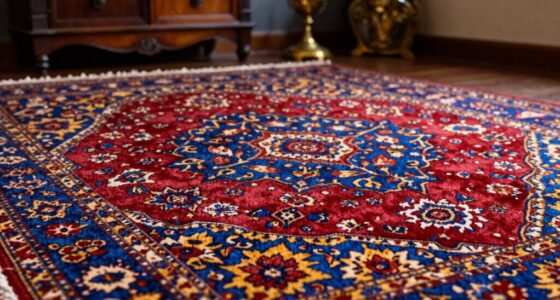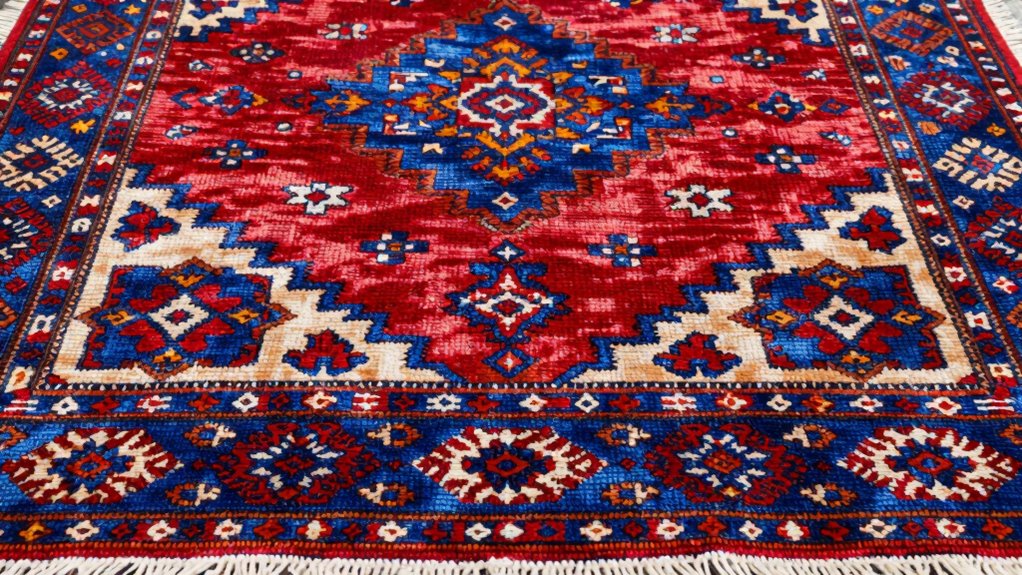

To spot counterfeit “handmade” rugs quickly, look for uniform dye colors instead of subtle variations and check the fringes—they should be extensions of the foundation, not sewn or glued on. Examine the backing for tight knots and no dye bleed, and feel the material—authentic rugs use natural fibers with dense weaving. Watch for suspiciously low prices or vague seller info. Keep exploring, and you’ll find even more tips to identify genuine craftsmanship.

Get furniture and decor delivered free — and shop member deals
- Fast, free delivery on millions of items
- Access to Prime Big Deal Days deals on October 6–7
- Prime Video, Amazon Music and more included
Key Takeaways
- Check for uniform dye colors; genuine rugs have subtle variations, while counterfeits show consistent, machine-like hues.
- Examine the fringe; authentic fringes are extensions of the foundation, not sewn or glued.
- Look at the backing; real rugs have tightly woven, knot-visible, and dye-stain-free backs.
- Assess material quality; natural fibers and dense weaving indicate authenticity, synthetic materials suggest fakes.
- Compare prices and seller transparency; suspiciously low prices and vague details often signal counterfeit rugs.
As an affiliate, we earn on qualifying purchases.
Recognize Visual Signs of a Fake Handmade Rug
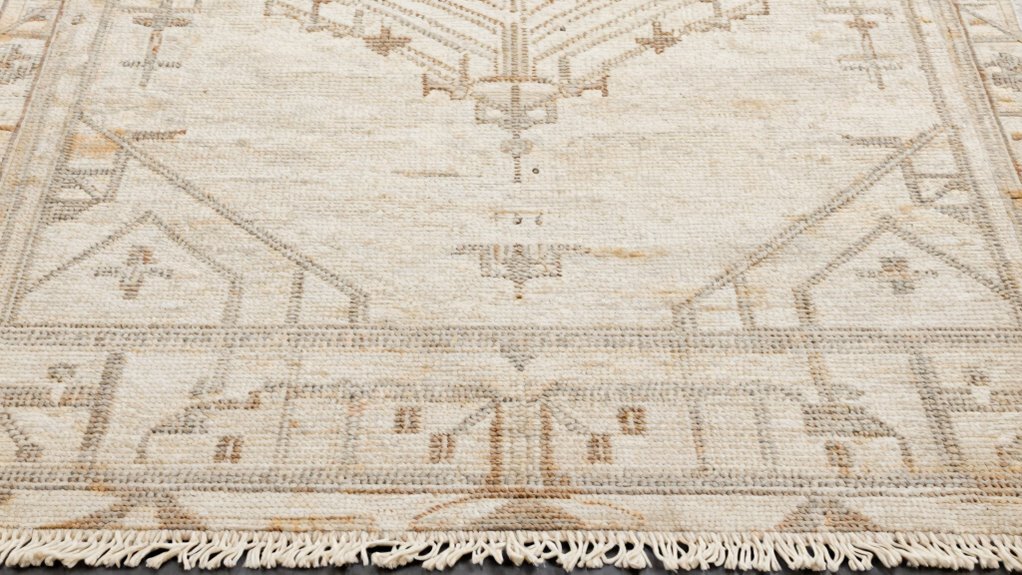
To identify a fake handmade rug, you need to closely examine its visual details. Start by inspecting the dye patterns; genuine handmade rugs often have slight variations in color due to traditional dyeing techniques, while counterfeit ones tend to have uniform, machine-like color consistency. Look at the fringe—authentic rugs usually have fringes that are an extension of the rug’s foundation, with some irregularities, whereas fake rugs often have fringes sewn or glued on afterward, appearing too perfect or uneven in an unnatural way. Pay attention to these subtle clues, as they reveal whether the rug was crafted by hand or mass-produced. Recognizing these signs helps you avoid purchasing a counterfeit and ensures you get an authentic, high-quality piece. Additionally, understanding the architectural solutions and design details can further confirm the authenticity of a handmade rug, especially when it complements a well-designed space.
Inspect the Backing and Knotting for Authenticity
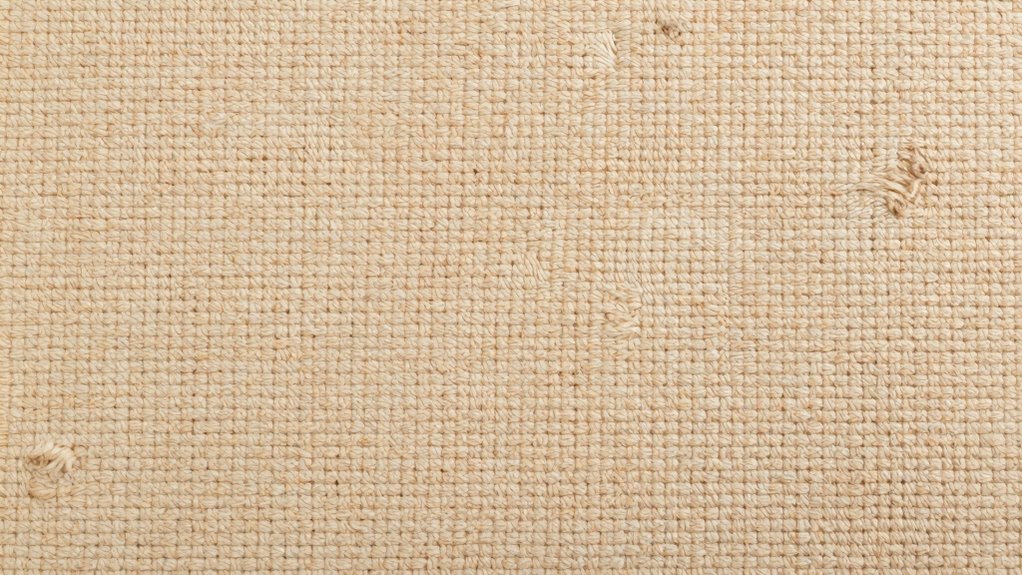
Examining the backing and knotting of a rug is essential for verifying its authenticity. Authentic handmade rugs usually have a tightly woven, consistent backing that shows the knots clearly, with no dye bleeding. If you notice dye bleeding through the backing or uneven coloration, it’s a sign of poor quality or a fake. Fringe inconsistency is another telltale sign; genuine rugs have fringes that are an extension of the rug’s foundation, not glued or sewn on afterward. Check that the knots are uniform and tightly packed, indicating skilled craftsmanship. Loose or uneven knots, or a backing that looks machine-made, suggest the rug may be counterfeit. These details help distinguish true handmade rugs from imitations. Additionally, European cloud innovation emphasizes the importance of precision and quality control, which can be reflected in the meticulous craftsmanship of authentic handmade rugs.
Assess Material Quality and Weaving Details
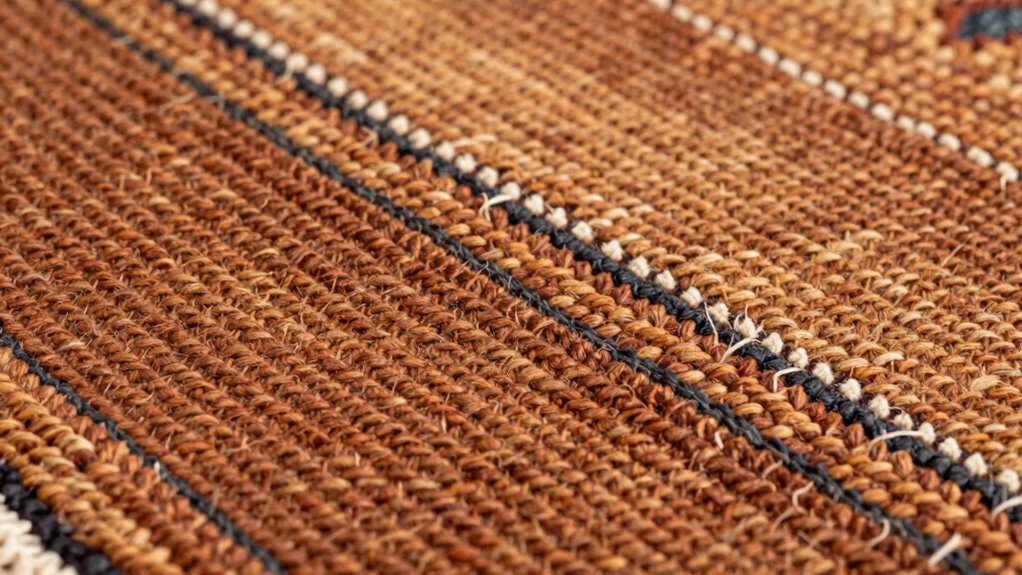
Evaluating the material quality and weaving details is essential for identifying a genuine rug. Authentic rugs feature consistent dyeing, ensuring even color throughout the fibers. Examine the fringe craftsmanship; well-made fringes are tightly woven and uniform, not glued or sewn on. To help differentiate, consider this table:
| Feature | Authentic Rug | Counterfeit Rug |
|---|---|---|
| Dye Consistency | Even, smooth color transitions | Uneven, blotchy patches |
| Fringe Craftsmanship | Tightly woven, uniform, neat | Loose, uneven, glued or sewn |
| Material Quality | Natural fibers like wool or silk | Synthetic, coarse fibers |
| Weaving Density | Dense, tight knots | Loose, uneven knots |
| Overall Finish | Precise, high-quality detail | Shoddy, inconsistent finish |
Additionally, authentic rugs often display well-executed craftsmanship that reflects the skill of experienced artisans. Focus on these details to avoid counterfeit rugs.
Perform Easy Tests to Confirm Handcrafted Quality
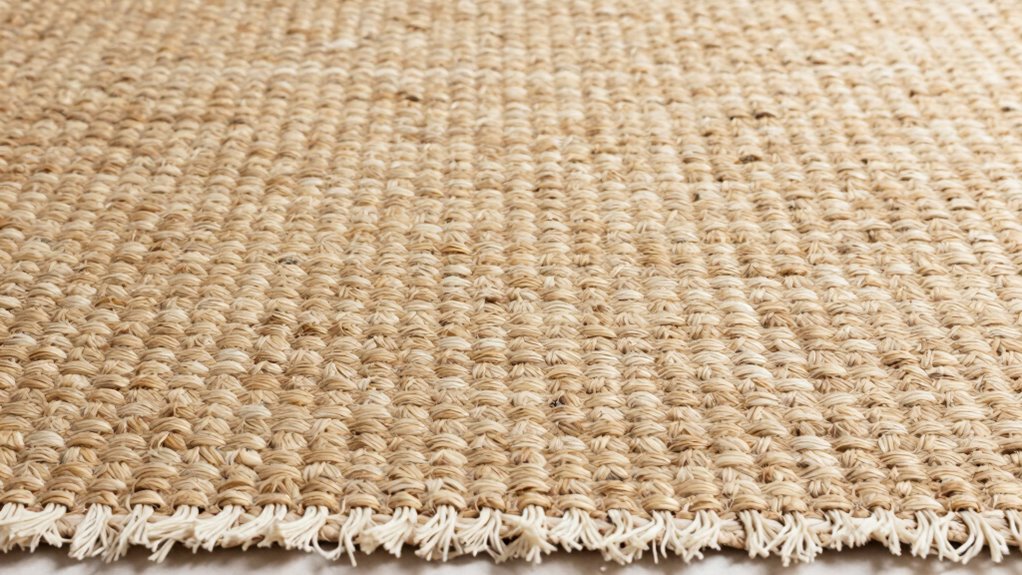
Simple tests can quickly help you verify if a rug is handcrafted and of genuine quality. First, examine the dyeing techniques: authentic handmade rugs often use natural dyes, resulting in subtle color variations and depth. If the colors appear uniform and overly bright, it may be a sign of synthetic dyes. Next, perform a rug size verification by gently stretching the rug; handmade rugs tend to have slight irregularities in size and shape due to their artisanal nature. You can also check the backing for visible knots or uneven weaving, which indicate craftsmanship. Additionally, Free Floating techniques can help reveal inconsistencies in the rug’s construction. These simple tests don’t require specialized tools but can reveal key clues about the rug’s authenticity. Trust your observation skills to identify genuine handmade quality quickly and confidently.
Compare Price and Seller Transparency to Spot Fakes
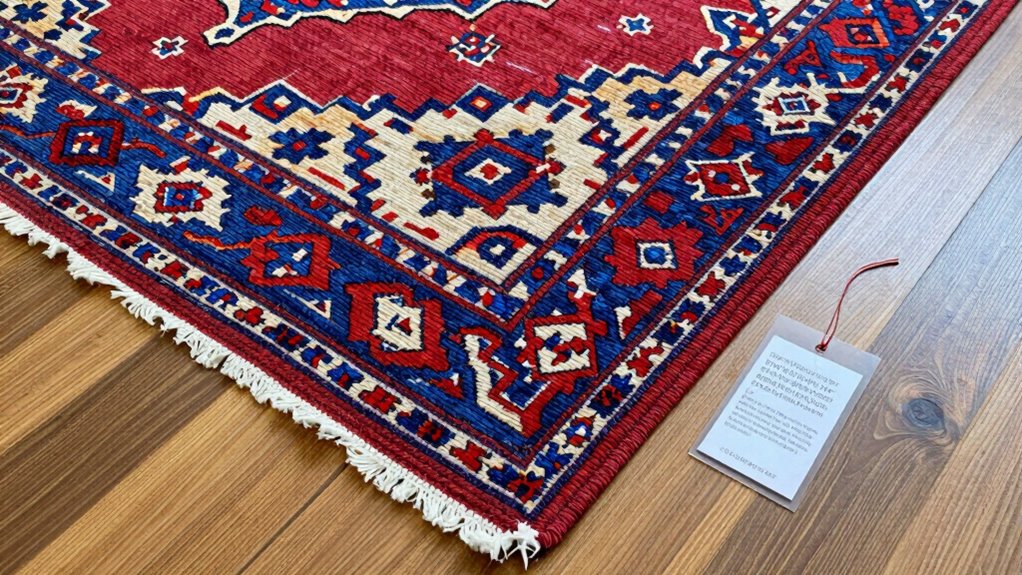
When shopping for a rug online or in person, comparing prices across different sellers is a key step in spotting fakes. If a deal seems too good to be true, it probably is. Genuine handmade rugs typically have consistent pricing based on quality, origin, and craftsmanship. Be wary of markedly lower prices, which may indicate a counterfeit. Additionally, seller transparency is essential—reliable sellers openly share details about the rug’s origin, materials, and production process. Lack of transparency or vague descriptions should raise red flags. By doing a thorough price comparison and evaluating how openly the seller provides information, you can better identify authentic pieces from fakes. Recognizing signs of counterfeit rugs and knowing what to look for helps you avoid scams and invest in a genuine, high-quality handmade rug.
Frequently Asked Questions
How Can I Verify a Rug’s Origin and Authenticity Through Documentation?
You can verify a rug’s origin and authenticity through documentation verification by examining the provided papers carefully. Look for authenticity certificates that detail the rug’s origin, materials, and craftsmanship. Confirm these documents match the rug’s design and provenance. Always cross-check with reputable sources or the seller’s documentation to confirm legitimacy. This process helps you confidently determine whether your rug is genuinely handmade and from the claimed region.
Are There Specific Brands or Sellers Known for Genuine Handmade Rugs?
Think of it like choosing a trusted friend—certain brands and sellers have built a solid reputation for genuine handmade rugs. You should research seller reviews and brand history to guarantee authenticity. Reputable brands like Safavieh, Nourison, and ABC Carpet & Home are known for quality. Always verify seller credentials, read customer feedback, and prefer established retailers to confidently find authentic, high-quality handmade rugs.
What Common Mistakes Do Buyers Make When Identifying Fake Handmade Rugs?
You often mistake fake handmade rugs for genuine ones by ignoring rug craftsmanship details and material authenticity. Don’t rely solely on appearance; examine the knots, fringes, and backing closely. Fake rugs may have machine-made patterns or synthetic materials that feel unnatural. By paying attention to these subtle cues, you can better distinguish authentic craftsmanship from counterfeit, ensuring you invest in truly handmade rugs that reflect quality and tradition.
How Does Rug Size Impact the Likelihood of It Being Counterfeit?
Think of rug size as a magnet for counterfeiters—larger rugs often attract more fakes because market demand for big, statement pieces is high. When size variation seems too perfect or inconsistent with typical handmade rugs, it’s a red flag. Small or unusual sizes can also be suspicious, as counterfeiters often produce standard dimensions. Always compare size with authentic examples to spot potential fakes quickly.
Can a Professional Appraiser Reliably Distinguish Fake From Real Handmade Rugs?
A professional appraiser can reliably distinguish fake from real handmade rugs using expert techniques and material analysis. They examine weaving patterns, knot density, and craftsmanship details that are difficult to replicate. Material analysis helps identify authentic natural fibers versus synthetic imitations. With their experience, you can trust that a seasoned appraiser will spot counterfeit rugs accurately, ensuring you make informed decisions when buying or valuing a handmade piece.
Conclusion
Remember, spotting a fake handmade rug isn’t always straightforward, but paying attention to visual signs, backing, materials, and price can make a big difference. Some might think high-quality fakes are impossible to detect, but with a little knowledge, you can avoid paying for a fake. Trust your eyes and instincts—if something feels off, it probably is. Investing in genuine craftsmanship guarantees you’re getting a true handmade piece that lasts and adds authentic beauty to your space.
Evergreen bestsellers Picks
bestsellers
As an affiliate, we earn on qualifying purchases.