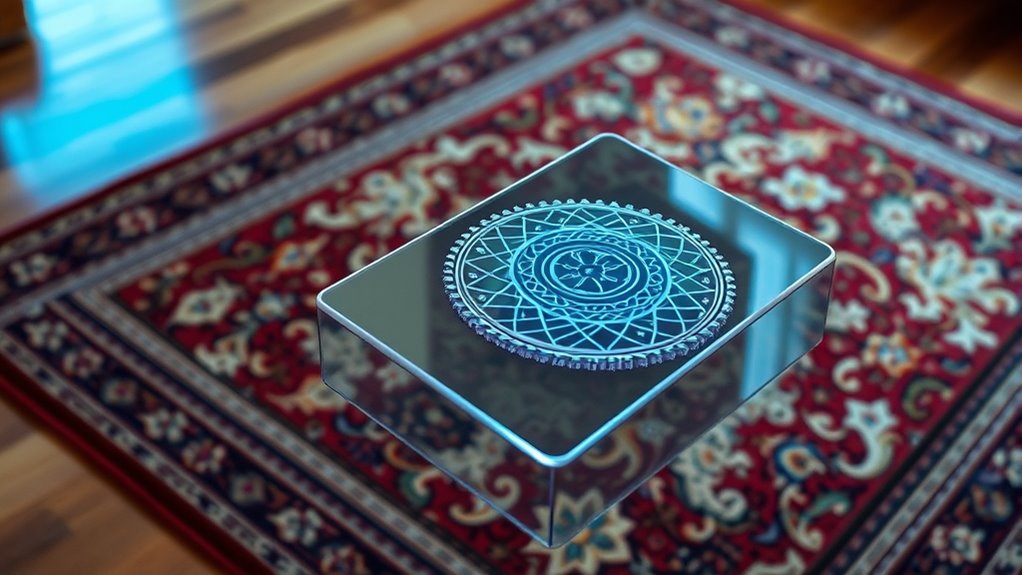

NFTs and digital provenance help you verify the authenticity and origin of physical rugs by creating secure, tamper-proof records on blockchain technology. This approach links the rug’s unique characteristics with a digital certificate, making it harder for fraud and counterfeits to enter the market. It boosts buyer confidence and supports cultural preservation. If you want to discover how these innovations are transforming rug authentication and ownership, there’s more to explore ahead.
Key Takeaways
- NFTs serve as digital certificates that verify the authenticity and provenance of physical rugs on the blockchain.
- Digital provenance through NFTs helps prevent counterfeiting and enhances buyer confidence in genuine rugs.
- Authentication methods like high-resolution scans and expert appraisal create unique digital signatures linked to NFTs.
- Blockchain technology ensures tamper-proof, transparent, and immutable ownership records for physical rugs.
- Digital provenance connects artisans and collectors globally, supporting cultural preservation and market trust.
Understanding NFTs and Their Role in Authentication

NFTs, or non-fungible tokens, are unique digital assets secured by blockchain technology that verify ownership and authenticity. Originally popularized through digital art and virtual collectibles, NFTs serve as a digital proof of authenticity for various assets. When applied to physical rugs, NFTs help establish a clear record of provenance, confirming the rug’s origin and ownership history. This digital certificate can be securely linked to the physical item, making fraud and counterfeiting much harder. As a result, buyers gain confidence in the authenticity and value of their purchase. You can think of NFTs as a modern way to authenticate and verify items, much like digital art or virtual collectibles, but tailored to tangible assets like rugs. This technology creates a transparent, tamper-proof trail for valuable physical objects, and implementing space and organization strategies can help maintain the integrity of such valuable collections.
The Traditional Provenance Challenges in the Rug Market

While NFTs offer a promising solution for verifying authenticity, the traditional methods used in the rug market face significant challenges. Provenance often relies on paper certificates, which are easy to forge or lose, making it difficult to verify a rug’s true origin. Traditional craftsmanship adds value, but without reliable records, it’s hard to distinguish genuine pieces from imitations. Market regulation varies widely, and lack of standardized oversight enables fraud and misrepresentation. As a result, buyers struggle to trust the provenance information provided, leading to hesitation and undervaluation of authentic rugs. These issues hinder transparency and fair trading, creating a need for more secure, tamper-proof systems. Digital solutions like NFTs could help address these challenges by offering immutable, easily accessible provenance records. Additionally, integrating AI in Sound Design techniques could enhance digital authentication processes by analyzing unique craftsmanship signatures embedded within the rugs.
How Digital Certificates Enhance Trust and Transparency

Digital certificates give you a secure, unchangeable record of ownership, so you always know who owns the rug. They provide verifiable proofs of authenticity, making it easier to confirm a rug’s genuine origin. This reduces the risk of counterfeits and builds greater trust in every transaction. The use of vetted certificates ensures the information remains reliable and trustworthy over time.
Immutable Ownership Record
How can you be certain that a rug’s ownership history is genuine and unaltered? The answer lies in an immutable ownership record secured by digital certificates. These certificates, often represented as NFTs, create a permanent record of digital ownership, ensuring that provenance tracking remains tamper-proof. Every transaction is recorded on a blockchain, making it impossible to alter or delete past ownership data. This transparency builds trust, as you can verify the rug’s entire history with confidence. By maintaining an unchangeable record of ownership, digital provenance solutions eliminate doubts about authenticity or previous claims. Additionally, the contrast ratio of the blockchain technology ensures that the record remains consistently reliable over time. You gain clarity and security, knowing that the provenance information is reliable and permanently stored, providing a solid foundation for trustworthy transactions.
Verifiable Authenticity Proofs
Digital certificates, such as NFTs, serve as verifiable evidence of a rug’s authenticity, giving you confidence in its provenance. These certificates showcase the rug’s artistic craftsmanship, confirming the skill and tradition behind its creation. They also highlight its cultural significance, linking the rug to a specific region or heritage. By providing a secure, tamper-proof record, digital certificates guarantee that you can trust the rug’s origins and value. This transparency helps you distinguish genuine pieces from imitations, preserving the integrity of both the artwork and its cultural background. With verifiable authenticity proofs, you gain clarity and assurance, making your investment in a physical rug more secure and meaningful. Digital certificates become a crucial tool for honoring craftsmanship and cultural heritage, especially when considering building regulations and authenticity standards in the art and antique markets.
Reduces Counterfeit Risks
Verifiable authenticity proofs like NFTs substantially strengthen trust by making it much harder for counterfeit rugs to enter the market. With digital certificates tied to each rug, art forgery becomes considerably more difficult, as the blockchain provides an unalterable record of provenance. This transparency discourages counterfeiters and protects buyers from purchasing fake or stolen pieces. By ensuring authenticity, NFTs help preserve the cultural significance of traditional rugs, supporting cultural preservation efforts. When collectors and buyers can verify a rug’s genuine origin instantly, it reduces the risk of counterfeit art flooding the market. Overall, this technology enhances trust, safeguards artistic heritage, and maintains the integrity of authentic craftsmanship. Digital provenance acts as a powerful tool to combat art forgery and uphold cultural value. Additionally, understanding regional divorce statistics and legal resources can inform how cultural artifacts are valued and protected within different communities.
The Process of Tokenizing a Physical Rug

To start tokenizing a physical rug, you first need reliable authentication methods to verify its origin and condition. Next, you create a digital token that represents the rug’s unique attributes and provenance. This process guarantees the rug’s authenticity is securely recorded and easily transferable through blockchain technology. Implementing fraud detection techniques during the authentication process can further ensure the integrity of the provenance data.
Rug Authentication Methods
Tokenizing a physical rug involves a meticulous process that transforms its unique characteristics into a secure digital asset. To authenticate its cultural significance and artistic craftsmanship, you’ll examine key features like provenance, material quality, and craftsmanship details. This ensures the rug’s history and artistry are accurately preserved and verified. Implementing modern technology such as blockchain integration enhances the security and transparency of the authentication process. Consider these methods:
- High-resolution 3D scans capturing texture and weave
- Expert appraisal reports confirming authenticity
- Embedded RFID or QR codes linked to blockchain data
- Detailed photographic documentation
- Scientific analysis of materials and dyes
These methods provide a reliable, tamper-proof way to confirm a rug’s history and value. They safeguard the cultural significance and artistic craftsmanship, making the rug’s provenance transparent and trustworthy in the digital domain.
Digital Token Creation
Transforming a physical rug into a digital asset starts with capturing its unique features through advanced technology. You’ll create a digital signature that verifies the rug’s authenticity and details its distinctive characteristics. This signature is essential for ensuring the rug’s provenance and integrity. Next, you’ll develop a digital token—typically an NFT—by encoding this information on a blockchain. Smart contracts automate the ownership transfer, ensuring secure and transparent transactions. These contracts also enforce rules related to royalties or licensing, providing ongoing value. The process involves linking the digital signature to the token, establishing a trustworthy digital representation of your physical rug. This seamless integration guarantees authenticity, simplifies provenance tracking, and enhances the rug’s value in the digital marketplace. Effortlessly detect and correct passive voice throughout the process to ensure clear and direct communication.
Benefits for Collectors, Sellers, and Manufacturers
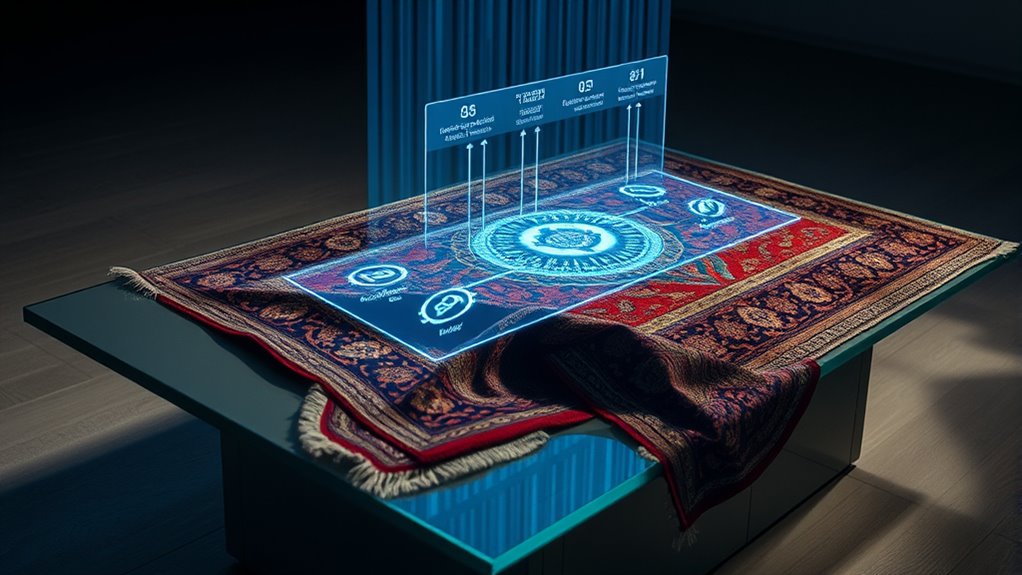
NFTs and digital provenance offer significant advantages for collectors, sellers, and manufacturers by establishing clear, immutable ownership records. This enhances trust and authenticity, essential for preserving a rug’s cultural significance and market valuation. As a collector, you benefit from verified provenance that highlights a rug’s history and authenticity, boosting its value. Sellers can more confidently market unique pieces, reducing fraud risks. Manufacturers gain credibility by showcasing transparent origins, appealing to discerning buyers. Additionally, digital provenance helps protect cultural heritage by documenting traditional craftsmanship. Incorporating mental clarity and health practices can further strengthen the appreciation of cultural artifacts and their significance.
Implementing Blockchain Solutions in the Rug Industry

Implementing blockchain solutions in the rug industry builds on the trust established through digital provenance by providing a secure, decentralized record-keeping system. This technology guarantees that each rug’s history—from cultural origins to craftsmanship—is transparently documented, supporting cultural preservation. By recording authentic details on a blockchain, artisans can showcase their artistic expression, safeguarding their work from counterfeiting. You can verify a rug’s provenance instantly, fostering confidence among buyers and collectors. Blockchain also enables artisans to connect directly with global markets, promoting traditional techniques and stories. As a result, the industry benefits from increased authenticity, value, and respect for cultural heritage. Integrating blockchain isn’t just about security; it’s about empowering artisans to preserve their legacy while sharing their artistic expression worldwide.
Potential Risks and Considerations of Digital Provenance

While digital provenance offers transparency and security, it also introduces several risks that collectors and artisans need to contemplate. Privacy concerns are significant, as sharing detailed provenance data can expose sensitive information about owners or origins. Technological barriers can hinder access, especially for those unfamiliar with blockchain or digital platforms, limiting widespread adoption. Additionally, the permanence of blockchain records means errors or false data are difficult to correct. Reliance on digital systems raises the risk of hacking or data breaches, potentially compromising ownership records. Finally, the cost of implementing and maintaining digital provenance solutions can be prohibitive for smaller artisans or collectors.
- Privacy concerns over sensitive data
- Technological barriers limiting access
- Risk of data inaccuracies or fraud
- Security vulnerabilities and hacking threats
- High costs of implementation
Future Trends and Opportunities in Rug Authentication

What innovative developments are shaping the future of rug authentication? AI art and virtual galleries are opening new opportunities. AI algorithms can analyze rug patterns and provenance data, offering instant verification and reducing fraud. Virtual galleries allow collectors and buyers to view authentic rugs in immersive digital environments, expanding access globally. These technologies enable seamless integration of digital provenance with physical artifacts, making it easier to verify authenticity and value. Moreover, blockchain-based NFTs linked to digital representations enhance trust and ownership transparency. As AI and virtual platforms evolve, you’ll find more streamlined, secure ways to authenticate and showcase rugs. Embracing these trends can improve provenance tracking, increase market confidence, and create innovative experiences for collectors and enthusiasts alike.
Frequently Asked Questions
How Secure Are Digital Certificates Against Hacking or Forgery?
Digital certificates are generally quite secure against hacking or forgery, thanks to cryptographic security measures. They rely on encryption to protect data and guarantee authenticity. Blockchain integrity further enhances security by providing a transparent, tamper-proof ledger of transactions. These combined features make it difficult for hackers to alter or forge certificates, giving you confidence that digital provenance is reliable and well-protected against malicious attacks.
Can Digital Provenance Be Transferred or Sold Separately From the Rug?
You can typically perform a digital transfer of provenance separate from the physical rug, allowing you to sell or transfer the provenance sale independently. This process involves updating the digital certificate to reflect the new ownership, ensuring the provenance remains accurate. Keep in mind, the transfer’s legitimacy depends on the platform’s security measures, so verify that it’s a trusted system to prevent forgery or disputes during the digital transfer.
What Costs Are Associated With Implementing Nft-Based Authentication?
When considering NFT-based authentication, you need a thorough cost analysis to understand the expenses involved. Implementation challenges include blockchain setup, digital infrastructure, and ongoing maintenance costs. You’ll also face costs for creating and minting NFTs, plus potential transaction fees. These factors can add up, so evaluating your budget and technical capabilities helps you determine if adopting this technology is feasible and worthwhile for securing your physical assets.
How Do Digital Provenance Systems Handle Rug Restorations or Repairs?
Imagine a delicate tapestry telling its story through each repair, like chapters in a book. Digital provenance systems handle rug restorations by recording every repair, creating a restoration tracking history that’s transparent and tamper-proof. When you seek repair authentication, it’s like consulting the book’s annotations—verifying the authenticity of each restoration, ensuring your rug’s story remains genuine and intact for generations to come.
Are There Legal Regulations Governing Digital Ownership of Physical Rugs?
You should know that legal regulations governing digital ownership of physical rugs focus on legal compliance and protecting intellectual property rights. Laws vary by jurisdiction, so it is crucial to understand local regulations regarding digital proof of ownership and authenticity. These rules ensure that digital representations and provenance data are legally valid, helping prevent fraud and unauthorized use. Staying informed about these regulations helps you safeguard your rights and maintain trust in digital ownership systems.
Conclusion
As you explore the world of digital provenance for rugs, you’ll realize it’s not just about safeguarding authenticity—it’s about transforming trust itself. With blockchain technology on the horizon, the potential for seamless, tamper-proof verification beckons, but questions remain. Will this innovation reshape the industry or reveal new challenges? The future of rug authentication holds secrets yet to be uncovered, leaving you on the edge of a digital revolution that could redefine value in ways you never imagined.