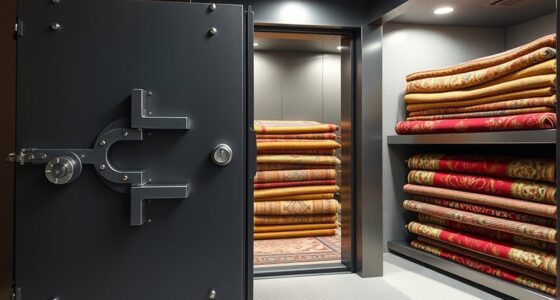
To protect your high-value rug, you should consider adding an insurance rider tailored specifically for valuable items. Proper scheduling involves providing an appraisal, photos, and provenance records, ensuring your insurer accurately values your rug. Regular reappraisals help keep coverage aligned with its current worth. By understanding these steps, you can secure appropriate protection and avoid disputes if a loss occurs. Continue to explore how these practices can safeguard your investment effectively.

Get furniture and decor delivered free with Prime
- Fast, free delivery on millions of items
- Prime Video, Amazon Music and more included
- Member-only deals all year
Key Takeaways
- Insurance riders provide tailored coverage for high-value rugs, protecting against risks like theft, fire, and damage.
- Proper scheduling involves appraisals, documentation, and provenance records to establish accurate coverage and value.
- Regular reappraisals ensure coverage keeps pace with the rug’s changing value, preventing under- or overinsurance.
- Premiums are calculated based on appraised value, material, origin, and associated risks, allowing for precise cost assessment.
- Clear documentation and scheduling help avoid disputes, ensure adequate coverage, and streamline claims processes.

When insuring high-value rugs, understanding the role of insurance riders can make all the difference in protecting your investment. Insurance riders are additional coverage options that you add to your standard policy, specifically tailored to safeguard valuable items like fine rugs. Before you can determine the appropriate rider, an appraisal process is vital. This process involves a professional appraiser examining your rug to assess its true value, considering factors like age, provenance, condition, and craftsmanship. An accurate appraisal ensures that your rug is insured for its correct worth, preventing underinsurance or overinsurance. Once the appraisal is complete, the insurer uses this information to calculate the premium. The premium calculation for a high-value rug takes into account its appraised value, the level of coverage you choose, and the risk factors associated with the rug’s material and origin. Understanding how these elements influence your premium helps you make informed decisions about coverage limits and costs. Recognizing the importance of accurate appraisals can significantly impact the effectiveness of your insurance coverage.
Adding an insurance rider for your high-value rug provides a way to specify coverage details that go beyond the standard policy. For example, you might want the rider to cover specific risks such as theft, fire, or accidental damage, which are particularly relevant for valuable textiles. When you schedule the rug as an insured item with a rider, you fundamentally create a dedicated coverage agreement tailored to its unique value. This scheduling process involves providing the insurer with detailed documentation, including the appraisal report, photographs, and any provenance records. Doing so ensures clarity and provides proof of value, which is vital should you need to file a claim. Scheduling also helps prevent disputes over the rug’s worth and coverage limits, giving you peace of mind.
The premium calculation for insuring a high-value rug with a rider is often more precise than a generic policy. Since the insurer knows the exact value of your rug, they can charge a fair premium based on the specific risks associated with that item. This tailored approach allows you to avoid overpaying for coverage you don’t need while ensuring sufficient protection. Keep in mind that the premium may fluctuate over time as the rug’s value changes or if additional coverage is added. Regular reappraisals are advisable to maintain accurate coverage and appropriate premiums. By understanding the appraisal process, scheduling your high-value rug, and how premiums are calculated, you’re better equipped to make strategic decisions that safeguard your prized possession and optimize your insurance investment.
As an affiliate, we earn on qualifying purchases.
Frequently Asked Questions
How Do Insurance Riders Affect Premium Costs for High-Value Rugs?
Insurance riders typically increase your premium costs because they offer customized coverage for high-value rugs. When you include a rider, the appraisal process becomes more detailed, ensuring your rug’s worth is accurately reflected. The more extensive the rider customization, the higher the premium may be. However, this added cost provides better protection, giving you peace of mind knowing your valuable rug is insured appropriately for its true value.
Can Scheduling High-Value Rugs Prevent Damage During Renovations?
In this modern age, scheduling high-value rugs can indeed prevent damage during renovations. You should implement preventive measures like careful handling techniques and proper protection to shield your rugs from dust, debris, and accidental spills. By moving or covering your rugs in advance, you reduce the risk of damage. This proactive approach guarantees your investment stays pristine, and it’s a wise step in safeguarding your valuable décor during any renovation project.
Are There Specific Storage Requirements for Insured High-Value Rugs?
Yes, there are specific storage guidelines for insured high-value rugs. You should store them in a climate-controlled environment to prevent damage from humidity or temperature fluctuations. Keep the rugs rolled or flat, avoiding direct sunlight and pests. Using proper padding and avoiding heavy weight on the rugs can also help preserve their condition. Following these storage guidelines guarantees your rugs stay protected and maintain their value over time.
What Are Common Exclusions in High-Value Rug Insurance Policies?
Imagine your prized rug develops mold damage due to humidity, and the insurer denies coverage, citing exclusions. Common exclusions often include mold damage and loss of provenance, meaning if your rug’s origin or history is compromised, it might not be covered. Additionally, policies may exclude damages from neglect or improper storage. Always review your policy carefully to understand these exclusions, so you’re prepared if a claim arises.
How Often Should High-Value Rugs Be Appraised for Insurance Purposes?
You should have your high-value rugs appraised every 3 to 5 years to guarantee your valuation stays current. Regular appraisal frequency helps update valuation updates, reflecting market changes and condition. If your rugs experience significant events like damage or restoration, consider scheduling an appraisal sooner. Staying proactive with these assessments guarantees your insurance coverage accurately reflects your rugs’ worth, preventing underinsurance or overinsurance.
Conclusion
By understanding insurance riders and the importance of scheduling your high-value rugs, you protect your cherished collection from unexpected mishaps. Think of it like having a trusty squire guarding your treasures—only now, it’s your insurance policy. Don’t leave your prized possessions vulnerable—secure them, and rest easy knowing you’re covered. After all, even in a world of knights and castles, a well-placed insurance rider is your modern-day shield against life’s surprises.
Fall Picks
fall essentials
As an affiliate, we earn on qualifying purchases.