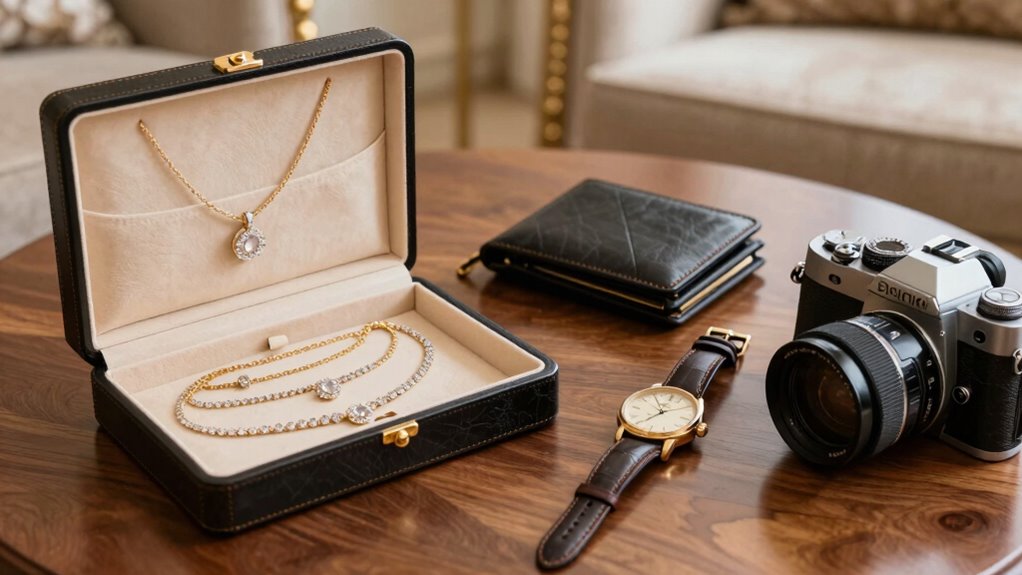

To document your luxury items like a pro, start by thoroughly cleaning and drying each item, then position them in a clutter-free space with neutral backgrounds and consistent lighting. Capture multiple angles and detailed close-ups of serial numbers, marks, and textures to guarantee completeness. Use proper storage and backing up methods, such as cloud or external drives, for easy access later. Avoid common mistakes like poor focus or bad lighting—continue to explore for expert tips to perfect your process.
Key Takeaways
- Use proper lighting and neutral backdrops to capture clear, true-color images without glare or shadows.
- Photograph items from multiple angles, including close-ups of serial numbers and unique features for verification.
- Ensure all photos are in focus, well-framed, and consistently lit to minimize editing and enhance clarity.
- Store images systematically in organized digital folders with backups to prevent data loss.
- Take detailed shots of serial numbers and markings to facilitate authentication and insurance claims.
How to Photograph Valuables for Insurance: The Complete Step-by-Step Guide
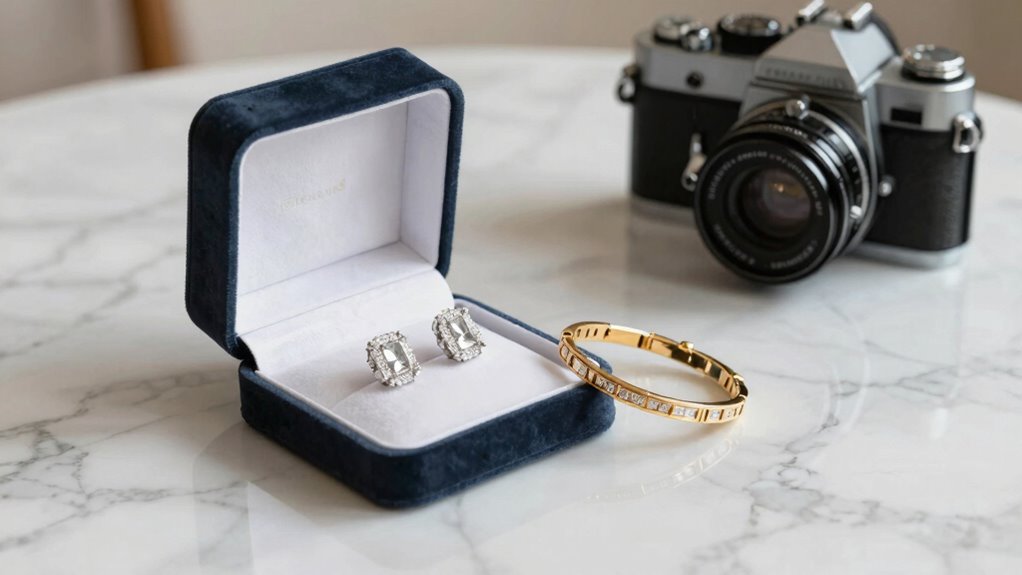
Photographing your valuables for insurance might seem straightforward, but capturing clear, detailed images is crucial to make certain your possessions are properly documented. Use appraisal techniques to identify key features and details that prove ownership and value. When taking photos, leverage digital photography tools like macro lenses, proper lighting, and a steady tripod to enhance image clarity. Focus on capturing multiple angles, including close-ups of unique markings, serial numbers, or distinctive features. Ensure the background is neutral and uncluttered to highlight the item. Use natural light or consistent artificial lighting to avoid shadows and color distortions. Incorporating European cloud innovation and secure cloud storage solutions can further safeguard your visual records against loss or damage. These detailed images, supported by appraisal techniques, create a comprehensive visual record that can significantly simplify claims and prove authenticity during insurance processes.
Preparing Your Jewelry, Handbags, and Art Before Taking Photos
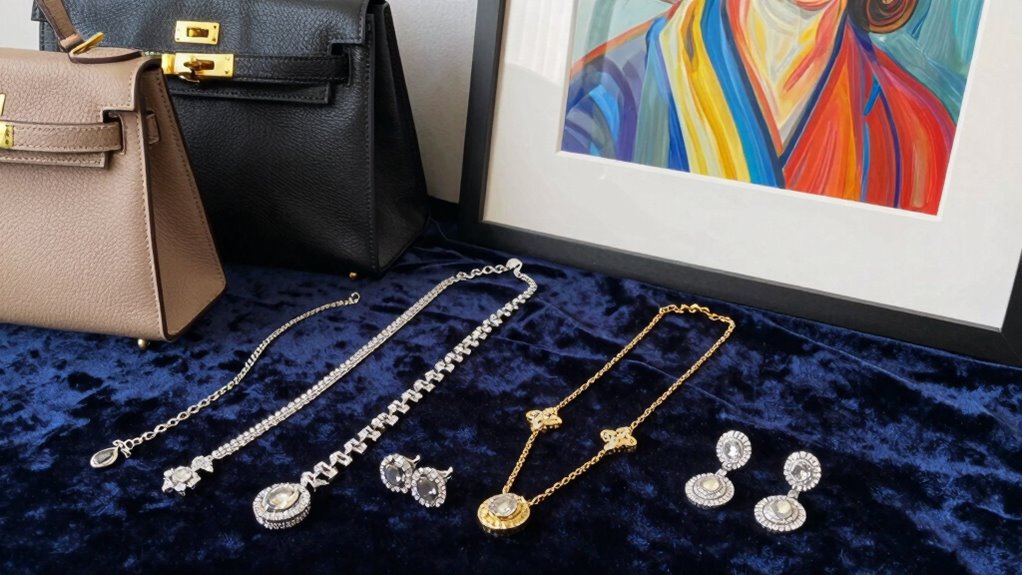
Before photographing your valuables, make sure to clean and carefully prepare each item to highlight details and reduce glare. Choose the best lighting, preferably natural or diffused, to guarantee colors and textures are true to life. Proper preparation makes your insurance photos clear and easy to verify later. Additionally, consider the piercing jewelry materials to ensure they are free of tarnish or damage that could affect their appearance in photos.
Clean and Prepare Items
To guarantee your jewelry, handbags, and artwork look their best in photos, start by thoroughly cleaning each item. Use appropriate cleaning tips to remove dirt, fingerprints, and dust that can diminish their appearance. Make sure your items are completely dry before photographing to avoid reflections or water spots. Consider using proper storage solutions to keep items dust-free and prevent scratches or tarnishing. Additionally, maintaining a clean indoor environment reduces airborne pollutants that can settle on your items and affect their appearance in photos. Cleaning and preparation are key to capturing clear, professional-quality images that truly showcase your luxury items.
Select Optimal Lighting
Choosing the right lighting is essential for capturing your jewelry, handbags, and art in their best light. Natural light provides soft, even illumination that highlights details without harsh shadows, making it ideal for most luxury items. Position your items near a window during the day to take advantage of natural light, but avoid direct sunlight that can cause glare or color distortion. When natural light isn’t available, use artificial lighting like softbox lights or LED panels to mimic daylight. Ascertain your light source is diffused to reduce reflections and shadows, especially on shiny surfaces like jewelry or polished artwork. Adjust the angle and distance of your lighting to highlight textures and colors accurately, creating a clear, professional-quality image. Utilizing proper lighting techniques ensures your luxury items are showcased beautifully and accurately in photographs.
Tips for Getting Great Lighting and Backdrops for Your Valuables
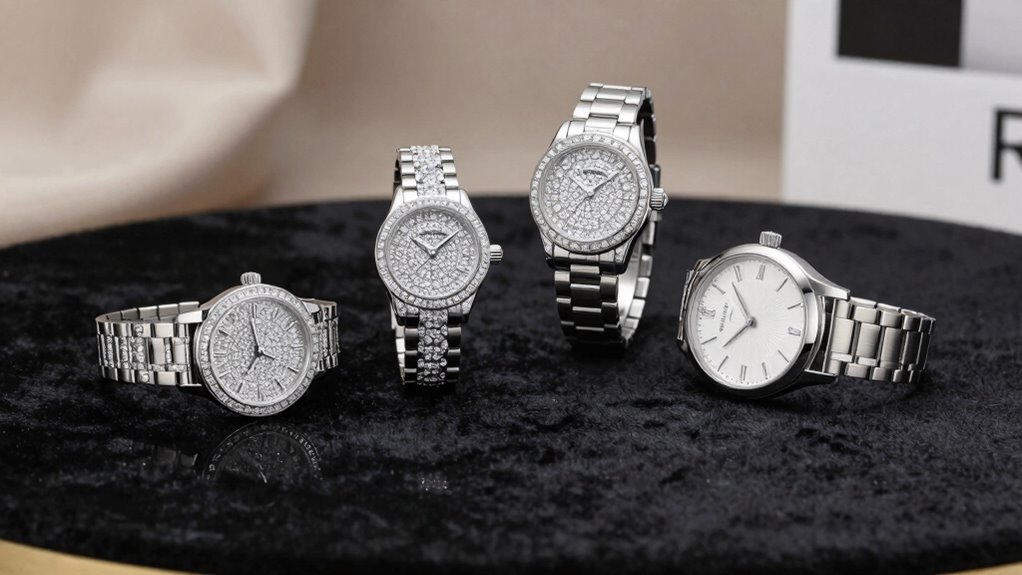
Great lighting and a clean backdrop are essential for showcasing your valuables effectively in insurance photos. Proper lighting tips help highlight details without harsh shadows or reflections, making your items look their best. When it comes to backdrop selection, opt for neutral, clutter-free backgrounds that won’t distract from your valuables. Here are some tips to improve your setup:
- Use soft, diffused light sources to reduce glare
- Position your items to avoid shadows hitting the background
- Choose plain, solid-colored backdrops like white or light gray
- Avoid busy patterns or textures that distract from the object
- Keep the area tidy and free of clutter to maintain focus on your valuables
- Understanding cookie functionality can help ensure your camera setup and device settings remain secure during your photography process.
These simple steps ensure your photos accurately represent your items for insurance purposes.
How to Capture Multiple Angles and Close-Ups for Full Documentation

To guarantee thorough documentation, you should vary your shooting angles and focus on capturing both the overall item and its details. Keep your lighting consistent to avoid shadows or color shifts that could obscure important features. Additionally, utilizing color accuracy techniques can help ensure that the photos reflect the true appearance of the luxury item, making your documentation even more reliable. By following these steps, you’ll create clear, exhaustive photos that stand up to insurance reviews.
Vary Your Shooting Angles
Capturing multiple angles and close-ups is essential for thorough insurance documentation. By varying your shooting angles, you create a detailed visual record that highlights every detail. Use creative composition and artistic angles to showcase the item’s unique features and craftsmanship. Experiment with different perspectives to avoid flat, monotonous images. This visual documentation approach helps guarantee nothing is overlooked and offers a more convincing claim if needed. Consider these tips: – Shoot from eye-level for a natural view – Capture overhead shots for context – Use close-ups to highlight textures and marks – Try unconventional angles to add interest – Take wide shots to show overall size and proportions
Focus on Details
Focusing on details guarantees your insurance photos provide a thorough record of the item. To achieve this, capture multiple angles and close-ups that highlight unique features and imperfections. Use a macro lens or the macro setting to improve focal depth, ensuring tiny details are sharp and clear. Pay close attention to color accuracy by avoiding harsh lighting or color casts that could distort true hues. Adjust your camera settings to balance exposure and maintain consistent color tones across all shots. Take close-ups of serial numbers, maker’s marks, or any distinguishing marks that verify authenticity. Additionally, incorporating local automation techniques can help streamline your photo documentation process, ensuring consistency and efficiency. By emphasizing details with sharp focus and true-to-life colors, you create a comprehensive visual record that supports your insurance claim and provides peace of mind.
Maintain Consistent Lighting
Maintaining consistent lighting is essential when photographing multiple angles and close-ups for full documentation. Proper lighting ensures your images accurately represent your luxury items and makes editing easier later. To achieve this, set up a dedicated studio space with controlled lighting conditions. Use natural light when possible, but supplement with softboxes or diffusers to prevent shadows and glare. Keep your light source steady and at the same angle throughout the shoot to ensure uniformity across all shots. Adjust your camera settings to match the lighting conditions, avoiding drastic changes between shots. Consistency is key for professional results, so double-check your setup before capturing each angle or detail. Using controlled lighting conditions helps maintain uniformity and reduces post-processing work. This approach guarantees clear, high-quality documentation for insurance purposes.
Organizing and Backing Up Your Insurance Photos for Easy Access
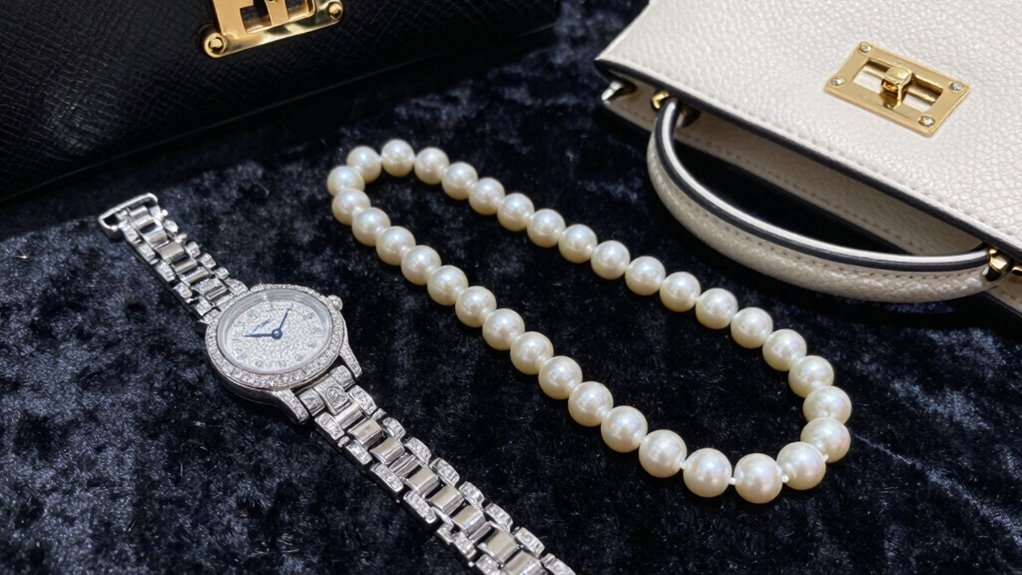
Organizing and backing up your insurance photos guarantees you can access them quickly when needed, reducing stress during emergencies. Use digital storage solutions like cloud services or external drives to keep your images safe. Create a clear file organization system by categorizing photos by item type, date, or location. This makes retrieval faster and ensures nothing gets misplaced. Regularly update your backups to include new photos. Consider using a spreadsheet to track each item’s details and storage location. Here’s a simple organization plan:
| Category | Storage Method |
|---|---|
| Jewelry | Cloud folder |
| Artwork | External hard drive |
| Watches | Cloud backup |
| Collectibles | Local folder |
| Electronics | Backup service |
This approach keeps your photos accessible and secure, giving you peace of mind. Implementing a consistent organization system can further streamline your process and prevent clutter.
Common Photography Mistakes That Could Hurt Your Insurance Claim
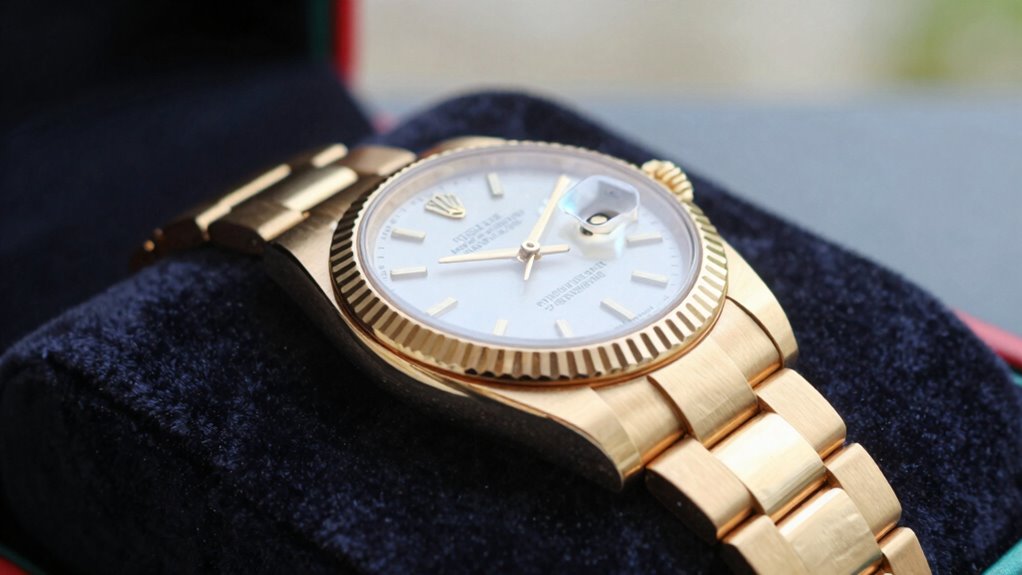
While having your insurance photos well-organized and backed up is essential, making mistakes during the photography process can jeopardize your claim. Common lighting issues can result in blurry or poorly exposed images, making details hard to verify. Poor photo composition, such as not capturing multiple angles or close-ups, can leave gaps in documentation. Additionally, neglecting to include serial numbers or identifying marks weakens your proof of ownership. Blurry or out-of-focus images, inconsistent lighting, and poor framing can all reduce the usefulness of your photos. To avoid these pitfalls, confirm good lighting, use proper composition techniques, and photograph your items from several angles, including close-ups of unique features and serial numbers.
- Ignore lighting conditions, resulting in dark or washed-out images
- Forget to include multiple angles or details
- Use poor focus or blurry shots
- Fail to capture serial numbers or distinguishing marks
- Rely on inconsistent or uneven lighting
Frequently Asked Questions
What Equipment Is Best for High-Quality Insurance Photos?
You should use a DSLR or mirrorless camera with a macro lens for detailed shots. Employ good lighting techniques, like natural light or a softbox, to reduce shadows and highlight details. Adjust camera settings—use a low ISO for clarity, a narrow aperture for depth, and a steady tripod to prevent blur. This combination guarantees high-quality insurance photos that accurately document your luxury items with sharpness and clarity.
How Often Should I Update My Insurance Documentation Photos?
You should update your insurance documentation photos at least once a year, especially for valuable collectibles and jewelry safety. Did you know that 1 in 10 claims are denied due to outdated or poorly documented evidence? Regular updates guarantee your photos accurately reflect current conditions, helping you get full compensation if needed. Keep your documentation fresh, clear, and detailed to protect your valuable assets effectively.
Can Professional Photographers Improve My Insurance Photo Documentation?
Yes, professional photographers can improve your insurance photo documentation. They excel in photo composition and lighting techniques, ensuring your luxury items are captured clearly and accurately. Their expertise helps highlight details, reduces shadows, and creates well-lit images, making your documentation more thorough. This professional touch can make a difference if you ever need to file a claim, providing high-quality photos that accurately represent your valuables.
What Details Should I Emphasize to Maximize Coverage?
Think of your camera as a detective’s magnifying glass—highlighting appraisal accuracy and photographic techniques. Focus on capturing clear, detailed shots of serial numbers, unique markings, and intricate designs. Use natural lighting to avoid shadows, and take close-ups to emphasize craftsmanship. Including a time-stamped photo and multiple angles ensures your coverage is thorough, making it easier for insurers to verify your luxury items’ value when needed.
How Do I Handle Damaged or Fragile Items in Photos?
When handling fragile items, take extra care to avoid further damage. Use a steady hand and proper lighting when photographing delicate objects, ensuring you capture all angles clearly. Include close-up shots to highlight details and any existing imperfections. Handle fragile items gently, and consider using a soft background or padding in your photos. This way, your documentation accurately reflects the item’s condition and minimizes the risk of misinterpretation during claims.
Conclusion
Think of your insurance photos like a treasure map—every angle and detail guides you through potential claims. When I documented my vintage watch collection, clear photos saved me hours of stress after a small mishap. With sharp lighting, multiple angles, and organized backups, you create a foolproof record. It’s like building a safety net—trust it, and you’ll catch yourself if the unexpected happens, turning chaos into calm in moments.