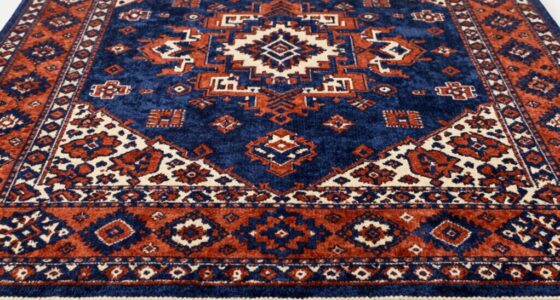
To determine your rug’s market value, experts analyze recent sales of similar pieces, considering factors like age, condition, craftsmanship, size, and rarity. They often use a sales comparison approach, which compares your rug to recent transactions, ensuring the valuation reflects current market trends. Appraisers also consider provenance and overall condition. If you want to understand how all these factors come together, there’s more to discover about the systematic process behind rug valuations.

Get furniture and decor delivered free — and shop member deals
- Fast, free delivery on millions of items
- Access to Prime Big Deal Days deals on October 6–7
- Prime Video, Amazon Music and more included
Key Takeaways
- Market trends, demand, and comparable recent sales primarily determine a rug’s market value.
- The sales comparison approach evaluates similar rugs sold recently for accurate valuation.
- Factors like age, condition, size, craftsmanship, provenance, and rarity influence the appraisal.
- Cost approach considers replacement cost minus depreciation, especially for unique or antique rugs.
- Combining data analysis with expert judgment ensures a fair, transparent, and current market valuation.

Have you ever wondered how employers determine your worth or how to navigate the appraisal process confidently? When it comes to evaluating a rug’s value, understanding the appraisal process can seem just as complex. The key lies in grasping how market valuation and appraisal methods work together to establish a fair price. Market valuation is the backbone of this process—it’s how experts determine a rug’s worth based on current market trends, demand, and comparable sales. By analyzing recent transactions of similar rugs, appraisers can set a realistic price that reflects what buyers are willing to pay today. This approach ensures that the valuation isn’t just based on subjective opinions but grounded in actual market data.
Understanding market trends and comparable sales helps determine a rug’s fair value confidently.
Appraisal methods serve as the tools used to arrive at these valuations. There are several common approaches, each suited to different types of rugs and circumstances. The sales comparison approach is the most straightforward; it involves comparing your rug to similar ones recently sold. When you consider factors like age, condition, size, and craftsmanship, this method helps create an accurate estimate rooted in real-world sales. Another method is the cost approach, which considers how much it would cost to replace the rug with a similar one today, minus depreciation. This is particularly useful for unique or antique rugs where comparable sales might be scarce. The income approach, though less common for rugs, can sometimes be used if the rug has a specific value tied to its use, such as in a commercial setting. Additionally, understanding the beneficial ingredients, like collagen and hyaluronic acid, found in eye patches can help evaluate their effectiveness and value.
Understanding these appraisal methods helps you see that determining a rug’s market value isn’t a guesswork game. Instead, it’s a systematic process that combines data analysis with expert judgment. When you’re seeking an appraisal, knowing which method will be used provides confidence that the valuation is fair and transparent. Appraisers also consider other factors like provenance, rarity, and condition, all of which influence the final value. They compile all this information to produce a report that reflects current market conditions and the unique qualities of your rug.
In short, by understanding the role of market valuation and the various appraisal methods, you become more equipped to navigate the appraisal process. Whether you’re selling, insuring, or simply curious about your rug’s worth, knowing how experts arrive at a fair market value empowers you to make informed decisions with confidence.
As an affiliate, we earn on qualifying purchases.
Frequently Asked Questions
How Does Regional Demand Affect Rug Valuations?
Regional demand considerably influences rug valuations by shaping regional patterns and demand fluctuations. When a particular area shows increased interest in specific styles or origins, prices tend to rise due to higher demand. Conversely, if demand drops, valuations decrease. You should consider regional trends because they directly impact what buyers are willing to pay, making understanding local preferences essential for accurate appraisal and market positioning.
What Role Does Rug Rarity Play in Appraisal?
Rug rarity substantially impacts its appraisal by increasing its market scarcity, which can drive up value. When a rug is rare, collectors and buyers see it as more desirable, often willing to pay a premium. Your appraisal considers how unique the rug is compared to others, with rare pieces commanding higher prices. So, the more scarce and uncommon your rug, the greater its potential market value.
How Do Condition and Wear Impact Market Value?
Imagine a rug’s condition as its vibrant canvas, where wear and damage dull its colors like a fading sunset. You’ll find that fabric quality and dye stability directly influence its market value; pristine fabric and stable dyes keep the rug looking fresh and lively. When wear appears, it’s as if the colors have been scratched away, lowering value. Maintaining good condition preserves its beauty and boosts its worth.
Are Vintage or Antique Rugs Valued Differently?
Vintage and antique rugs are valued differently because of factors like color saturation and provenance authenticity. You’ll find antique rugs often have richer, more faded colors that add character, while vintage rugs may have brighter hues. Provenance authenticity greatly influences their worth, as genuine history assures quality. When evaluating, consider how these aspects impact desirability and market value, helping you make informed decisions about buying or selling.
What External Factors Influence Rug Pricing Trends?
External factors like market fluctuation and economic conditions directly influence rug pricing trends. When the economy is strong, demand for quality rugs rises, boosting prices. Conversely, during economic downturns, buyers may hold back, causing prices to drop. Market fluctuation can lead to rapid changes in value, especially for rare or antique rugs. Staying aware of these factors helps you understand why rug prices shift over time.
Conclusion
Understanding how a rug’s market value is determined can feel like unraveling a complex tapestry. Remember, just like each knot and thread tells a story, every factor in the appraisal process adds to its worth. By paying attention to these details, you gain confidence in evaluating your rug’s true value. So, approach the process with curiosity and care—like gently untangling a beautiful, intricate design—and you’ll uncover its worth with clarity and ease.
Halloween Picks
halloween
As an affiliate, we earn on qualifying purchases.