To properly protect your rugs valued over $25,000, start by accurately appraising their authenticity, origin, and condition through a professional. Document each piece thoroughly with photos and detailed info, then choose an insurance policy tailored for high-value collections. Make sure your coverage includes replacement costs and riders for unique or antique items. Regular maintenance and secure storage are essential for preserving their value. If you want to learn how to maximize your protection, keep exploring these key steps.
Key Takeaways
- Hire certified appraisers to accurately evaluate age, provenance, condition, and craftsmanship for rugs over $25,000.
- Maintain detailed records, including photographs, provenance documentation, and restoration history, to support valuation and insurance claims.
- Store high-value rugs properly—rolled, wrapped in breathable materials, in a climate-controlled, pest-free environment.
- Select insurers with strong financial ratings, offering specialized coverage options, including riders for unique or antique rugs.
- Regularly review and update insurance policies, ensuring coverage limits, deductibles, and conditions align with your collection’s value and needs.
Understanding the Value of High-End Rugs
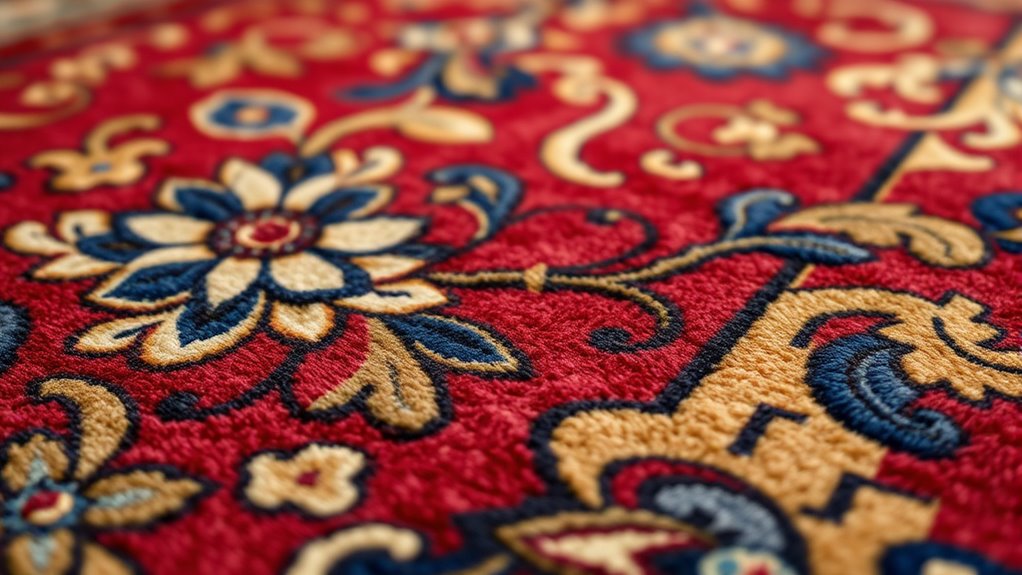
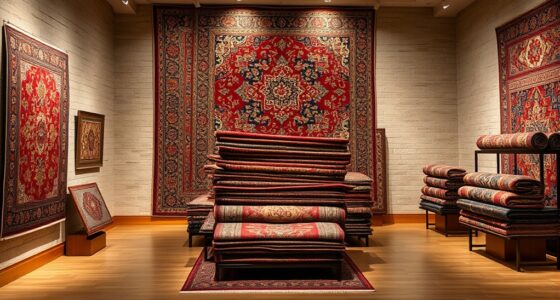
High-end rugs hold significant value due to their craftsmanship, materials, and unique designs. Rug weaving is a detailed process that influences a rug’s durability and artistry, often taking months or years to complete. This intricate craftsmanship adds to the rug’s worth. Additionally, antique preservation plays a crucial role in maintaining a rug’s value over time. Well-preserved antique rugs, especially those with historical significance, fetch higher prices. Factors like age, origin, and condition are essential in appraising these pieces. Understanding these elements helps you recognize a high-end rug’s true worth. Proper maintenance and care can significantly impact the longevity and value of these prized possessions. Incorporating sound vibrations and regular cleaning can help preserve a rug’s integrity and appearance. Recognizing the cultural significance of certain patterns or motifs can also enhance appreciation and value. Whether it’s a rare vintage piece or a meticulously crafted modern creation, knowing how rug weaving and antique preservation impact value ensures you’re better prepared to protect your investment. Additionally, understanding environmental factors can help prevent damage caused by humidity, sunlight, or pests, further safeguarding your investment.
How to Properly Appraise Your Valuable Rug
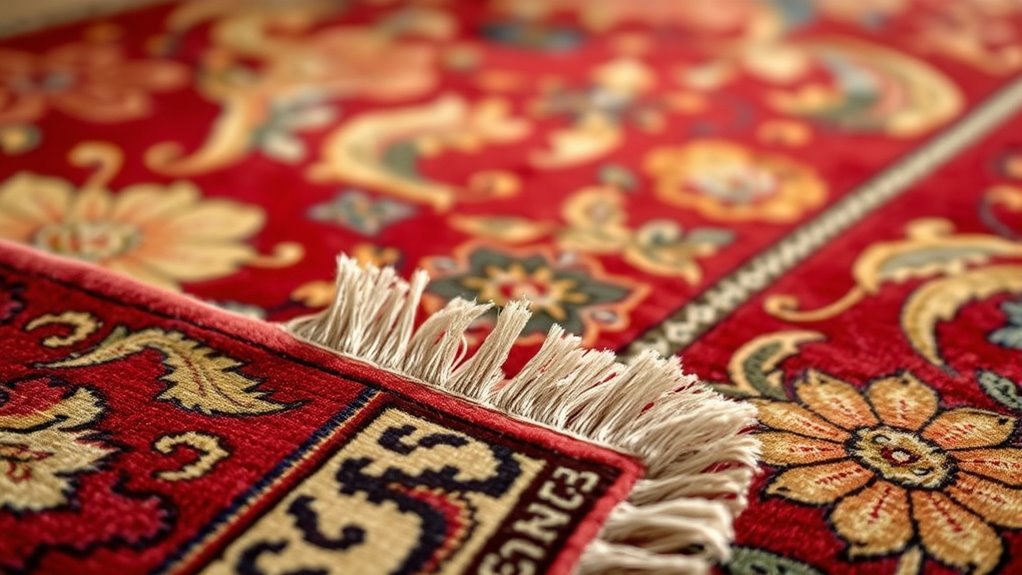
To guarantee your rug is accurately appraised, consider hiring professional appraisal services that specialize in high-value textiles. Make sure to document all details, including size, materials, and origin, to support your valuation. Additionally, learn to recognize authenticity signs to verify your rug’s true worth and prevent over- or under-insuring. Understanding color accuracy principles can also help you identify potential fraud or counterfeit items in the market. Being familiar with paint preparation and usage guidelines can further assist in assessing the condition and provenance of your rug, especially if it involves intricate dyeing or restoration history. Regularly inspecting the drivetrain components of your bike, such as the gears and chain, can provide insights into the rug’s wear and maintenance history, aiding in a comprehensive appraisal.
Professional Appraisal Services
Wondering how to accurately determine the value of your valuable rug? Professional appraisal services are essential. Expert appraisers consider factors like antique restoration, which can considerably impact your rug’s worth. They stay updated on current market trends, helping you understand how shifts in demand and style influence value. A thorough appraisal includes examining the rug’s age, provenance, condition, and craftsmanship. Certified appraisers use specialized tools and knowledge to provide an objective, detailed report, giving you confidence in your insurance coverage. Relying on a professional ensures your rug is accurately assessed, avoiding undervaluation or overpayment. Additionally, understanding appraisal accuracy can be useful for identifying effective treatment options for skin issues, similar to how expert appraisers use specialized knowledge for valuation. Whether you plan to sell or insure, a proper appraisal from a trusted service safeguards your investment and provides peace of mind.
Documenting Rug Details
How can you guarantee your rug’s details are accurately documented for appraisal? Start by taking thorough photographs from multiple angles, highlighting unique patterns, borders, and wear. Record specific details like size, fiber type, knot count, and origin. Include notes on any antique rug restoration work or recent rug cleaning techniques used, as these affect value. Proper documentation helps ensure accurate appraisal and insurance coverage. Use the table below as a guide:
| Rug Feature | Description |
|---|---|
| Size & Dimensions | Exact measurements and shape |
| Material & Weave | Wool, silk, cotton; knot density |
| Condition & Repairs | Wear, damages, restoration history |
Additionally, paying attention to the knot density and the intricacies of the weaving technique can significantly influence valuation. Understanding appraisal methods and proper documentation techniques can further protect your investment and support proper valuation. Furthermore, Glycolic acid benefits can be considered in maintaining the condition of your rug’s fibers, especially if cleaning is required. Incorporating electric dirt bike horsepower insights can help appreciate the complexity of craftsmanship involved in high-value rug weaving, as both require precision and expertise.
Recognizing Authenticity Signs
When evaluating your rug’s authenticity, paying close attention to specific signs can make all the difference. Look for authenticity markers such as unique weaving techniques, consistent knot density, and precise color application, which indicate genuine craftsmanship. Authentic rugs often feature natural dyes that fade gracefully over time, unlike synthetic dyes that may appear uneven or overly vibrant. Signature verification is also vital; authentic rugs typically include identifiable signatures or marks from artisans or workshops, confirming their origin. Examine the backside of the rug for clear, well-defined patterns that match the front. Any irregularities or inconsistencies could signal a reproduction. Additionally, understanding the role of advanced AI processing power in authenticating high-value rugs can further aid in accurate appraisal. Recognizing authenticity markers and verifying signatures help ensure your appraisal reflects the true value of your valuable rug, and careful evaluation can help you avoid potential pitfalls during appraisal. Moreover, becoming familiar with preppy dog names can sometimes help in understanding the subtle details that differentiate authentic craftsmanship from imitations. Staying informed about archival data trends and developments can also provide valuable context for assessing a rug’s provenance and historical significance.
Choosing the Right Insurance Policy for Your Collection
When choosing an insurance policy for your collection, you need to consider coverage options that protect your items fully. It’s also important to weigh deductibles and premiums to find a balance that fits your budget. Additionally, check the insurer’s reputation and stability to ensure your collection is in good hands long-term. To better tailor your policy, understanding the risks associated with high-value items can help you select the most comprehensive coverage. Being aware of security measures like Ring Security Cameras can also influence your policy options and premiums. Incorporating data-driven strategies when evaluating different policies can further optimize your decision-making process.
Policy Coverage Options
Choosing the right insurance policy for your collection can feel overwhelming, but understanding your coverage options is a crucial first step. You’ll want to consider how policies address potential risks and what is actually covered. Key factors include:
- Specific coverage for high-value rugs
- Policy exclusions that limit protection
- Coverage limits that set maximum payout
- Additional riders or endorsements for unique items
- Conditions for claims and repairs
Knowing these details helps ensure you’re fully protected and avoid surprises during a claim. Carefully review policy exclusions to understand what isn’t covered, and verify coverage limits align with your collection’s value. This clarity helps you select a policy that offers comprehensive protection without gaps or unnecessary restrictions.
Deductibles and Premiums
Are you aware of how deductibles and premiums impact the overall cost and coverage of your insurance policy? Choosing the right balance involves understanding how policy adjustments affect your premium costs and out-of-pocket expenses. A higher deductible generally lowers your premium but requires you to pay more if a claim occurs. Conversely, a lower deductible increases premiums but reduces your immediate financial burden during a claim. When selecting a policy, consider how these factors influence your ability to manage claim procedures smoothly. Make certain your policy aligns with your collection’s value and your financial comfort. Adjusting deductibles and premiums thoughtfully can help optimize coverage, making sure you’re protected without overspending. Always review how policy adjustments impact claim procedures so you’re prepared when it counts most.
Insurer Reputation and Stability
Ever wondered how the reputation and financial stability of an insurer can affect your collection’s protection? Insurer stability guarantees they can pay claims when needed, giving you peace of mind. A strong reputation indicates effective reputation management, meaning they handle claims professionally and transparently. Look for insurers with a proven track record of reliability and positive customer feedback. Consider these factors:
- Long-standing presence in the industry
- Positive reviews and customer satisfaction scores
- Transparent communication and claim processes
- Financial ratings from agencies like A.M. Best or Fitch
- Consistent claim settlement history
Choosing an insurer with solid stability and good reputation management protects your valuable rug collection, ensuring you’re covered when it matters most. Don’t overlook these qualities—they’re key to safeguarding your investment.
Documenting and Maintaining Your Rug’s Documentation
How can you guarantee your rug’s value and authenticity are protected? The key is thorough documentation. Keep detailed records of professional rug cleaning and antique restoration processes, including receipts and descriptions of work performed. Take high-quality photos from multiple angles to capture its condition and unique features. Store these documents in a safe, organized location, both physically and digitally. Regularly update your records after any maintenance or restoration. Proper documentation proves your rug’s provenance and condition, which is essential during insurance claims or appraisals. Maintaining these records ensures you can substantiate its value over time, especially for rugs valued over $25,000. Clear, comprehensive documentation preserves your investment and provides peace of mind that your rug’s authenticity and worth are well-protected.
Tips for Safe Storage and Handling

Proper storage and handling are essential steps in preserving your rug’s value and condition over time. To guarantee this, follow simple storage tips and handling precautions. Store your rug in a clean, dry, and well-ventilated space away from direct sunlight, moisture, and pests. Roll the rug rather than folding it to prevent creases and damage. Use acid-free tissue paper or a breathable fabric to wrap it, avoiding plastic that traps moisture. When moving or handling, lift with care, avoiding dragging or pulling on fringes, which can cause fraying. Keep the rug off the ground, using pallets or shelves for better airflow. Regularly inspect your stored rug for signs of deterioration and adjust storage conditions as needed.
What to Do in Case of Damage or Loss
If your rug suffers damage or is lost, acting quickly can help minimize further harm and protect your investment. First, verify your emergency preparedness plan is in place, including contact info for your insurer and a list of necessary documentation. Photograph the damage or loss immediately, capturing clear images for evidence. Follow your insurance company’s claim filing procedures promptly—report the incident as soon as possible, providing detailed descriptions and supporting documents such as receipts or appraisals. Keep records of all communications and steps taken. If you have a professional appraiser or restoration expert, consult them for advice and documentation. Swift action and organized documentation will streamline your claim process and maximize your chances of full coverage.
Frequently Asked Questions
How Often Should I Reappraise My High-Value Rug?
You should consider updating your appraisal frequency based on your rug’s age, market trends, and condition. Typically, a high-value rug needs revaluation every 3 to 5 years to guarantee your coverage stays accurate. Regular rug revaluation helps you understand its current worth, especially if it appreciates or depreciates over time. Staying proactive with appraisals ensures you’re adequately protected and can confidently manage your insurance needs.
Can I Insure a Rug I Haven’t Appraised Yet?
You can insure a rug without an appraisal, but it’s not ideal. The appraisal process provides an accurate valuation, ensuring your insurance policy offers proper coverage. Without an appraisal, insurers might use estimates that could undervalue or overvalue your rug, risking insufficient protection or excessive premiums. To get the best coverage, it’s recommended to have your rug appraised before insuring it, so your policy reflects its true worth.
What Are Common Mistakes in Rug Documentation?
When documenting your rug, guarantee you avoid common mistakes like neglecting detailed descriptions, poor photo quality, or missing provenance info. Accurate appraisal accuracy depends on thorough documentation, so preserve all records carefully. You should include measurements, material, age, and condition. Keep digital and physical copies safe, and update documentation with any repairs or changes. Proper documentation helps protect your investment and simplifies future appraisals.
How Do I Choose a Reputable Appraiser?
Did you know not all appraisers are equally qualified? To choose a reputable one, you should verify their credentials, such as certifications from recognized organizations. Ask about their valuation methods—reliable appraisers use transparent, consistent techniques. Research their reputation and experience with high-value rugs. A trustworthy appraiser will gladly provide references and explain their process, giving you confidence that your valuable rug is accurately appraised and well protected.
Does My Home’S Climate Affect My Insurance Coverage?
Your home’s climate impact definitely affects your insurance coverage, especially if you live in a humid or damp area. Moisture concerns can lead to mold, mildew, or damage that insurance might cover if properly documented. To protect your valuable rugs, make certain your home’s climate is controlled and well-ventilated. Regular maintenance and using dehumidifiers can help mitigate moisture issues, giving you peace of mind and potentially lowering your insurance premiums.
Conclusion
Protecting your high-end rugs is essential, especially since over 60% of valuable rugs suffer damage or loss without proper insurance. By accurately appraising, documenting, and choosing the right coverage, you guarantee your collection stays safe and valuable. Remember to handle and store your rugs carefully, and know what steps to take if something goes wrong. Taking these precautions can save you thousands and preserve your investment for years to come.