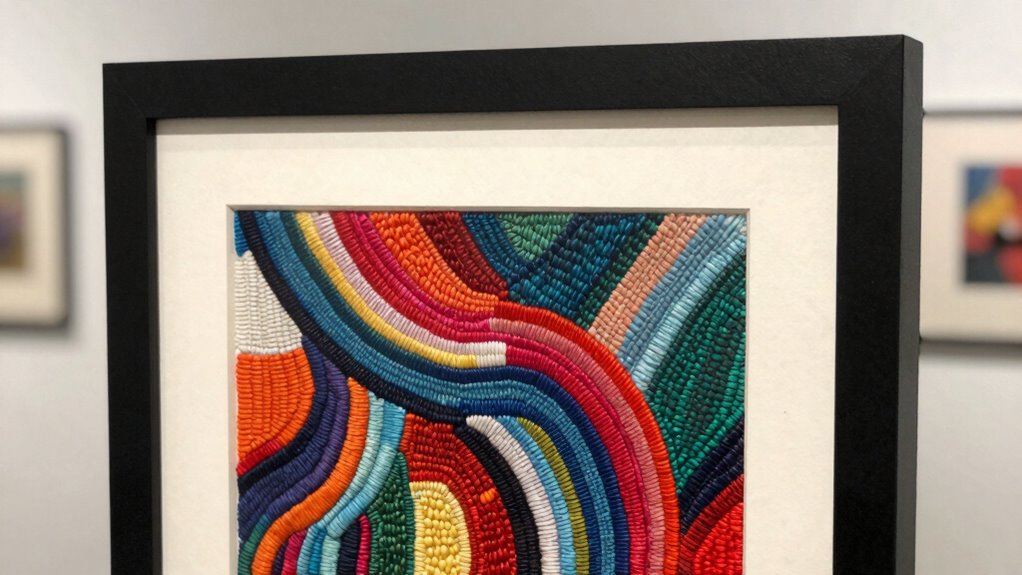
To make your textile art gallery-ready, choose framing materials that complement its colors and textures. Opt for wood or metal frames with appropriate finishes, and use UV-protective glazing to preserve vibrancy. Mount your piece securely with acid-free backing, ensuring it stays flat and protected. Coordinate frame colors with your textile’s tones for harmony, and use shadow box styles for added depth. Keep these tips in mind, and you’ll discover how to elevate your display to a professional level.

Get furniture and decor delivered free — and shop member deals
- Fast, free delivery on millions of items
- Access to Prime Big Deal Days deals on October 6–7
- Prime Video, Amazon Music and more included
Key Takeaways
- Match frame colors and materials to enhance the textile’s natural tones and create visual harmony.
- Use UV-protective glazing and proper mounting techniques to preserve vibrancy and prevent damage.
- Select appropriate framing styles, such as shadow boxes or sleek metal frames, based on the textile’s texture and weight.
- Incorporate conservation methods and acid-free supports for long-term stability and protection.
- Ensure overall presentation is cohesive, balanced, and elevates the textile art as a professional gallery piece.
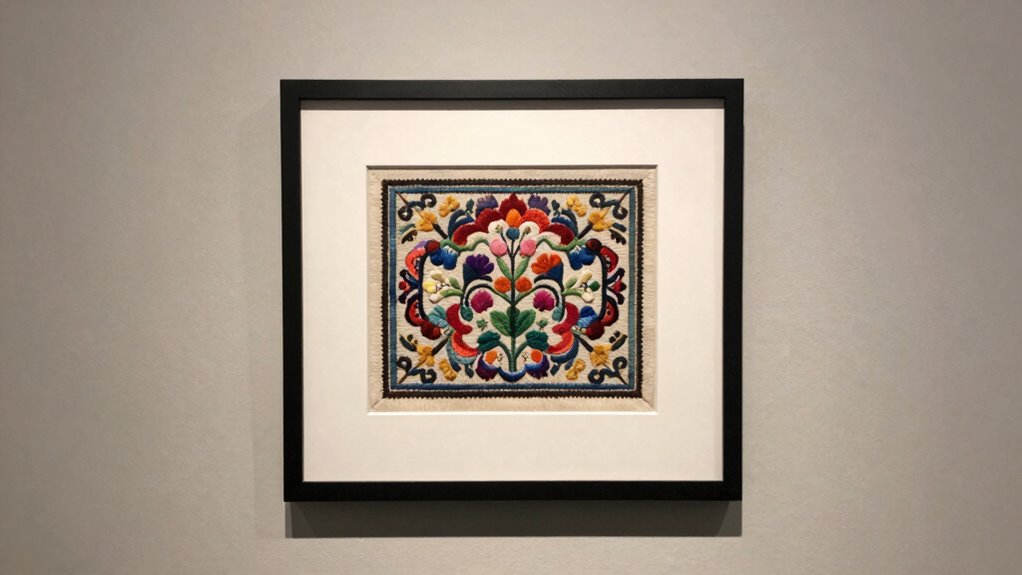
Have you ever wondered how to showcase your textile art in a way that highlights its beauty and craftsmanship? The key lies in thoughtful framing that respects and enhances your piece. To start, consider the importance of color coordination. You want your textile art to stand out, yet harmonize with its surroundings. Think about the colors within the textile itself — if it features warm tones like reds and oranges, choose framing materials that complement these hues without overpowering them. For cooler shades like blues or greens, opt for frames that either match or subtly contrast, creating visual interest without clashing. The goal is to find a balance that draws viewers in and emphasizes the artwork’s colors naturally.
Choose framing that complements your textile’s warm or cool tones to enhance its natural beauty and create visual harmony.
Next, pay close attention to framing materials. The right materials can elevate your textile art from a simple display to a gallery-worthy piece. Wood frames, especially those with a smooth or distressed finish, add warmth and texture that complement many textiles. Metal frames, on the other hand, lend a sleek, modern vibe, perfect for contemporary pieces. When selecting framing materials, consider the weight and texture of your textile. Heavier, thicker textiles might require sturdier frames with reinforced backing, while lighter fabrics can be showcased with more delicate, minimalist frames. Additionally, think about the depth of the frame — a shadow box style provides space between the textile and glass, preventing any crushing or warping of intricate or bulky textures. Proper framing techniques are essential to ensure your textile remains in optimal condition over time. Incorporating mounting methods that are gentle yet secure can further protect your textile’s fibers and structure. Choosing the right support system is equally important to prevent sagging or uneven tension.
Another vital aspect is the choice of glazing. UV-protective glass or acrylic helps preserve your textile’s colors, especially if it’s displayed in a sunny area. When it comes to mounting, avoid stretching or pulling your textile too tight, as this can distort its shape and texture. Instead, opt for a mounting method that holds the textile flat and secure without damaging the fibers, such as a gentle, acid-free mat board or a specialized textile mounting system. This approach ensures your piece remains pristine and feels professional. Incorporating proper mounting techniques can also help maintain the integrity of delicate textiles over time.
Finally, pay attention to the overall presentation. Combining excellent color coordination with the right framing materials creates a cohesive, gallery-ready display. Incorporating proper conservation techniques ensures your textile art remains vibrant and intact over time. Once you’ve selected the perfect frame, backing, and glass, your textile art will command attention and admiration, showcasing your craftsmanship at its best. With careful thought and precision, your textile art won’t just hang on the wall — it will become a compelling centerpiece that elevates your entire space.
UV protective glazing for artwork
As an affiliate, we earn on qualifying purchases.
As an affiliate, we earn on qualifying purchases.
Frequently Asked Questions
What Types of Frames Are Best for Delicate Textiles?
For delicate textiles, choose frames with a subtle, protective design like wood or metal without elaborate embellishments. Opt for simple frame styles that won’t overpower your artwork. Color coordination is key—neutral tones like black, white, or natural wood help highlight the textile’s details. Use UV-protective glass to prevent fading. This combination guarantees your fragile textile remains the focal point while maintaining a gallery-ready, professional appearance.
How Do I Prevent Fabric Damage During Framing?
To prevent fabric damage during framing, you should handle your textile carefully to avoid unnecessary tension or stretching. Use acid-free materials for mounting and backing to protect the fabric from deterioration over time. When stretching, do so gradually and evenly, avoiding excessive force. Consider securing the textile with gentle, acid-free pins or sewing it onto a supportive, acid-free backing to maintain its shape without risking tears or distortion.
Can I Frame Textile Art Without Professional Help?
Yes, you can do DIY framing for textile art, but it requires careful planning and preservation tips. You’ll need acid-free materials, gentle handling, and proper mounting techniques to avoid damage. Use a flat, clean surface and avoid adhesives directly on the fabric. Take your time, follow preservation tips, and consider consulting online tutorials or guides. With patience, you can frame your textile art beautifully without professional help.
What Glass Options Protect Textile Art From UV Damage?
Think of your textile art as a delicate bloom needing protection. UV filtering glass acts like a shield, blocking harmful rays that fade colors over time. Opt for UV-protective acrylic or museum-grade glass for textile preservation, ensuring your masterpiece stays vibrant. These options filter out UV damage, safeguarding your artwork’s beauty and longevity, so you can enjoy its intricate details for years to come without worry.
How Do I Choose the Right Matting for Textile Pieces?
You choose the right matting for textile pieces by focusing on color coordination and matte selection. Opt for a matte that complements the textile’s hues without overpowering them, perhaps a neutral tone like cream or soft gray. Consider a matte with enough space around the art to prevent crowding, enhancing its visual impact. This approach highlights your textile art while maintaining a professional, gallery-ready presentation.
Conclusion
By choosing the right frame, you elevate your textile art, creating a polished, gallery-ready presentation. By selecting complementary materials, by paying attention to detail, and by embracing your unique style, you guarantee your artwork stands out. By framing with intention, by caring for every edge, and by showcasing your passion, you turn a simple piece into a striking display. Ultimately, framing your textile art with thought and purpose transforms your space and celebrates your creative vision.
Halloween Picks
halloween
As an affiliate, we earn on qualifying purchases.