
TL;DR

Get furniture and decor delivered free — and shop member deals
- Fast, free delivery on millions of items
- Access to Prime Big Deal Days deals on October 6–7
- Prime Video, Amazon Music and more included
A House Beautiful report outlines a routine for maintaining granite countertops: clean spills promptly with products made for stone, handle cookware carefully and check the seal regularly. It recommends resealing at least annually, with more frequent checks for heavily used counters; exact needs can vary by stone and finish.
House Beautiful’s granite-care report recommends prompt cleanup of spills, cleaners formulated for stone and periodic resealing to help protect countertops from stains and wear. The advice matters to homeowners because granite’s natural durability does not make it immune to staining, surface dulling or chips at exposed edges.
For routine care, the report advises wiping up acidic liquids such as vinegar, wine and coffee quickly, particularly on light-colored stone. It cautions against cleaners containing harsh chemicals; glass cleaners may contain ammonia, which the article says can dull stone. A soft cloth and a cleaner intended for granite or other stone are presented as safer options. The article includes Weiman products as examples, but readers should follow the instructions for whichever product they choose.
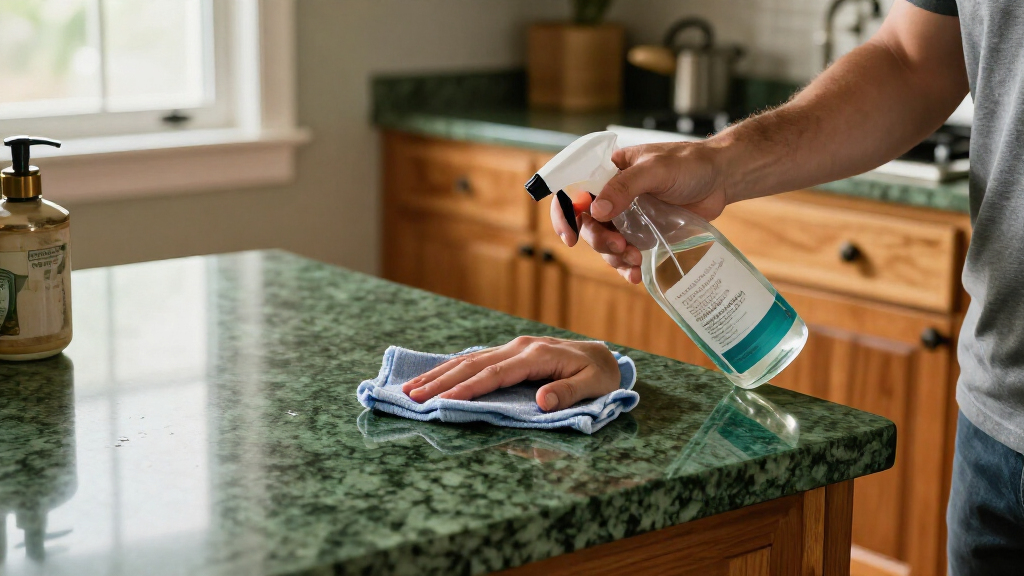
To reduce the chance of chips, the report says to set heavy cookware down gently, taking particular care around edges and corners. It also describes an end-of-day wipe-down: apply a stone-specific cleaner, wipe with a soft cloth, then buff with a separate clean, dry cloth. The article’s detailed product instructions refer to spraying, wiping in a circular motion and buffing; those directions apply to the named product, not necessarily every stone cleaner.
For longer-term protection, House Beautiful recommends resealing at least once a year, with a six-month interval as a possibility for kitchens that see heavy use. To check the existing seal, its report suggests leaving a small amount of water on the surface for about 15 minutes. If the water remains on top, the seal is described as intact; if it sinks in and leaves dark spots, the article says resealing may be due. A penetrating sealer is applied across the counter and allowed to dry according to its instructions. The report says its example product requires four to six hours of drying and suggests a second coat for added protection.
Daily Habits That Protect Stone
Granite-care routines can help homeowners avoid preventable stains and surface damage, while also making maintenance more predictable. Prompt spill cleanup limits the time liquids sit on a porous material, and using a suitable cleaner can reduce the risk of dulling from products not intended for stone.
Sealing is not a substitute for daily care, and the report does not claim it makes granite stain-proof. Instead, it presents resealing as one part of protecting a naturally porous surface. Checking the seal can help owners decide when maintenance may be needed rather than relying only on a fixed calendar. Gentle handling also addresses a different risk: impact damage at vulnerable edges and corners.
As an affiliate, we earn on qualifying purchases.
Why Granite Needs Ongoing Care
The report explains that granite is naturally porous and that countertops generally receive a protective sealant before installation. That layer slows absorption, but the article says it gradually wears with everyday kitchen use. The care advice therefore separates routine cleaning from periodic protection: wiping spills and food residue is a regular task, while checking and renewing the seal is an occasional one.
House Beautiful also notes that the appropriate interval may depend on use and finish. High-use areas, including space around a cooktop or where children eat, may need more frequent attention. The report says honed granite may be more porous than glossy granite and may require more frequent resealing. These are general recommendations in the article, not a guarantee for every countertop; stone type, finish, installation and the sealer used can affect care needs.
Care Needs Vary by Countertop
The source is a home-care report, not a laboratory comparison of cleaners or sealers. It does not provide independent test results, identify the particular granite varieties covered by its recommendations or establish a single resealing schedule that applies to every installation. Its product examples are from Weiman, so readers should not treat branded claims in the article as independent findings.
The water test is described as a practical indicator, but the report does not explain how to distinguish seal failure from other causes of darkening or specify how the result may vary by stone. Product directions can differ, including application and drying times. Readers should check the countertop installer’s guidance and the labels for their chosen cleaner or sealer; it is not clear from the report whether every granite surface can use the same products.
Check the Seal Before Resealing
Homeowners can begin by following the countertop maker’s care guidance, wiping up spills promptly and avoiding products that are not labeled for stone. When considering resealing, they can use the report’s water test as an initial check, then confirm the appropriate product and method with the countertop installer or sealer manufacturer. Follow the product label for application, ventilation and drying time, and keep the surface out of food preparation until it is ready for use.
For counters with persistent dark marks, damage or uncertainty about the stone or existing finish, the report does not offer a diagnostic procedure. A qualified stone-care professional can advise whether resealing or another repair is appropriate. The next maintenance step will depend on the countertop’s condition and product guidance, rather than a universal schedule alone.
Key Questions
How often should granite countertops be resealed?
The House Beautiful report recommends at least once a year, and says homeowners with heavily used kitchens may consider checking or resealing at six-month intervals. Actual needs can vary by stone, finish and sealer; follow installer and product guidance.
How can I tell whether the seal may need attention?
The article describes leaving a little water on the counter for about 15 minutes. If it remains on the surface, the seal is described as intact; if it sinks in and leaves dark spots, resealing may be due. Treat this as a guide, not a definitive diagnosis.
Which cleaners should I use on granite?
Use a cleaner labeled for granite or stone surfaces and follow its directions. The report warns that some glass cleaners may contain ammonia, which can dull stone, and advises avoiding harsh chemicals and abrasive or acidic products.
What everyday habits help prevent damage?
Wipe up acidic spills promptly, clean with a soft cloth and set heavy cookware down gently. The report singles out edges and corners as particularly vulnerable to chips.
Source: rss
Fall Picks
fall essentials
As an affiliate, we earn on qualifying purchases.