To prevent stains effectively, start by thoroughly cleaning and drying your fabrics before applying stain guards or treatments. Use an even coat, following product instructions carefully, to create a barrier that repels liquids and keeps spills from setting in. Reapply periodically, especially after deep cleaning, to maintain protection. Pair treatments with other precautions like avoiding drinks near delicate fabrics. Keep exploring, and you’ll discover more tips to keep your fabrics looking fresh and stain-free.
Key Takeaways
- Ensure fabrics are clean and dry before applying stain guards for optimal adhesion and effectiveness.
- Apply stain treatments evenly with a light coat to create a durable, protective barrier.
- Reapply stain guards periodically, especially after deep cleaning or professional treatments, to maintain protection.
- Use products specifically formulated for fabric protection to ensure compatibility and best results.
- Combine stain guards with other protective measures, like slipcovers or careful spill management, for enhanced stain prevention.
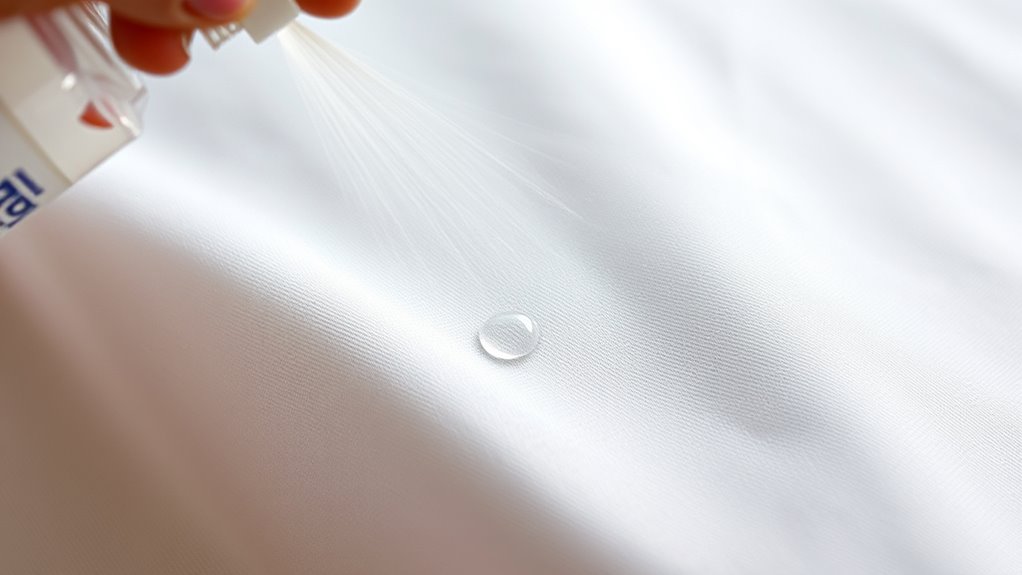
Spills and stains can happen unexpectedly, but you can substantially reduce their impact by taking proactive steps. One of the most effective ways to do this is by applying fabric protection treatments to your furniture and clothing. These treatments create a barrier that repels liquids and prevents stains from setting in, making cleanup faster and easier. When you invest in quality fabric protection, you’re essentially giving your fabrics a layer of stain resistance that works tirelessly to keep messes at bay. You don’t need to wait for an accident to happen; applying stain guards regularly can maintain this resistance over time, keeping your upholstery and garments looking newer longer.
To maximize stain resistance, start with a thorough cleaning of the fabric before applying any protection. Dirt, oils, and debris can interfere with the effectiveness of treatments, so ensure surfaces are clean and dry. Follow the instructions carefully, as different products may require specific application techniques or drying times. A light, even coat is usually sufficient to create a durable protective layer. Once applied, these treatments penetrate the fabric fibers, forming a semi-permanent shield that repels liquids and prevents stains from soaking in quickly. This means that when spills occur, liquids bead up on the surface, giving you more time to blot and clean before stains set.
Regular maintenance is key to preserving fabric protection and stain resistance. Reapply treatments periodically, especially after deep cleaning or professional upholstery treatments. Keep in mind that some fabrics are more receptive to stain guards than others, so check the manufacturer’s recommendations. When you choose products specifically formulated for stain resistance, you’ll notice a noteworthy difference in how your fabrics respond to potential messes. Remember, prevention is always better than cure—by taking these small steps, you considerably reduce the chance of permanent stains and extend the life of your fabrics.
In addition to applying stain guards, consider pairing them with other protective measures, like using slipcovers or avoiding placing drinks near upholstery. While no treatment guarantees complete stain-proofing, fabric protection and stain resistance treatments give you a powerful advantage. They act as a first line of defense, helping you keep your fabrics looking fresh and clean with minimal effort. When accidents do happen, you’ll find it easier to clean up and less likely to face stubborn stains that require professional removal. Furthermore, understanding the importance of financial management in maintaining your home’s appearance and longevity can help you allocate resources effectively for ongoing fabric care. Overall, these proactive steps save you time, money, and frustration, reinforcing your commitment to maintaining a beautiful, stain-free environment.
As an affiliate, we earn on qualifying purchases.
Frequently Asked Questions
Can Stain Guards Be Used on All Fabric Types?
Stain guards can’t be used on all fabric types because of fabric compatibility and product limitations. Some fabrics, like silk or delicate materials, may be damaged or lose their texture when treated. Always check the product label for fabric compatibility before applying. If you’re unsure, test a small area first. Using the right stain guard guarantees you protect your fabric effectively without risking damage or reduced quality.
How Often Should I Reapply Stain Treatments?
Think of stain treatments as your fabric’s best friends, needing regular check-ins. You should reapply stain guard every 3 to 6 months to maintain its effectiveness. This application frequency helps extend stain guard longevity, ensuring your fabrics stay protected. Keep an eye on wear and tear; if protection seems to fade or stains begin to seep through, it’s time for a fresh coat. Regular touch-ups keep your fabrics resilient and stain-free.
Are Stain Guards Safe for Children’s Furniture?
Yes, stain guards are generally safe for children’s furniture when you choose non-toxic, child-safe options. Look for products labeled as low in chemicals or free from harmful substances to minimize chemical concerns and guarantee child safety. Always follow the manufacturer’s instructions, apply in well-ventilated areas, and keep children away during and after application until it’s fully dry. This way, you protect your furniture without compromising your child’s health.
Do Stain Treatments Affect Fabric Breathability?
You might worry that stain treatments harm fabric breathability, but most are designed to safeguard without blocking airflow. These treatments create a barrier that prevents stain penetration, making cleanup easier without sacrificing comfort. Quality products ensure fabric remains breathable, so your furniture stays comfortable and fresh. Always follow manufacturer instructions, and test on a small area first, to keep your furniture both stain-resistant and breathable.
Can Stain Prevention Products Be Used on Delicate or Antique Items?
Yes, you can use stain prevention products on delicate fabrics and antique items, but you should verify for delicate fabric compatibility first. Always test a small hidden area to guarantee it doesn’t damage or discolor the material. For antique preservation concerns, choose products specifically designed for vintage or fragile textiles. Follow the manufacturer’s instructions carefully to avoid any harm, and when in doubt, consult a professional conservator.
Conclusion
By using stain guards and treatments consistently, you can keep your belongings looking new longer. Did you know that applying a stain protector can reduce the chances of permanent stains by up to 80%? That’s a huge difference, especially for busy households or those with kids. Remember, a little prevention goes a long way—so don’t wait until a stain appears. Stay proactive, and enjoy cleaner, fresher fabrics and surfaces every day!