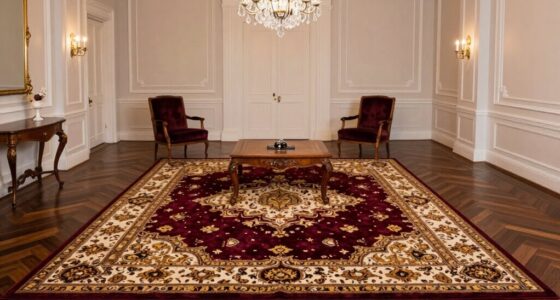
Many new collectors believe that rarity automatically equals high value, but that’s not true. Rarity is just one part of a rug’s worth; craftsmanship, condition, dyes, and authenticity matter just as much. A rare rug with poor quality or faded dyes might not be valuable at all. To truly understand a rug’s worth, you need to see the bigger picture. Keep exploring, and you’ll discover what really makes a rug valuable.
Key Takeaways
- Rarity alone does not determine a rug’s value or quality.
- High knot density and craftsmanship are often more important than scarcity.
- Natural dyes aging well can add value, regardless of rarity.
- Poorly made rare rugs may be less valuable than common, well-crafted ones.
- A holistic assessment of condition, authenticity, and craftsmanship is essential for proper valuation.
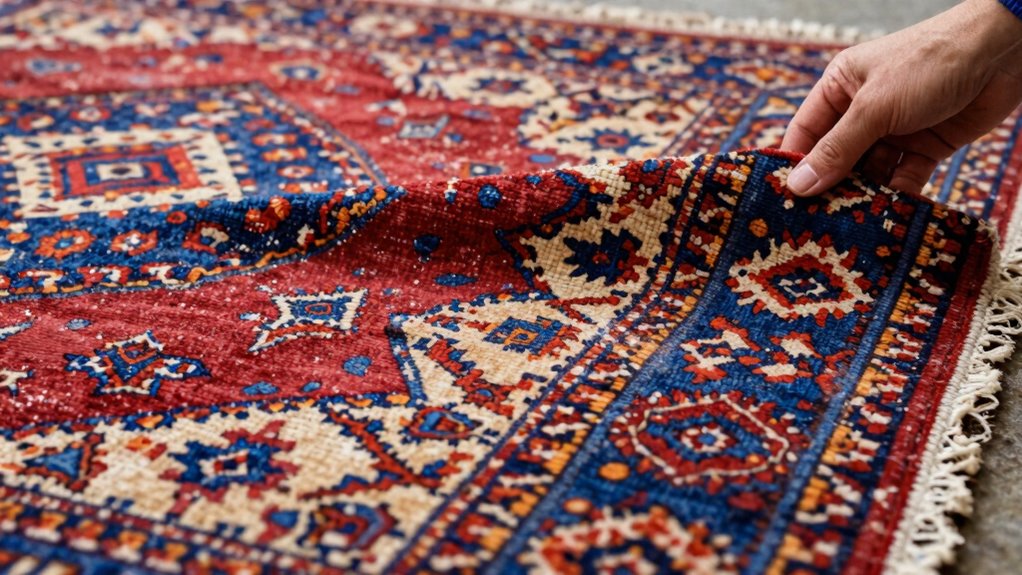
Have you ever assumed that a rug’s rarity automatically makes it valuable? Many new collectors fall into this trap, thinking that because a rug is hard to find, it must also be worth a fortune. But that’s not always the case. Rarity is just one piece of the puzzle. To truly understand a rug’s worth, you need to look deeper into how it was made, especially the craftsmanship involved. For instance, examining the knots per inch can tell you a lot about the quality and detail of the weaving. Higher knots per inch usually mean a finer, more intricate rug because the weaver has spent more time creating tiny, precise knots. A rug with 200 knots per inch will generally be more detailed and durable than one with only 50, even if both are equally rare. This detail can significantly influence a rug’s desirability and value.
But craftsmanship isn’t only about knots. The dye techniques used also play a crucial role. Many collectors overlook the importance of natural versus synthetic dyes. Rugs dyed with traditional, natural dyes typically age better and develop a richer patina over time, making them more appealing and valuable to collectors. Synthetic dyes, while often cheaper and easier to produce, can fade or discolor, which diminishes a rug’s aesthetic appeal and, consequently, its worth. So, just because a rare rug employs sophisticated dye techniques doesn’t automatically mean it’s a high-value piece. It’s essential to consider how these techniques contribute to the rug’s overall condition and authenticity. Additionally, understanding the craftsmanship behind the weaving process can help you assess whether a rug’s rarity is genuinely reflective of its quality.
Understanding these nuances helps you avoid overestimating a rug’s worth based solely on its rarity. You might come across an obscure, rare rug that’s poorly made or has faded dyes, which won’t fetch a high price regardless of its scarcity. Conversely, a more common rug crafted with exceptional knot density and exquisite dye techniques can be far more valuable. Recognizing the craftsmanship behind the rug helps you distinguish between true investment pieces and those you might regret overpaying for.
In the end, the value of a rug hinges on a combination of rarity, craftsmanship, condition, and historical context. Don’t be tempted to believe rarity alone guarantees a good investment. Instead, focus on the details—like knots per inch and dye techniques—that reveal the true artistry and longevity of each piece. This approach will serve you better as you build a collection rooted in quality rather than just scarcity.
As an affiliate, we earn on qualifying purchases.
Frequently Asked Questions
How Does Rug Condition Affect Rarity and Value?
Rug condition greatly impacts its rarity and value. If the fiber quality remains high and dye stability is intact, the rug retains more of its original beauty and rarity. You’ll find that well-preserved rugs with minimal wear, vibrant colors, and intact fibers are more valuable. Conversely, damage or fading reduces rarity and worth, even if the rug is intrinsically rare. Proper care helps maintain both fiber quality and dye stability, boosting your rug’s value.
Are Rare Rugs Always More Expensive?
Rare rugs aren’t always the most expensive, despite antique myths and rarity myths suggesting otherwise. You might think rarity equals instant wealth, but the market’s a wild card—condition, age, and design matter just as much. Some rare finds are undervalued because they lack appeal, while common-looking rugs can fetch high prices if they’re in pristine condition or highly sought after. Don’t fall for the myth that rarity alone guarantees a fortune.
Can a Rug’s Age Alone Determine Its Rarity?
No, a rug’s age alone doesn’t determine its rarity. Antique classifications consider factors like design uniqueness and condition, which make some older rugs more rare than others. You should look at the craftsmanship, provenance, and how many similar pieces exist. Age adds value, but rarity depends on the combination of these elements. Focus on the story and distinct features that make the rug stand out, regardless of its age.
What Role Does Provenance Play in Rug Rarity?
Ever wondered why some rugs command higher prices? Provenance plays a vital role in rug rarity by revealing its historical significance and cultural context. When you know a rug’s origin and history, you better understand its uniqueness and value. Provenance authenticates its rarity, connecting you to the story behind it. Without this knowledge, you might overlook a truly exceptional piece, missing out on its rich cultural journey and significance.
How Can I Verify a Rug’s Rarity Authenticity?
To verify a rug’s rarity and authenticity, start by examining its weaving techniques and craftsmanship, which reveal its age and origin. Look closely at the dye sources—natural dyes indicate older, rarer pieces, while synthetic dyes suggest more recent production. Research the rug’s pattern and design, and consult experts or reputable appraisers who can authenticate its provenance. These steps guarantee you accurately assess its rarity and true worth.
Conclusion
Remember, rug rarity isn’t just a hidden gem waiting to be uncovered; it’s a complex story woven with history, condition, and provenance. Don’t be fooled into thinking rarity alone makes a rug valuable—sometimes, it’s the quiet ones with a story to tell that steal the show. So, approach each piece like a curious explorer, knowing that true value often lies beneath the surface, waiting to be discovered like a treasure chest buried in the sands of time.