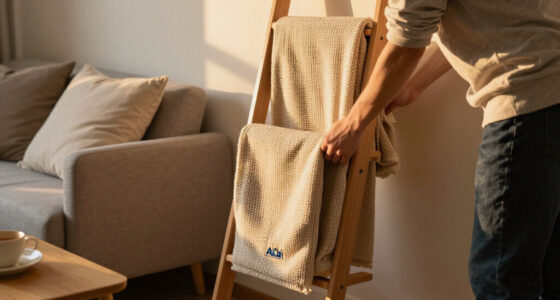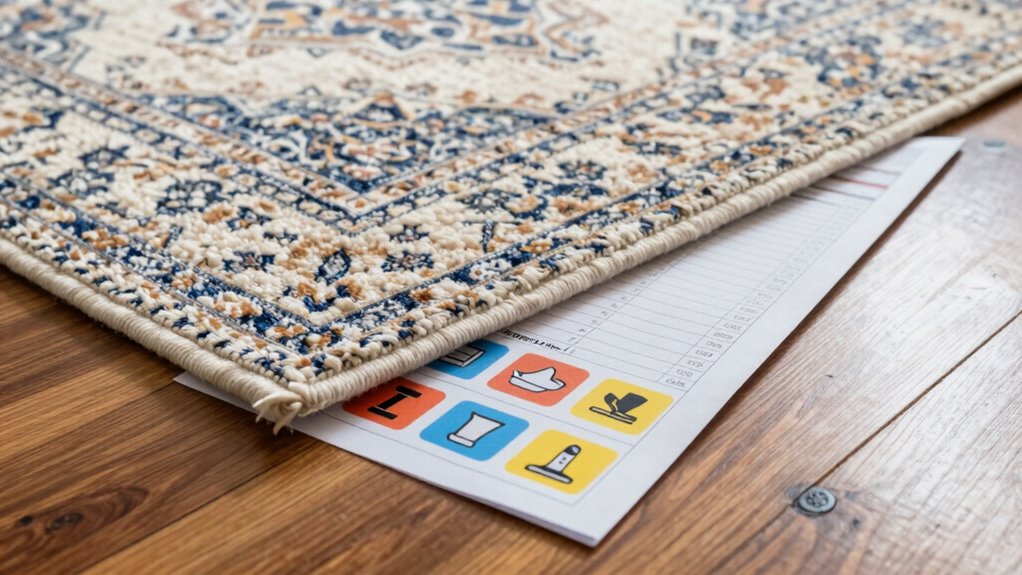

Before buying a rug pad, you need to prioritize safety by checking for key features like fire-resistant, non-toxic materials and proper certifications. Make sure the pad offers effective non-slip technology, fits snugly, and is installed correctly to prevent slips and bunching. Opt for eco-friendly options and watch out for warning signs like chemical odors or poor grip. Focusing on safety now guarantees peace of mind—continue to uncover essential tips for a secure and long-lasting choice.

Get furniture and decor delivered free — and shop member deals
- Fast, free delivery on millions of items
- Access to Prime Big Deal Days deals on October 6–7
- Prime Video, Amazon Music and more included
Key Takeaways
- Prioritize rug pads with fire-resistant, non-toxic materials and safety certifications to reduce health and fire hazards.
- Ensure the pad has advanced non-slip technology and proper installation to prevent slips and bunching.
- Choose eco-friendly, natural materials like wool or rubber to avoid harmful off-gassing and chemical exposure.
- Watch for warning signs like chemical odors, slippery surfaces, or lack of certifications indicating unsafe products.
- Invest in durable, high-quality rug pads and maintain them regularly to ensure ongoing safety and longevity.
As an affiliate, we earn on qualifying purchases.
Why Safety Features Matter When Choosing a Rug Pad
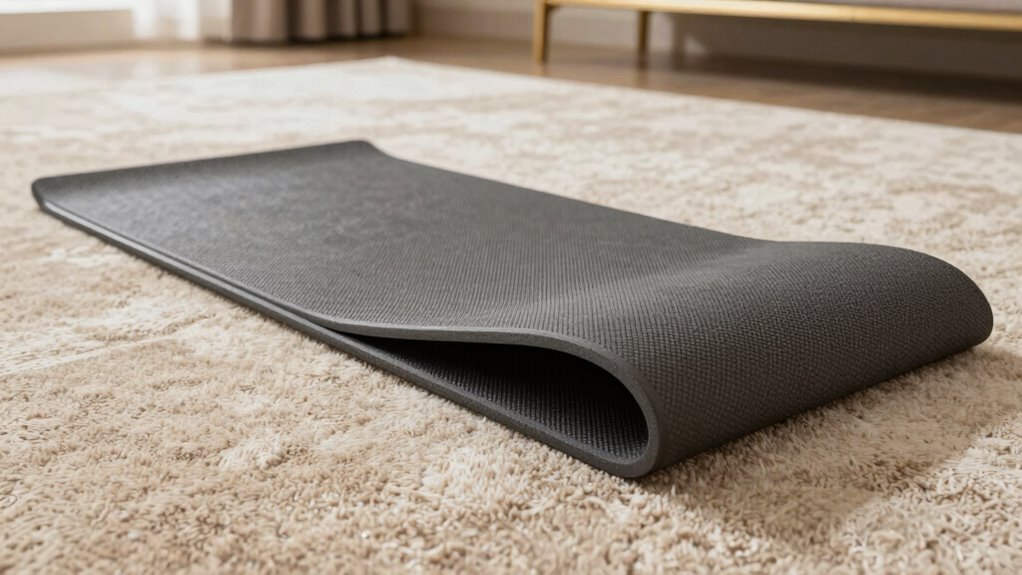
Safety features are crucial when choosing a rug pad because they help prevent accidents and protect your flooring. One key concern is the fire hazard, as some rug pads contain flammable materials that can easily catch fire. You want a pad made from fire-resistant materials to reduce this risk. Chemical safety is equally important; some pads use chemicals that could emit harmful fumes or cause skin irritation. Always check for labels indicating non-toxic, chemical-free options. Additionally, selecting a pad with proper ventilation considerations can help prevent moisture buildup and mold growth beneath your rug. By prioritizing safety features, you minimize potential hazards that could lead to fires or health issues. Choosing a rug pad with proper safety certifications ensures your home remains a safe environment while preserving your flooring’s integrity. Safety isn’t just a feature—it’s a necessity.
How Non-Slip Rug Pad Technologies Keep Your Floors Safe
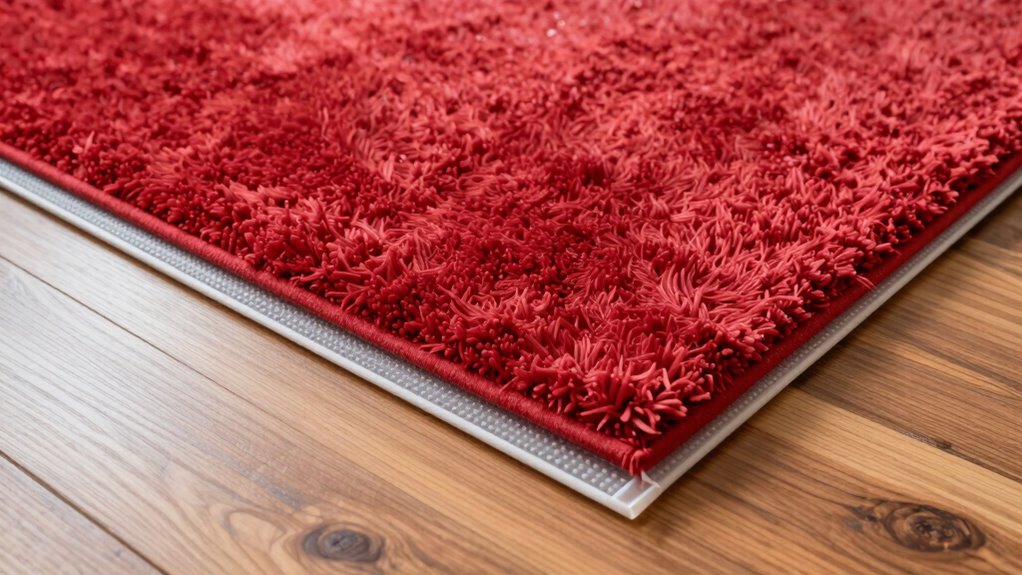
Non-slip rug pad technologies play an essential role in keeping your floors safe by preventing slips and falls. Many modern rug pads use specialized grips made from synthetic fibers that enhance traction without damaging your flooring. These fibers are durable, moisture-resistant, and maintain their grip over time, ensuring your rug stays securely in place. Additionally, rug pads with textured surfaces or decorative patterns not only add visual appeal but also improve grip, reducing the risk of accidents. By choosing a pad with advanced non-slip technology, you create a safer environment in your home, especially in high-traffic areas or households with children and seniors. Properly designed rug pads ensure your rugs stay put while adding a layer of safety and style to your space. Moreover, European cloud innovation is driving the development of new, eco-friendly materials that can further enhance the safety and durability of rug pads.
Safe, Eco-Friendly Materials for Rug Pads
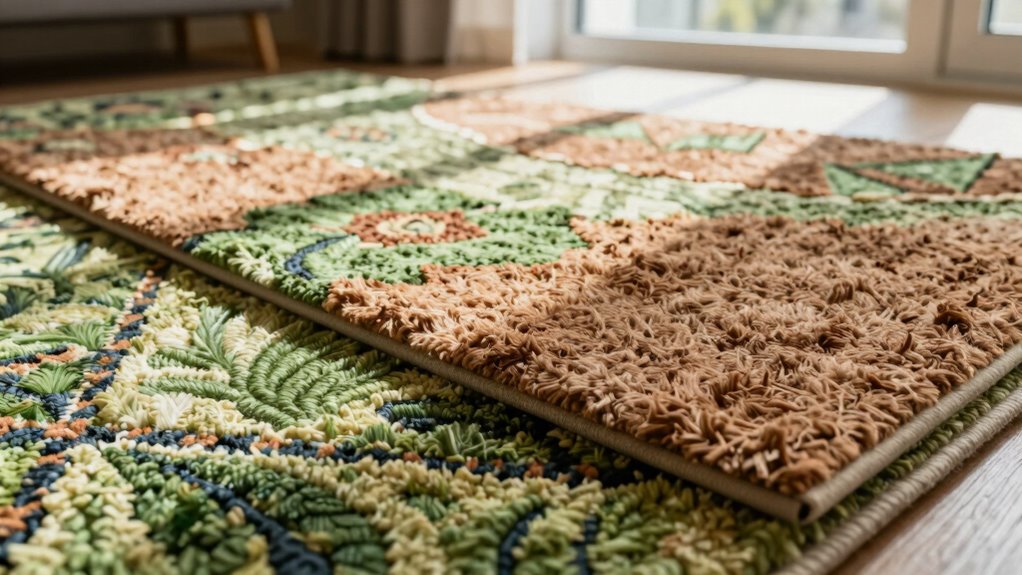
Choosing rug pads made from safe, eco-friendly materials is an excellent way to protect both your family and the environment. Look for options with high material durability to guarantee your rug pad lasts years without breaking down or releasing harmful chemicals. These eco-friendly sourcing practices mean the materials come from sustainable sources, reducing environmental impact. Natural materials like wool, felt, or natural rubber are popular choices because they’re non-toxic and biodegradable. Avoid synthetic materials that may off-gas or contain harmful chemicals. By selecting eco-friendly materials, you support safer indoor air quality and promote sustainability. Remember, a durable, eco-conscious rug pad not only keeps your floors protected but also aligns with your commitment to a healthier planet. Incorporating air quality considerations into your choice helps ensure your home remains safe and healthy.
Red Flags: Warning Signs of Unsafe Rug Pads to Avoid
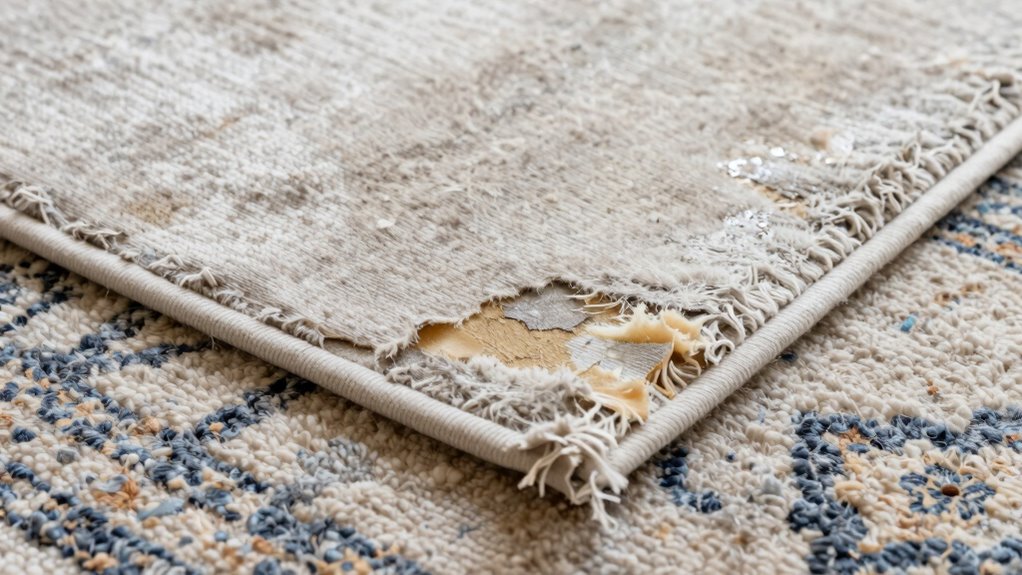
While eco-friendly materials help guarantee your rug pad is safe and sustainable, there are warning signs that indicate a pad may be unsafe. One major red flag is the presence of safety hazards, such as strong chemical odors or slippery surfaces. If the pad emits a chemical smell, it could signal harmful material concerns that might affect your health or damage your flooring. Avoid pads made from cheap or unverified materials, as they might contain toxic substances or unstable adhesives. Additionally, look out for pads that don’t stay in place or slip easily, which can cause accidents. Always check product labels for safety certifications and avoid anything that seems poorly constructed or flimsy. Recognizing these warning signs helps ensure your rug pad is both safe and reliable. Color accuracy and proper material selection are essential to avoid health risks associated with unsafe products.
How to Measure Your Rug and Floor for a Perfect Fit
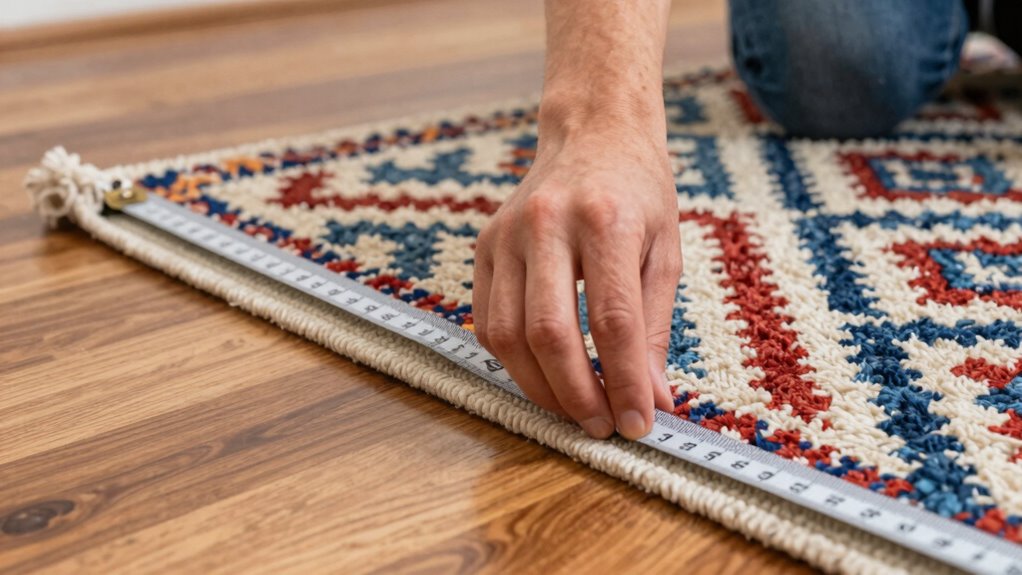
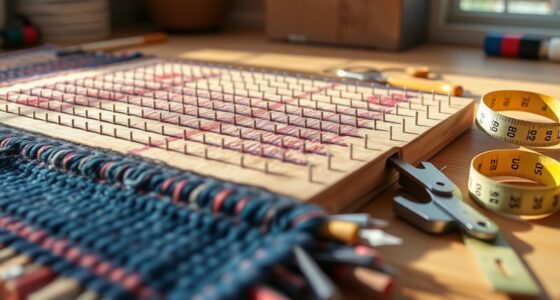
To achieve a perfect fit for your rug, start by measuring both the rug and the area where you’ll place it. Use a tape measure to determine the rug’s length and width, noting any design patterns that might influence placement. Consider fiber types, as some materials like wool or synthetic fibers may shrink or expand over time, affecting fit. Measure the floor area carefully, accounting for any furniture or obstacles. For a balanced look, aim for the rug to be slightly smaller than the space, leaving a margin around the edges. When selecting your rug pad, verify it fits within these measurements for safety and security. Properly measuring helps prevent slipping and ensures your rug stays in place, especially with intricate design patterns or delicate fibers.
Tips for Installing Rug Pads to Maximize Safety and Security
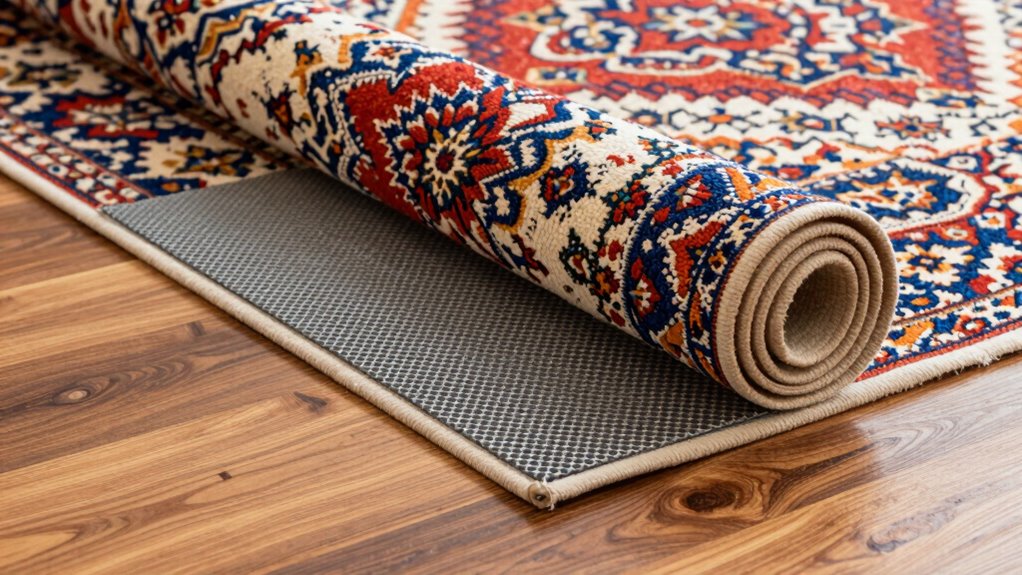
Properly installing your rug pad is key to ensuring your rug stays secure and safe. To maximize safety and minimize fire hazards, follow these tips:
Secure your rug with proper pad installation to enhance safety and reduce fire risks.
- Clean the surface thoroughly before placing the pad to prevent debris that could cause slipping or damage.
- Choose a rug pad made from non-toxic, chemical-safe materials to reduce chemical safety concerns and avoid potential fire hazards.
- Secure the edges with double-sided tape or non-slip backing to prevent shifting, which can cause trips or falls.
- Always check that your rug pad complies with fire safety standards to ensure it does not contribute to fire risks in your home.
Always avoid using flammable or low-quality materials that could increase fire hazards. Proper installation not only keeps your rug in place but also contributes to a safer home environment, reducing risks related to chemical exposure and fire safety.
Certifications and Testing That Ensure Rug Pad Safety

Understanding certification standards and testing methods helps you choose safe rug pads. Recognized safety labels indicate products that meet established requirements. By knowing these points, you can confidently select pads that prioritize your safety and your home’s well-being. Additionally, being aware of local safety standards can further ensure the rug pad complies with regional regulations.
Certification Standards Explained
Certification standards play a crucial role in ensuring rug pads are safe for your home. They set benchmarks for rug pad durability and limit material toxicity, so you know what to look for. Here are three key aspects these standards cover:
- Material Safety: Certification ensures rug pads meet low toxicity levels, reducing harmful chemical exposure.
- Durability Tests: Standards verify that rug pads maintain their grip and cushioning over time, preventing premature wear.
- Fire Resistance: Approved pads pass fire safety tests, giving you peace of mind in case of accidents.
- Unique Textures: Standards also consider unique textures that add depth and interest to the design, ensuring safety without sacrificing style.
Testing Methods Overview
To guarantee rug pads are safe for your home, manufacturers use a variety of testing methods that verify their compliance with established standards. These tests assess rug pad durability, ensuring they can withstand regular use without deteriorating or posing safety risks. They also evaluate how well the pad maintains its structural integrity over time. Additionally, testing covers aesthetic design aspects, confirming that materials won’t cause staining or damage to your rugs or flooring. Manufacturers may conduct fire safety tests, off-gassing evaluations, and chemical exposure assessments to verify the rug pad doesn’t emit harmful fumes or substances. These methods help identify any potential hazards, giving you confidence that the product is both safe and reliable for everyday use in your home. Understanding mattress safety standards can further enhance your confidence in selecting secure home products.
Recognized Safety Labels
How can you be sure a rug pad is truly safe for your home? Recognized safety labels offer peace of mind by confirming the rug pad has undergone rigorous testing. Look for certifications such as:
- CPSC compliance – Ensures the pad meets safety standards for off-gassing and chemical emissions, supporting rug pad durability.
- CertiPUR-US® – Verifies foam components are free from harmful substances, safeguarding your family’s health.
- Green Guard Certification – Indicates low chemical emissions, helping maintain good indoor air quality without compromising design aesthetics.
These labels guarantee the rug pad has passed safety tests, so you won’t sacrifice durability or style. Choosing certified options means your rug stays secure, safe, and visually appealing for years to come.
Investing in Quality Rug Pads: Cost vs. Safety Benefits
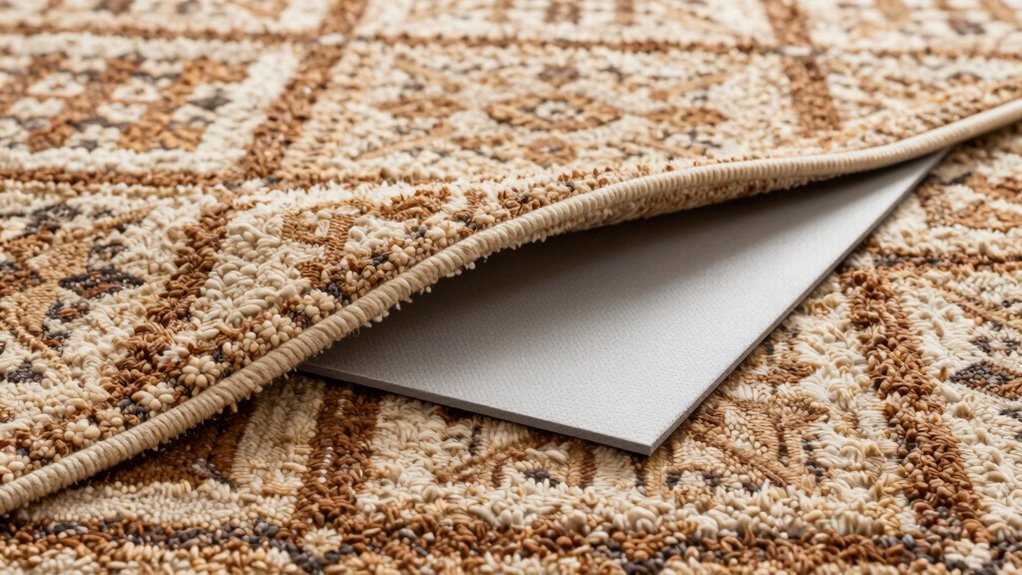
While high-quality rug pads might seem like a costly investment upfront, they offer significant safety benefits that can save you money and trouble in the long run. Investing in a durable rug pad guarantees better rug stability and reduces slipping hazards, protecting your loved ones. High-quality pads also boast excellent rug pad durability, meaning they won’t break down or lose effectiveness quickly. Plus, their material versatility allows you to choose options suitable for various flooring types and rug materials, enhancing safety without damaging your floors. Additionally, security-focused features in some premium rug pads can provide extra peace of mind. Although the initial cost is higher, these premium pads prevent accidents, prolong your rug’s lifespan, and minimize the need for replacements. In short, spending a little more on quality pays off through improved safety, durability, and peace of mind.
How to Maintain Your Rug Pad for Long-Term Safety and Performance
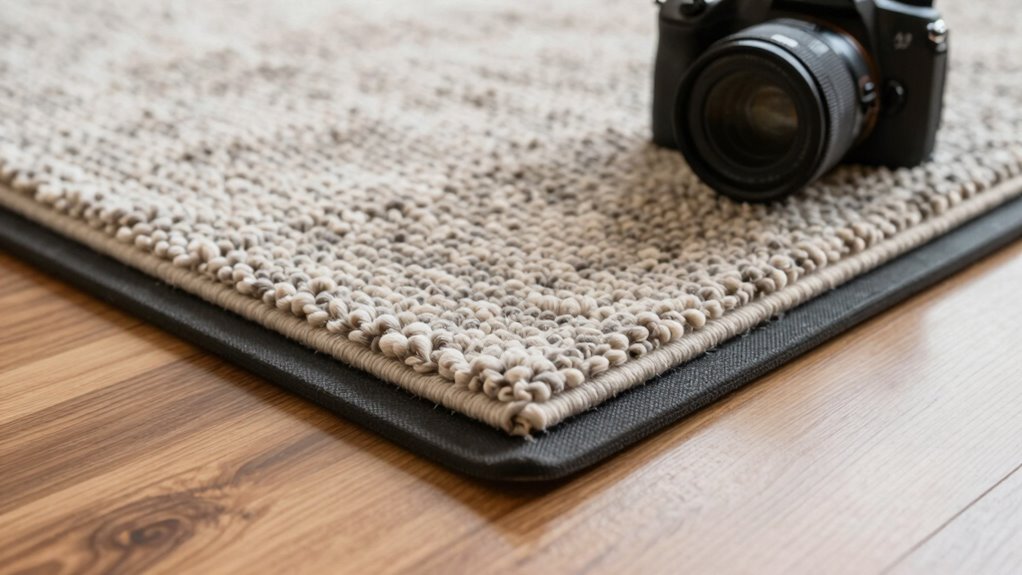
To keep your rug pad safe and effective, regular cleaning is essential to prevent dirt buildup and maintain grip. Make sure you install it correctly, following proper tips to avoid slipping or bunching. By staying on top of these maintenance steps, you’ll guarantee your rug stays secure and in good condition for years to come. Incorporating smart appliance technology can also help monitor and alert you to any safety issues with your rug pad or surrounding area.
Regular Cleaning Practices
Regular cleaning is essential to keep your rug pad safe and effective over time. Neglecting this can lead to mold, dirt buildup, and reduced grip, jeopardizing your area rugs and decorative accents. To maintain ideal performance, follow these simple steps:
- Vacuum the rug pad regularly to remove dust and debris, ensuring it stays clean and safe.
- Spot clean any stains or spills immediately with mild soap and water to prevent damage.
- Periodically remove the rug to inspect the pad for signs of wear or deterioration, replacing it if needed.
Proper Installation Tips
Proper installation plays a key role in ensuring your rug pad remains safe and effective over time. To maximize rug pad durability, make sure it fits snugly beneath your rug without any wrinkles or gaps. A secure fit prevents shifting, which can cause slips or damage. Keep the edges even and aligned with your rug to preserve its aesthetic appeal. Avoid overlapping the pad with the rug’s edges, as this can cause bunching or curling. Use double-sided tape or non-slip rug grips if necessary for added stability. Proper installation not only enhances safety but also extends the lifespan of your rug pad. When installed correctly, your rug stays in place, looks better, and performs ideally for years to come.
Frequently Asked Questions
Can I Use Any Rug Pad on Hardwood Floors?
You can’t use any rug pad on hardwood floors without checking rug pad compatibility. Some pads can damage or stain your floors, so look for ones designed specifically for hardwood protection. Opt for thin, non-slip pads made from breathable materials to prevent moisture buildup. Always verify the product details and choose a pad that offers both safety and compatibility, ensuring your hardwood stays protected and your rug stays in place.
How Often Should I Replace My Rug Pad for Safety?
You should replace your rug pad every 1 to 3 years to guarantee safety. The rug pad lifespan can vary based on usage and material, so regular safety maintenance is key. Check for signs of wear, flattening, or damage, which can cause slips or damage your floors. By replacing your rug pad timely, you maintain a secure, stable surface, preventing accidents and prolonging the life of both your rug and your hardwood floors.
Are There Specific Rug Pad Sizes Recommended for Different Rugs?
You should choose a rug pad size that matches your rug’s dimensions closely for maximum safety and fit. Verify size compatibility so the pad doesn’t slip or bunch up. Consider thickness carefully; a thicker pad offers extra cushioning but might affect stability. For larger rugs, opt for a pad with a non-slip backing. Always measure accurately to select the right size and thickness, enhancing safety and comfort.
Do Eco-Friendly Rug Pads Provide the Same Safety Benefits?
Ever wonder if eco-friendly rug pads are just as safe? They can be, especially when made from eco-friendly materials and backed by safety certifications. These pads often meet rigorous standards for slip resistance and durability, ensuring your safety while protecting the environment. While they might cost a bit more, their safety benefits and sustainability make them a smart choice for conscious homeowners. Are you ready to choose safer, greener options?
Can I Install a Rug Pad Myself Without Professional Help?
You can definitely handle DIY installation of a rug pad, but it’s vital to follow the manufacturer’s instructions carefully. If your rug pad requires specialized tools or has complex features, consider professional assistance to guarantee safety and proper fit. DIY installation saves money and can be straightforward if you’re comfortable with basic tasks. However, for large or tricky rugs, professional help guarantees a secure, safe setup and peace of mind.
Conclusion
Before you pick out a rug pad, remember safety comes first—no need to be a knight in shining armor, risking slips and falls. Use this checklist to find one with the right features, materials, and certifications. Proper installation and maintenance will keep your floors safe for years, just like a well-guarded castle. Don’t rush the process—your floors and family will thank you. Now, go forth and choose wisely!
Fall Picks
fall essentials
As an affiliate, we earn on qualifying purchases.