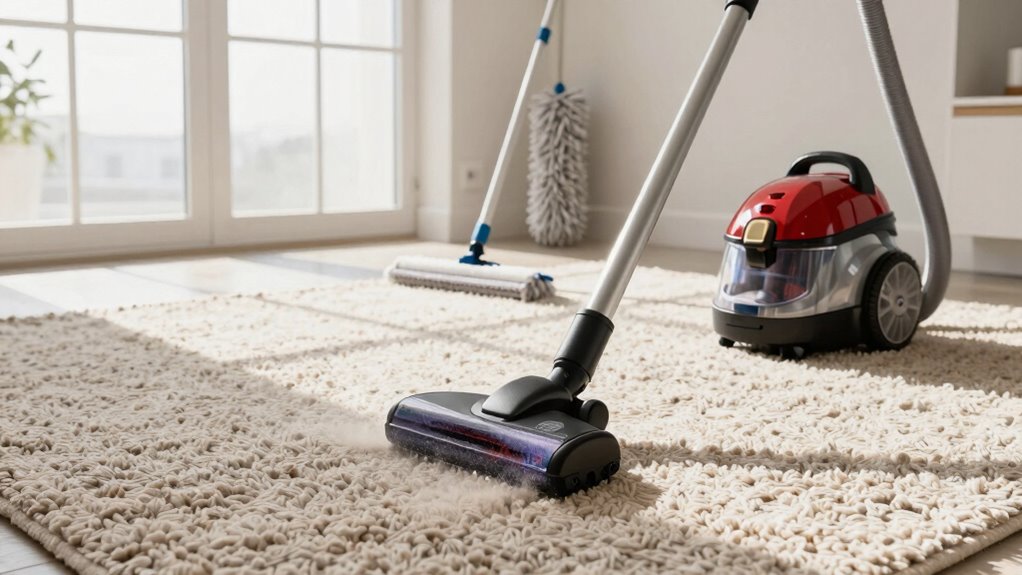

To reduce dust load before it settles into your rugs, regularly dust surfaces with microfiber cloths and dampen them to trap dust instead of dispersing it. Use high-efficiency air purifiers with HEPA filters near common dust sources and keep indoor humidity levels balanced to discourage dust mites and mold. Vacuum often with a HEPA-equipped cleaner, especially in high-traffic areas, and maintain a clean environment. Keep in mind, implementing these tips helps improve air quality and keeps your rugs cleaner longer.

Get furniture and decor delivered free with Prime
- Fast, free delivery on millions of items
- Prime Video, Amazon Music and more included
- Member-only deals all year
Key Takeaways
- Use high-efficiency air purifiers with HEPA filters near rugs and high-traffic areas.
- Regularly vacuum rugs and surrounding surfaces with a HEPA-filter vacuum cleaner.
- Dust nearby surfaces frequently with microfiber or damp cloths to prevent dust settling into rugs.
- Maintain optimal indoor humidity levels to inhibit dust mite and mold growth.
- Implement consistent cleaning routines to reduce dust accumulation before it settles into the fibers.

Dust accumulation can quickly become a nuisance, affecting both your health and the cleanliness of your space. To tackle this issue before dust settles into your rugs, you need to focus on effective dust trapping and air purification. These strategies help keep dust particles in check, preventing them from embedding deep into your flooring and furniture. When dust particles linger in the air, they settle onto surfaces over time, making cleaning more difficult and reducing air quality. By improving air purification, you can notably reduce airborne dust, making your environment healthier and cleaner. Use high-efficiency air purifiers equipped with HEPA filters to trap fine dust particles that traditional filters might miss. These devices draw in air continuously, capturing dust, pet dander, pollen, and other allergens before they settle on surfaces. Proper placement of air purifiers near common dust sources — like the living room or bedrooms — enhances their effectiveness.
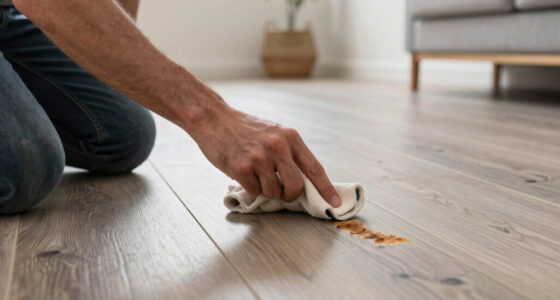
In addition to air purification, dust trapping becomes essential. Regularly dust surfaces with a microfiber cloth or a damp cloth that attracts dust rather than just spreading it around. Microfiber cloths are especially effective because their tiny fibers trap dust particles rather than dispersing them into the air. When cleaning, focus on high-touch areas like doorknobs, light switches, and electronics, which tend to gather dust quickly. Don’t forget to vacuum frequently using a vacuum cleaner with a HEPA filter. This ensures you’re capturing the smallest dust particles, preventing them from re-entering the air or settling into your rugs. Pay special attention to areas near windows and vents, where dust often accumulates more rapidly. Maintaining a clean indoor environment is crucial for reducing dust load and improving overall air quality. Additionally, understanding dust particle size can help you select the most effective cleaning tools and techniques. Implementing dust control measures can further enhance your efforts to keep dust from settling. Maintaining proper humidity levels also discourages dust mites and mold, making dust less persistent.
HEPA air purifier for dust removal
As an affiliate, we earn on qualifying purchases.
As an affiliate, we earn on qualifying purchases.
Frequently Asked Questions
Can Air Purifiers Help Reduce Dust in Rugs?
Yes, air purifiers can help reduce dust in rugs by improving air quality and removing dust particles before they settle. Their efficiency depends on the filter quality, especially for capturing smaller dust particles, which are harder to filter. Choose an air purifier with a HEPA filter, as it effectively traps dust particle sizes down to 0.3 microns. Regular use minimizes dust buildup, keeping your rugs cleaner longer.
How Often Should I Replace HVAC Filters?
You should replace your HVAC filters every one to three months, depending on your home’s dust levels and filter type. Regular air filter maintenance guarantees peak dust trapping methods, preventing dust from circulating. If you have pets or allergies, consider changing filters more frequently. Staying consistent with filter replacements keeps dust out of your home’s air, reducing the load that eventually settles into rugs and improves overall indoor air quality.
Does Humidity Control Affect Dust Accumulation?
Yes, humidity control considerably impacts dust accumulation. When humidity levels are too low, dust becomes airborne more easily, increasing the amount settling on surfaces. Maintaining ideal humidity, around 40-50%, helps with dust prevention by reducing airborne particles and preventing static that attracts dust. Proper humidity management keeps dust from settling into rugs and other surfaces, making cleaning easier and improving indoor air quality.
Are There Specific Cleaning Products Effective Against Dust?
Yes, certain cleaning products are effective against dust. Use allergen-reducing sprays and dust mite mitigation products designed to target microscopic particles. Look for labels indicating they combat allergens and dust mites for better allergen reduction. Regularly using a vacuum with a HEPA filter, combined with these products, helps remove dust, allergens, and mites from surfaces and fabrics, improving indoor air quality and reducing allergen buildup in your home.
What Are the Best Vacuuming Techniques for Dust Removal?
You might think vacuuming is enough, but proper technique matters. Vacuum at least twice a week and focus on high-traffic areas. Use the brush attachment to loosen and lift dust from fibers effectively. Move slowly and overlap each pass to guarantee deep cleaning. Don’t forget to vacuum under furniture and along edges. These techniques can dramatically reduce dust, making your home healthier and cleaner, and dispelling the myth that vacuuming alone is sufficient.
Conclusion
By regularly sweeping and vacuuming, you’re clearing a path through a swirling cloud of dust, preventing it from settling deep into your rugs. Think of each sweep as sweeping away a fog that threatens to settle like a heavy blanket. Keep the air fresh and dust at bay, and your home will feel lighter, brighter—almost as if you’ve lifted a veil of haze. With each simple action, you’re creating a cleaner, healthier space to breathe and relax.
Columbus Day / Indigenous Peoples' Day Picks
long weekend sales
As an affiliate, we earn on qualifying purchases.