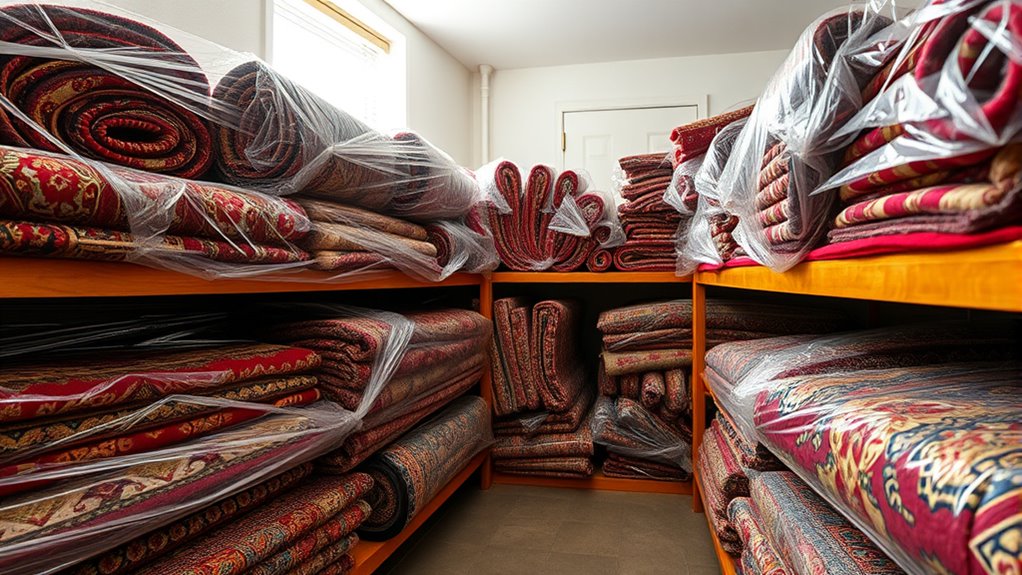

When storing your rugs, choose breathable covers like fabric storage bags or soft cloth wraps instead of non-porous plastic, which can trap moisture and cause damage. Use UV-filtering covers to prevent fading from sunlight, and wrap the rug tightly to keep pests out and maintain its shape. Regularly check your storage setup to guarantee it stays dry and pest-free. To learn more about protecting your rugs effectively, keep exploring these strategies.
Key Takeaways
- Use breathable fabric covers or textile storage bags to prevent moisture buildup and allow airflow.
- Select UV-filtering covers to protect rugs from fading caused by sunlight exposure.
- Wrap rugs with acid-free paper or soft cloth layers to maintain fiber integrity and shape.
- Store rugs in a cool, dry, dark environment with proper ventilation to reduce mold and pest risks.
- Incorporate pest deterrents like cedar blocks or mothballs cautiously, ensuring they do not stain or damage fibers.
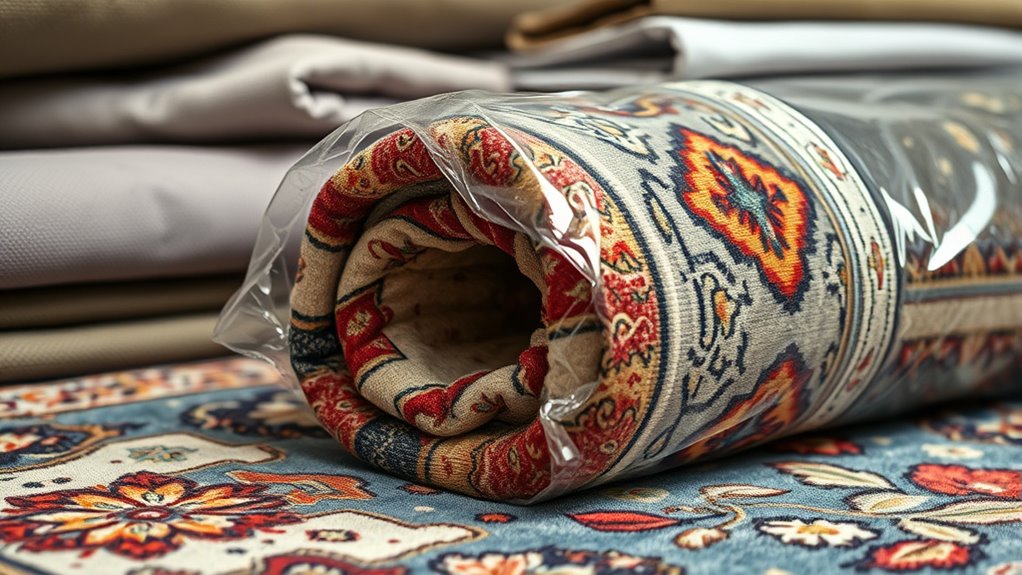
Rugs add warmth and style to your home, but they also require protection to stay looking their best. When storing rugs, using the right covers and wrapping materials is essential to prevent damage over time. One of the most important considerations is UV protection. Exposure to sunlight can cause fading and deterioration of your rug’s fibers, so selecting covers that block or filter UV rays helps preserve their color and texture. Look for storage options that are UV-resistant or made from materials specifically designed to shield against harmful sunlight. This way, your rug remains vibrant and intact, even if it’s stored in a well-lit space.
Protect your rugs from sunlight with UV-resistant covers to maintain their color and texture over time.
Pest prevention is another critical aspect of safeguarding your rugs. Insects like moths, carpet beetles, and silverfish are notorious for damaging fibers, especially if the rug is stored for an extended period. To keep pests at bay, choose covers that are breathable yet pest-proof. Airtight or tightly woven wrapping materials help create a barrier, preventing pests from burrowing into the fibers. Incorporate pest deterrents or repellents into your storage routine—such as cedar blocks or mothballs—if appropriate, but ensure they don’t come into direct contact with the rug to avoid staining or chemical damage. Proper wrapping not only keeps pests out but also helps maintain the rug’s shape and prevents dust accumulation.
When selecting a cover, consider the material’s breathability. Non-breathable plastic can trap moisture, leading to mold and mildew, which can ruin your rug. Instead, opt for breathable fabric covers or special storage bags designed for textiles. These allow air to circulate, reducing moisture buildup, and help prevent mold growth. If you’re wrapping the rug for long-term storage, roll it rather than folding it, as folding can cause creases and weaken fibers over time. Use acid-free paper or a soft cloth between the layers to prevent any transfer of dyes or fibers, keeping your rug in pristine condition. Additionally, consider using portable storage options to facilitate easy handling and relocation.
Finally, ensure the storage space itself is cool, dry, and away from direct sunlight. Properly covering your rug with UV protection and pest prevention in mind is a proactive way to extend its lifespan. Regularly inspect stored rugs for signs of pests or moisture, and re-apply protective measures as needed. Taking these steps makes sure your cherished rugs stay beautiful and durable for years to come.
Frequently Asked Questions
Are There Eco-Friendly Cover Options for Storing Rugs?
Yes, you can find eco-friendly cover options for storing rugs. Look for covers made from biodegradable materials or those that support recycling options. These environmentally conscious choices help reduce waste and minimize your ecological footprint. By selecting biodegradable covers, you guarantee safe storage while being gentle on the planet. Always check product labels for eco-friendly certifications, and consider reusing or recycling your covers when you’re done with them.
How Do Covers Affect Rug Breathability Over Time?
Covers can restrict a rug’s breathability, leading to moisture retention underneath. This trapped moisture increases the risk of mold development over time, which can damage the fibers and cause odors. To protect your rug, choose breathable covers that allow air circulation. Regularly check the stored rug for signs of moisture or mold, and guarantee the storage area remains dry to maintain your rug’s quality and longevity.
Can Protective Covers Prevent Pest Infestations?
Yes, protective covers can prevent pest infestations if they act as a pest deterrent and have high cover durability. You should choose covers made from materials that pests can’t chew through or penetrate, like thick plastic or tightly woven fabric. Ensuring the cover fits well and remains intact over time helps keep pests out. Regularly inspect and replace covers when they show signs of wear to maintain effective pest protection.
What Are the Best Storage Conditions Inside Covers?
You should store your rugs in a climate-controlled environment inside durable covers. Maintain consistent temperature and humidity levels to prevent mold, mildew, and fiber damage. Guarantee the cover is sturdy enough to protect against dust, pests, and moisture. Avoid direct sunlight, which can fade colors. Proper climate control and cover durability work together to keep your rugs in excellent condition, preventing deterioration over time.
Do Covers Impact the Longevity of Different Rug Materials?
Yes, covers can impact the longevity of different rug materials. If you choose covers with UV protection, they’ll shield your rugs from sunlight that causes fading and deterioration. Additionally, good covers prevent mold by controlling moisture, especially in humid environments. Make sure your covers are breathable and properly fitted to avoid trapping humidity, which helps preserve your rugs’ vibrant colors and fibers over time.
Conclusion
In essence, using protective covers and wrapping materials keeps your rugs safe from dust, moisture, and damage, much like a knight shields a castle. Don’t forget, even in this digital age, a well-wrapped rug is your best defense—think of it as your rug’s personal suit of armor. So, take the time now; your future self will thank you when your cherished rug stays pristine, just like a treasured relic from an ancient tapestry.