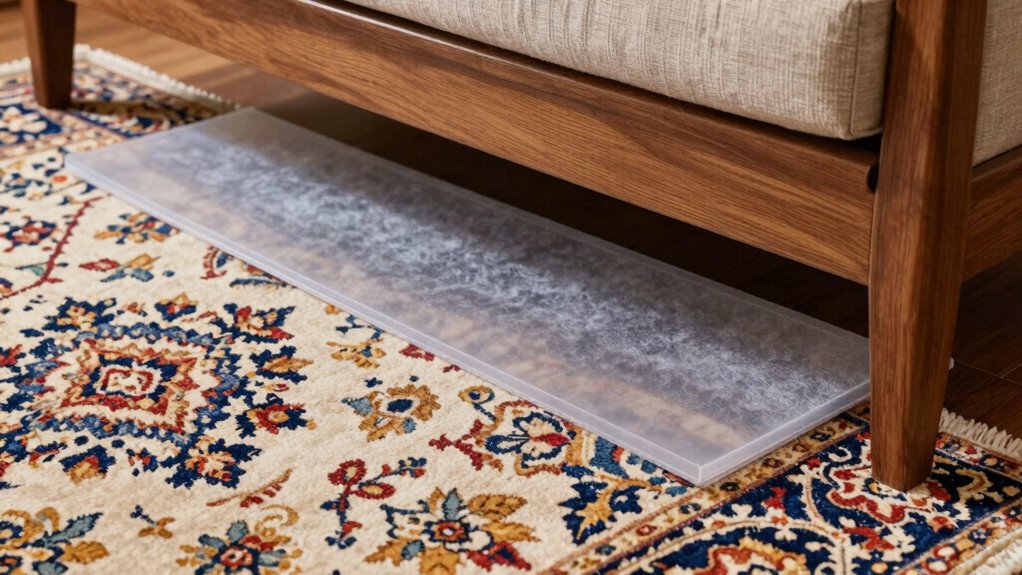
To safeguard your rugs under heavy furniture, use high-quality padding like dense felt or rubber pads placed directly beneath the furniture’s legs or corners. Make sure the padding covers the entire contact area to distribute weight evenly and prevent crushing or indentations. Regularly reposition your furniture and lift rather than drag it to avoid long-term damage. If you want to keep your rugs looking their best longer, there’s more to take into account for effective protection.

Get furniture and decor delivered free — and shop member deals
- Fast, free delivery on millions of items
- Access to Prime Big Deal Days deals on October 6–7
- Prime Video, Amazon Music and more included
Key Takeaways
- Use high-quality, dense felt or rubber pads directly under furniture legs or corners.
- Ensure pads are large and continuous or multiple to distribute weight evenly.
- Avoid thin or flimsy padding that lacks support and durability.
- Regularly re-position furniture to prevent deep impressions and uneven wear.
- Lift furniture when moving to prevent dragging and damage to both rug and padding.
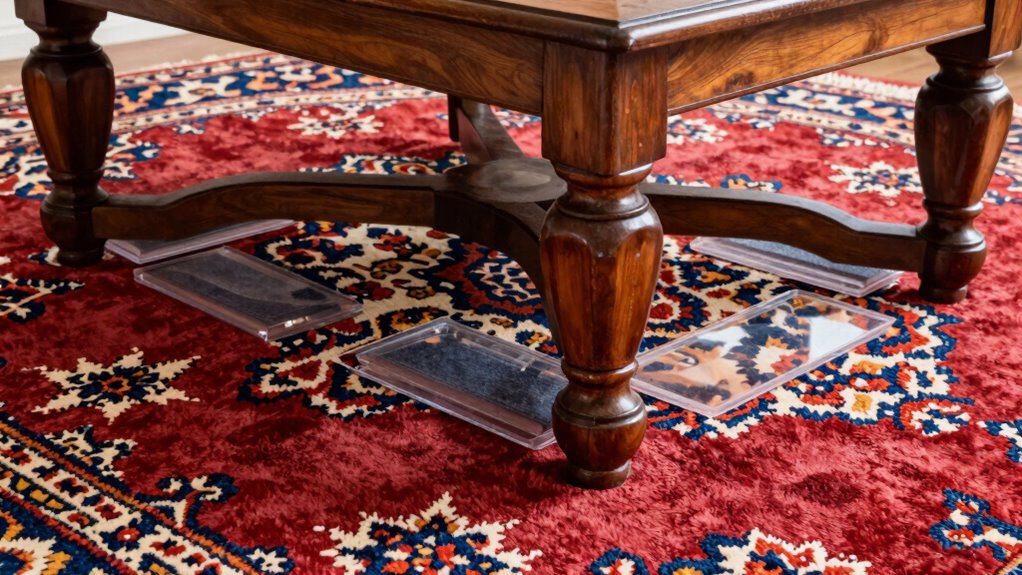
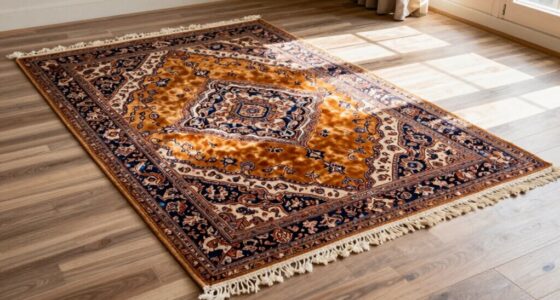
Heavy furniture can quickly damage your rugs by causing crushing, indentations, or tears, especially if they’re not protected. When you place large pieces like sofas, beds, or dressers directly on your area rugs, the weight can press down on the fibers, leading to permanent indentations that ruin the rug’s appearance. Over time, this pressure can even cause fibers to weaken or break, making your beautiful area rugs look worn out before their time. To prevent this damage, it’s crucial to use proper protection methods, starting with adding furniture padding underneath heavy furniture. Furniture padding acts as a cushion, absorbing some of the pressure and distributing the weight more evenly across the rug’s surface. This simple step can make a significant difference in maintaining the integrity and look of your area rugs.
When selecting furniture padding, opt for high-quality, dense felt pads or rubber pads designed specifically for use under furniture. These pads not only protect your rugs but also help prevent slippage, ensuring your furniture stays in place. Place the padding directly under the legs or corners of heavy furniture to target the areas that exert the most pressure. Avoid using thin or flimsy pads, as they won’t provide enough support and can still allow indentations to form. If you have a large piece of furniture with a broad base, consider using a large, continuous pad or multiple smaller ones strategically positioned to cover the entire contact area. This ensures even weight distribution and reduces the risk of damage. Additionally, understanding the importance of biodiversity in our environment can remind us to protect all aspects of our living spaces, including your home furnishings. Recognizing the impact of heavy furniture on rugs can help you make better choices when arranging your space. Incorporating proper ventilation in your home can also help maintain the condition of your rugs by reducing humidity that might contribute to fiber deterioration. Moreover, using protective pads can extend the lifespan of both your rugs and furniture by minimizing wear and tear from movement and weight. Being mindful of furniture placement can further help prevent uneven pressure and damage over time.
In addition to furniture padding, you can also consider placing protective mats or rugs under particularly heavy or frequently moved furniture pieces. These mats act as an extra layer of protection, making it easier to lift or slide furniture without dragging it directly across the surface of your area rugs. Regularly repositioning furniture can also help prevent deep impressions from forming in the same spots continuously. If you’re redecorating or rearranging your space, lift and move furniture properly rather than dragging it, which can tear or fray your rugs. Maintaining an awareness of how much weight is placed on your rugs and taking proactive steps with padding and protective measures will help preserve their beauty and longevity for years to come.
As an affiliate, we earn on qualifying purchases.
Frequently Asked Questions
How Often Should I Check Rug Protection Under Heavy Furniture?
You should check your rug protection under heavy furniture every few months. Regular furniture rearrangement helps prevent permanent dents and uneven wear, so it’s a good idea to adjust your furniture occasionally. When you check, look for signs of damage or dirt buildup. If needed, do rug cleaning to maintain its appearance and longevity. Staying proactive guarantees your rug stays protected and looks great for years to come.
Can I Use DIY Methods to Protect Rugs From Heavy Furniture?
Yes, you can use DIY methods to protect rugs from heavy furniture. Focus on proper furniture placement to evenly distribute weight and prevent indentations. Use inexpensive solutions like felt pads or furniture coasters under heavy legs, which makes rug maintenance easier and prevents damage. Regularly check and reposition furniture to avoid permanent marks. These simple DIY tips help maintain your rug’s appearance and prolong its lifespan effectively.
Are There Specific Materials Best for Rug Protection Under Heavy Items?
When choosing materials for rug protection under heavy furniture, focus on flexibility and durability. Protective padding options like felt pads, foam sheets, or rubber coasters are ideal because they offer excellent material compatibility, preventing damage and slipping. Opt for dense, dense padding that distributes weight evenly, reducing pressure points. Combining these materials guarantees your rug stays pristine, providing sturdy support while safeguarding your floor from heavy furniture’s harsh impact.
How Do I Prevent Mold or Mildew Under Heavy Furniture?
To prevent mold or mildew under heavy furniture, use rug padding combined with moisture barriers. First, choose a thick, breathable rug padding to allow air circulation. Then, add a moisture barrier, like a plastic sheet or specialized pad, to block humidity from reaching the rug. Regularly lift the furniture to check for trapped moisture and keep the area well-ventilated, ensuring your rug stays dry and mold-free.
Will Rug Protection Damage the Furniture or Floor?
Did you know that improper rug padding can cause damage in up to 30% of homes? Rug padding designed for heavy furniture distributes weight evenly, preventing dents and scratches. Using quality padding won’t damage your furniture or floor; it actually protects both by reducing friction and pressure. Just make certain you choose the right padding type for your specific flooring and furniture weight, and you’ll keep everything safe and intact.
Conclusion
By taking these simple steps, you’re like a skilled gardener tending to your delicate blooms, shielding your rugs from the weight of heavy furniture. Think of the rug as a treasure chest, and your furniture as the unwelcome storm—your protection methods are the sturdy shield that keeps your treasure safe and vibrant. With a little effort, your rugs will stay lush and lively, standing proud like a fortress of comfort under your furniture’s quiet reign.
Fall Picks
fall essentials
As an affiliate, we earn on qualifying purchases.