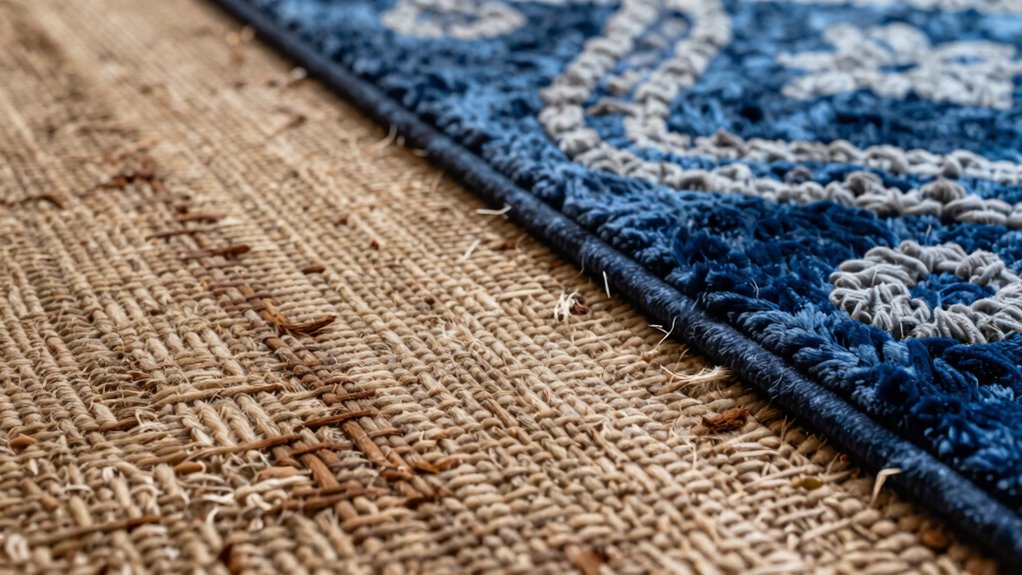

Hallway runners need different care than room-sized rugs because they face higher foot traffic and dirt buildup. You should vacuum them 2-3 times a week and schedule deep cleanings every six months to prevent grime and wear. The constant exposure to dust, crumbs, and mud makes regular cleaning essential to keep their appearance and longevity. Understanding their material and choosing eco-friendly products can also help them stay in great shape longer. Keep going to learn more tips.
Key Takeaways
- Hallway runners face higher foot traffic, requiring more frequent cleaning to prevent dirt buildup and maintain appearance.
- Constant exposure to dirt and debris causes faster wear, so they need tailored cleaning schedules.
- Material durability and cleaning methods must be adapted to handle the daily stress of hallways.
- Deep cleaning is essential every six months to remove embedded grime and preserve fiber integrity.
- Eco-friendly cleaning products are recommended to protect both the runner and the environment from chemical damage.
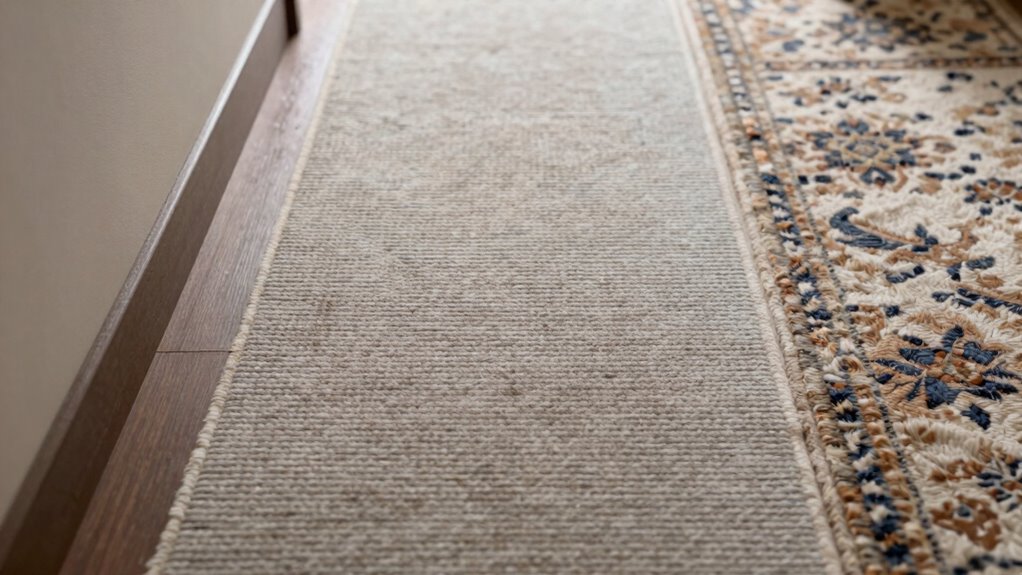
While hallway runners may seem similar to room rugs, they actually require different care to stay looking their best. The key differences come down to cleaning frequency and material resilience, areas where understanding the unique demands of a runner can make all the difference in maintaining its appearance and longevity.
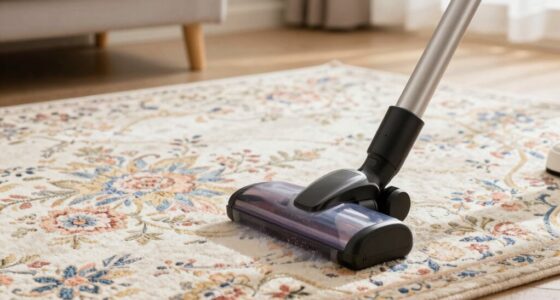
Hallway runners experience more foot traffic than most room rugs, which means they get dirty faster. As a result, you need to consider cleaning frequency carefully. Regular vacuuming—at least two to three times a week—is essential to prevent dirt and debris from embedding deep into the fibers. Unlike a rug tucked away in a seldom-used room, a runner in a busy corridor is constantly exposed to dust, crumbs, and even mud tracked in from outside. Skipping frequent cleanings can lead to a buildup of grime that dulls the colors and accelerates wear. For high-traffic areas, more frequent deep cleaning, such as professional steam cleaning or spot treatments, might be necessary every six months to keep the runner fresh and inviting. Additionally, choosing appropriate cleaning methods based on the material’s properties can help extend its lifespan. Being aware of material durability also aids in selecting cleaning techniques that won’t cause unnecessary damage, further preserving your runner’s condition over time. Regular maintenance suited to the traffic level can significantly prolong the appearance and functionality of your hallway runner, especially when considering biodiversity-friendly cleaning products that are safer for the environment.
As an affiliate, we earn on qualifying purchases.
Frequently Asked Questions
Can Hallway Runners Be Safely Washed in a Regular Washing Machine?
Hallway runners usually can’t be safely washed in a regular washing machine because of washing machine limitations and their size. Most runners are too large or delicate for standard machines. Instead, you should use suitable cleaning methods like spot cleaning, gentle hand washing, or professional cleaning. Always check the care label first, and avoid machine washing unless it’s specifically labeled as safe, to prevent damage and guarantee proper maintenance.
How Often Should I Replace My Hallway Runner for Optimal Appearance?
Think of your hallway runner as a loyal companion who endures daily adventures. To keep it looking fresh, replace it every 3-5 years, depending on foot traffic and wear and tear. High traffic areas wear down faster, making replacement sooner ideal. Regular cleaning prolongs its life, but once signs of fraying, fading, or permanent stains appear, it’s time for a new one. Your hallway deserves a vibrant, well-maintained look.
Are There Specific Cleaning Products Best Suited for Hallway Runners?
You should choose eco-friendly cleaning products that are gentle yet effective for your hallway runner, avoiding harsh chemicals. Look for stain-resistant treatments that help prevent stubborn spots and keep your runner looking fresh longer. Regularly vacuum and spot clean with natural solutions like vinegar and water. These eco-friendly options and stain-resistant treatments protect your hallway runner’s fibers, ensuring it stays clean, vibrant, and durable without damaging the environment.
Can Hallway Runners Be Used Outdoors or in High-Moisture Areas?
Hallway runners aren’t ideal for outdoor or high-moisture areas because they lack outdoor durability and moisture resistance. Exposure to rain, snow, or humidity can cause them to warp, fade, or develop mold. If you want a runner for such spaces, choose one specifically designed with weather-resistant materials. This guarantees longevity and keeps your space safe and clean without worrying about damage from moisture or outdoor elements.
Do Hallway Runners Require Special Padding or Underlayments?
Yes, hallway runners often require special padding or underlayments. They improve durability considerations by providing extra support, reducing wear, and preventing slipping. When choosing padding, consider material compatibility to guarantee it works well with your runner’s fabric and backing. Proper underlayments also help absorb impact and maintain the rug’s shape, making your hallway safer and extending the life of your runner.
Conclusion
Remember, hallway runners face more foot traffic and dirt than room-sized rugs, so they need special care. Don’t think a quick vacuum is enough—regular deep cleaning preserves their look and longevity. Some might say it’s too much effort, but investing in proper care keeps your home beautiful and your runners durable. It’s worth it to maintain your space’s charm and save money in the long run. After all, a well-cared-for runner reflects your attention to detail.