
To prevent dye bleed during home laundry, start by sorting your clothes carefully—separate whites, lights, and darks—and wash new garments separately until you’re sure they won’t bleed. Always use cold water and a gentle, color-safe detergent, and consider adding a color catcher sheet to trap loose dyes. Handle stains promptly and avoid overloading your machine. If you’re interested in more tips, you’ll find useful strategies to keep your clothes vibrant and stain-free.
Key Takeaways
- Always separate clothes by color and wash new garments separately to prevent dye transfer.
- Use cold water and gentle, color-safe detergents to maintain dye stability during washing.
- Handle stains promptly with cold rinsing and appropriate stain removers to minimize dye bleeding.
- Dry clothes inside out on low heat and consider using Color Catcher Sheets to absorb loose dyes.
- Regularly clean washing machine filters and maintain proper machine settings to reduce residual dye buildup.
Understanding the Causes of Dye Transfer
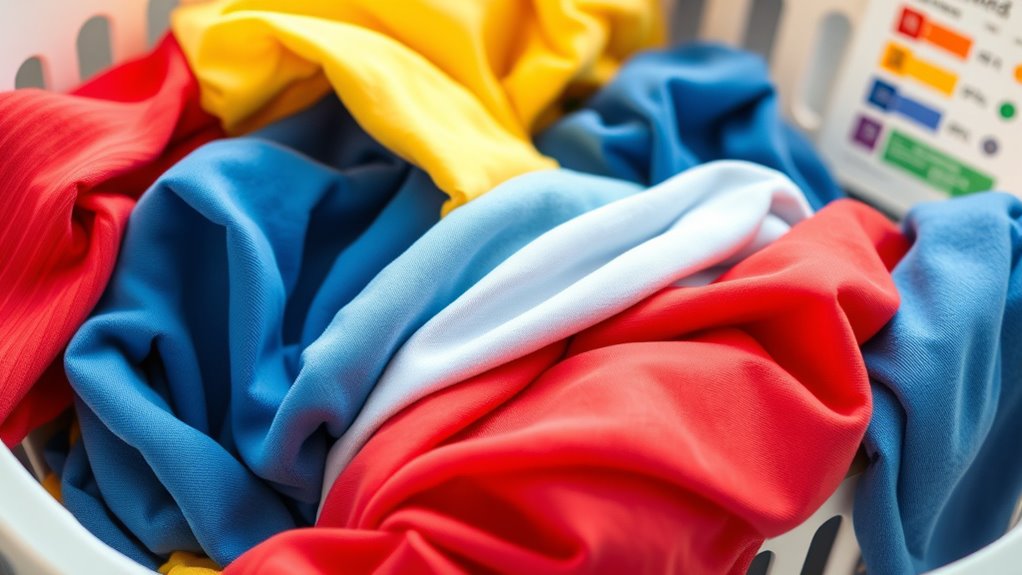
Dye transfer occurs when loose or unstable dyes from one fabric seep out during washing and stain other clothes. This usually happens because of issues with fabric fiber or dye stability. Some fabrics have fibers that easily release dye if they aren’t tightly woven or treated properly. If the dye isn’t stable within the fiber, it can easily break free during the wash cycle. Bright or dark-colored textiles are more prone to bleeding because their dyes tend to be less stable. Additionally, washing at high temperatures or using harsh detergents can weaken the dye-fiber bond, increasing the risk of dye transfer. Understanding how fabric fiber and dye stability interact helps you choose better laundry practices, ultimately preventing unwanted dye bleed and keeping your clothes looking their best.
Sorting Clothes Properly Before Washing
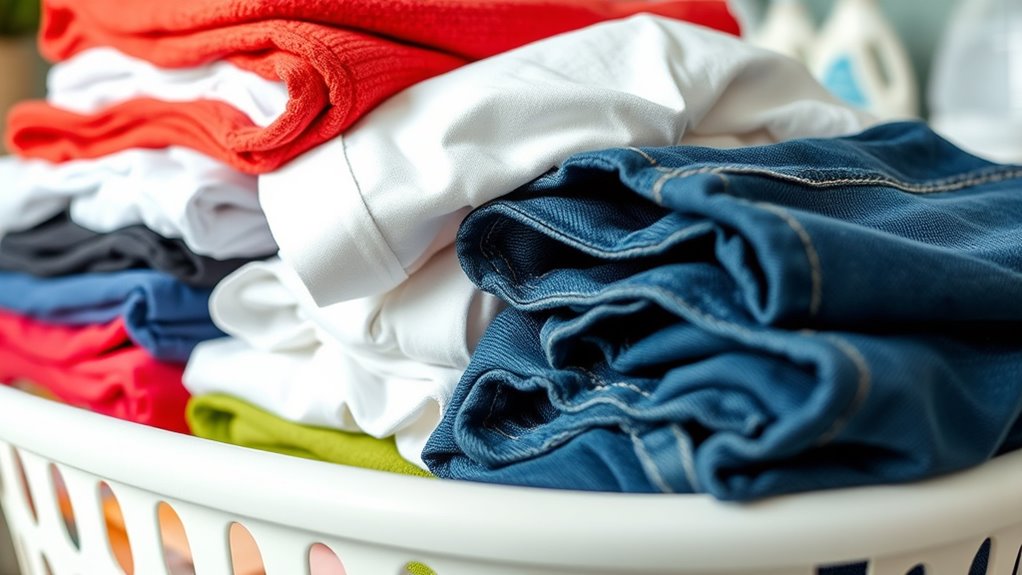
Properly sorting your clothes before washing is the first step in preventing dye transfer. Start by separating items based on color and fabric type. Always keep whites, light colors, and darks apart to avoid accidental dye bleed. Use laundry baskets to organize clothes, making sorting easier and more efficient. Check labels for instructions on fabric softeners, which can affect dye retention, and avoid mixing heavily dyed items with delicate fabrics. For added protection, wash new clothes separately until you’re sure they won’t bleed. Remember, sorting isn’t just about color—separating heavy fabrics like towels from lighter shirts reduces friction and dye transfer. Taking these simple steps helps preserve your clothes’ colors and keeps your laundry looking fresh. Additionally, understanding kitchen appliance maintenance can help you care for your washing machine, ensuring it functions properly and reduces the risk of dye transfer caused by machine issues. Proper care of your washing machine’s drainage system can also prevent residual dyes from contaminating future loads. Regularly inspecting and cleaning the washing machine filter can further minimize dye residue buildup and improve overall performance. Being aware of automated laundry cycles can help you choose the best wash settings to prevent color bleeding and protect your garments.
Using Cold Water for Delicate Colors
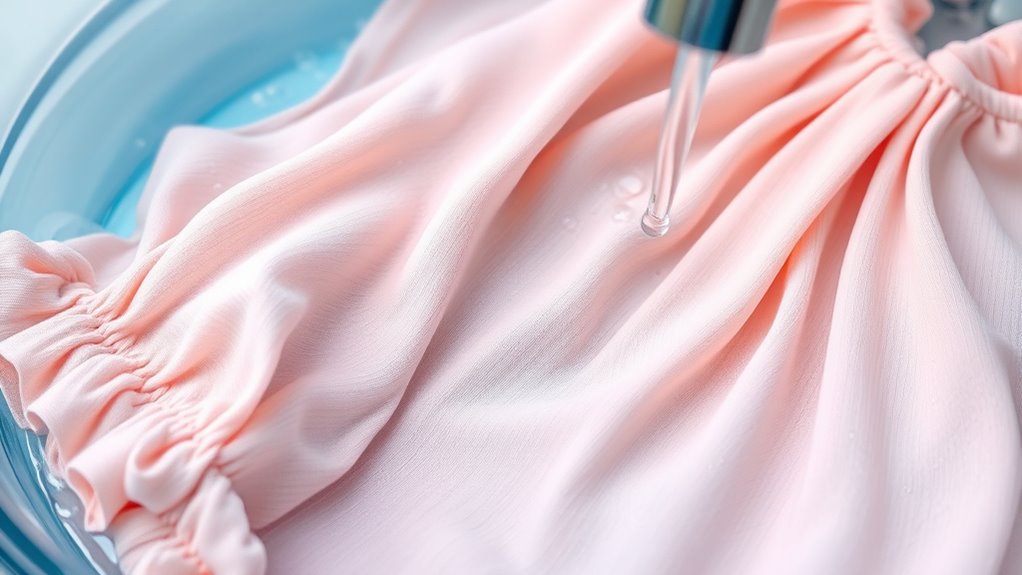
Washing delicate colors in cold water helps keep their vibrancy intact. It also minimizes the chances of dye bleeding onto other fabrics. By choosing cold water, you protect your clothes and extend their bright appearance.
Preserves Color Integrity
To keep delicate colors vibrant and prevent bleeding, washing with cold water is highly effective. Cold water helps maintain dye stability, reducing the chance of colors fading or running. It also slows down fabric absorption, minimizing dye leaching during the wash. By choosing cold water, you preserve the original hue and intensity of your garments, ensuring they look new longer. Additionally, using cold water can help prevent the dye molecules from loosening, maintaining color integrity more effectively. Cold water also helps to reduce dye transfer between fabrics, which can cause unintended color mixing. Consider these points:
- Cold water prevents dye molecules from loosening, maintaining color integrity.
- It reduces the risk of fabric absorption that causes dye transfer.
- Less agitation with cold water helps keep dyes securely in place.
- Using cold water supports gentle cleaning without damaging delicate fibers.
Implementing cold water in your routine keeps your clothes looking vibrant and color-true over time.
Reduces Dye Transfer
Using cold water considerably reduces dye transfer between garments, especially for delicate colors prone to bleeding. Cold water helps prevent dyes from loosening and migrating during washing, keeping colors vibrant and intact. When washing, skip hot water cycles and opt for cold instead, which minimizes dye leaching. To further protect your clothes, use gentle fabric softeners designed for delicate fabrics, as they help reinforce fibers and reduce dye release. If stains appear, choose stain removers formulated for color preservation, avoiding harsh chemicals that might loosen dyes. Additionally, selecting appropriate wash cycles can further minimize dye bleeding by providing gentle agitation and optimal water temperature. Proper cycle selection and understanding industry trends can boost your laundry results.
Given the evolving nature of laundry technologies, staying informed about latest innovations can help you select the best practices for color care. By combining cold water with proper stain removers and fabric softeners, you significantly decrease the risk of dye transfer, keeping your clothes looking fresh and vibrant after every wash.
Choosing the Right Detergent and Additives
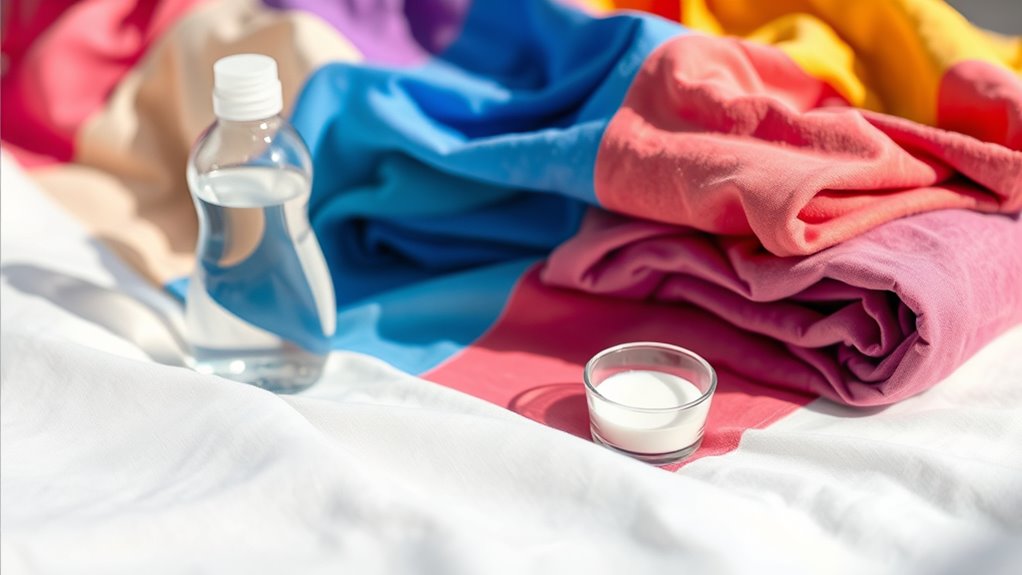
Choosing the right detergent is key to preventing dye bleed, so opt for gentle, color-safe options. These detergents help protect your fabrics and keep colors vibrant. Additionally, consider using color-safe additives to enhance protection during each wash. Embracing artistic expression and creativity in your laundry routines can also help you develop more mindful and effective ways to care for your clothes.
Selecting Gentle Detergents
Selecting gentle detergents is essential for preventing dye bleed during home washing. Look for products labeled as mild or designed for delicate fabrics, as these are less likely to cause color transfer. When choosing your detergent, consider options that include:
- Fabric softeners that are dye-free and gentle on colors
- Detergents with low or no bleach content
- Bleach alternatives, such as oxygen-based cleaners
- Formulas specifically made for color preservation
Avoid harsh chemicals that can weaken fabric dyes and increase bleeding risk. Using a gentle detergent helps maintain fabric integrity and vibrant colors. Proper fabric care is also important to prevent dye transfer and prolong the life of your clothing. Incorporating detergents with positive customer reviews can further ensure effective and safe cleaning. Remember, the right detergent can make all the difference in preventing dye transfer and keeping your clothes looking fresh and bright longer. Always check labels to ensure they’re safe for your delicate or color-sensitive items.
Using Color-Safe Additives
To prevent dye bleed effectively, you should incorporate color-safe additives into your laundry routine. Using fabric softeners designed for color preservation can help reduce friction, which minimizes dye transfer between fabrics. Look for softeners labeled as safe for colored clothes, as they help maintain fabric integrity. Additionally, consider bleach alternatives that brighten your whites without damaging dyes or causing bleeding. These alternatives are gentler and help preserve the original colors of your garments. Always read product labels carefully to ensure compatibility with colored fabrics. Incorporating the right fabric softeners and bleach alternatives is a simple yet effective strategy to prevent dye bleed and keep your laundry looking fresh. Recognizing soulmate angel numbers can also be a helpful sign of positive love connections on the horizon. Proper fabric care techniques are essential for protecting your clothing investments and maintaining vibrant colors over time. Paying attention to color preservation tips can further enhance your efforts to maintain the vibrancy of your clothing. Understanding clothing dye chemistry can help you choose the most effective products for preventing color transfer.
Applying Color Catcher Sheets to Prevent Bleeding
Applying color catcher sheets is a simple yet effective way to prevent dye transfer during laundry. These sheets absorb loose dyes released during washing, helping to maintain fabric dyeing and color fastness. To use them, toss a sheet into your washing machine with your clothes. They work best with mixed loads or new garments that may bleed. Using a color catcher sheet can also be especially helpful in preventing dye bleed when washing new or brightly colored clothes. Additionally, choosing color-safe detergents can enhance the effectiveness of these sheets. Proper laundry practices contribute to better dye retention and prevent color transfer. When combined with gentle washing cycles, the sheets provide even better protection against dye bleed. Here are some tips:
- Use a sheet for each load with colorful or new clothing
- Avoid overloading the washer for better dye absorption
- Wash on a gentle cycle for delicate fabrics
- Replace sheets if you’re doing multiple loads
Color catcher sheets are a practical solution to protect your clothes from dye bleed, especially when you’re unsure about fabric dyeing stability. They help preserve your clothing’s vibrant colors and prevent unwanted dye transfer.
Washing New Garments Separately or With Similar Colors

Washing new garments separately or with similar colors is one of the most effective ways to prevent dye bleeding. When you wash brightly colored or dark clothing with lighter items, dye bleeding can occur, staining your other clothes. By grouping items with similar hues, you reduce the risk of color transfer, ensuring better garment protection. This approach minimizes dye leakage during the wash cycle, especially for new clothes that haven’t been colorfast tested yet. Always check labels for colorfastness and consider washing new items alone initially. Using cold water also helps preserve colors and prevent dye from bleeding. Additionally, choosing appropriate detergents formulated for color protection can further help maintain clothing vibrancy. Taking these precautions helps maintain your clothes’ appearance and prolongs their life, saving you time and effort on stain removal or re-dyeing. Being aware of dye stability can further help you choose the best washing practices to prevent color run issues, and understanding how modern toilet technology can enhance bathroom hygiene makes your routine more efficient.
Avoiding Overloading the Washing Machine
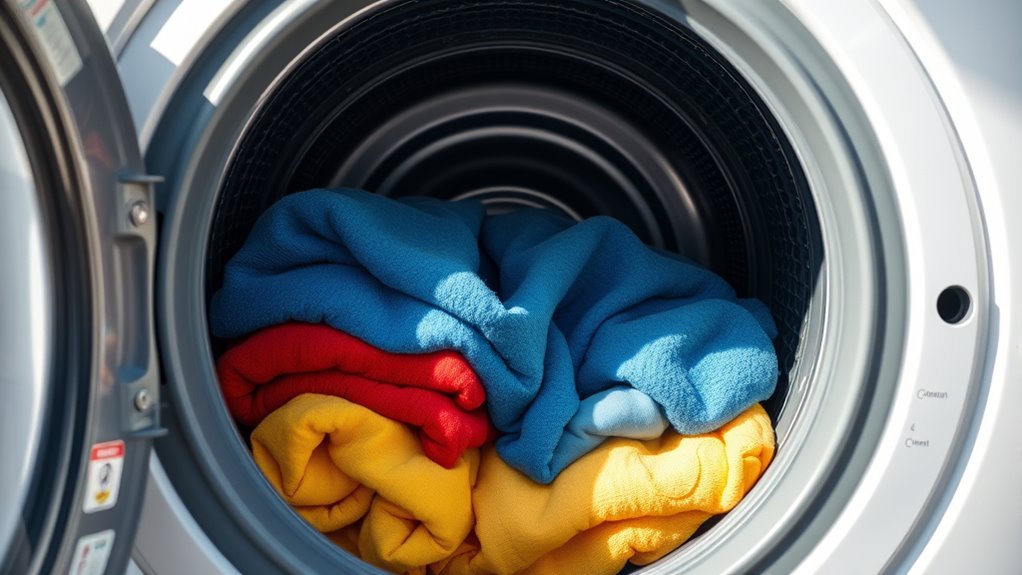
Overloading your washing machine can lead to increased dye transfer and ineffective cleaning, as clothes don’t have enough space to move freely. To prevent dye bleed, avoid packing it too full. Instead, follow these tips:
- Leave enough room for clothes to tumble freely, ensuring proper detergent distribution.
- Choose the right amount of proper detergent based on load size and fabric type.
- Consider garment fabrics; delicate or dark fabrics benefit from gentle cycles and less agitation.
- Separate heavily dyed items from whites and light colors to minimize dye transfer.
Handling Stains and Spills Promptly
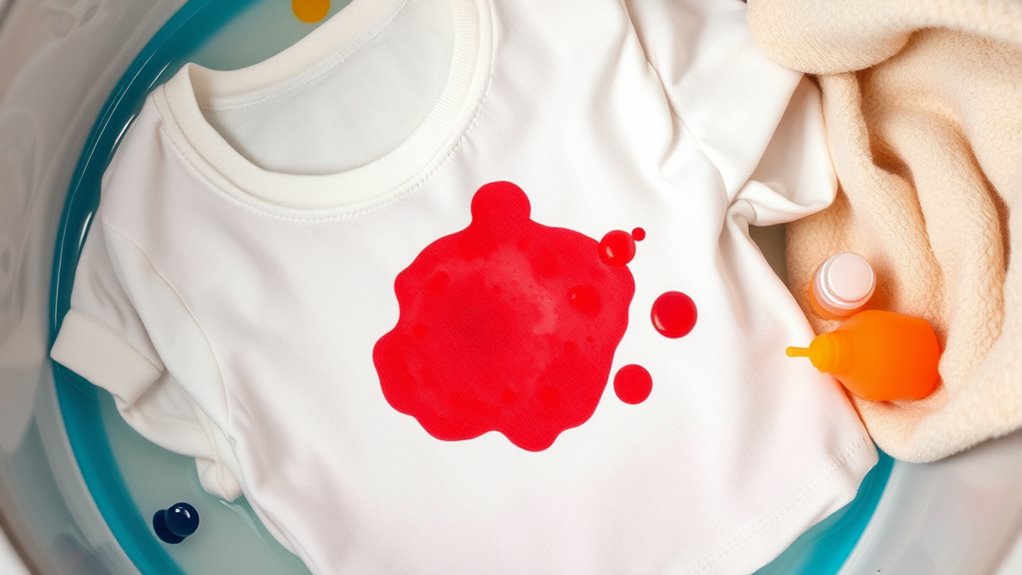
When a stain or spill occurs, quick action is essential to prevent it from setting and causing permanent damage. Prompt stain removal and spill cleanup can save your clothes and keep colors vibrant. First, blot the spill gently with a clean cloth—don’t rub, as that spreads the stain. Use this table to guide your response:
| Spill Type | Immediate Action | Follow-up |
|---|---|---|
| Coffee or tea | Blot with cold water | Apply stain remover if needed |
| Juice or soda | Rinse with cold water | Wash promptly |
| Oil or grease | Sprinkle baking soda | Use stain remover afterward |
| Ink or dye | Dab with rubbing alcohol | Wash with detergent |
| General spills | Blot and rinse quickly | Repeat if necessary |
Handling stains swiftly minimizes dye transfer and preserves garment color.
Tips for Drying Clothes to Prevent Color Transfer
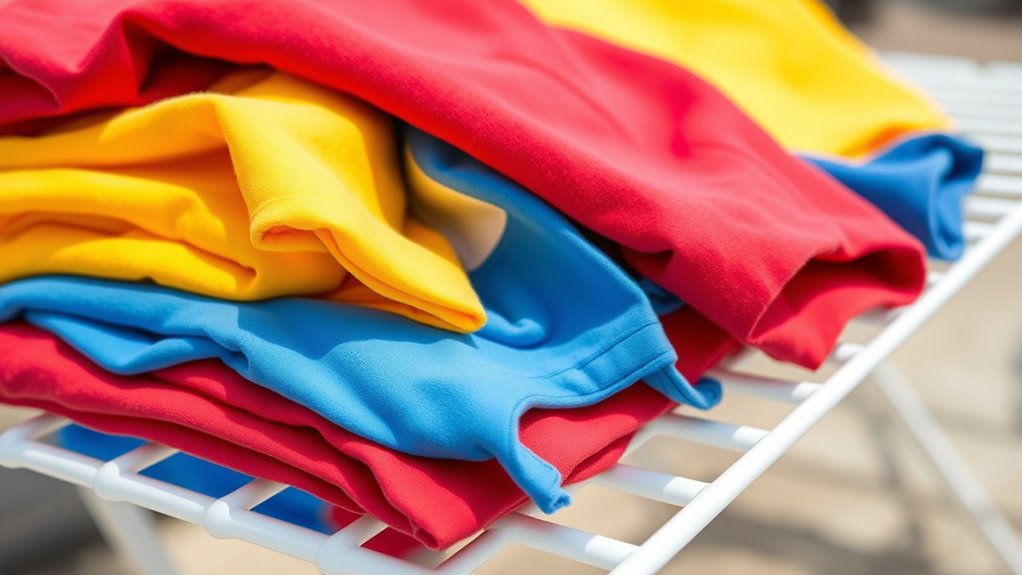
After addressing stains promptly, the way you dry your clothes can considerably impact color transfer. To prevent dye bleed, use proper drying techniques. First, avoid high heat, as it can set colors and cause bleeding. Instead, opt for air drying or low-heat settings. Consider hanging clothes inside out to protect colors. Using fabric softeners in the wash can also help reduce static and fiber friction, lessening dye transfer during drying. Additionally, lay delicate items flat to prevent stretching and color fading. Keep whites and colors separate to avoid cross-transfer. Always make sure clothes are thoroughly dry before folding or storing. Incorporate these drying techniques and fabric softeners tips into your routine to help keep colors vibrant and prevent dye bleed.
Frequently Asked Questions
Can Fabric Softeners Affect Dye Transfer?
Fabric softener interactions can influence dye transfer during washing. When you use fabric softeners, they create a coating on clothes that can sometimes trap loose dye particles, increasing the risk of dye transfer. To improve dye transfer prevention, consider skipping softeners on new or brightly colored garments. Instead, opt for cold water washes and gentle detergents to help preserve dye integrity and reduce color bleeding.
How Does Water Ph Influence Dye Bleeding?
Did you know that pH balance critically impacts dye bleeding? When water is too acidic or alkaline, it can weaken dye bonds, causing colors to fade or transfer. Maintaining a neutral pH helps guarantee proper color fixation, reducing dye bleed. By controlling water pH during washing, you support stronger dye bonds, preserving your clothes’ vibrant colors and preventing unwanted color transfer. Always check your water’s pH for ideal fabric care!
Are There Natural Remedies to Set Colors?
You can try natural remedies for color fixation to set colors effectively. Using natural dyes like turmeric, indigo, or beetroot can help, as they often produce vibrant, lasting hues. To improve color fixation, soak your fabrics in a mixture of salt or vinegar before washing. These natural solutions help lock in the dye, reducing bleeding. Remember, proper pre-treatment enhances color retention, making your clothes stay bright longer.
How Often Should I Replace Color Catcher Sheets?
You should replace color catcher sheets after each laundry load, especially if you’re washing multiple dark or bright items. Conducting colorfastness testing helps determine if the sheets are still effective. Also, choose a gentle laundry detergent suited for color preservation. When sheets become full of dye, they lose their ability to trap color, so replacing them guarantees your clothes stay vibrant and prevent dye transfer during future washes.
Do Different Washing Machine Types Impact Dye Transfer?
Sure, your fancy new washer might seem like the hero, but it can actually impact dye transfer more than you think. Different machine types, from top loaders to front loaders, affect how water and detergent circulate, influencing dye bleed. Even your chosen wash cycle matters—longer, hotter cycles increase color transfer risk. So, don’t be fooled; your machine’s type and settings really do play a role in keeping colors vibrant and separate.
Conclusion
By following these simple tips, you can keep your clothes looking fresh and vibrant, just like a bouquet of freshly picked flowers. Remember to sort carefully, use cold water, and choose the right products. With a little attention, you’ll prevent dye bleed and enjoy spotless, colorful laundry every time. Think of your washing routine as a dance—when you move in sync, everything stays perfectly in tune. Happy washing!