Many cleaning products can damage marble, but not all cause instant etching. Harsh chemicals, acids, and abrasives are the main culprits, especially if used improperly or left on surfaces. Proper maintenance involves using pH-neutral cleaners, sealing, and quick spill cleanup. To keep your marble looking its best, avoiding risky substances like vinegar or lemon juice is key. For more tips on how to protect and care for your marble, keep exploring these essential facts.
Key Takeaways
- Not all cleaners cause instant damage; many household products can harm marble if they contain acids or harsh chemicals.
- Acidic substances like vinegar or lemon juice can etch marble, but proper sealing and quick cleanup prevent immediate damage.
- Using pH-neutral, marble-specific cleaners minimizes the risk of etching and maintains the surface’s shine.
- Regular sealing creates a barrier that protects marble from acids and spills, reducing the chance of instant etching.
- Proper cleaning practices, such as avoiding abrasive scrubbers and acidic products, help preserve marble’s appearance and prevent damage.
Do All Cleaners Damage Marble Instantly?
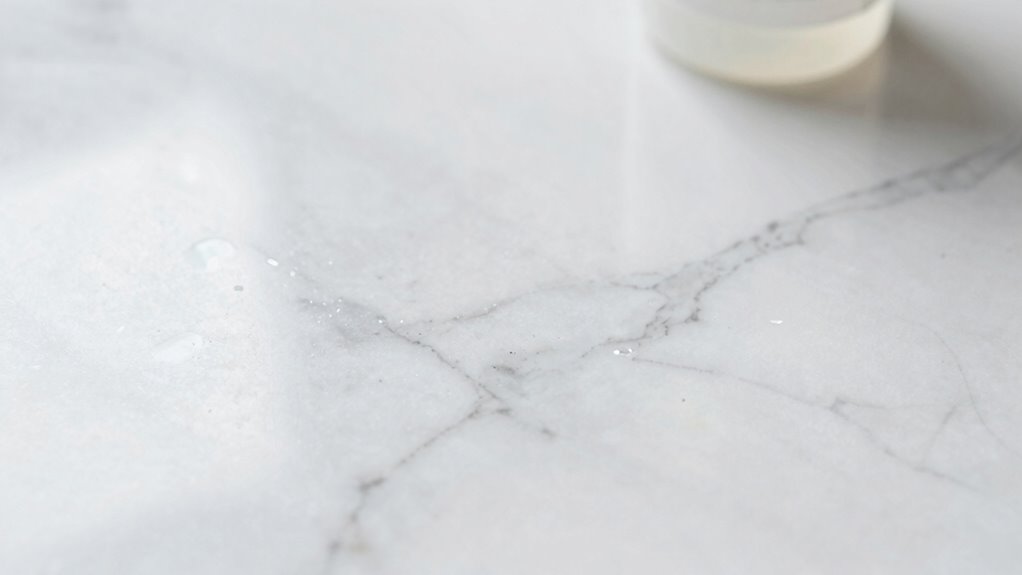
Not all cleaners damage marble instantly, but many common household products can cause immediate harm. Some cleaners contain acids or harsh chemicals that can dull the surface, hindering marble polishing efforts and making stain removal more difficult. Even products marketed as safe or all-purpose can contain ingredients that etch or dull the marble’s finish. It’s crucial to use pH-neutral cleaners designed specifically for marble to prevent damage. Regular cleaning helps maintain the stone’s natural shine and prevents the buildup of stains. Avoid abrasive scrubbers or acidic substances like vinegar or lemon juice, as they can cause etching or discoloration. Always check labels carefully to ensure your cleaner is safe for marble surfaces, preserving both its beauty and integrity. Proper cleaning methods are essential for maintaining marble’s appearance over time.
What Causes Marble Etching and How Does It Happen?
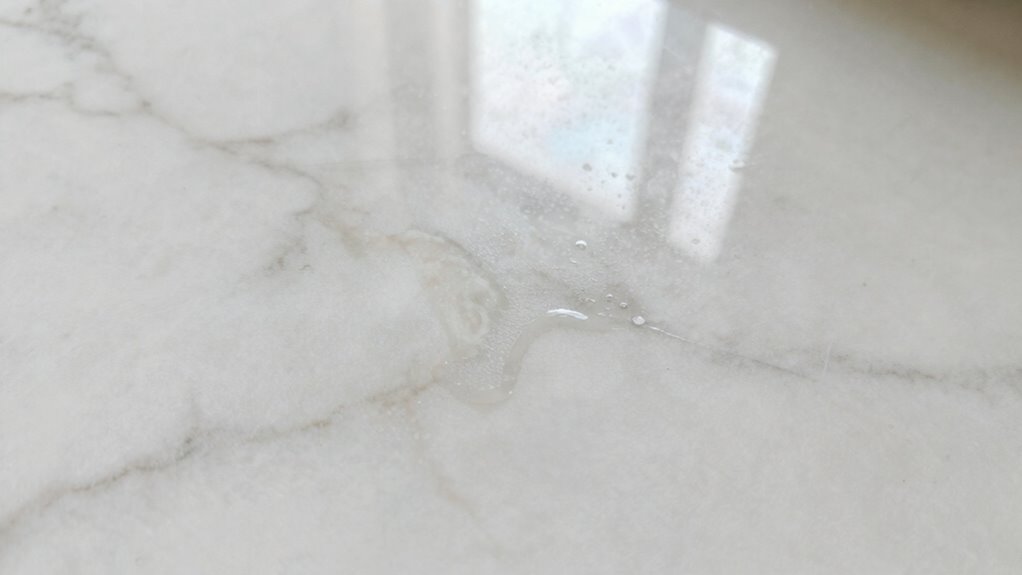
You might not realize that acidic substances, like certain cleaning agents or foods, can cause marble to etch. When these come into contact with your surface, they react with the calcium carbonate, leading to damage. Spills from beverages or acidic foods can also create lasting etching if not cleaned promptly.
Acidic Substances Cause Damage
Acidic substances are one of the main culprits behind marble etching, as they react with the calcium carbonate in the stone. When you pour lemon juice, vinegar, or other acids on your marble surface, they cause a chemical reaction that dissolves the stone’s surface, leading to dull spots and etching. This damage happens quickly, often before you even notice it. To prevent this, proper surface sealing is essential; it creates a barrier that slows down acid penetration. Regular marble polishing can also restore the surface’s shine after minor damage. However, once acids etch the marble, they leave behind visible marks that compromise its beauty. Avoiding acidic substances altogether is the best way to keep your marble looking pristine and protected from damage. Understanding the role of sealants can help in effectively safeguarding your marble from such corrosive reactions.
Contact With Cleaning Agents
Contact with cleaning agents can cause marble etching when these substances contain harsh chemicals or abrasives that react with the stone’s surface. Using improper cleaners can damage the marble’s finish, making it dull or etched. To prevent this, always choose pH-neutral cleaners and avoid acidic or alkaline solutions. Proper sealants maintenance helps protect your marble, but aggressive chemicals can still penetrate over time. Regular polishing techniques restore shine, yet improper products may cause etching instead. Here’s a quick guide:
| Cleaning Agent Type | Effect on Marble | Recommended Action |
|---|---|---|
| Acidic Cleaners | Cause etching | Avoid entirely |
| Abrasive Cleaners | Scratch surface | Use gentle pads |
| Neutral Cleaners | Safe for marble | Use regularly |
| Harsh Chemicals | Damage sealants | Seek professional help |
| Polishing Products | Can improve finish | Use appropriate techniques |
Proper maintenance guarantees your marble remains beautiful and etch-free.
Food and Beverage Spills
Food and beverage spills are a common cause of marble etching because liquids like wine, citrus juices, coffee, and soda contain acids that react with the stone’s surface. When these acids sit on your marble, they can cause dull spots or etches, especially if the surface isn’t protected. To prevent this, regular marble polishing helps maintain a smooth, resilient surface that resists damage. Applying a sealant creates a barrier that minimizes acid penetration, reducing the risk of etching from spills. If you notice etching, professional marble polishing can restore your surface’s shine. Remember, quick cleanup and proper sealant application are key to protecting your marble from daily accidents and maintaining its natural beauty over time. Proper maintenance also plays a crucial role in preventing damage and prolonging the lifespan of your marble surfaces.
How Can You Recognize Stains Versus Etching on Marble?
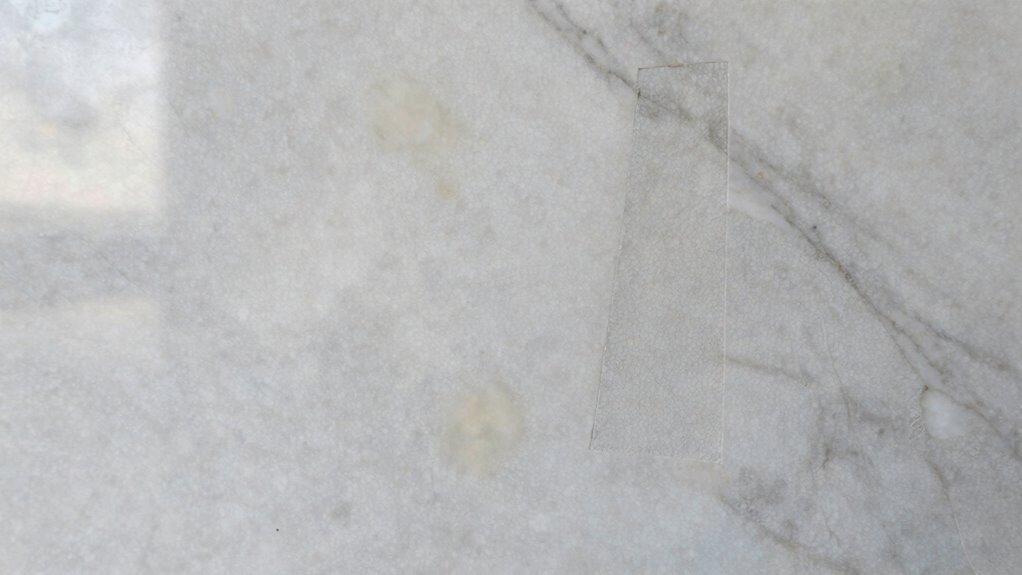
Recognizing the difference between stains and etching on marble is essential for proper care and restoration. Stains often appear as discolorations caused by liquids seeping into the stone, and they usually can be removed through stain removal techniques or marble polishing. Etching, however, results from acid damage, leaving dull, matte spots that can look like a surface scratch or dullness. To distinguish them, check if the surface feels rough or dull in spots—this suggests etching. Stains typically sit on the surface and may be removed with a poultice or gentle cleaning. Remember, stains can often be addressed without altering the marble’s shine, while etching may require more involved restoration, like polishing, to restore the original finish. Additionally, understanding the nature of marble damage can help determine the most effective repair method.
Are Acidic Cleaners Always Harmful to Marble?
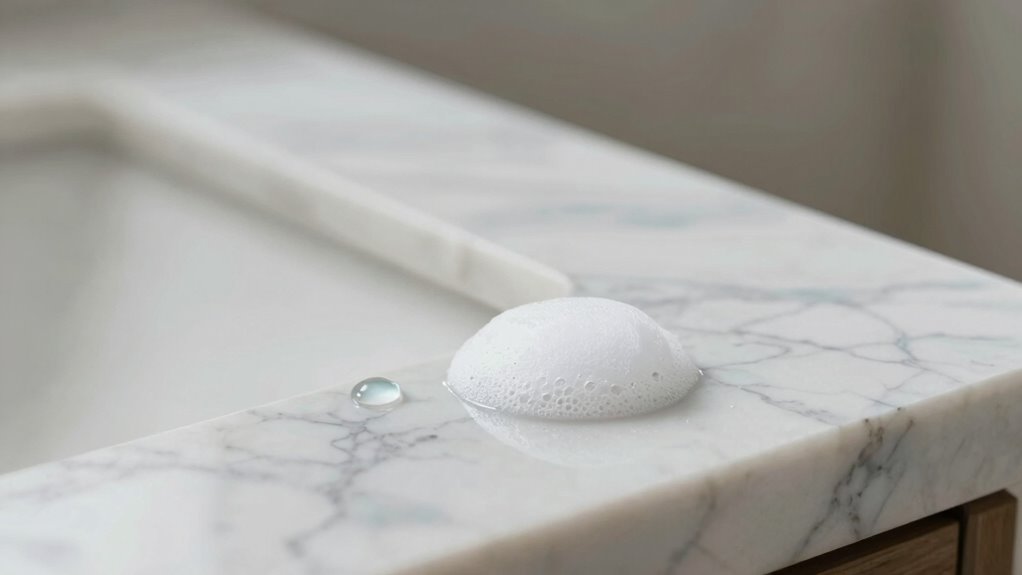
Many people assume all acidic cleaners damage marble, but that’s not always true. Some common household substances are mildly acidic yet safe when used properly. Understanding proper marble maintenance helps you avoid harm while keeping your surfaces looking their best. For example, using gentle, manufacturer-recommended cleaning solutions can help preserve the integrity of your marble. Air Purifier Maintenance Dos and Don’ts
Acidic Cleaners and Marble
While it’s true that acidic cleaners can damage marble, they aren’t always harmful if used properly. When you use acidic cleaners, they can etch the surface if applied directly or left on too long. However, if you make sure to rinse thoroughly and avoid prolonged contact, the risk decreases. Regular marble sealing creates a protective barrier against acids, reducing potential damage. After cleaning, surface polishing can restore shine and smoothness, making your marble look new again. Always test cleaners on a small, inconspicuous area first. Properly diluted acidic solutions, like those used for specific stains, won’t harm your marble if handled carefully. Understanding how to use these cleaners correctly helps preserve the beauty and integrity of your marble surface, especially when considering free floating techniques that complement traditional cleaning.
Common Household Substances
Are common household substances always harmful to marble? Not necessarily. Some everyday items can be safe if used correctly, but caution is key. For example, cleaning with mild solutions can help maintain marble’s shine and assist in stain removal techniques without damaging its surface. However, acidic substances like vinegar or lemon juice can etch marble if left on too long. Additionally, choosing appropriate cleaning products designed specifically for marble can further protect its integrity. Imagine using baking soda paste to gently lift stains, or wiping spills immediately to prevent staining. You might also buff with a soft cloth to enhance marble polishing. Yet, forget harsh chemicals or abrasive pads, which can scratch or dull the surface. Knowing which household substances are safe helps preserve your marble’s beauty and longevity.
Proper Marble Maintenance
Although acidic cleaners are often viewed as harmful to marble, they aren’t always destructive if used properly. The key to proper marble maintenance is understanding how to clean without damaging the surface. For instance, gentle cleaning with pH-neutral solutions prevents etching and preserves the marble’s polish. If you need to restore shine, marble polishing can enhance the surface’s luster without risking harm. Additionally, sealing techniques play a crucial role in protecting your marble from stains and acids, reducing the risk of damage from everyday spills. When used carefully, even mild acids like vinegar can be safe for cleaning if promptly rinsed off. Proper sealing enhances a marble surface’s resistance to acids, making maintenance safer and more effective. Remember, regular sealing and gentle cleaning are your best tools for maintaining marble’s beauty while avoiding unnecessary etching or dulling.
When Is It Safe to Use Certain Cleaners on Marble?

Knowing when it’s safe to use certain cleaners on marble is essential to prevent damage. You should only apply specific cleaners after confirming they won’t harm the surface, especially during marble polishing or stain removal. Never use acidic or abrasive products unless approved for marble. Look for gentle, pH-neutral cleaners designed for natural stone. Test any new product on a small, hidden area first. Avoid harsh chemicals that can etch the surface instantly.
- Check labels for “marble-safe” or “pH-neutral”
- Opt for specialized marble or stone cleaners
- Avoid vinegar, lemon, or other acids
- Use soft cloths or sponges for cleaning
- Consult a professional for stubborn stains or polishing needs
How to Safely Clean and Maintain Your Marble Surfaces
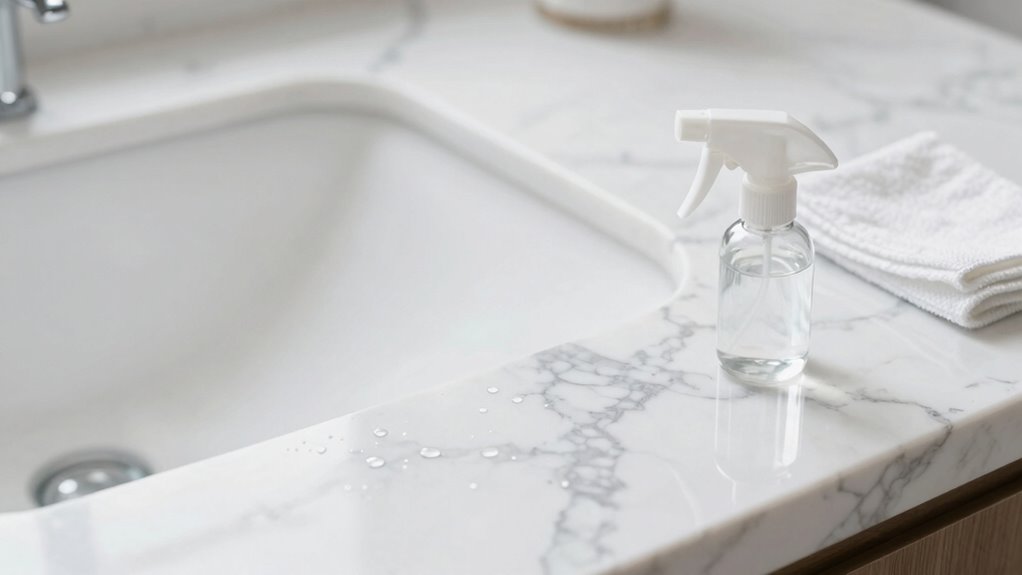
Using the right cleaning techniques is key to keeping your marble surfaces looking their best. Regularly dust and wipe with a soft cloth and pH-neutral cleaner to prevent buildup. Avoid acidic or abrasive cleaners, as they can damage the marble’s surface. For stubborn stains, gentle marble polishing with a specialized product can restore shine without risking etching. Sealing techniques are essential; apply a high-quality sealant periodically to protect against spills and stains. Always follow the manufacturer’s instructions for sealing and reapplying. Use soft cloths or sponges for cleaning, and steer clear of rough scrubbers. Proper marble maintenance helps preserve your marble’s beauty and integrity over time. Consistent maintenance, combined with proper sealing, helps preserve your marble’s beauty and integrity over time. Proper care guarantees your surfaces stay pristine and resistant to damage.
How to Spot and Prevent Etching Before It Starts

Etching on marble can develop subtly, making it essential to recognize early signs and prevent damage before it occurs. To do this, pay attention to your marble’s surface for dull spots or slight changes in shine, which may indicate initial etching. Use proper polishing techniques to restore surface luster and prevent further damage. Regular sealing methods create a protective barrier, reducing acid and spill penetration that can cause etching. Keep an eye out for:
- Areas with dull or matte patches
- Surfaces that feel rough or sticky
- Spills from acidic substances like citrus or vinegar
- Uneven shine after cleaning
- Visible marks that don’t buff out easily
Proactively applying these sealing methods and polishing techniques helps maintain your marble’s beauty and keeps etching at bay. Understanding the importance of proper maintenance can help you extend the lifespan of your marble surfaces and prevent costly repairs.
Best Practices for Protecting Your Marble From Damage

To effectively protect your marble from damage, you need to adopt consistent care practices and take proactive steps to minimize risk. Regularly perform marble polishing to maintain its luster and create a smoother surface that’s less prone to staining. Use soft cloths and pH-neutral cleaners to prevent etching and avoid harsh chemicals that can cause damage. Implement stain prevention by sealing your marble surfaces properly, which helps repel spills and moisture. Be mindful of placing mats or coasters under glasses and hot items to prevent scratches and thermal damage. Promptly clean up spills to avoid staining, especially from acidic substances. By establishing these best practices, you’ll keep your marble looking pristine and protected from common sources of damage.
Expert Tips for Choosing the Right Marble Care Products
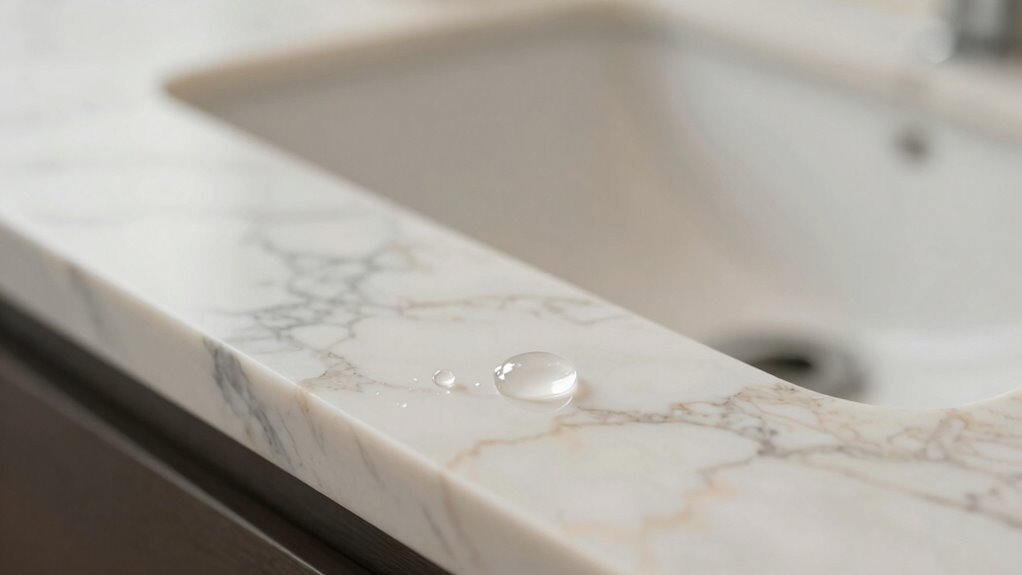
Choosing the right marble care products is essential for maintaining your surface’s beauty and longevity. To guarantee you select effective options, consider products that support proper marble sealing and enhance polishing techniques without damaging the surface. Look for gentle, pH-neutral cleaners that won’t etch your marble. Opt for sealers that penetrate deeply and offer long-lasting protection against stains. When polishing, use products specifically designed for marble to restore shine and smoothness. Avoid harsh chemicals that can dull or damage the surface. Remember, the correct care products can make a significant difference in preserving your marble’s natural elegance and preventing costly repairs down the line.
- Gentle, pH-neutral cleaners
- Sealers that offer deep, long-lasting protection
- Polishing products suited for marble surfaces
- Avoiding harsh chemicals
- Products that support proper marble sealing and polishing techniques
Frequently Asked Questions
Can Natural Stone Sealers Prevent All Types of Marble Etching?
Natural stone sealers can’t prevent all types of marble etching because their sealer effectiveness varies. While they provide some natural protection, they mainly block stains and minor damage, not acids or aggressive chemicals that cause etching. To best safeguard your marble, combine sealing with proper maintenance and avoid acidic substances. Remember, no sealer offers complete protection, so understanding its limits helps keep your marble looking its best.
How Often Should Marble Surfaces Be Professionally Inspected for Damage?
You should schedule professional inspections for your marble surfaces at least once a year. Think of it as a health check-up for your stone; early detection of damage prevents costly repairs later. Regular marble maintenance ensures that any signs of etching, staining, or cracks are caught promptly. By staying proactive with professional inspections, you keep your marble looking pristine and preserve its natural beauty for years to come.
Are There Specific Brands Recommended for Safe Marble Cleaning?
For safe cleaning, stick to reputable brands like Granite Gold, Black Diamond, or Miracle Sealants, which are known for their marble-safe formulas. These brand recommendations make sure you avoid acids or harsh chemicals that can etch your marble. Always read labels carefully to confirm the product is specifically designed for marble surfaces. Using the right cleaner not only protects your marble but also keeps it looking pristine and lasting longer.
What Are the Long-Term Effects of Using Harsh Cleaning Agents on Marble?
Using harsh cleaning agents on marble can cause long-term damage by disrupting pH levels, leading to etching and dullness. These cleaners often leave chemical residues that stain or weaken the surface over time. You should avoid acidic or alkaline products, opting instead for pH-balanced, gentle cleaners. Regularly using harsh chemicals can compromise marble’s integrity, making it more vulnerable to scratches and permanent damage.
How Does Humidity Impact Marble’s Susceptibility to Etching and Staining?
You might not realize it, but humidity effects can silently threaten your marble. High humidity creates a damp environment that makes your marble more stain susceptible and accelerates etching. Moisture seeps into porous surfaces, weakening the stone over time. If you neglect humidity control, you could face unexpected damage, risking costly repairs. Keep humidity levels in check to protect your marble’s beauty and longevity from this hidden danger.
Conclusion
Think of your marble as a delicate dance partner—requiring gentle steps and the right touch. By understanding what causes etching and using proper cleaning techniques, you’ll keep your surfaces shining like a polished gem. Stay vigilant against harm, choose your products wisely, and maintain a steady rhythm of care. With this knowledge, you’ll guarantee your marble remains a timeless masterpiece, unblemished and elegant, ready to impress for years to come.