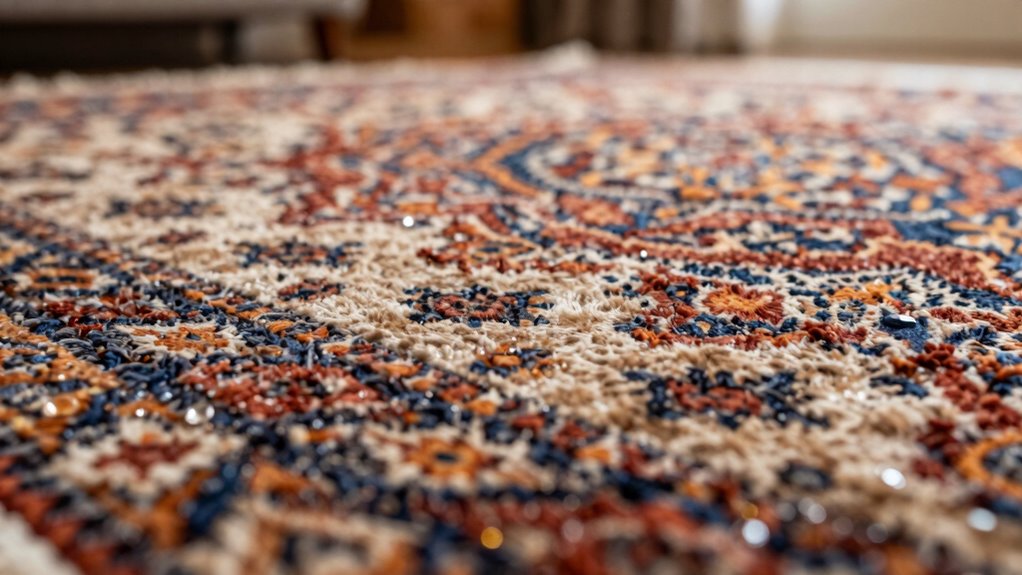
To keep your rugs safe and looking their best, aim for indoor humidity levels between 30% and 50%. This range helps prevent mold, mildew, and fiber damage while keeping the fibers flexible and vibrant. Too dry or too moist air can cause problems, so monitoring humidity with a hygrometer and adjusting with humidifiers or dehumidifiers is key. Stay tuned for easy tips on how to maintain these ideal conditions effortlessly.
Key Takeaways
- The ideal indoor humidity range for rugs is between 40% and 60%.
- Maintaining humidity within 30% to 50% helps prevent mold and fiber damage.
- Humidity levels above 60% increase mold and mildew risk; below 30% causes brittleness.
- Use a hygrometer to monitor humidity and keep it stable within the recommended range.
- Adjust humidity with humidifiers or dehumidifiers depending on seasonal conditions.
What Is the Ideal Humidity Range for Rugs?
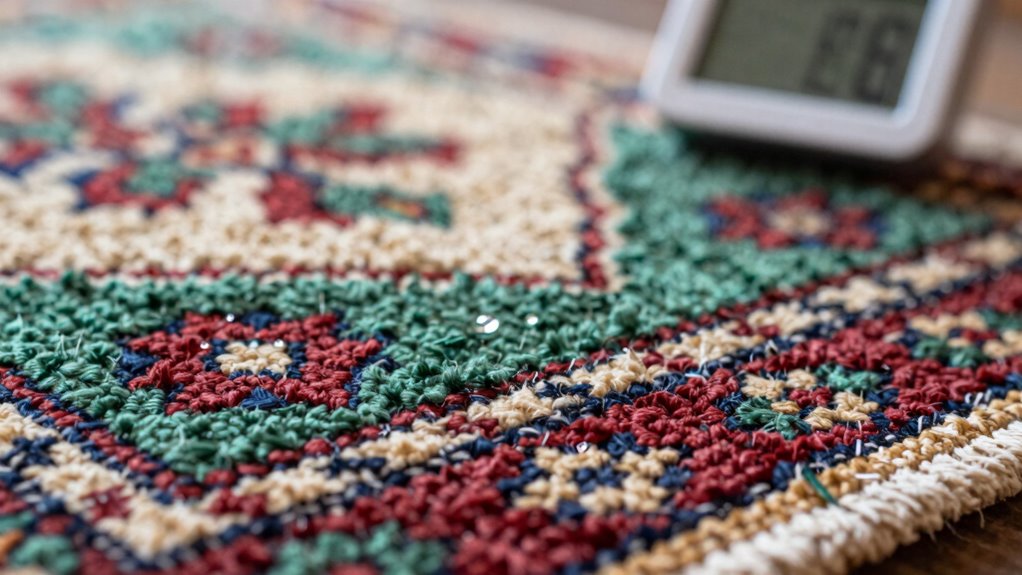
Maintaining the right humidity level is essential to keep your rugs in good condition. The ideal humidity range for rugs is between 40% and 60%. This humidity control helps prevent issues like mold growth, fiber deterioration, and color fading. Staying within this range ensures your rug remains supple, vibrant, and structurally sound over time. Too dry, and fibers become brittle, increasing the risk of tears; too moist, and mold or mildew can develop, damaging the rug’s integrity. To achieve excellent rug preservation, monitor your environment regularly with a hygrometer and use humidifiers or dehumidifiers as needed. Proper humidity levels create a stable environment, safeguarding your investment and maintaining the beauty of your rugs for years to come.
Why Humidity Levels Matter for Rug Longevity and Appearance
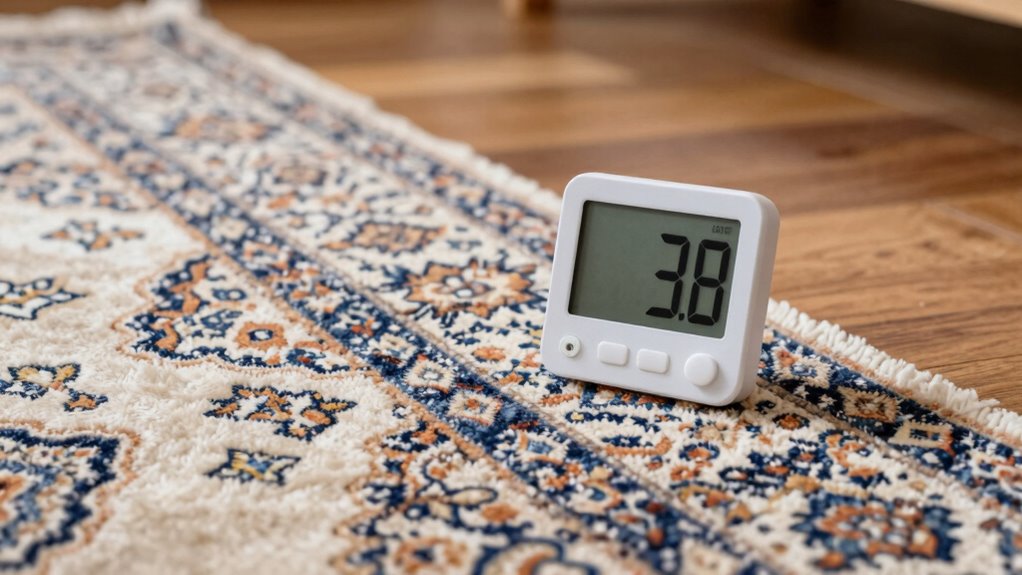
Keeping your rug in good shape isn’t just about cleaning it regularly; humidity levels play a key role in preserving its appearance and lifespan. Proper humidity prevents excess dust accumulation, which can settle into fibers and cause wear over time. It also helps prevent mold growth, which can stain and weaken your rug’s foundation. Maintaining ideal humidity minimizes fluctuations that lead to fiber expansion or contraction, keeping your rug looking new. Additionally, controlling humidity is essential for indoor air quality, which directly influences the longevity of your rugs and overall home environment.
How to Measure and Maintain Proper Humidity in Your Home
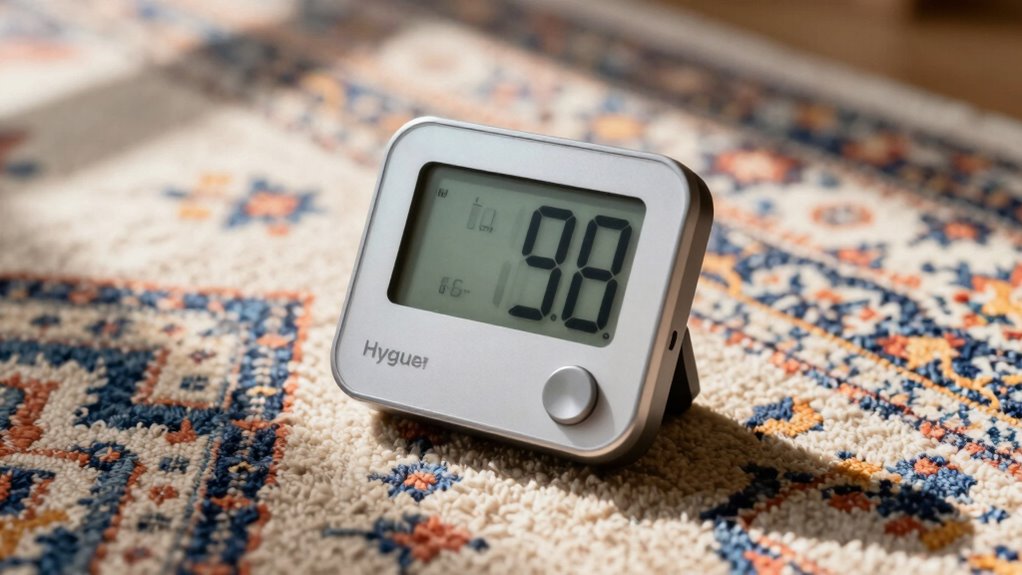
Ever wonder how to guarantee your home’s humidity stays within the ideal range for your rug? Start by using a reliable hygrometer; this device measures your indoor humidity accurately, helping you maintain the suitable 30-50%. Good air quality depends on balanced humidity, so avoid common humidity myths like overly humidifying to prevent dust mites or excessively drying to stop mold. Instead, monitor regularly and adjust using humidifiers or dehumidifiers as needed. Keep doors and windows closed during extreme weather to stabilize humidity levels. Proper measurement and maintenance not only protect your rug but also improve overall air quality. Maintaining optimal humidity levels can also prevent mold growth, which is harmful to both your home and health. Staying informed ensures you’re not misled by myths and keeps your home safe and comfortable for everyone.
Signs Your Rugs Are Suffering From Too Much or Too Little Humidity
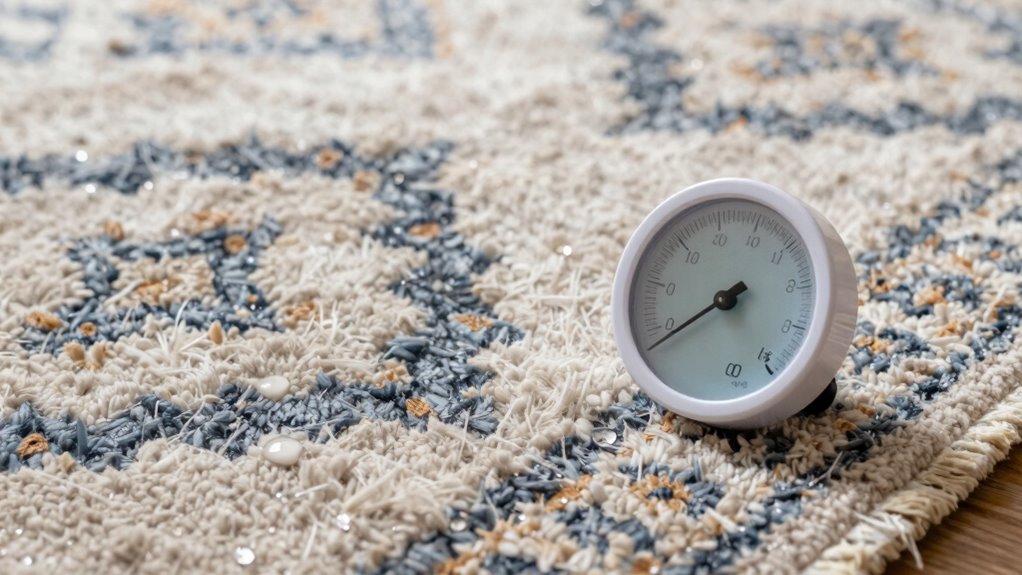
When your home’s humidity levels fall outside the ideal range, your rugs often show warning signs. Too much humidity can lead to mold growth, causing dark spots, a musty smell, and fabric deterioration. You might notice your rugs feel damp or develop a fuzzy, discolored surface. Conversely, low humidity causes rugs to become brittle, cracked, or frayed, making fibers break easily. It can also create gaps or looseness in the weave. Both extremes invite pest infestation, such as carpet beetles or mites, which thrive in damp or overly dry environments. If you see mold spots, musty odors, or an increase in pests, it’s a clear sign your rugs are suffering from humidity imbalance. Proper humidity levels are essential for maintaining your rugs’ appearance and longevity, helping prevent these issues from developing. Addressing these issues promptly helps preserve your rugs’ appearance and longevity.
Easy Tips to Keep Humidity Levels in Check for Rug Care
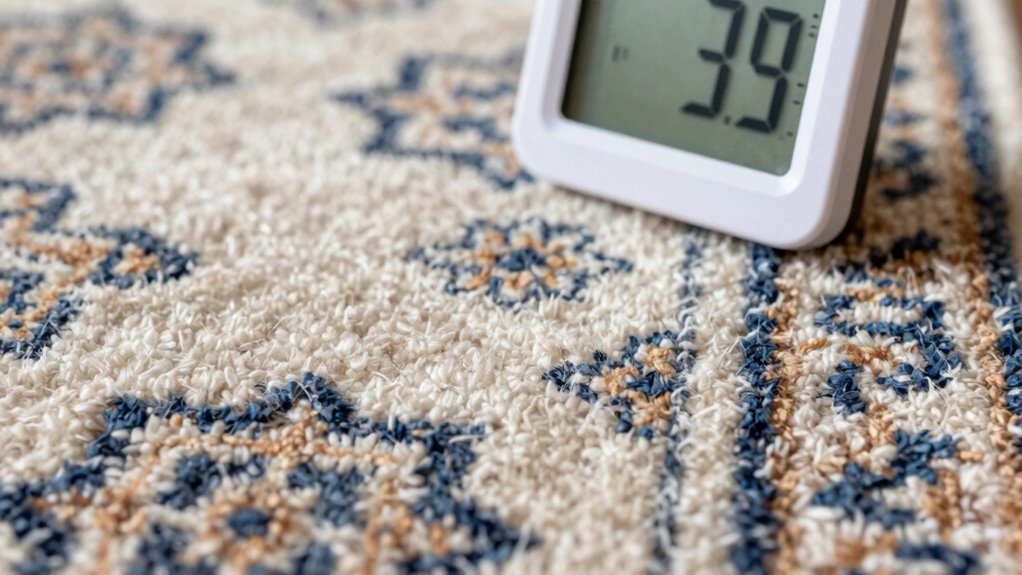
Maintaining proper humidity levels in your home is essential for rug care, and simple adjustments can make a big difference. To prevent mold and ensure pet safety, use a dehumidifier or air conditioner in humid months, and a humidifier if the air gets too dry. Regularly ventilate your space to promote airflow and reduce moisture buildup. Keep rugs dry by quickly cleaning spills and avoiding placing them in damp areas. Use a hygrometer to monitor humidity, aiming for 30-50%. Avoid excessive humidity, which fosters mold, and too low levels, which can harm pets’ respiratory health. Proper equipment such as dehumidifiers and humidifiers can help maintain consistent humidity levels effortlessly. These small steps help preserve your rugs, prevent mold, and create a safe environment for your pets. Consistent monitoring and adjustments keep humidity in check effortlessly.
Frequently Asked Questions
How Does Humidity Affect Different Rug Materials Differently?
Humidity impacts rug materials by causing fiber expansion or contraction, which can distort their shape over time. Natural fibers like wool are sensitive to humidity changes, risking dye stability and color fading if exposed to high moisture. Synthetic rugs resist these issues better but can still be affected by extreme humidity. Maintaining ideal humidity levels helps preserve your rug’s appearance, ensuring fiber integrity and color longevity.
Can Mold Develop on Rugs in Certain Humidity Conditions?
Imagine mold creeping in like an unwelcome shadow—you can prevent this by controlling humidity. Mold can develop on rugs when humidity levels stay high, creating a perfect environment for spores to grow. To avoid this, practice mold prevention by maintaining ideal humidity control. Keep your home’s humidity between 30-50%, and ensure proper ventilation. This simple step shields your rugs from mold, preserving their beauty and your peace of mind.
What Are the Long-Term Effects of Improper Humidity on Rug Fibers?
If you don’t control humidity levels, you risk humidity-related mold, which can cause your rug fibers to deteriorate over time. Excess moisture accelerates fiber degradation, weakening the rug’s structure and appearance. You might notice fraying, loss of color, or permanent damage. To protect your investment, keep humidity in a safe range, ensuring your rug stays clean, strong, and beautiful for years to come.
Are There Specific Humidity Levels Recommended for Antique Rugs?
Think of your antique rug as a delicate garden needing just the right climate. For antique preservation, aim for humidity control between 40-60%. Too high, and mold or warping threaten; too low, and fibers become brittle. Maintaining this balance safeguards your rug’s beauty and integrity over time. Regularly monitor the environment, ensuring your cherished piece remains as timeless as a well-tended garden.
How Do Seasonal Changes Impact Indoor Rug Humidity Requirements?
Seasonal fluctuations notably impact your indoor rug humidity needs. During winter, dry air from heating systems can cause your rugs to become brittle, so you should increase humidity levels with humidifiers. In summer, higher outdoor humidity may lead to mold or mildew, so use dehumidifiers or air conditioning to maintain ideal levels. Consistent indoor climate control helps protect your rugs from damage caused by seasonal changes.
Conclusion
Keeping your rugs in their prime is like tending a delicate garden—you need just the right humidity to thrive. By monitoring and maintaining proper levels, you ensure your rugs stay vibrant and damage-free, like a well-tended flowerbed. Don’t let fluctuating humidity turn your beautiful rugs into wilted leaves. With a little effort, you’ll create a comfortable, healthy environment where your rugs can flourish and remain stunning for years to come.