Rotating and resting your rugs regularly is key to preventing uneven wear and fading. By repositioning your rug every few months, you distribute foot traffic and sunlight exposure evenly, which helps maintain its color and structure. Additionally, allowing your rug to rest after deep cleaning helps fibers recover and stay durable. Incorporating these simple practices will extend your rug’s lifespan and keep it looking fresh—keep going to learn even more tips for caring for your rugs.
Key Takeaways
- Regularly rotate rugs to evenly distribute foot traffic and prevent uneven wear patterns.
- Rest rugs after cleaning or heavy use to allow fibers to recover and maintain structural integrity.
- Flip or reposition rugs periodically to promote uniform exposure to sunlight and foot traffic.
- Use proper vacuum techniques to remove dirt and debris, reducing staining and fiber damage.
- Combine rotation, resting, and careful cleaning to preserve rug appearance and extend lifespan.
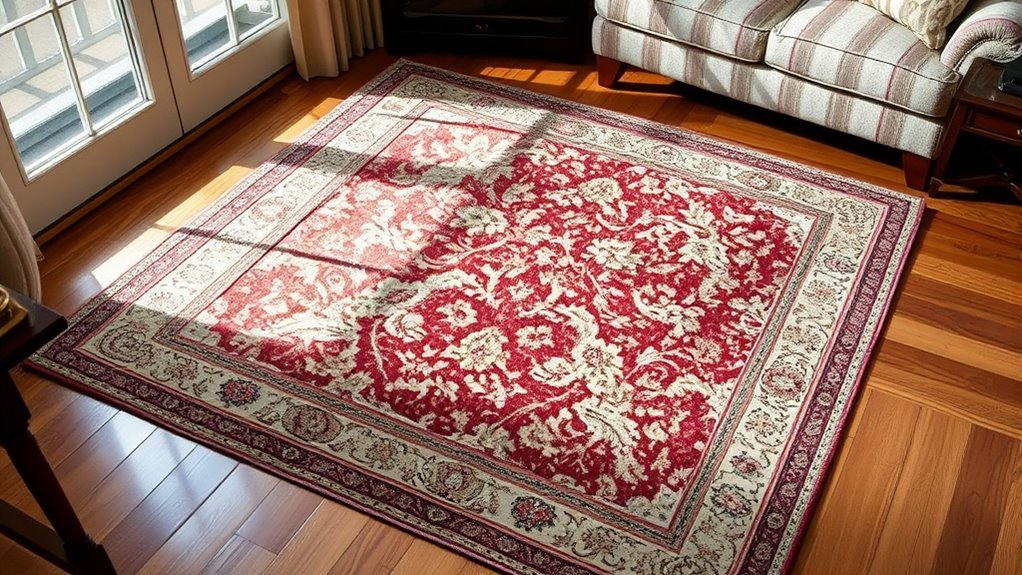
To keep your rugs looking their best and prevent uneven wear, it’s crucial to regularly rotate and rest them. When you rotate your rugs, you distribute foot traffic more evenly across the surface, helping to avoid areas that become worn or faded faster than others. Resting your rugs allows the fibers to recover, especially after deep cleaning or heavy use. Incorporating proper vacuum techniques is key here; use a vacuum cleaner with a beater bar or rotating brush to thoroughly lift dirt and debris from the fibers. Vacuum in multiple directions to loosen dirt trapped deep within the pile, which not only keeps your rug cleaner but also reduces the risk of staining and fiber damage. Regular vacuuming also plays an essential role in stain prevention, as removing dirt before it settles prevents it from becoming embedded or causing discoloration. Additionally, choosing the right cleaning frequency based on foot traffic can help prolong the rug’s lifespan. In addition to vacuuming, rotating your rug every few months ensures that no single area bears the brunt of foot traffic for too long. This simple step helps maintain uniform wear and color, especially in high-traffic zones like entryways or hallways. When you rotate, make sure to flip or reposition the rug in a way that evenly distributes wear patterns and exposure to sunlight, which can fade colors unevenly. Resting your rug after vacuuming or cleaning allows the fibers to settle, helping to maintain the rug’s integrity over time. If your rug is in a sunlit area, consider rotating it more frequently to prevent uneven fading caused by UV exposure. Proper vacuum techniques are also vital for preventing dirt buildup, which can lead to staining or fiber damage over time. Stain prevention is another critical aspect of maintaining your rug’s appearance. By adopting effective vacuum techniques, you can catch spills or dirt before they settle deep into the fibers, making stain removal easier. When accidents happen, address them immediately with a suitable cleaning solution, and avoid rubbing, which can spread the stain or damage the fibers. Regular rotation and proper vacuuming also prevent the accumulation of grime in specific spots, reducing the likelihood of permanent staining or discoloration. Resting your rugs after cleaning ensures the fibers are dry and less prone to mold or mildew, which can cause stains and odors. Ultimately, implementing a routine of rotating and resting your rugs, combined with proper vacuum techniques focused on stain prevention, extends their lifespan and keeps them looking vibrant. These simple steps ensure even wear, preserve color, and protect against dirt buildup, making your rugs a durable and attractive part of your home for years to come.

Rug Doctor Pro Motorized Upholstery Tool Attachment For Pro Deep Commercial Carpet Cleaning Machine – Dual Action Motorized Brush with Strong Suction Removes Stains, Soils & Lingering Odors
DUAL-ACTION MOTORIZED BRUSH: The Rug Doctor Pro Motorized Upholstery Tool Attachment does the scrubbing for you. Simply spray,…
As an affiliate, we earn on qualifying purchases.
As an affiliate, we earn on qualifying purchases.
Frequently Asked Questions
How Often Should I Rotate My Rug for Optimal Wear?
You should rotate your rug every 6 to 12 months to guarantee even wear. When vacuuming, use proper techniques to prevent damage and extend its life. Regular rotation helps avoid uneven fading or thinning, and it can also aid in stain prevention by distributing foot traffic evenly. If your rug experiences heavy use or sunlight exposure, consider rotating more frequently to keep it looking fresh and balanced.
Can Rotating Rugs Prevent Permanent Fabric Damage?
Rotating your rugs helps prevent permanent fabric damage by distributing wear evenly, especially if you use proper vacuuming techniques regularly. It also aids in stain prevention, as it reduces the chances of certain areas getting overly soiled or faded. By routinely rotating and caring for your rugs, you maintain their appearance and longevity, ensuring they stay beautiful and durable for years to come.
What Tools Are Best for Safely Rotating Heavy Rugs?
Imagine gripping a sturdy broom handle or sliding a furniture dolly beneath a heavy rug—these tools make rotating rugs safer and easier. Use a furniture dolly to lift and turn the rug without strain, and employ gloves for grip. As you rotate, maintain proper vacuuming techniques to prevent stains, ensuring even wear. These tools help you protect your rug’s fibers, keeping it fresh and beautiful longer.
Should I Rotate Rugs Differently Based on Foot Traffic?
Yes, you should rotate rugs differently based on foot traffic. High-traffic areas, like near doorways or under furniture, wear faster, so rotate your rug more frequently in those spots. Adjust rug placement and furniture arrangement to evenly distribute foot traffic, ensuring even wear. Regular rotation helps maintain your rug’s appearance longer, preventing uneven fading or fraying, especially in busy parts of your home.
How Does Rug Fiber Type Affect Rotation Frequency?
Rug fiber type is like a race car engine—some are built for speed and durability. You should rotate more often with delicate fibers like wool or silk, which are less durable and prone to fading from fiber dyeing. Sturdier fibers like nylon or polypropylene can handle less frequent rotation. Understanding fiber durability helps you decide when to rotate, protecting your rug from uneven wear and color loss.

Kenmore 81214 200 Series Pet Friendly Lightweight Bagged Canister Vacuum with HEPA, 2 Motor System, and 3 Cleaning Tools-Orange
BAGGED CANISTER VACUUM: Designed to clean all areas and surfaces of your entire home, den, kitchen, car or…
As an affiliate, we earn on qualifying purchases.
As an affiliate, we earn on qualifying purchases.
Conclusion
By rotating and giving your rugs time to rest, you’re extending their life and keeping them looking fresh. Isn’t it worth taking a little extra effort to protect your investment? Regularly changing their position prevents uneven wear and helps maintain their beauty for years to come. So, why not make rug maintenance a simple part of your routine? With just a bit of care, you’ll enjoy cozy, vibrant rugs that stay stunning longer.

Shark StainStriker Cleaning Solution Bundle for Portable Cleaners, Carpet and Area Rug Formula, Instantly Eliminates Odors, Includes 32 oz OXY Multiplier and 16 oz Deep Clean Solution, PXCMBUNDLE
COMPATIBLE: Designed for use with all Shark Portable Carpet Cleaners – PX201, PX202BRN, PX203BRN & PX251.
As an affiliate, we earn on qualifying purchases.
As an affiliate, we earn on qualifying purchases.

TARPAL 3'x6'(2-Pack White Tarp Waterproof 7.5 mil Medium Duty All Purpose Poly Tarps Cover Waterproof,Snow Proof UV Protection,Rip and Tear Proof,Poly Tarpaulin
【Premium Waterproof & UV-Resistant】Crafted with high-quality fabric and heat-sealed technology, this white medium tarp offers superior protection against…
As an affiliate, we earn on qualifying purchases.
As an affiliate, we earn on qualifying purchases.