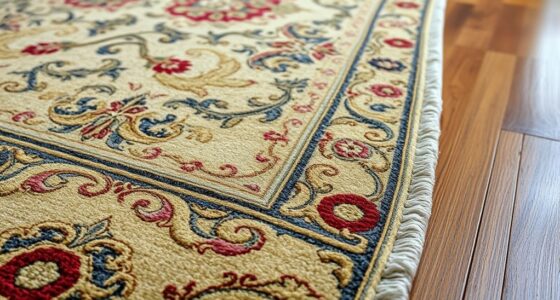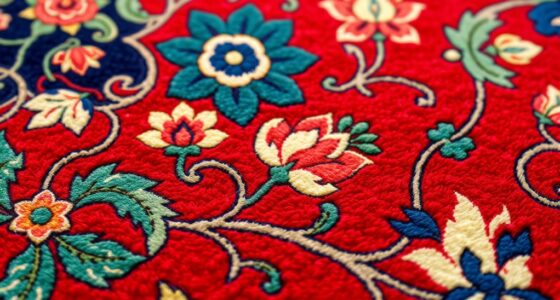
To decode Caucasian rug motifs, focus on the geometric patterns and tribal symbols woven into the design. These motifs often represent natural elements, spiritual beliefs, or serve as tribal markers indicating origin and lineage. Symbols like stars, animals, and abstract shapes carry layered meanings, conveying protection, guidance, or community values. Each motif is a visual story passed down through generations. Keep exploring, and you’ll uncover the rich cultural narratives woven into these beautiful textiles.

Get furniture and decor delivered free — and shop member deals
- Fast, free delivery on millions of items
- Access to Prime Big Deal Days deals on October 6–7
- Prime Video, Amazon Music and more included
Key Takeaways
- Geometric motifs in Caucasian rugs often symbolize natural elements, spiritual protection, and community beliefs.
- Symbols like stars and animals communicate guidance, strength, fertility, and tribal identity.
- Motifs serve as visual storytelling tools, passing cultural narratives and customs across generations.
- Tribal symbols indicate the weaver’s origin and preserve cultural heritage within each pattern.
- Decoding these symbols reveals layered meanings and enhances appreciation of the rugs’ artistic and cultural significance.
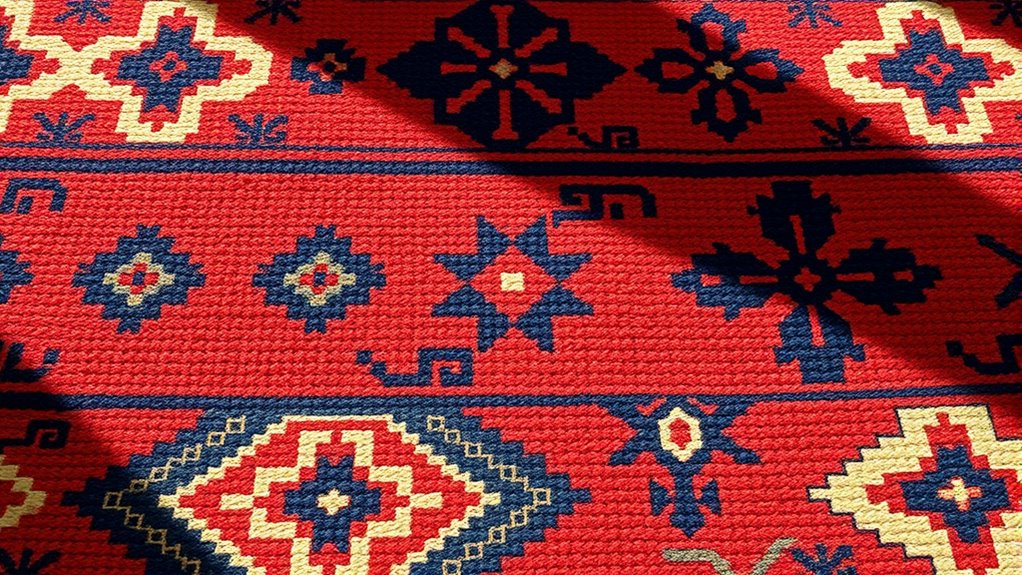
Rug motifs are more than just decorative patterns; they often carry meaningful symbolism and cultural stories. When you look closely at Caucasian rugs, you’ll notice that their designs aren’t random or purely aesthetic. Instead, they’re carefully crafted expressions of tradition, identity, and history. One of the most prominent features you’ll see are geometric patterns, which are fundamental to these rugs. These patterns are not just visually appealing but serve as a visual language, conveying messages across generations. Many of these geometric shapes—such as diamonds, zigzags, and triangles—represent natural elements like water, mountains, or animals, while also embodying protective or spiritual meanings. As you examine these motifs, you might realize that they act as a form of storytelling, passing down beliefs and customs through intricate designs. Additionally, these designs often incorporate cultural symbolism, which adds layers of meaning to the visual narrative. Alongside geometric patterns, tribal symbols are heavily embedded within Caucasian rug motifs. These symbols often serve as markers of tribal identity, indicating the origin or lineage of the weaver. For example, certain motifs might be unique to a specific tribe, acting as a signature or badge of belonging. When you see a rug with distinct tribal symbols, you’re witnessing a piece of cultural heritage that’s been preserved through generations. These symbols might include stylized animals, celestial bodies, or abstract shapes, each carrying its own meaning. For instance, a star symbol may symbolize guidance or protection, while a particular animal motif might represent strength or fertility. The combination of tribal symbols and geometric patterns creates a complex visual language that can tell you a lot about the community that made it. Understanding these motifs helps you appreciate the deeper significance behind Caucasian rugs. They’re more than just floor coverings; they’re woven narratives that reflect the values, beliefs, and histories of their creators. When you observe a rug with specific geometric patterns or tribal symbols, you’re engaging with a cultural dialogue that spans centuries. These motifs allow you to connect with the traditions of the weavers, recognizing that each design is a carefully chosen symbol meant to convey a message—be it for protection, identity, or storytelling. In this way, decoding rug motifs enriches your appreciation of their artistry and cultural importance, turning each piece into a meaningful artifact.
Frequently Asked Questions
How Do Regional Differences Influence Rug Motif Symbolism?
Regional differences shape rug motif symbolism by reflecting local tribal identity and geographic symbolism. When you examine a rug, you’ll notice distinct patterns that represent specific tribes or regions, revealing their cultural stories and beliefs. These motifs serve as a visual language, allowing you to recognize where the rug’s from and understand the unique traditions that influence its design. Such differences make each rug a cultural treasure, rich with regional meaning.
Can Motifs Indicate the Age of a Caucasian Rug?
Motifs can sometimes indicate the age of a Caucasian rug through age markers and motif evolution. You can identify older rugs by observing simpler, more primitive designs, while more recent pieces often feature intricate, refined motifs. Changes in motif styles over time reflect evolving cultural influences and techniques. By studying these patterns, you get a better sense of when the rug was made, though expert analysis helps confirm its precise age.
Are There Universal Symbols Across All Caucasian Rug Tribes?
Think of Caucasian rug tribes as different chapters in a storybook; while some symbols echo across pages, each tribe adds its unique twist. There aren’t universal symbols, but certain motifs carry shared symbolic meanings like protection or fertility. Variations in motifs reveal local customs and history, making each rug a personalized narrative. You’ll notice these differences and similarities, enriching your understanding of their cultural tapestry.
How Do Motifs Reflect Cultural Exchanges Between Regions?
You see that motifs often reflect cultural exchanges between regions through intertribal motifs and trade route influences. When you observe shared patterns, it indicates that tribes traded and shared ideas, incorporating symbols from neighboring areas. These motifs reveal connections, alliances, and exchanges of artistic techniques, making the rugs not only decorative but also historical records of social interactions and the movement of ideas across regions.
What Modern Influences Are Seen in Traditional Motifs?
You’ll notice modern reinterpretations of traditional motifs in contemporary design, blending old symbolism with fresh styles. Artists and designers incorporate bold colors, geometric patterns, and abstract forms, creating a fusion that respects heritage while embracing innovation. These influences reflect current aesthetics, making traditional Caucasian rug motifs more versatile and appealing in today’s decor. Such blending keeps cultural symbols relevant, allowing you to enjoy their timeless beauty with a modern twist.
Conclusion
As you unravel the intricate patterns woven into Caucasian rugs, you realize each motif is like a secret whispered by generations past. These symbols are the threads that connect history, culture, and personal stories, turning the rug into a living tapestry. When you decode their meaning, you’re not just reading designs—you’re listening to a timeless voice echoing through the fibers, reminding you that beneath every pattern lies a story waiting to be discovered.
Halloween Picks
halloween
As an affiliate, we earn on qualifying purchases.