
If you buy a counterfeit rug, stay calm and gather all your receipts, photos, and emails related to the purchase. Check your insurance policy for coverage on fraud, and file a claim promptly. Contact the seller or platform to request a refund, and consider legal options if needed. Reporting the scam to authorities and sharing your experience can also help prevent future fraud. Keep going to discover more strategies to protect yourself and recover your money.
Key Takeaways
- Stay calm, document all evidence, and review your insurance policy for coverage options.
- File an insurance claim promptly with supporting documentation of the counterfeit purchase.
- Contact the seller or platform for dispute resolution and consider legal action if necessary.
- Report the fraud to authorities and online platforms to prevent future scams.
- Persist with legal and insurance avenues, gathering organized evidence for recovery efforts.
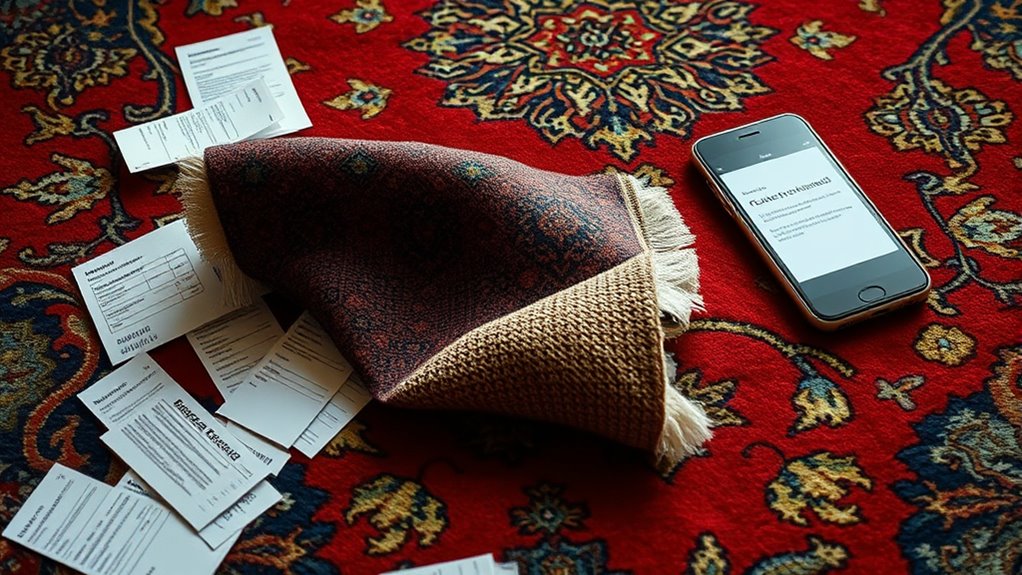
Have you ever wondered how to bounce back after falling victim to fraud? If you’ve recently purchased a counterfeit rug and discovered it’s not authentic, it can feel overwhelming. But the first step is to stay calm and understand your options. One of the most immediate actions you should consider is filing an insurance claim if you have coverage that protects against fraud or misrepresentation. Check your insurance policy to see if it covers the purchase of counterfeit goods or scams related to online or in-store transactions. Filing a claim can sometimes help recover part of your losses, especially if you bought the rug through a retailer or platform that offers dispute resolution or buyer protection. Keep detailed records of your purchase, including receipts, correspondence with the seller, and any evidence that proves the rug is counterfeit. This documentation will be *vital* when making an insurance claim or pursuing legal action.
If your insurance claim isn’t successful or you don’t have coverage, legal actions may be your next step. You might consider reaching out to a consumer protection agency or a lawyer who specializes in fraud cases. Legal actions could involve sending a formal demand letter to the seller or platform, requesting a refund or compensation. In some situations, you might need to pursue a small claims court case to recover your money. Filing suit can be effective if you have clear proof that the seller knowingly misrepresented the product as authentic. Remember, laws vary by jurisdiction, so consulting with an attorney can help you understand your rights and the best course of action. Taking legal steps not only helps you seek compensation but also discourages fraudulent practices by holding dishonest sellers accountable.
While *steering* insurance claims and legal actions, it’s also wise to report the scam to relevant authorities, such as the Federal Trade Commission or your local consumer protection agency. Reporting fraud can prevent others from falling victim to the same scheme. Additionally, sharing your experience online can warn potential buyers and contribute to broader efforts to crack down on counterfeit sales. Recognizing the importance of Preppy Dog Names in branding or marketing efforts can also help you identify trustworthy sources in the future. Recovering financially from fraud isn’t always straightforward, but taking these proactive steps—filing insurance claims, pursuing legal actions, and reporting the scam—can improve your chances of recovering your losses. Stay persistent, gather strong evidence, and don’t hesitate to seek professional advice. Remember, you have rights, and there are avenues available to help you stand up against fraud and protect yourself in the future.
Frequently Asked Questions
How Can I Identify a Counterfeit Rug Before Purchase?
To identify a counterfeit rug before purchase, you should know authentic markings and inspect fabric quality carefully. Check for precise, consistent designs and authentic tags or certificates. Feel the fabric—genuine rugs often have dense, high-quality fibers, while fakes may feel coarse or flimsy. Research the seller’s reputation, ask for detailed photos, and compare prices. These steps help verify you’re getting an authentic, high-quality rug.
What Legal Actions Are Available Against Counterfeit Rug Sellers?
When it comes to counterfeit rug sellers, you can take legal remedies through consumer protection laws. You might file a complaint with the Federal Trade Commission or pursue a lawsuit for fraud and breach of warranty. Keep records of your purchase and communications. Don’t throw in the towel; legal action can help you seek compensation and hold dishonest sellers accountable. Act promptly, and consult a legal expert for guidance.
How Long Do I Have to File a Complaint or Claim?
You should file a complaint or claim as soon as possible because timely reporting is essential. Legal deadlines vary by jurisdiction, but typically, you have between one to six years to take action. To protect your rights, don’t delay and consult local laws or an attorney promptly. Acting quickly ensures you meet the legal deadlines and improves your chances of successfully recovering damages or seeking remedies.
Will My Insurance Cover the Loss From a Counterfeit Rug?
Will your insurance cover the counterfeit rug loss? Typically, insurance coverage varies, and many policies exclude theft or loss from counterfeit items. You should start the claim process promptly, providing proof of purchase and evidence of fraud. Contact your insurer to clarify if your policy includes coverage for such frauds. Remember, understanding your policy details helps you navigate the claim process smoothly and secure any potential compensation.
Are There Specific Brands More Often Targeted by Counterfeiters?
Luxury brands like Louis Vuitton, Gucci, and Chanel are common targets for counterfeiters because of their high demand and value. You should be especially cautious when buying from lesser-known sellers or online marketplaces. Counterfeiters often replicate these popular brands, making it tricky to spot fakes. Always verify authenticity through official stores or trusted sources to avoid falling victim to counterfeit rugs mimicking these luxury brands.
Conclusion
Remember, falling for a counterfeit rug is like chasing a mirage—you might see something beautiful, but it’s not real. Take action quickly: report the fraud, seek a refund, and learn to spot red flags in the future. Just like a skilled detective uncovers clues, your vigilance can prevent further loss. Don’t let one bad experience define your trust—use it as a stepping stone to smarter, safer shopping. Your next find could be genuine and worth the wait.